



Every website with strong organic traffic has one thing in common: other websites are pointing to it. That’s really all link building is: getting other sites to link back to yours. It sounds simple on paper, and in some ways it is.
But the way you go about it can either build a website that ranks steadily for years, or quietly get penalized the moment an algorithm update looks a little too closely at where your links came from.
That’s the part most people skip over. They hear “link building” and think it just means getting more links, as many as possible, as fast as possible. In reality, the sites that consistently rank well have been far more selective than that.
According to a study, 92.3% of the top 100 ranking domains had at least one backlink.
They’ve built relationships, created things worth citing, and stayed patient with a process that rewards consistency over shortcuts.
This guide explains what link building means today, how backlinks work, the right ways to earn them, mistakes to avoid, how to monitor your backlink profile, and how strategies vary across industries.
By the end, you’ll have a practical understanding of effective link building.
What Is Link Building and Why Does It Matter?
Link building is the process of getting other websites to link to your pages. Search engines treat these links as votes of confidence. When a relevant, trustworthy site links to you, it’s telling Google “this page is worth pointing people toward,” and Google factors that endorsement into your rankings.
So, why is link building important, especially with search changing so fast? Because backlinks remain one of the strongest signals of authority a search engine has, even in an AI-driven world where answers get summarized instead of listed.
A page with a few strong, relevant links routinely outranks a page with none, even if both are written equally well. Content quality gets you in the running; backlinks often tip the scales.
The numbers back this up. Here are several well-known link-building statistics and what the data actually shows:
- The #1 result on Google has about 3.8x more backlinks than pages ranking in positions 2–10
- Pages with at least one backlink are 77% more likely to rank in the top 10 than pages with none.
- Around 94% of all published content earns zero external backlinks, meaning even a modest link-building effort puts you ahead of most of the web
Beyond rankings, the link-building benefits show up in ways that are easy to underestimate:
- Higher search visibility and more organic traffic over time
- Direct referral traffic from people clicking through on the linking site itself
- Faster discovery and indexing of new pages, since search engines find content by following links
- Stronger brand credibility, especially when the links come from respected sites in your industry
- Long-term authority that compounds each new relevant link makes the next one slightly easier to earn
That compounding effect is worth sitting with for a second. A brand-new site with zero backlinks has to work hard for its first few links.
But a site that’s already been cited by a handful of respected sources starts to look credible to everyone else evaluating it too, including other site owners deciding whether to link to you, and search engines deciding how much to trust you.
What Actually Happens When a Site Links to You?
A backlink does much more than simply connect one page to another. Behind the scenes, search engines evaluate the quality, relevance, and type of every link before deciding how much value it passes to your website.
Here’s what happens when another website links to you:
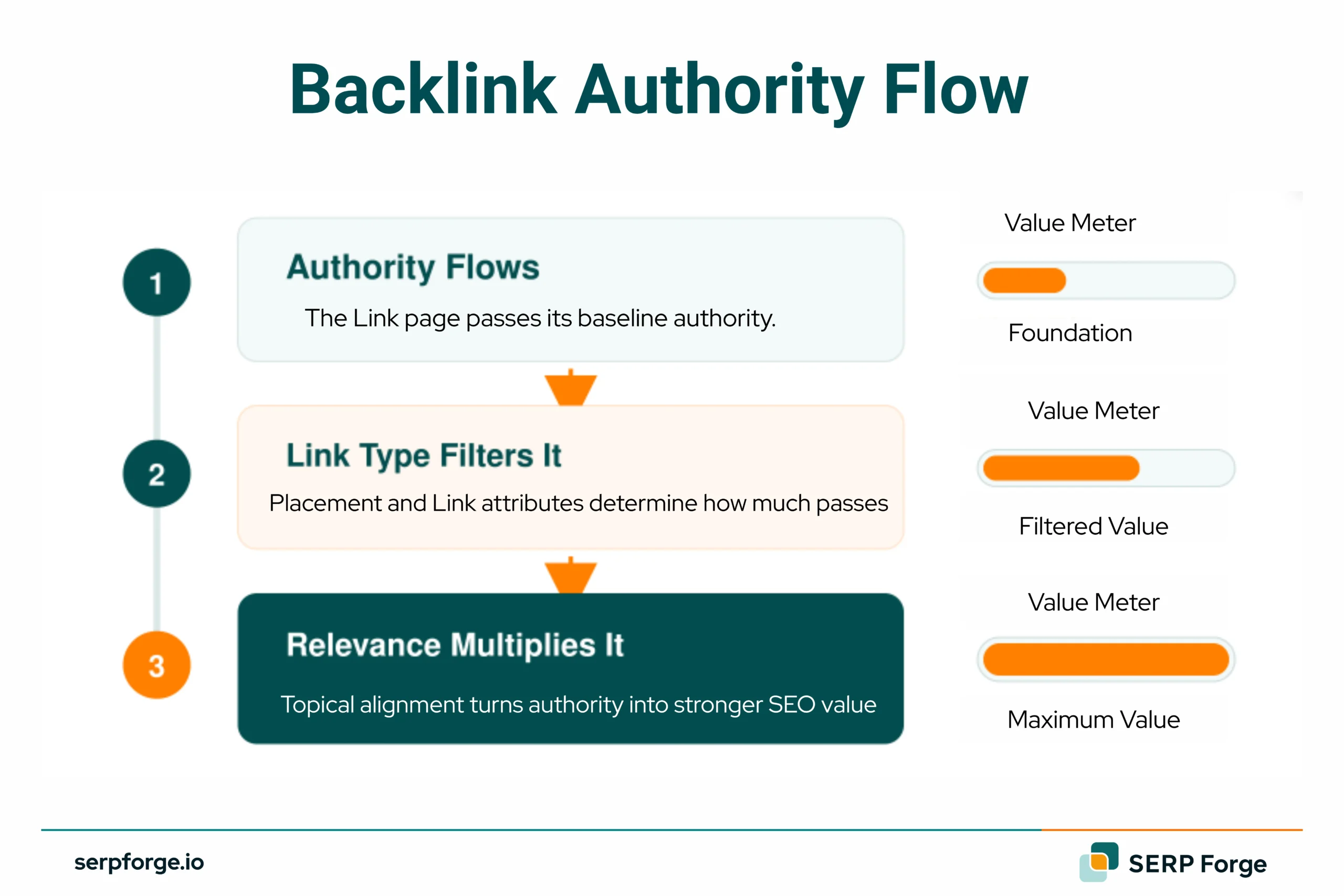
1. Authority Flows from the Linking Page
Every backlink passes a portion of the linking page’s authority, commonly called link equity. Some SEO professionals also refer to this as link juice.
However, not all links pass the same amount of authority. A backlink from a trusted, authoritative website typically carries far more weight than one from a brand-new site with little credibility.
Two backlinks might look identical on paper, but they can carry very different weight depending on where they came from.
In fact, one link from a DR 70+ domain is on average 12x more valuable than 12 links from DR 20–30 domains, and 89% of top-ranking pages have at least one link from a DR 60+ domain, compared to just 34% of pages sitting past position 20.
Example: A backlink from an established industry publication is generally more valuable than a link from a newly created personal blog.
2. The Link Type Determines Whether Authority Is Passed
Search engines also look at the type of backlink.
- Do-follow links allow authority to pass from one page to another.
- No-follow links tell search engines not to pass ranking signals through that link.
While do-follow links are generally more valuable for SEO, a natural backlink profile includes a healthy mix of both link types.
Keep in mind: An unnatural backlink profile made up entirely of do-follow links can appear manipulative to search engines.
3. Relevance Determines How Valuable the Link Is
Authority alone isn’t enough.
Search engines also evaluate whether the linking website is relevant to your topic.
A backlink from a website that covers similar subjects sends a much stronger topical signal than one from an unrelated niche.
For example:
- Right: A cooking blog linking to your recipe app provides a strong relevance signal.
- Wrong: A technology forum linking to that same recipe app provides much less contextual value.
The more relevant the referring website is to your niche, the more meaningful that backlink becomes.
Search engines don’t evaluate backlinks based on quantity alone. They consider authority, link attributes, and topical relevance together to determine how much value a backlink passes to your website.
Relevance matters even beyond traditional rankings now too: topical brand mentions correlate roughly 3x more strongly with AI Overview visibility than raw backlink counts alone. That is why link building sits at the core of SERP Forge AI SEO.
What Kind of Content Naturally Attracts Links?
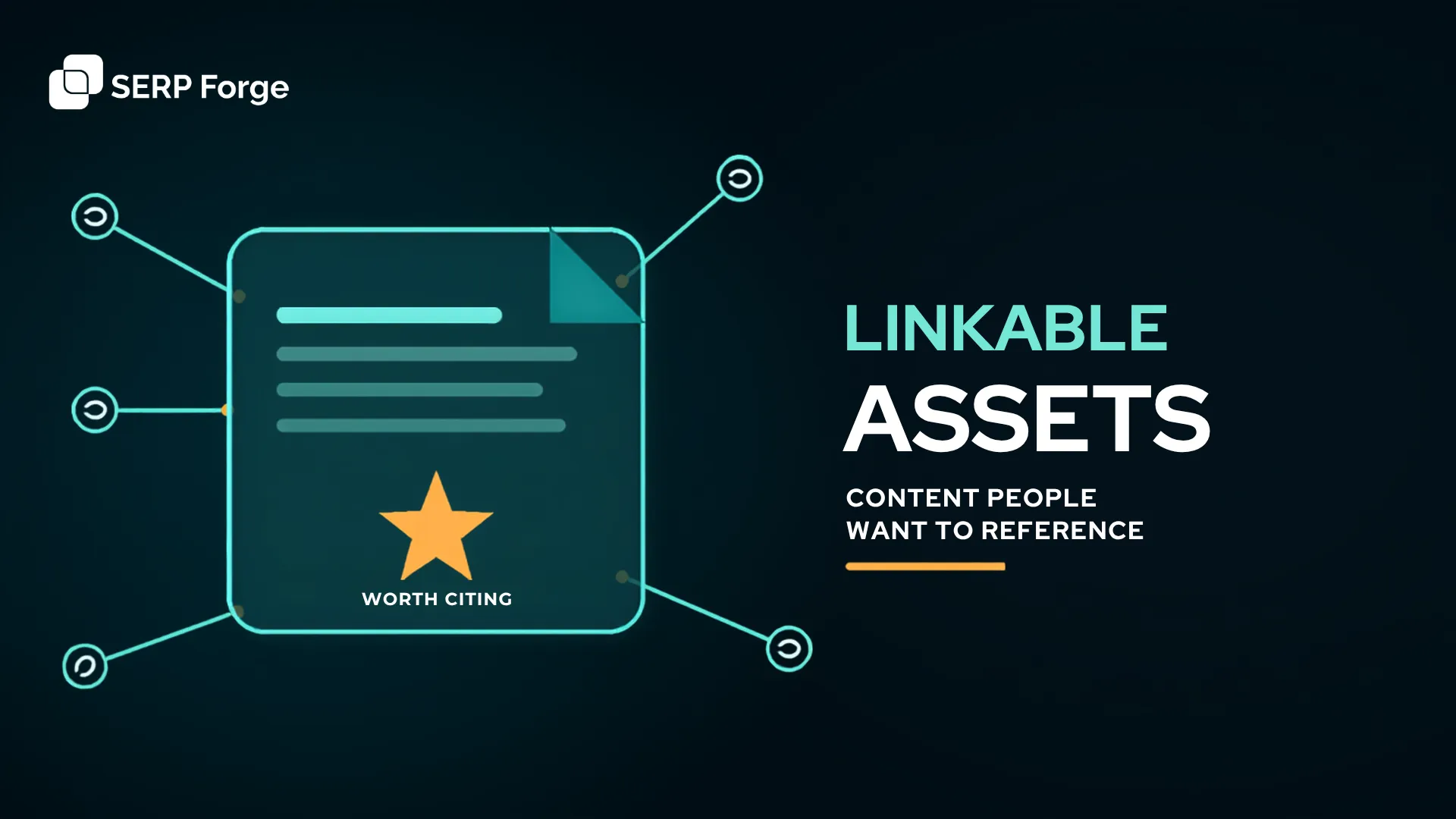
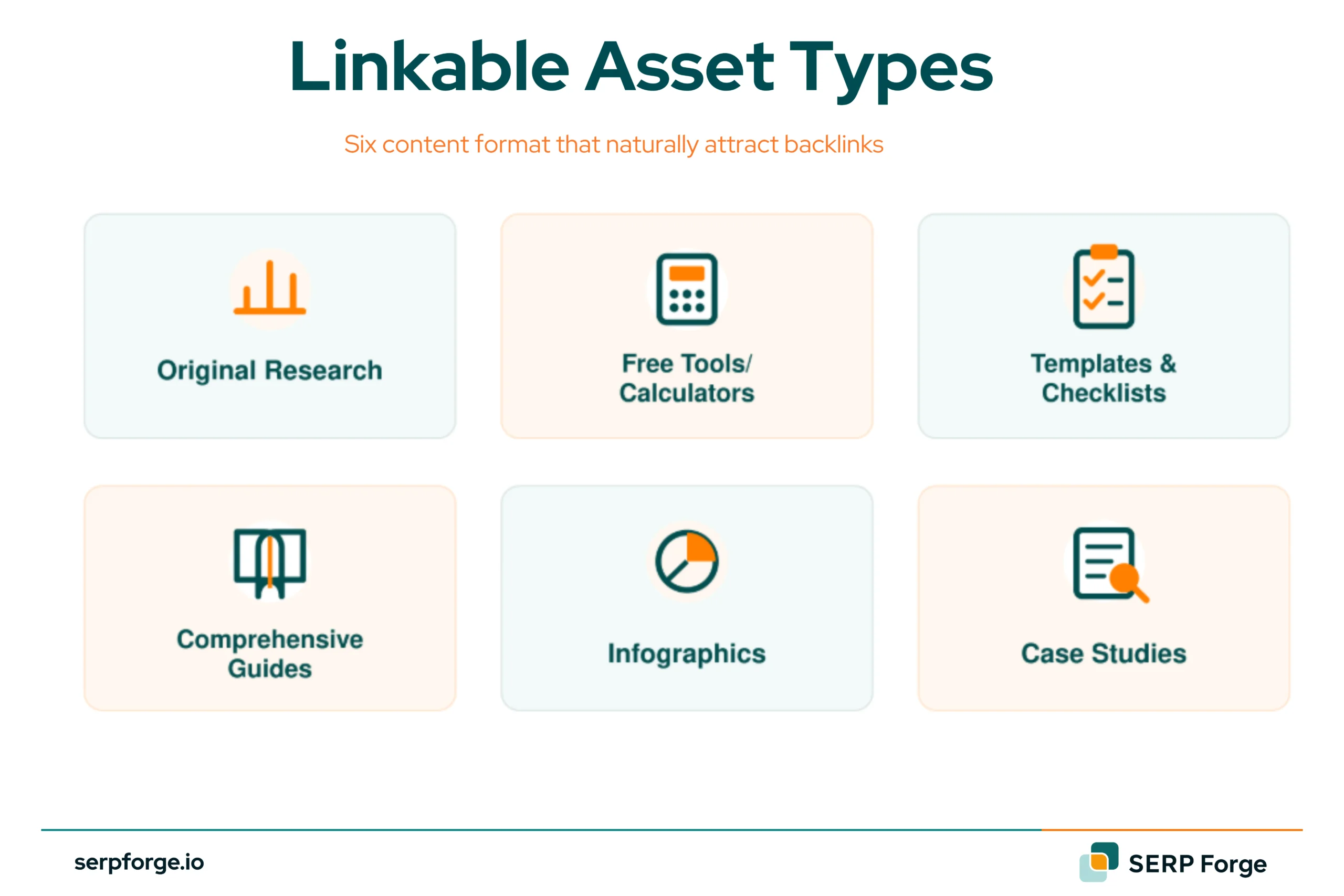
The easiest way to build backlinks is to create something people genuinely want to reference. These resources are known as linkable assets: pages that provide lasting value rather than simply promoting a product or service.
Common examples include:
- Original research and industry surveys
- Free tools and calculators
- Templates and checklists
- Comprehensive guides
- Visual resources and infographics
The more useful your content is, the more naturally it earns backlinks.
Publish Original Information
If you’re wondering what kind of content that attracts backlinks performs best, original content consistently leads the way.
This includes:
- Proprietary research
- Survey results
- Industry statistics
- Expert insights
- Case studies
Why? Journalists, bloggers, and publishers constantly look for credible information they can reference instead of creating it themselves.
Create Resources That Save Time
People naturally link to content that solves problems.
Resources like calculators, templates, checklists, and detailed guides become valuable references because they help readers complete a task faster.
Practical tip: Before publishing, ask yourself, “Would another website link to this because it genuinely helps their audience?” If the answer is yes, you’re creating a strong linkable asset.
Make Complex Topics Easy to Understand
Visual content often earns backlinks because it’s easy to consume and share.
For example, infographic link building works well because infographics simplify complicated ideas into visuals that other websites can reference while crediting the source.
Flowcharts, comparison tables, timelines, and process diagrams can have the same effect.
Earn Links Instead of Asking for Them
This approach is commonly known as link baiting.
Despite its name, link baiting isn’t about manipulating people into linking to your website. It’s about publishing something so useful, original, or insightful that backlinks happen naturally.
Instead of chasing links through outreach, you give people a reason to cite your work.
Key takeaway: Great link-building starts long before outreach. When your content offers unique insights, practical resources, or original data, backlinks become a natural result of the value you create.
What Are the Main Link Building Techniques?
There’s no single way to build links; the sites that do this well almost always use a mix of approaches rather than betting everything on one tactic. Broadly, link building techniques fall into a few reliable categories, and it’s worth understanding each one rather than picking randomly.
- Manual link building: directly reaching out to site owners, journalists, or bloggers and asking for a link, usually through guest posts, partnerships, or straightforward outreach emails
- Organic link building: links that happen naturally when people discover and share your content on their own, without anyone asking them to; this is the long-term goal most other techniques are working toward
- Resource page link building: getting listed on curated “best tools” or “helpful resources” pages that many sites in your niche already maintain
- Testimonial link building: offering a genuine testimonial to a product or service you actually use, in exchange for a credited link back to your site
- Niche edits: getting a link inserted into an already-published, relevant article instead of waiting for a brand-new piece of content to go live
- Forum backlinks: earned through real, helpful participation in industry forums and discussion boards, where a link feels like a natural part of the conversation rather than spam
- Social backlinks: links and shares earned by distributing your content across social platforms, which can indirectly lead to more traditional backlinks once the right people see it
- Free guest posting sites: publications and blogs that accept quality guest contributions from your industry without requiring payment
- Crowdfunding link building: Earning links back to your site when you launch or support a crowdfunding campaign, since these campaign pages often get picked up by news outlets, backers, and niche blogs
- Editorial links: links a journalist or writer adds purely because your content adds real value to their article, which makes them the hardest links to fake and the most trusted by search engines
None of these techniques work in complete isolation. A strong link-building campaign usually combines multiple approaches.
For example, you can create linkable assets that earn organic backlinks, support them with manual outreach, and add niche edits or resource page mentions where relevant.
What Is Digital PR and HARO Link Building?
One of the fastest-growing areas of link building combines SEO with traditional public relations. Rather than requesting backlinks directly, the goal is to earn editorial coverage by sharing valuable stories, original research, or expert insights with journalists and publishers.
Digital PR link building involves pitching newsworthy content to media outlets. If your story or expertise is selected, the publication may mention your brand, quote your insights, and include a backlink to your website.
Because these links are earned through editorial decisions instead of direct requests, they’re often among the most authoritative backlinks you can acquire.
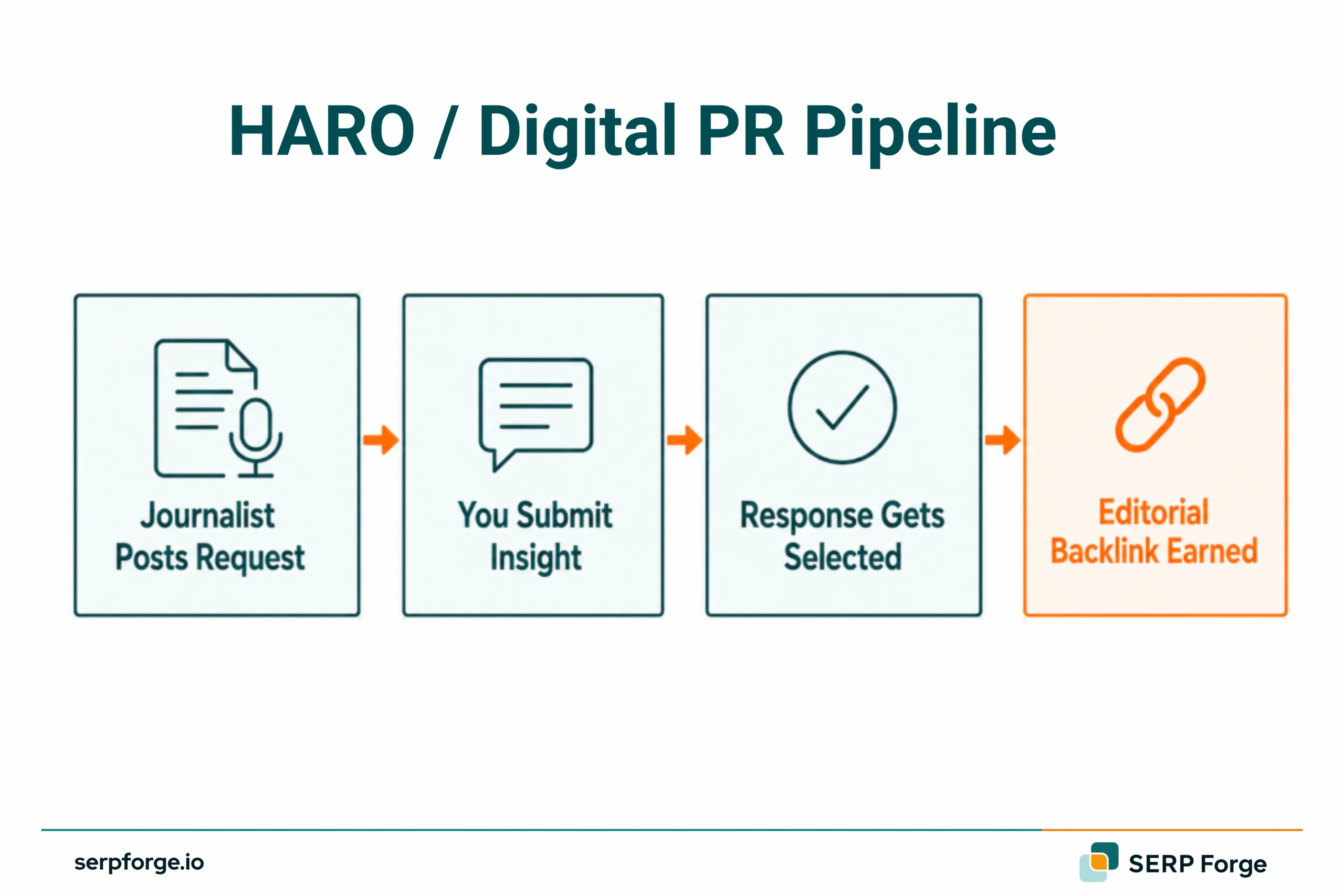
A popular Digital PR strategy is HARO link building (Help a Reporter Out). The process is straightforward:
- Journalists publish requests for expert sources.
- You submit relevant insights or commentary.
- If your response is selected, your quote is featured in the article.
- In many cases, you receive an editorial backlink to your website.
Practical tip: Journalists receive dozens of responses for every request. Short, original, and experience-based answers are far more likely to be selected than generic AI-generated responses.
To manage outreach at scale, many PR and SEO teams use media databases. These platforms organize journalists, publications, and contact information by industry or topic, making it easier to find the right person instead of sending generic pitches to hundreds of inboxes.
What Link Building Methods Should You Avoid?
Not every link building tactic is worth trying. Some strategies are designed to earn trust, while others attempt to manipulate search rankings.
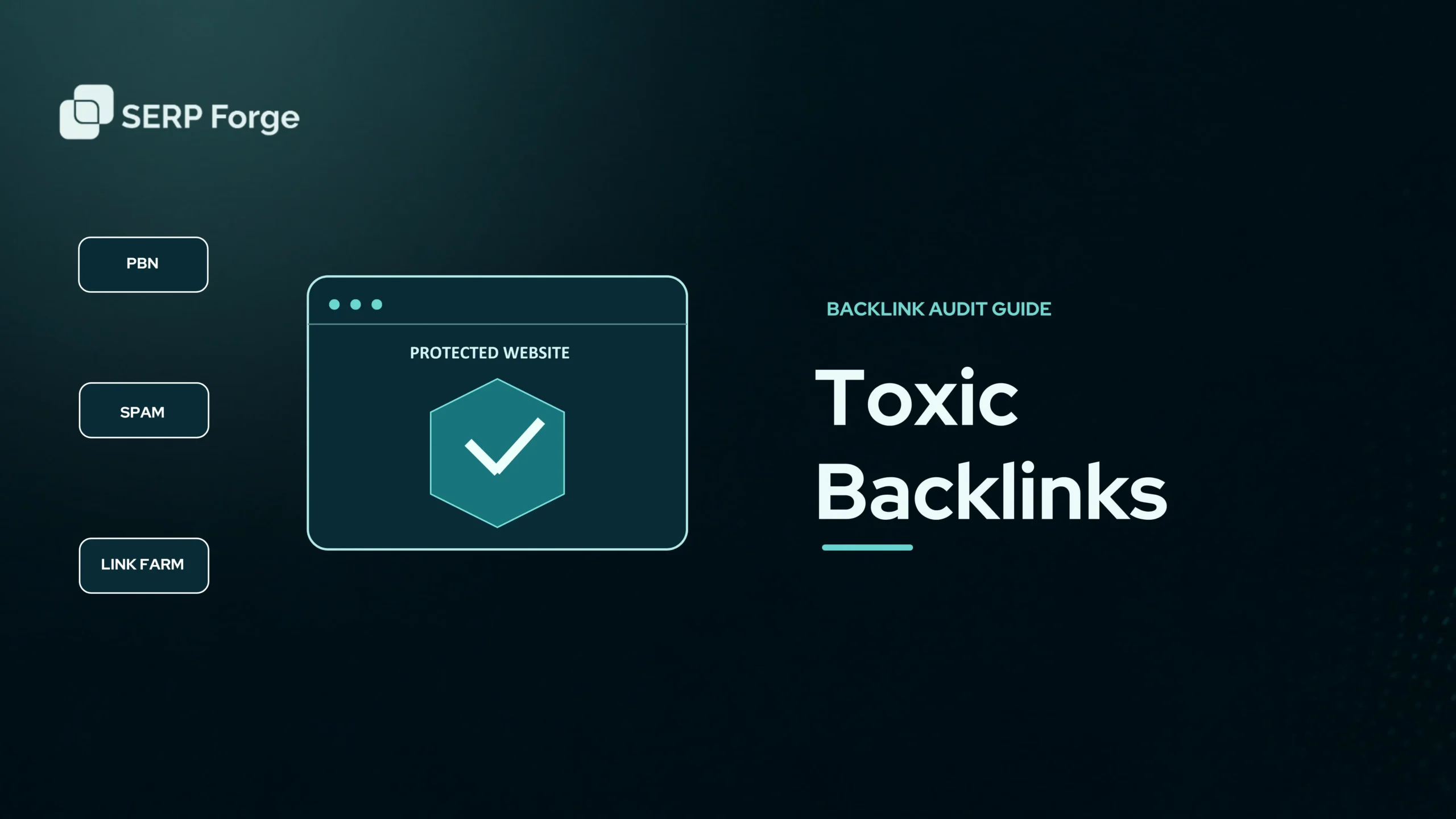
These manipulative tactics are known as black hat link building. They violate search engine guidelines and may produce quick wins, but they’re also among the riskiest SEO practices because they can result in penalties or significant ranking drops.
It almost always catches up with a site eventually, often in the form of a manual penalty or a sudden ranking collapse.
| Risky Method | Why It’s a Problem |
|---|---|
| PBN backlinks | Come from a private network of websites built solely to link to each other and manipulate rankings artificially |
| Link farming | Large groups of low-quality sites exist purely to exchange links with each other, with no real audience or purpose |
| Link exchange (excessive) | Two sites agree to link to each other purely for SEO gain rather than genuine relevance to their readers |
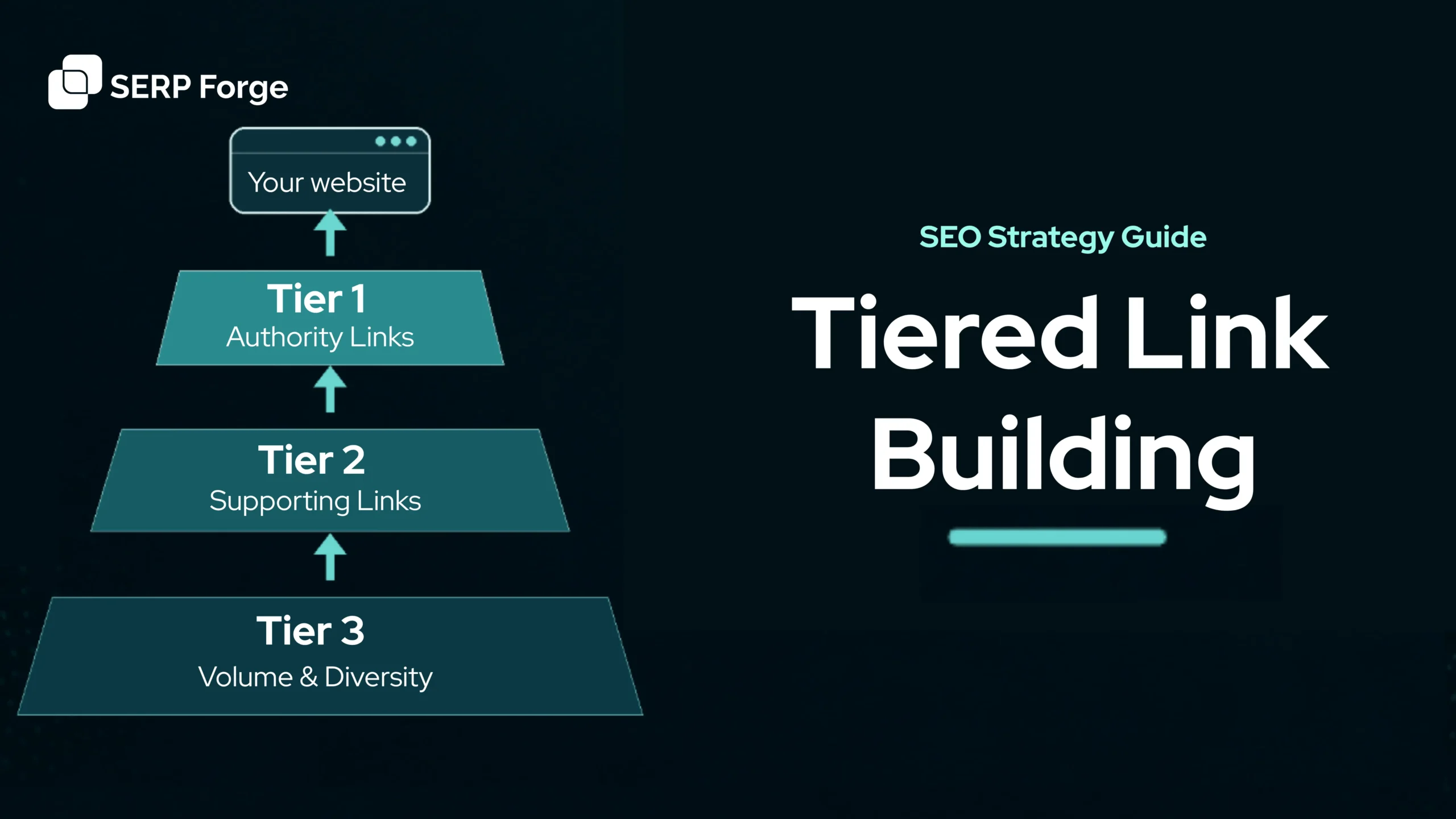
| Tiered link building | Links are built to other links, rather than to your actual site, in layers — attempting to pass authority indirectly, a pattern search engines have gotten very good at detecting |
The common thread across all of these is intent.
They’re built to game a system rather than to genuinely help a reader find something useful, and that distinction is exactly what modern search engines have gotten better and better at spotting over time.
How Do You Get Quality Backlinks the Right Way?
If you’re wondering how to get quality backlinks, the answer is simple: earn them by providing value. No shortcut delivers sustainable results.
The most effective strategy starts by identifying websites that are relevant to your industry and already link to similar content, then reaching out with a personalized pitch that clearly explains why your resource deserves to be referenced.
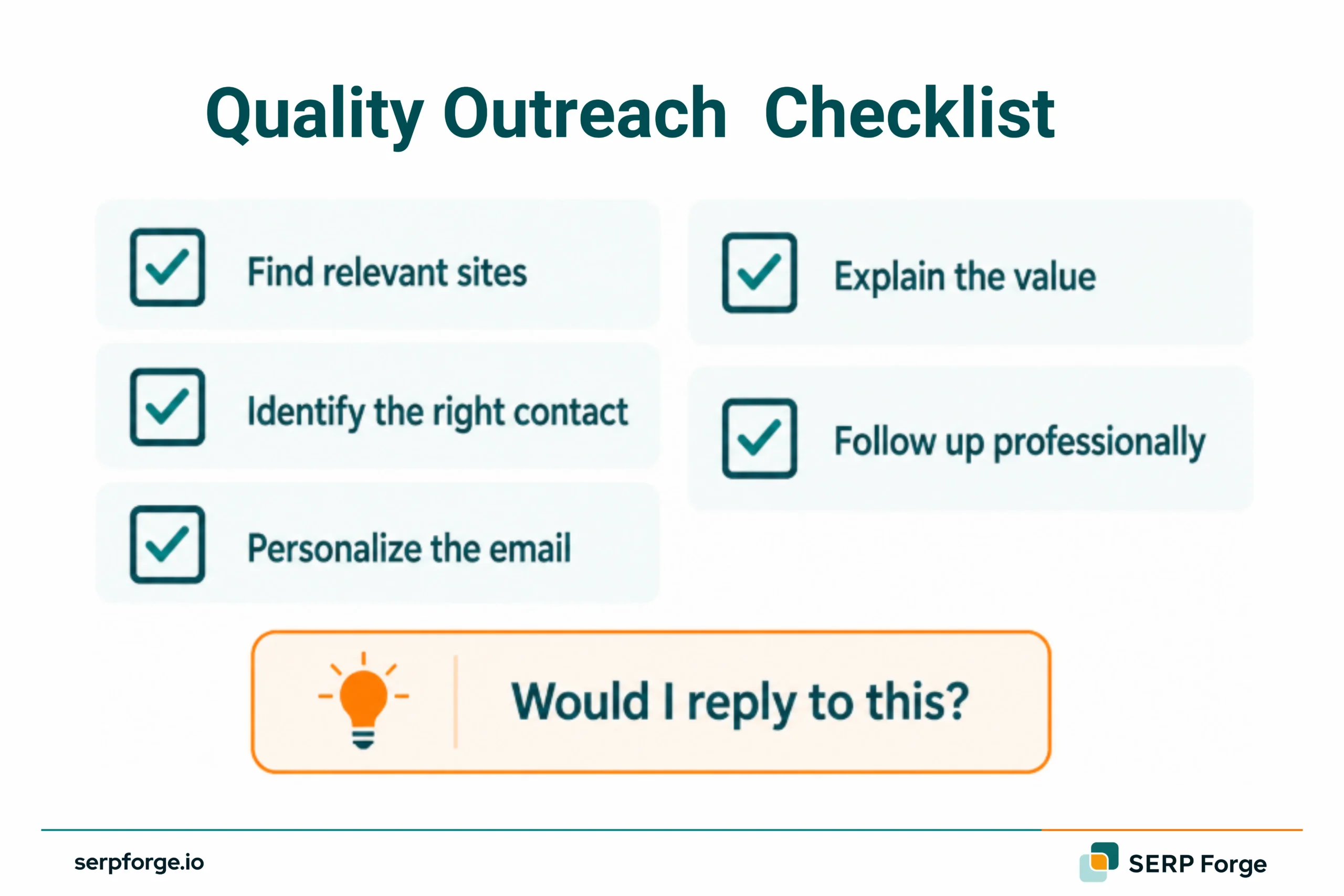
A successful outreach campaign usually includes:
- Finding topically relevant websites
- Identifying the right person to contact
- Personalizing every outreach email
- Explaining the value your content provides
- Following up professionally when appropriate
Don’t rely on generic outreach. Even the best outreach email templates only work when they’re customized. Mentioning a recent article, complimenting a specific resource, or explaining why your content fits their audience makes your email far more effective than sending the same pitch to hundreds of websites.
Practical tip: Before sending an outreach email, ask yourself, “Would I reply to this if I received it?” If the answer is no, make it more personal and specific.
There are also opportunities that many businesses overlook. For example, multilingual link building helps you earn backlinks from websites published in other languages, making it an effective strategy for brands targeting international markets with localized content.
Another option is affiliate backlinks, which come from affiliates, partners, or creators promoting your products or services. While these links can contribute to your backlink profile, they should complement a broader link-building strategy rather than become your only source of backlinks.
What Are the Most Common Link Building Mistakes?
Even well-planned link-building campaigns can fail if you overlook the fundamentals. Many link-building mistakes are repeated across industries, often because businesses focus on quantity instead of quality.
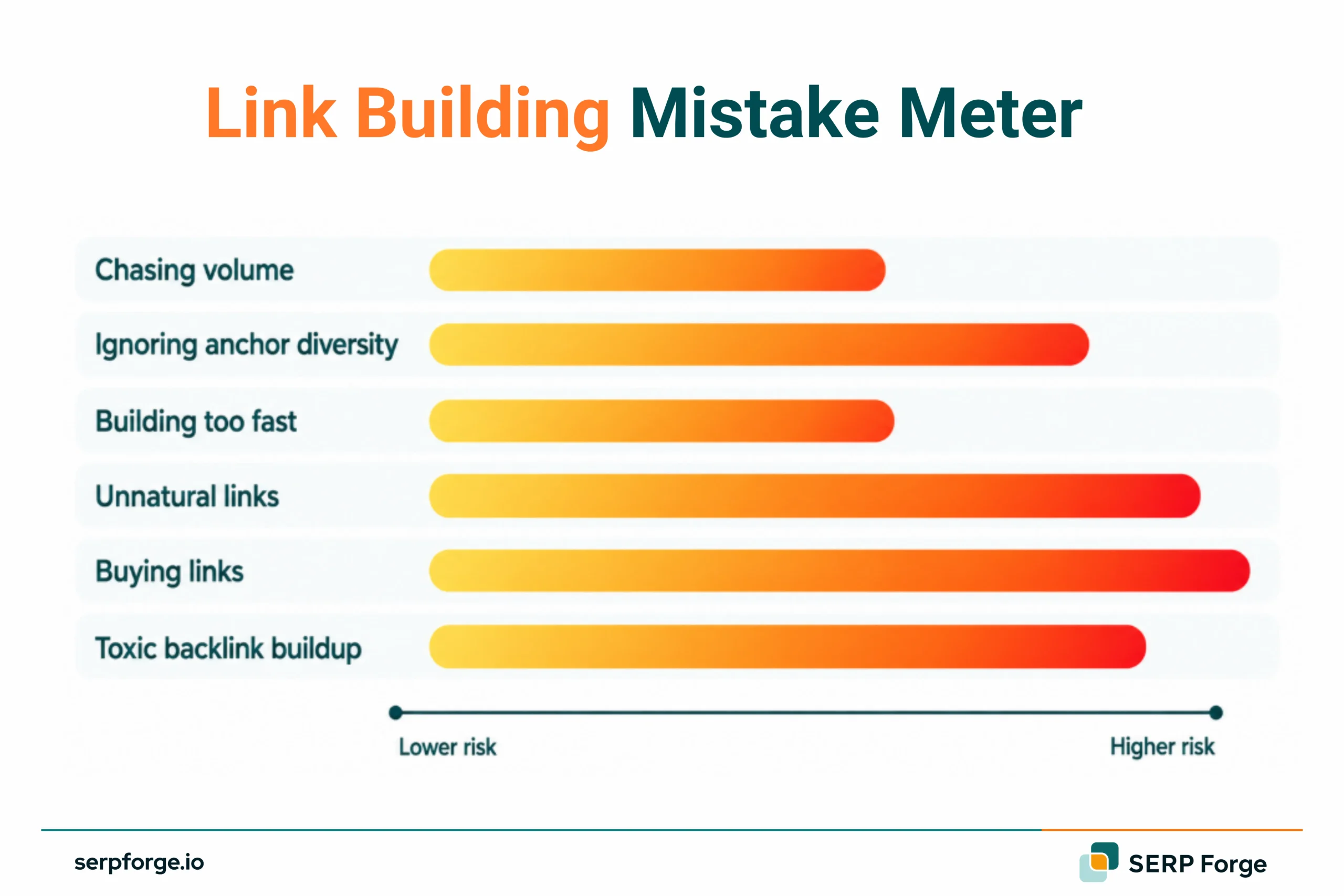
Some of the most common mistakes include:
- Prioritizing link quantity over relevance, assuming that more backlinks automatically lead to better rankings.
- Ignoring anchor text diversity, which can make your backlink profile appear over-optimized and unnatural.
- Building too many backlinks within a short period, creating an unnatural growth pattern that may attract scrutiny from search engines.
- Earning unnatural links that exist solely to manipulate rankings rather than provide genuine value to users.
- Looking for how to buy backlinks, which violates search engine guidelines and can result in manual actions or ranking penalties.
- Allowing toxic backlinks from spammy or low-quality websites to accumulate without reviewing your backlink profile or using the disavow backlink tool when necessary.
A healthy backlink profile grows naturally over time. Focus on earning links from relevant, trustworthy websites instead of chasing quick wins that could create long-term SEO risks.
How Do You Audit and Monitor Your Backlinks?
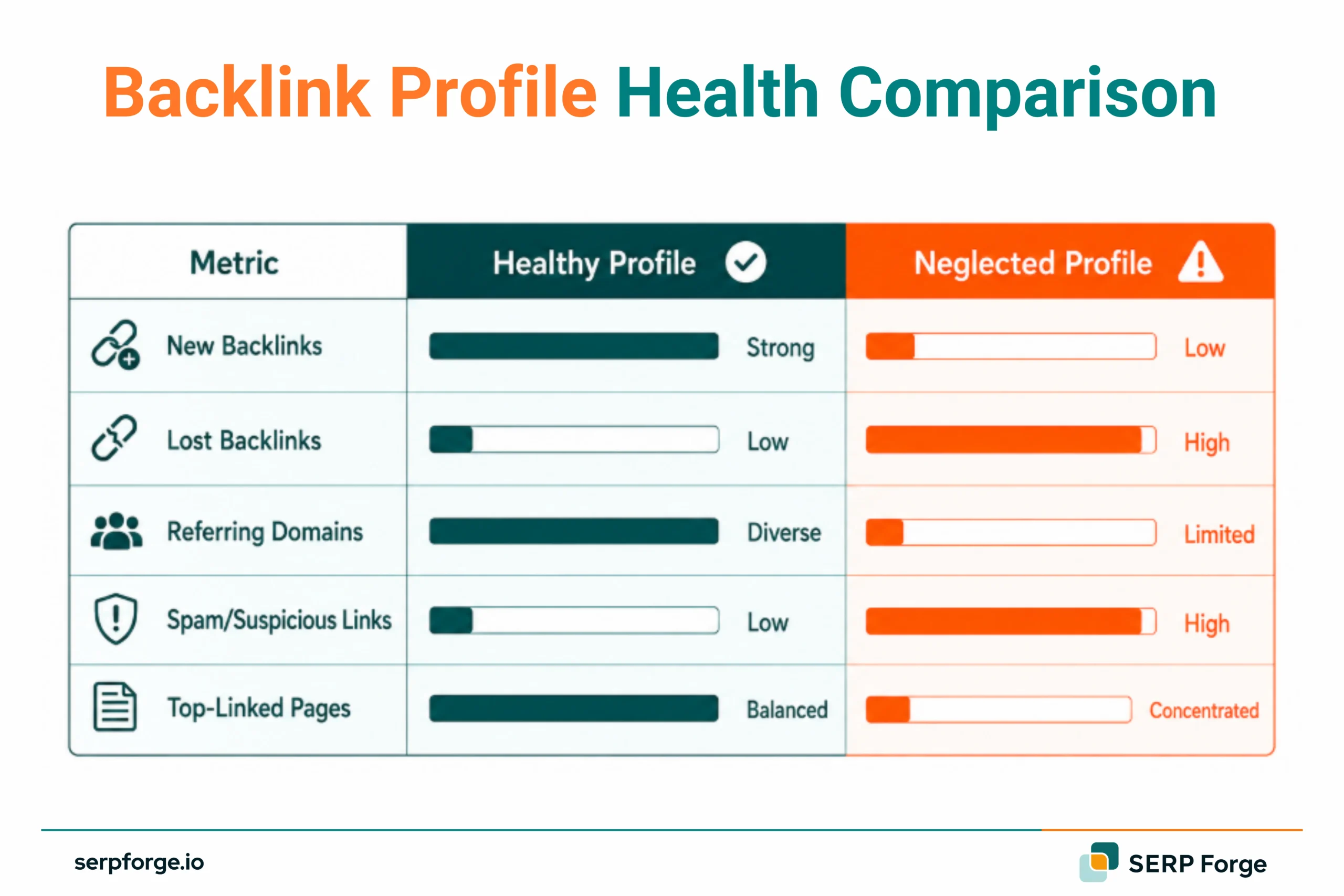
Building backlinks is only half the job. To protect your SEO performance, you also need to monitor the links pointing to your website. Over time, you’ll gain new backlinks, lose existing ones, and occasionally attract low-quality links all of which can influence your search visibility.
A regular backlink audit helps you understand the overall health of your backlink profile. During an audit, you should review:
- Newly acquired backlinks
- Lost backlinks
- Referring domains
- Spam or suspicious links
- Your strongest linked pages
This gives you a clear picture of what’s helping your website and what may need attention.
Instead of waiting for rankings to drop, review your backlink profile every month or quarter to identify issues before they become problems.
Once you know what to monitor, the next step is making the process easier. Rather than checking backlinks manually, most SEO teams use backlink monitoring tools that automatically notify them when links are gained, lost, or changed.
Not Every Backlink Delivers Value Immediately
Earning a backlink doesn’t always mean it starts helping your SEO right away.
If you’re researching how to index backlink placements, it’s important to understand that search engines first need to crawl and index the page containing your backlink before it can contribute ranking signals. Encouraging faster discovery through internal links, social sharing, or natural promotion can help new backlinks get recognized sooner.
Don’t Ignore Easy Link Opportunities
One of the simplest ways to strengthen your backlink profile is through link reclamation.
Sometimes another website already mentions your brand, product, or research but forgets to include a hyperlink. Since the relationship already exists, requesting a link is often much easier and more successful than starting a brand-new outreach campaign.
Scale Your Process as You Grow
Managing a handful of backlinks in a spreadsheet is manageable. Managing hundreds isn’t.
That’s why many SEO teams invest in link building software to centralize backlink tracking, outreach, reporting, and campaign management. Having everything in one place saves time, reduces manual work, and makes it much easier to monitor long-term progress.
How Does Link Building Change by Industry?
Link building isn’t one-size-fits-all. The best approach depends heavily on your industry, your buyers, and how much trust your niche requires before someone’s willing to link to you at all.
| Industry | What Usually Works Best |
|---|---|
| SaaS | Successful link building for SaaS companies often relies on comparison content, integration partners, review platforms, and thought leadership. These SaaS link building strategies align with the way buyers research software before making a decision. |
| B2B | B2B link building focuses on original research, expert content, strategic partnerships, and industry publications that reach the same business audience. |
| Enterprise | Enterprise link building relies on Digital PR, original research, executive thought leadership, and structured outreach supported by internal approval processes. |
| E-commerce | E-commerce link building performs well with product reviews, buying guides, influencer collaborations, seasonal campaigns, and affiliate partnerships. |
| Healthcare | Link building for healthcare should prioritize expert-reviewed content, trusted medical publications, professional organizations, and authoritative health resources. |
| Legal | Link building for lawyers is most effective through legal directories, local citations, bar associations, expert commentary, and reputable legal publications. |
| Startups | Link building for startups often means leaning on personal networks, founder story pitches, and smaller, faster wins before a brand has the authority to land bigger media placements |
What’s worth noticing across all of these is that the underlying principles never really change: relevance, trust, and genuine usefulness still matter everywhere.
What changes is where those signals come from and how patient you need to be before they start paying off.
Should You Build Links In-House or Get Help?
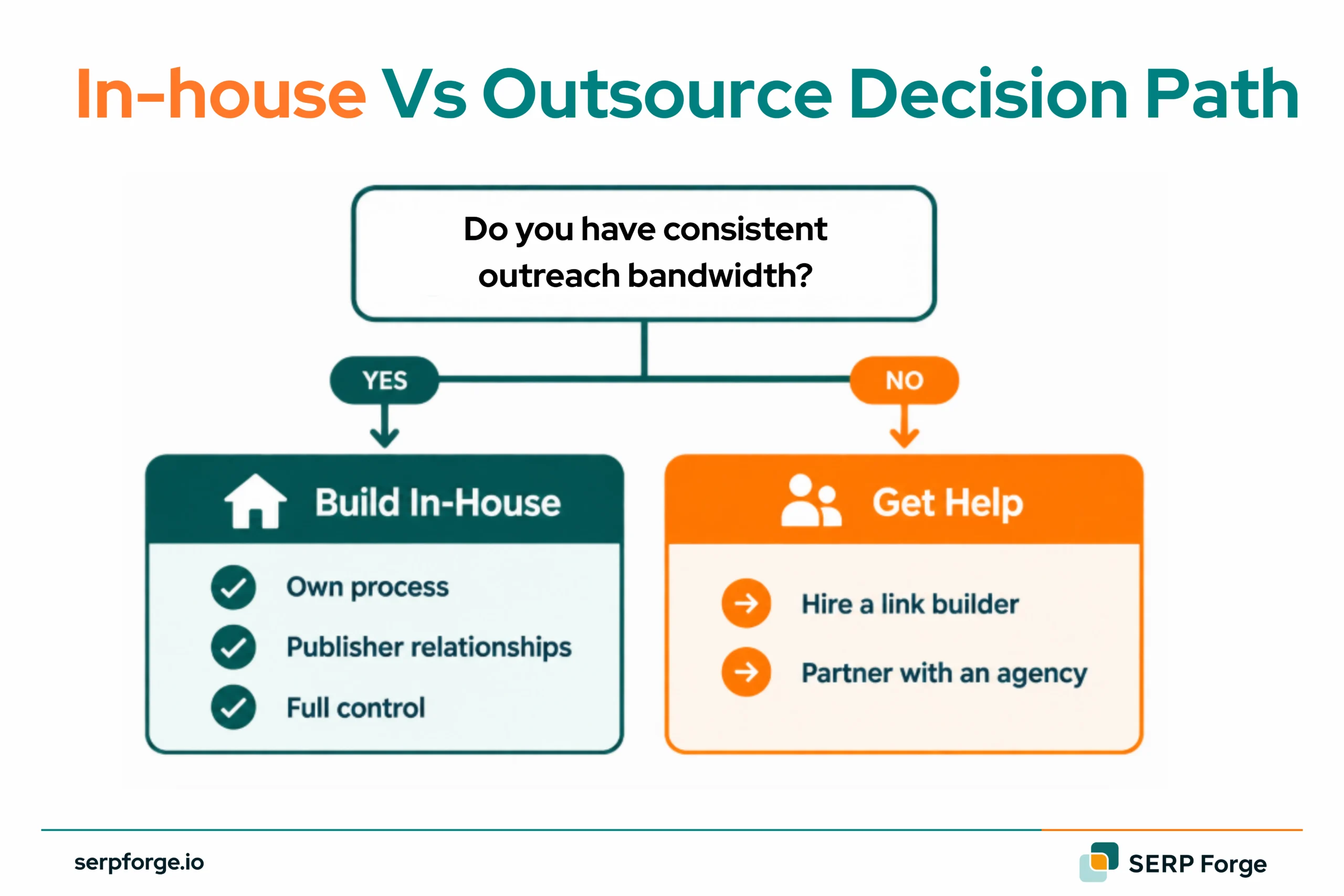
As your business grows, you’ll eventually need to decide whether to manage link building internally or bring in outside expertise. The right choice depends on your resources, budget, and growth goals.
If you want to keep link building in-house:
- Build your own outreach process.
- Create relationships with publishers over time.
- Maintain full control over your strategy.
This approach works well if your team has the time and expertise to manage outreach consistently.
If you need to scale faster:
Many businesses choose to outsource link building when internal teams become too busy to maintain consistent outreach.
You can either:
- Hire SaaS link builder professionals to join your marketing team, or
- Partner with an experienced SaaS link building agency that already has established outreach processes and publisher relationships.
If you’re evaluating an agency, ask about their outreach process, reporting, and how they earn links. Sustainable agencies focus on relationship-building, not buying backlinks.
Top-ranking pages typically earn new followed referring domains at a rate of 5%–14.5% per month. 66.5% of links pointing to websites become dead over time.
Keep Learning From the Community
No matter which approach you choose, staying connected with other SEO professionals is valuable.
Joining link-building Slack communities allows you to:
- Discover new outreach opportunities
- Learn proven strategies from experienced SEOs
- Stay updated on industry changes
- Exchange outreach templates and best practices
Whether you build links in-house or work with specialists, success comes from consistent outreach, strong relationships, and a repeatable process, not simply sending more emails.
How Do You Keep a Link Building Campaign Organized?
Link building can quickly become difficult to manage, especially when multiple campaigns, websites, or team members are involved. Having a clear system helps you stay organized, avoid duplicate outreach, and monitor progress more effectively.
A simple link building checklist can help you stay on track by including:
- Target websites and contact details
- Outreach status for each prospect
- Anchor text used
- Link type (do-follow or nofollow)
- Follow-up schedule
- Link acquisition status
Keeping this information in one place reduces missed opportunities and ensures every outreach campaign follows a consistent process.
Tracking results is just as important as managing outreach.
A well-structured link building report template helps measure the impact of your campaign instead of simply counting backlinks. It provides a clearer picture of what’s working and where improvements are needed.
A good report typically tracks:
- New backlinks earned
- Referring domains acquired
- Changes in domain authority or authority metrics
- Organic traffic growth
- Referral traffic from backlinks
- Keyword ranking improvements
Rather than focusing on the number of links alone, reporting helps demonstrate the business value of your link-building efforts.
How Long Does Link Building Actually Take to Pay Off?
This is the question almost everyone eventually asks, and the honest answer is: longer than most people want to hear.
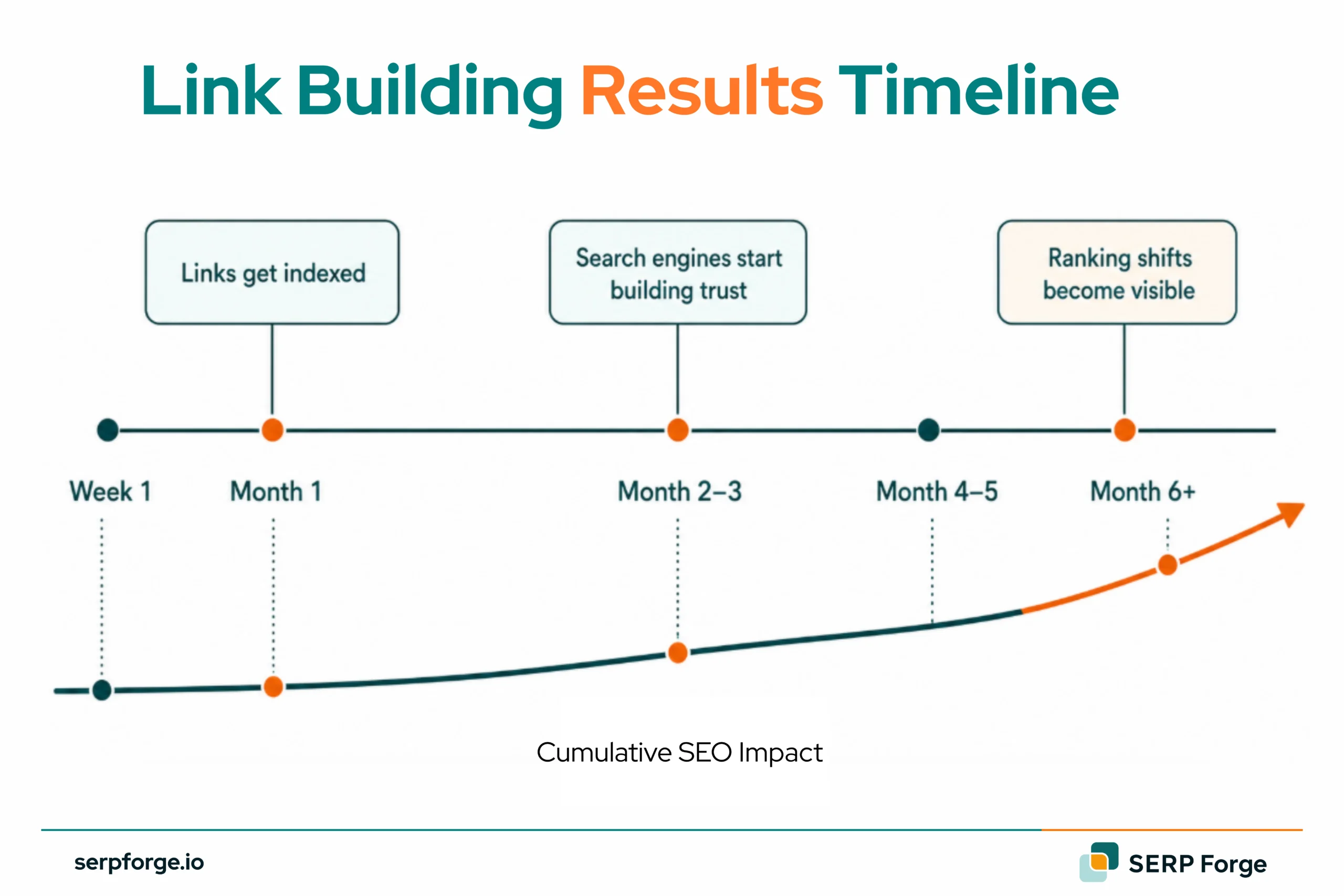
Individual links can take weeks to get indexed and start passing value, and it usually takes several months of consistent effort before a noticeable ranking shift shows up, since search engines want to see a pattern of trust building up over time, not a single event.
That’s exactly why the sites that treat link building as an ongoing habit publishing linkable content regularly, doing outreach every month rather than in one big push, and keeping their backlink profile clean tend to pull ahead of sites that try to compress a year of link building into a single sprint.
Domains with stronger backlink authority are mentioned more frequently across ChatGPT, Gemini, Perplexity, and Google AI Overviews.
Search engines have gotten very good at telling the difference between the two.
The Bottom Line
Search engines have changed dramatically over the past decade, but one principle hasn’t: websites earn authority when other trustworthy websites choose to reference them. Algorithms may evolve, AI may reshape how people search, and ranking factors may shift, but genuine recommendations remain difficult to fake.
Build content worth referencing, earn links by creating real value, and treat link building as a long-term investment rather than a short-term tactic. Do that consistently, and your backlink profile will continue working for you long after individual campaigns end.
FAQ’s
1. How many backlinks do I actually need to rank?
There’s no fixed number; quality and relevance matter far more than count. A handful of strong, relevant links often outperforms dozens of weak ones, so focus on where the links come from rather than hitting a specific total.
2. Does losing backlinks hurt my rankings?
It can, especially if you lose several high-authority links around the same time. This is exactly why regular monitoring matters: catching lost links early gives you a chance to reach out and get them restored before rankings slip.
3. Can internal links replace the need for backlinks?
No. Internal links help search engines understand your site structure and distribute authority across your own pages, but they don’t bring in new trust or authority from the outside the way backlinks do. You need both working together.
4. Is guest posting still worth doing in 2026?
Yes, but its role has shifted. It’s less effective as a standalone tactic than it used to be and works best as one piece of a broader strategy alongside digital PR and organic link earning, rather than the main method on its own.
5. How do I know if a website is a good site to get a backlink from?
Check whether it has real organic traffic, covers topics relevant to your industry, and looks like a genuine publication rather than a link-selling network. A relevant site with modest traffic is usually a better source than a high-authority site with no real audience.