


An analysis of more than a billion pages found that roughly two-thirds had zero external links pointing to them. Only about 6% of published content earns even a single backlink. If you’re not actively building links, you are statistically invisible to Google.
That’s where manual link building comes in. It’s slower than buying links or running automated outreach software, but it’s also the only approach that consistently survives Google’s spam updates and keeps paying off years later.
This guide breaks down what manual link building actually is, the nine methods that work in 2026, an eight-step process you can run this month, four outreach templates you can copy, and how to measure whether any of it is working.
What Is Manual Link Building?
Manual link building is the practice of earning backlinks through direct human effort, research, personalized outreach, and relationship building instead of software, bulk submissions, or paid placements.
A real person finds a relevant site, makes a case for why a link adds value, and a real editor decides whether to add it.
Manual link building typically involves:
- Identifying websites that are genuinely relevant to your niche
- Building or using a linkable asset (a guide, tool, or data study)
- Reaching out to a real editor, blogger, or journalist with a personalized pitch
- Earning a link because the content deserves it, not because you paid for it
Manual link acquisition has become more important, not less, as Google’s SpamBrain system gets better at spotting manipulated links.
One industry analysis found that 89% of top-ranking pages have at least one link from a domain rated 60+ in authority, compared to just 34% of pages stuck at position 20 or lower. Quality, human-vetted links are doing the heavy lifting.
Manual vs Automated Link Building
Manual link building outreach trades speed for durability. Here’s how the two compare side by side:
| Factor | Manual Link Building | Automated Link Building |
|---|---|---|
| Method | Human research and personalized outreach | Software, bots, bulk submissions |
| Speed | Weeks to months per link | Hours to days for hundreds of links |
| Risk level | Low, editorially earned | High, spam, and manual action risk |
| Link relevance | High, niche-matched, contextual | Often irrelevant or off-topic |
| Typical tactics | Guest posts, HARO, digital PR, resource pages | PBNs, link farms, auto-directories, spun content |
| Google compliance | Aligns with Google’s guidelines | Frequently violates them |
| Long-term value | Compounds over time | Tends to get devalued or penalized |
What Are the Different Types of Manual Link Building Methods?
Manual link building isn’t one tactic.
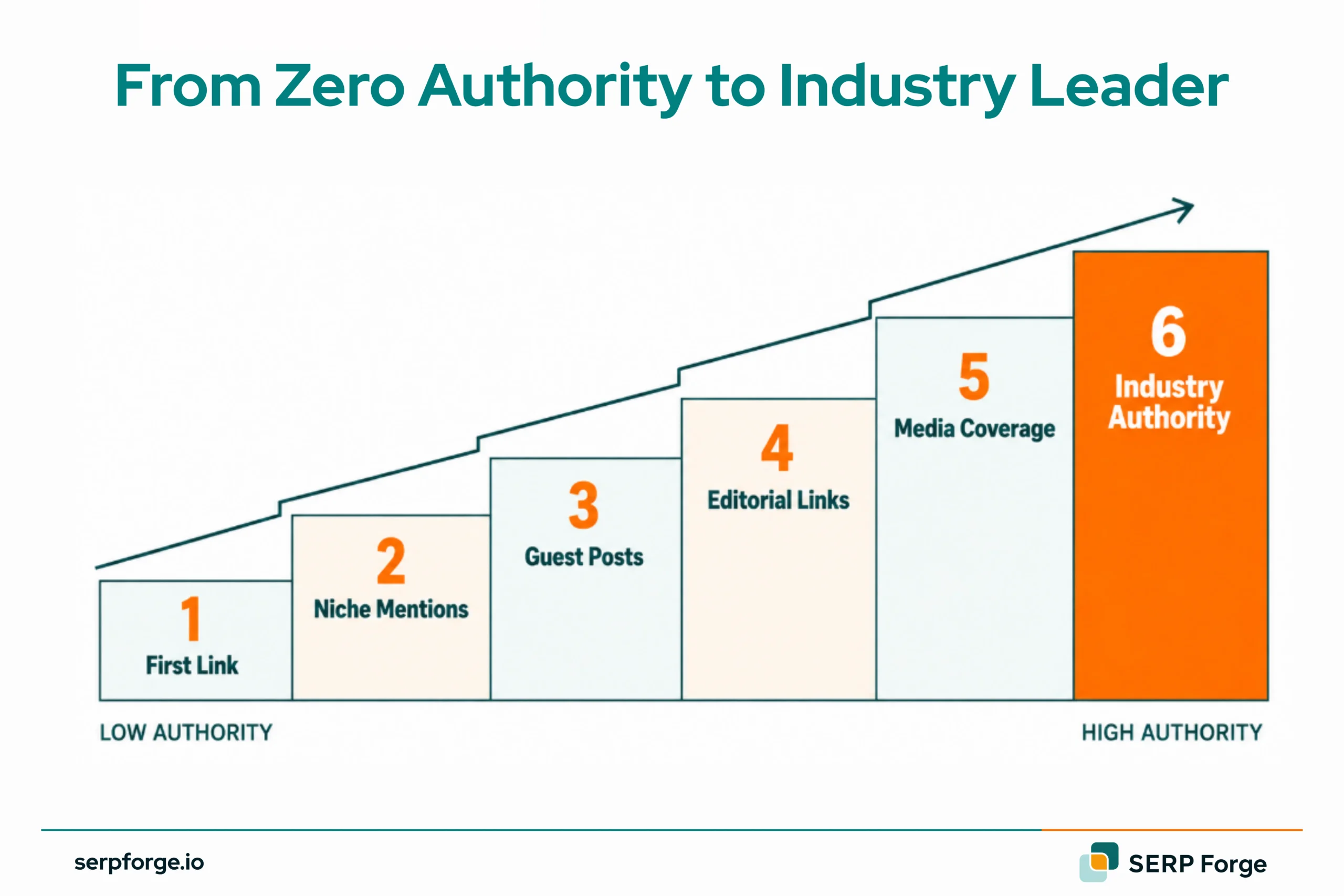
It’s a toolkit of nine distinct methods, and which ones you lean on depends on your content, your industry, and how much time you can dedicate to outreach:
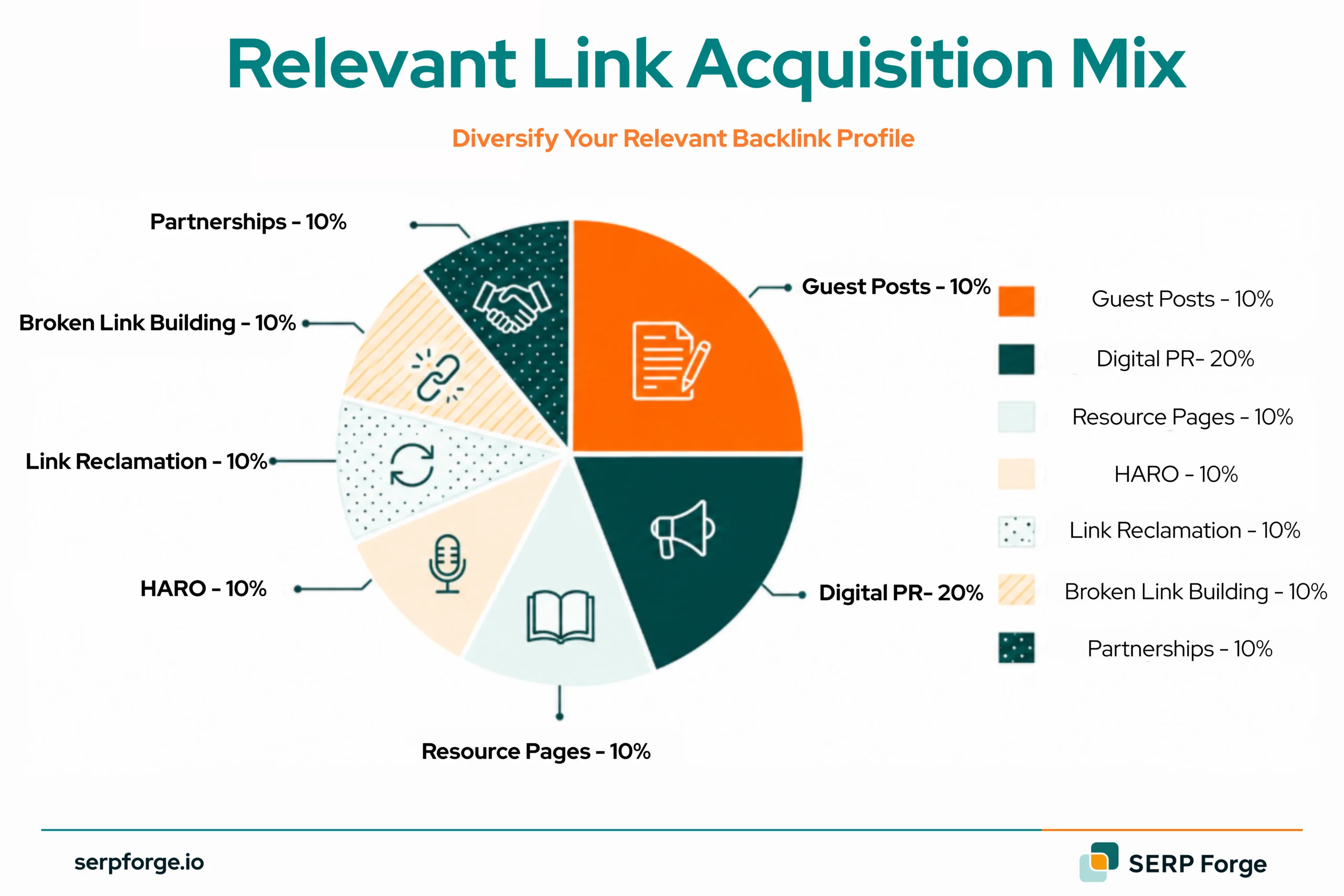
Guest Posting
Guest posting means writing an article for another website in exchange for a byline link, an author bio link, or a contextual in-content link.
It remains one of the most reliable manual backlink building tactics, even though acceptance rates at high-authority sites typically sit between 5% and 15%.
Finding Relevant Guest Post Opportunities:
Search Google for your niche plus phrases like “write for us” or “submit a guest post.” You can also pull a competitor’s backlink profile in Ahrefs or Semrush and filter for guest-post-style placements you could realistically target, too.
Pitching Guest Content:
Lead with one specific, well-developed topic idea instead of three vague ones. Personalized pitches that reference a specific article on the target site consistently outperform generic templates; research puts the lift at roughly 40% higher success rates.
Securing Editorial Links:
Push for a contextual link inside the body content, not just an author bio link at the bottom. In-content links carry more topical relevance and tend to get clicked more, which editors notice.
Real example: Respona ran a guest posting campaign that emailed 1,000 sites with active “write for us” pages. They got a 20% reply rate, and 55 sites about 5.5% agreed to publish for free.
Every accepted post brought in three to seven additional links from sites that picked up the published piece, not just the one direct placement.
Resource Page Link Building
Resource pages are curated lists of helpful links on a specific topic, and they’re built specifically to link out, which makes them one of the easier manual link acquisition targets. Search for intitle: “resources” plus your keyword, or “helpful links” + [topic], then pitch your most useful page as an addition.
The best resource pages are actively maintained, niche-relevant, and already link to sites similar to yours.
Skip pages that haven’t been updated in years; the link equity is usually weak, and the owner is unlikely to respond.
Broken Link Building
Broken link building means finding dead links on someone else’s page and offering your own content as a working replacement.
Tools like Ahrefs’ broken link checker or Check My Links (a Chrome extension) make it easy to scan resource pages and roundups for 404s.
The pitch is simple: tell the site owner their page has a dead link, and suggest your relevant page as a replacement. You’re doing them a favor, not just asking for something.
Link Reclamation
Link reclamation recovers backlinks you already earned but lost, usually because a page got moved, deleted, or restructured without a proper 301 redirect.
This is different from broken link building, where you’re targeting someone else’s broken outbound link rather than your own broken inbound one.
Run a backlink audit quarterly to catch lost links early, then either fix the redirect on your end or reach out and ask the site to update the URL.
Unlinked Brand Mention Outreach
Unlinked brand mentions happen when a site references your company or product by name without linking to you. Monitoring tools like Google Alerts, Mention, or Ahrefs’ Alerts feature these mentions automatically.
Industry surveys on this tactic report close to a 100% success rate when the site is still active and maintained, you’re asking for one small edit, not a new piece of content.
HARO and Journalist Outreach
HARO-style journalist outreach means responding to media queries with expert quotes in exchange for an editorial link. After Connectively shut down HARO in late 2024, Featured.com relaunched it as a free platform in 2025, alongside alternatives like Qwoted and SourceBottle.
Realistic success rates sit between 5% and 15% of pitches, and speed matters enormously: responses submitted within six hours of a query going live convert roughly 20% better than later replies. Lead with your specific credentials in the first line journalists scan, they don’t read.
Expert Roundup Participation
Roundup posts collect short quotes from multiple experts on one topic, and they’re a low-effort way to get a relevant link without writing a full guest article.
Find roundups in your niche, follow the blogger, and respond quickly when they put out a call for contributors.
Podcast and Interview Link Building
Guesting on a niche podcast usually earns a link in the show notes, plus exposure to an audience that already trusts the host.
Authority Hacker’s research puts the average at around 1.8 links per guest appearance, since shows often get cross-posted to YouTube, newsletters, and transcript pages.
Digital PR Campaigns
Digital PR means creating original, data-backed content, surveys, studies, or interactive tools specifically so journalists have a reason to write about it and link to it.
It’s the manual link-building method with the highest ceiling for volume: research from Digitaloft and Reboot Online found the average digital PR campaign earns links from 42 unique domains in a single cycle.
Real example: Shorr Packaging, a packaging supplier, spent roughly $10,000 on an original research campaign and outreach. The result was 170 high-authority backlinks from outlets including
Forbes, CNBC, and Entrepreneur an ROI reported in the thousands of percent, all from one well-pitched dataset.
Step-by-Step Manual Link Building Process
Picking a tactic is only half the job.
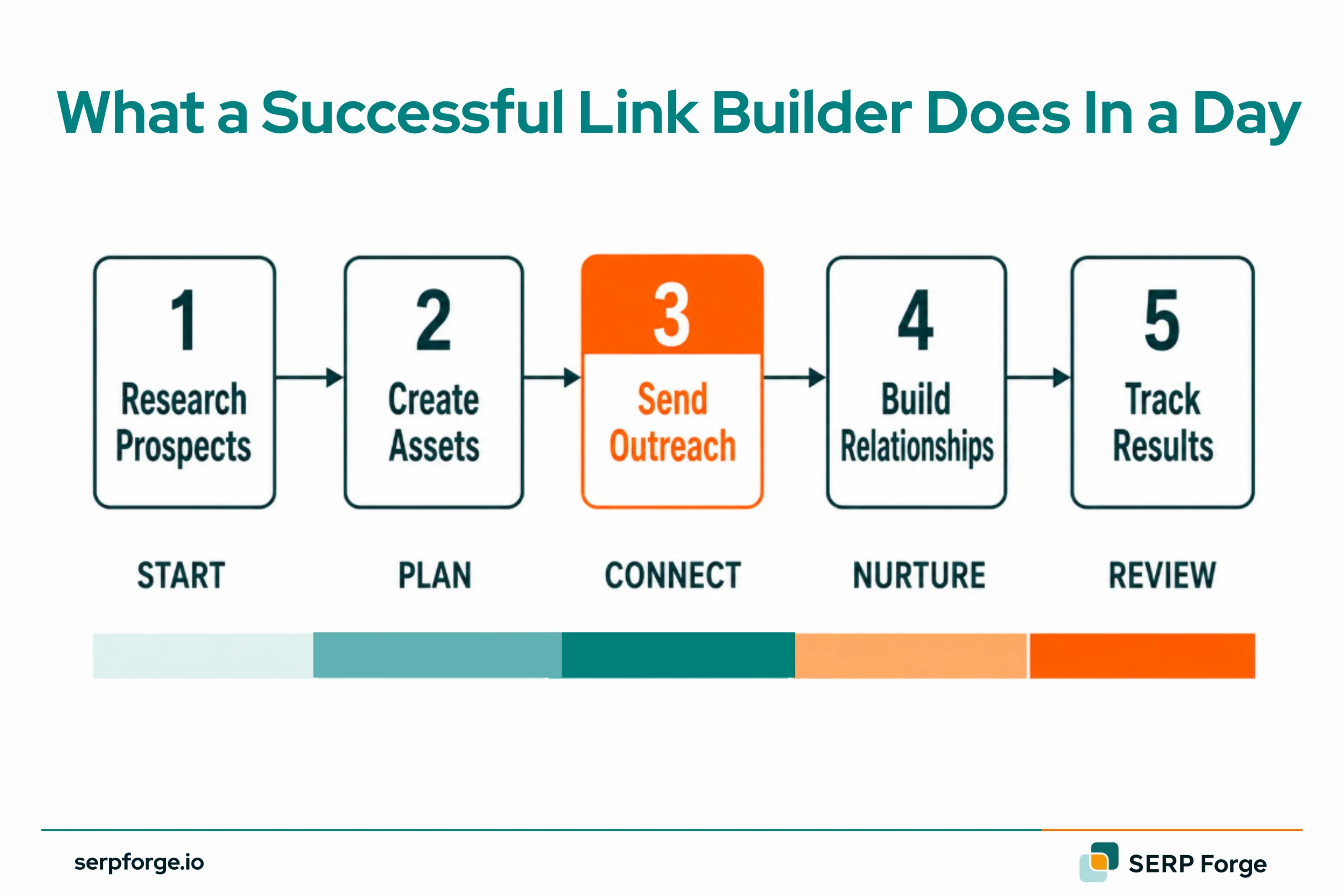
Here’s the repeatable, eight-step process that turns any of the methods above into actual published links:
Step 1 – Define Link Building Goals
Decide which pages need links, which keywords they should rank for, and what authority threshold counts as a “good” link for your site.
For context, WebFX’s 2026 analysis of 1,462 domains found page-one sites average a median of 907 referring domains, though that ranges from 76 in apparel to over 3,000 in finance.
Step 2 – Create Linkable Assets
You need something worth linking to before you ask anyone for a link. BuzzSumo’s analysis of one million articles found original research and data-driven studies attract roughly 6x more backlinks than opinion-based posts.
Step 3 – Build a Prospect List
Pull competitor backlink profiles in Ahrefs or Semrush to find sites that already link to similar content, then add niche blogs, resource pages, and journalists you find through Google searches and social platforms like LinkedIn.
Step 4 – Qualify Prospects
Not every site on your list deserves your time. A simple scorecard keeps prioritization consistent by scoring each prospect 1 to 5 on relevance, domain authority, real organic traffic, and editorial standards, then works down the list from the highest combined score.
| Criteria | What to check | Weight |
|---|---|---|
| Topical relevance | Does the site cover your niche? | High |
| Authority (DR/DA) | Is it above your minimum threshold? | High |
| Real traffic | Does it have organic visitors, not just metrics? | Medium |
| Editorial standards | Does it publish original, edited content? | Medium |
Step 5 – Find Contact Information
Use a tool like Hunter.io to find verified email addresses, or check the site’s “About” and “Contact” pages directly. For journalists and bloggers, LinkedIn’s “People” tab on a company page often surfaces the right editor faster than a generic contact form.
Step 6 – Personalize Outreach
Reference something specific from the recipient’s site in your first two sentences. Personalized pitches that use the recipient’s name and a specific reference can lift response and acceptance rates by 40% to 63%, depending on the study.
Step 7 – Follow Up Strategically
Most replies don’t come from the first email. Hunter.io’s data shows a single, polite follow-up improves acceptance rates by about 25% send it three to five business days later, and stop after two follow-ups if there’s still no response.
Step 8 – Secure and Monitor Links
Once a link goes live, monitor your backlinks to confirm they’re still live and dofollow, check the anchor text, and log the URL in a tracking sheet.Re-check your link portfolio every quarter, since links do get removed or redirected, which is exactly when link reclamation comes back into play.
Manual Link Building Outreach Templates
These four templates are starting points, not finished emails. Replace every bracket with something specific before you hit send, or you’ll land in the same generic-pitch pile every editor deletes on sight.
1. Guest Post Outreach Template:
| Subject: Quick idea for [Website Name] Hi [Name], I just read your post on [specific article title] the point about[specific detail] was something I hadn’t seen covered elsewhere. I write about [your topic] and had an idea that might fit youraudience: “[proposed title].” It would cover [1-2 sentence outline]. I’ve written for [1-2 relevant sites] before and I’m happy to sharesamples. Would this be useful for [Website Name]? Thanks,[Your name] |
2. Broken Link Outreach Template
| Subject: Found a broken link on [Page Title] Hi [Name], I was reading your page on [topic] and noticed the link to[broken URL] no longer loads might be worth fixing for your readers. I have a similar resource on [your topic] that could work as a replacement if it’s useful: [your URL]. Either way, thought you’d want to know about the broken link. Best,[Your name] |
3. Resource Page Outreach Template
| Subject: Possible addition to your [topic] resources page Hi [Name], Your resources page on [page topic] is one of the better-organizedlists I’ve found on this especially the section on [specific item]. I put together a guide on [your topic] that covers [specific value]and might be a relevant addition: [your URL]. No worries either way, just thought it might be useful for your readers. Thanks,[Your name] |
4. Brand Mention Outreach Template:
| Subject: Thanks for the mention in [Article Title] Hi [Name], Thanks for mentioning [Your Brand] in your recent piece on [topic]glad it was a useful context for your readers. Small ask: would you be able to link the mention to [your URL]? Itwould help readers who want to dig deeper, and I’d really appreciate it. Thanks again for the feature,[Your name] |
How Do You Measure Manual Link Building Success?”
A link campaign that doesn’t move any metric isn’t working, no matter how many emails went out. Track these six numbers.
1. Referring Domains Growth
Count unique linking domains, not total backlinks. Multiple links from one site matter far less than the same number spread across different domains — referring domain count correlates more strongly with rankings than raw backlink volume.
2. Organic Traffic Increases
Compare organic sessions to the linked page before and after a campaign. One law firm’s resource page campaign, covered by Hennessey Digital, pulled in over 2,000 organic visitors and ranked for 1,114 keywords within months of acquiring 40 backlinks.
3. Keyword Ranking Improvements
Track your target keywords in Google Search Console or a rank tracker before launching outreach, then check again 60 to 90 days after links go live. Ranking gains from link building tend to show up gradually, not overnight.
4. Referral Traffic Performance
Check Google Analytics for direct clicks coming from the sites that linked to you. Guest posts and digital PR placements often drive meaningful referral traffic on top of the SEO value, especially when the linking page has an engaged readership.
5. Link Retention Rate
Calculate the percentage of links still live and dofollow six and twelve months after acquisition. A high retention rate signals you’re earning links from well-maintained, reputable sites rather than thin guest-post mills that disappear or go nofollow later.
Return on Investment (ROI)
Compare what a campaign cost your time, any tools, any fees against the value of the organic traffic it generated, using paid search cost-per-click as a rough proxy.
Conclusion
Manual link building works because it’s hard to fake. Every method covered here guest posting, broken link outreach, HARO, digital PR, and the rest depends on a real person deciding your content deserves a link, which is precisely the kind of signal Google’s algorithms are built to reward.
Run the eight-step process consistently, qualify your prospects before you pitch them, and track the six metrics above so you know what’s actually working.
If outreach at scale isn’t something your team has time for, a vetted link-building agency or freelance specialist can run the same process on your behalf, just make sure they can show you real, personalized outreach rather than a list of “guaranteed placements,” which is usually a red flag for paid or automated links in disguise.
Frequently Asked Questions
1. Is manual link building still effective in 2026?
Yes. Backlinks remain a top-three Google ranking factor, and manual, editorially-earned links are the ones surviving spam updates that target automated and paid link schemes.
2. How many backlinks should I build each month?
There’s no universal number. Benchmark against referring domains instead: match or exceed what top-ranking pages in your niche add each month.
3. What is the safest manual link building strategy?
Unlinked brand mention outreach and link reclamation you’re asking for a link to content that’s already referenced or already earned. Broken link building and resource page outreach are close behind.
4. How long does manual link building take to show results?
One to six months of consistent link acquisition. Digital PR can spike faster from a single placement; guest posting and other relationship-based tactics compound more gradually.
5. Can manual link building improve local SEO?
Yes. Local partnerships, local resource pages, sponsorships, and local journalist outreach build the same relevance and authority signals Google uses for local pack and map rankings.
6. Is outreach necessary for manual link building?
Yes, for most tactics guest posting, broken link building, HARO, and resource page link building all require contacting a site owner or editor directly. Digital PR is the exception: a strong enough data story can attract press coverage without one-to-one pitching.
How do I measure backlink quality?
Check the linking domain’s authority score (DR or DA), real organic traffic, topical relevance to your niche, and whether the link is dofollow and placed within the body content rather than a footer or sidebar.