



Link building techniques are the specific, repeatable methods used to get other websites to link to yours, such as digital PR, guest posting, broken link building and link reclamation. A link building strategy decides which pages need links and why. Techniques are how you actually earn them.
This guide ranks 17 techniques by the quality of link they produce, how much they cost, and how much risk they carry. Each one includes the exact steps we use at SERP Forge for SaaS and B2B clients.
Key takeaways
• Highest-quality links: original research and digital PR. They earn editorial links and make you the cited source in AI answers.
• Fastest wins: unlinked brand mentions, lost link reclamation and integration pages, because the linking site already knows you.
• Most predictable at scale: guest posting, broken link building and resource pages. In our analysis of 1,000+ outreach campaigns, 70% of replies came from follow-up emails 2 to 4, not the first email.
• Domains beat links: in our study of 500 SaaS backlink profiles, high-growth sites had 3 to 5 times more unique referring domains than slow-growth peers.
• Avoid: PBNs, paid dofollow links, expired-domain redirects and site reputation abuse. Google made the last two named spam policies in March 2024.
Link building techniques vs. link building strategies
A link building strategy is the plan: which pages need authority, what a publisher would realistically cite, your budget and your timeline. A link building technique is one method inside that plan, such as pitching a guest post or replacing a broken link.
Most sites fail at link building because they pick techniques before strategy. They send 300 guest post pitches to a page that has nothing worth citing. Start with 3 to 5 target pages, decide what makes each one link-worthy, then pick techniques that fit. If you are new to the fundamentals, start with our guide on what link building is and why it matters.
All 17 link building techniques at a glance
| Sr no | Technique | Type | Difficulty | Cost | Time to first link | Best for |
|---|---|---|---|---|---|---|
| 1 | Original research and data studies | Earned | High | High | 4–8 weeks | Brands with proprietary data |
| 2 | Statistics and “source of truth” pages | Earned | Medium | Low | 2–3 months | Any niche that cites numbers |
| 3 | Free tools and calculators | Earned | High | High | 1–3 months | SaaS, fintech, B2B |
| 4 | Infographics and original charts | Earned | Medium | Medium | 2–6 weeks | Data-heavy topics |
| 5 | Skyscraper and content refresh | Earned + Outreach | Medium | Medium | 2–4 weeks | Sites with existing content |
| 6 | Guest posting | Outreach | Medium | Medium | 2–6 weeks | Topical authority, thought leadership |
| 7 | Broken link building | Outreach | Medium | Low | 2–4 weeks | Sites with deep guides |
| 8 | Resource page link building | Outreach | Low | Low | 1–3 weeks | Guides, tools, templates |
| 9 | Competitor backlink gap analysis | Prospecting | Low | Low | Feeds other techniques | Everyone |
| 10 | Niche edits (link insertions) | Outreach | Low-medium | Medium | 1-2 weeks | Pages that already rank |
| 11 | Digital PR campaigns | PR | High | High | 4–12 weeks | High-authority media links |
| 12 | Journalist requests (HARO, Qwoted, Featured) | PR | Medium | Low | 1–4 weeks | Founders and subject experts |
| 13 | Podcast guesting | PR | Low | Low | 2–8 weeks | Founders, B2B brands |
| 14 | Unlinked brand mentions | Recovery | Low | Low | Days | Established Brands |
| 15 | Lost link reclamation | Recovery | Low | Low | Days | Sites with redesigns or migrations |
| 16 | Integration and partner pages | Relationship | Low | Low | 1–4 weeks | SaaS with integrations |
| 17 | Testimonials and case studies | Relationship | Low | Low | 1–3 weeks | Any business that uses vendors |
Difficulty, cost and timing are SERP Forge estimates from client campaigns. Your results depend on niche and domain authority.
How we ranked these techniques
We scored each technique on four criteria:
1. Link quality: is the link editorial, contextual and from a relevant site?
2. Scalability: can you repeat it every month without running out of targets?
3. Risk: could it look like a link scheme under Google’s spam policies?
4. Cost per link: time plus money, including content you have to create.
The benchmarks come from two SERP Forge studies: a backlink analysis of 500 SaaS companies and an analysis of 1,000+ outreach campaigns covering 100,000+ emails.
The SERP Forge Link Value Ladder
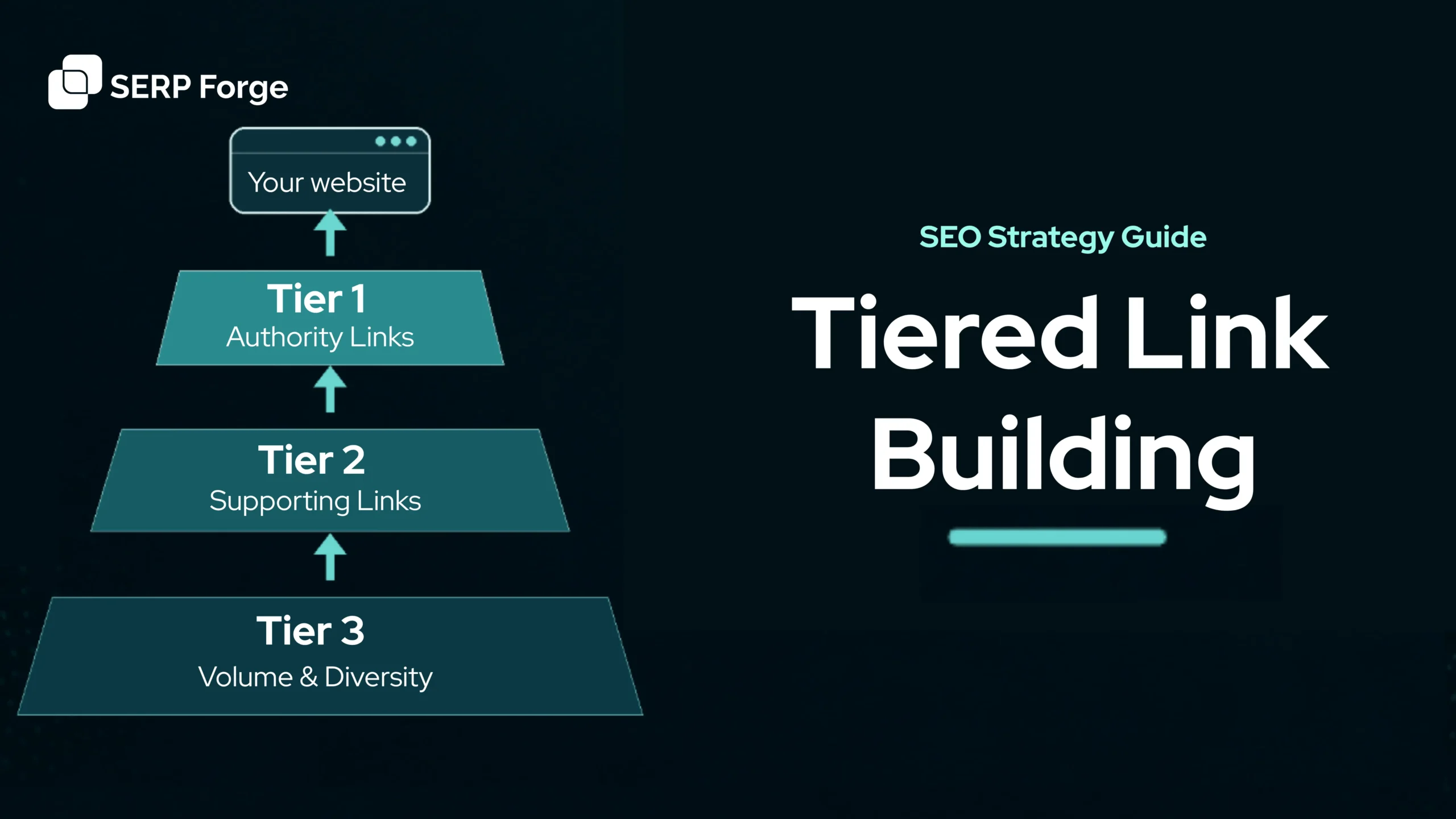
Not every link is equal. We group techniques into four tiers:
| Tier | What you get | Techniques |
|---|---|---|
| Tier 1: Cited source | Editorial links from media and industry sites that reference your data | Original research, digital PR, statistics pages, free tools |
| Tier 2: Contextual earned | In-content links from relevant sites you pitched | Guest posting, broken link building, resource pages, skyscraper |
| Tier 3: Relationship | Links from sites that already know you | Unlinked mentions, reclamation, integration pages, testimonials, podcasts |
| Tier 4: Foundational | Directory, profile and citation links | Business directories, review sites, social profiles |
A healthy profile uses all four. Tier 1 moves rankings and AI visibility the most, but Tiers 2 and 3
give you steady monthly growth, which matters: in our 500-company study, high-growth SaaS sites
built links consistently rather than in spikes.
Asset-led techniques (links you earn)
These techniques create something people want to reference. Outreach still helps, but the asset does most of the work.
1. Original research and data studies
How to do it:
Original research means publishing data nobody else has, such as survey results, product usage patterns or benchmark studies, so other writers cite you as the source.
1. Find a question your industry argues about but cannot answer with numbers.
2. Collect data: a survey of 200+ respondents, anonymized product data, or an analysis of public datasets.
3. Publish the methodology next to the findings. Credibility drives citations.
4. Lead with one headline number and one chart that works on its own.
5. Pitch the finding (not your company) to writers already covering the topic.
Why it works: a statistic keeps earning links for years because every new article on the topic needs a source. It is also the format AI assistants quote most readily, because a specific number with a clear source is easy to attribute.
Watch out: weak methodology gets you ignored by journalists. Publish sample size and dates.
2. Statistics and “source of truth” pages
A statistics page collects the most-cited numbers on a topic in one maintained, well-sourced page, so writers link to you instead of hunting for each figure.
How to do it:
1. Pick a topic where people routinely need numbers (“X statistics”, “X benchmarks”).
2. Collect 50 to 100 stats, each with its original source and year.
3. Group them by subtopic and add your own data where you have it.
4. Update quarterly and show the update date at the top.
Why it works: writers searching “[topic] statistics” are looking for something to cite. If your page ranks, links arrive with no outreach. See our own link building statistics roundup as an example.
Watch out: outdated stats destroy trust. Remove anything older than three years unless it is a historical baseline.
3. Free tools and calculators
A free tool solves one narrow problem, such as a pricing calculator or a checker, and earns links every time someone writes about that problem.
How to do it:
1. Find a calculation or check people already search for (“how much”, “what is my”, “checker”).
2. Build the simplest version that gives an accurate answer fast.
3. Make results easy to screenshot or share.
4. Pitch it once to resource pages and “best tools” lists in your niche.
Why it works: a tool is a one-time build that keeps attracting links, because writers link to tools instead of explaining the calculation themselves.
Watch out: tool traffic can come from the wrong audience. Make sure the tool matches the buyer you want, not just search volume.
4. Infographics and original charts
Infographic link building means turning data or a process into a visual that other sites embed, with a credit link back to you.
How to do it:
1. Visualize one focused idea with original or freshly compiled data.
2. Publish it on a page that explains the methodology.
3. Add an embed code with your attribution link.
4. Pitch sites that cover the topic in text only.
Why it works: you save the publisher design work, and the credit link comes with the embed.
Watch out: generic infographics no longer earn links. A single original chart often beats a long poster. Our infographic link building guide covers the full process.
5. Skyscraper technique and content refresh
The skyscraper technique means finding content that already has many backlinks, publishing a clearly better version, and asking the linking sites to reference yours.
How to do it:
1. Find pages with 30+ referring domains that are outdated or thin.
2. Build a version that is more current, more complete or more useful (new data, better examples, a tool).
3. Export the sites linking to the original.
4. Email each one and show the specific difference: “your link points to 2021 data; ours covers 2026”.
Why it works: editors want their pages to stay accurate, and you are handing them a fix.
Watch out: “longer” is not “better”. If your version is not clearly different, reply rates stay near zero. The same logic applies to your own decayed pages: refresh them before building new links to them.

Outreach-led techniques (links you pitch)
These techniques depend on finding the right sites and writing emails people answer. Our 21 outreach email templates work for all five.
6. Guest posting
Guest posting means writing an article for another site in your industry, with a contextual link back to a relevant page on your site.
How to do it:
1. Find sites with searches like “[niche] + write for us” or from our list of 300+ guest posting sites. 2. Check the site gets real organic traffic and publishes on your topic.
3. Pitch a specific angle the site has not covered, not “can I write for you?”
4. Match their tone, format and length.
5. Include one contextual link to a genuinely useful resource, not your homepage.
Why it works: editors accept pitches that fill a gap for their readers. Relevance is the biggest predictor of acceptance.
Watch out: sites that accept everything are sites whose links carry little weight. Google’s site reputation abuse policy targets off-topic content published on strong domains, which ended mass guest posting on generalist blogs.

7. Broken link building
Broken link building means finding dead links on relevant websites and offering your content as the replacement.
How to do it:
1. Find broken pages in your niche that still have backlinks.
2. Check what the dead page covered using the Wayback Machine.
3. Make sure your page is an equal or better replacement.
4. Email the site: name the exact broken URL and your replacement in two sentences.
5. Send one follow-up after 5 to 7 days with something new, then stop.
Why it works: you are reporting a problem on their page, not asking a favor. Link rot is widespread: a Pew Research study found that 23% of news pages and 21% of government pages contain at least one broken link.
Watch out: do not send the same template to 1,000 sites. Short, specific emails win.
8. Resource page link building
Resource page link building means getting your content added to curated “resources”, “tools” or “recommended reading” pages in your niche.
How to do it:
1. Search “[topic] + useful resources”, “recommended tools” or “intitle:resources”.
2. Confirm the page is maintained (recent updates, working links).
3. Pitch only content that fits the page’s existing theme.
4. Lead with what your resource adds for their readers.
Why it works: the page exists to link out, so your request matches its purpose. Full process in our resource page link building guide.
Watch out: many resource pages are abandoned. A link from a page nobody visits and Google rarely crawls adds little.

9. Competitor backlink gap analysis
Competitor backlink gap analysis means finding sites that link to two or more competitors but not to you. These are your highest-probability prospects.
How to do it:
1. Pull the backlink profiles of 3 to 5 competitors.
2. Filter for domains linking to multiple competitors.
3. Label each by how the link was earned: guest post, resource page, PR, directory, review.
4. Use the matching technique from this list for each prospect.
Why it works: these sites have already proven they link to content like yours.
Watch out: this is a prospecting layer, not a technique by itself. It feeds guest posting, broken links and PR.

10. Niche edits (link insertions)
A niche edit is a link added to an existing, already-indexed article on another site, usually where your resource adds something the article is missing.
How to do it:
1. Find ranking articles that mention a topic you cover in more depth.
2. Identify the exact sentence where your resource helps the reader.
3. Suggest a short addition plus your link, and explain why it improves their article.
Why it works: the page is already indexed and trusted, so the link gets picked up quickly.
Watch out: paid link insertions are the most common link scheme footprint. Earn them editorially. See our tips for smarter niche edits.
PR and authority techniques (links from media)
11. Digital PR campaigns
Digital PR means creating a newsworthy story, usually built on original data, and pitching it to journalists so they cover it and link to you.
How to do it:
1. Build the asset: a survey, data analysis or tool journalists cannot get elsewhere.
2. Write a 30 to 50 name list of journalists who cover that exact angle (11 media databases to find them).
3. Pitch in under 200 words, leading with the finding.
4. Track placements by domain, link status (follow or nofollow) and unlinked mentions to reclaim later.
Why it works: journalists link to sources that make their story stronger. You become the source, not the requester. Our digital PR link building guide covers campaign formats that earn DR 60+ links.
Watch out: many media links are nofollow. They still build brand authority and feed AI search visibility, but budget for it.

12. Journalist requests (HARO, Qwoted, Featured)
Journalist request platforms connect reporters who need expert quotes with sources. A useful answer earns a mention and often a link.
Current state: Cision rebranded HARO as Connectively, then shut it down in December 2024. Featured.com acquired HARO in April 2025 and relaunched it. Query volume is now spread across HARO, Qwoted, Featured and Source of Sources, so sign up for at least two.
How to do it:
1. Filter queries to topics where you have real expertise.
2. Respond fast. Early answers get read first.
3. Lead with a direct, quotable answer in under 150 words.
4. Add a one-line credential (title, company, relevant result).
Why it works: you help a journalist finish a story on deadline. The link is a byproduct. Full process in our HARO link building guide.
Watch out: generic, AI-written answers are now easy to spot and get skipped.

13. Podcast guesting
Podcast link building means appearing as a guest on industry podcasts and earning a link from the episode page or show notes.
How to do it:
1. Target shows that publish episode pages with guest links (check 3 recent episodes).
2. Pitch a narrow topic backed by a real result.
3. Mention a specific resource on your site during the conversation so the host has something to link.
Why it works: hosts need guests every week, so the ask helps them. You also get a relevant audience and content you can repurpose.
Watch out: not every podcast links out. Check before you pitch.
Relationship and recovery techniques (fastest wins)
14. Unlinked brand mentions
Unlinked brand mention outreach means finding articles that mention your brand, product or founder without a link, and asking the author to add one.
How to do it:
1. Set up alerts for your brand, product and founder names.
2. Filter for relevant, indexed pages.
3. Thank the author and suggest the specific page that helps their readers.
Why it works: the author already decided you were worth naming. You are only asking them to finish the job.
Watch out: only works once people are talking about you. Newer brands should start with techniques 6 to 8.
15. Lost link reclamation
How to do it:
Link reclamation means recovering backlinks you already earned that broke because of a URL change, redesign or removed page.
1. Export lost backlinks.
2. Fix what you control first: 301-redirect your old URLs to the closest live page.
3. For links removed by the other site, email them the current URL.
Why it works: the trust already exists. See our full guide on how link reclamation recovers lost backlinks.
Watch out: check monthly. Links drop continuously, especially after site migrations.
16. Integration and partner pages
Integration link building means getting listed on the partner, marketplace or integrations pages of tools your product works with.
How to do it:
1. List every platform your product connects to, and every agency or reseller that uses you.
2. Build a clear “how [you] works with [partner]” page for each.
3. Ask each partner to add you to their integrations directory or partner list.
Why it works: those pages exist to help their users find compatible tools, so your listing is a feature for them. The links are relevant, and they send buyers who are actively choosing a solution. This is one of the most underused techniques for SaaS link building.
Watch out: directory-style partner pages are often nofollow. The referral traffic is still worth it.
17. Testimonials and case studies
Testimonial link building means writing a genuine review of a tool or vendor you use, in return for a credited link on their testimonials or customer page.
How to do it:
1. List tools you actually use and like.
2. Check each vendor has a testimonials or customers page that links out.
3. Offer a specific result (a number or a problem solved), not generic praise.
4. Offer a full case study for a more prominent placement.
Why it works: vendors want social proof. You are giving them content they can publish. Steps and outreach wording in our testimonial link building guide.
Watch out: these links often point to your homepage. Great for brand trust, weaker for ranking specific pages.
Which link building techniques help you get cited by ChatGPT and AI search?
AI assistants with web search, such as ChatGPT, Perplexity and Google AI Overviews, pull answers from pages that already rank and from sources that are repeatedly referenced across the web. The techniques that help most:
1. Be the original source of a number. Original research (#1) and statistics pages (#2) produce specific, attributable facts that AI answers quote.
2. Get mentioned on the pages AI tools already cite. “Best X” lists, comparison posts and industry roundups carry weight in AI answers. Digital PR (#11), journalist requests (#12) and testimonials (#17) put your brand on those pages, and even unlinked mentions help AI tools associate your brand with the topic.
3. Keep your entity consistent. Describe your company, product and category the same way everywhere you are mentioned.
4. Write extractable pages. Clear definitions, comparison tables and dated statistics are easier for AI systems to lift and attribute.
5. Let AI crawlers in. Check that your robots.txt and CDN bot settings do not block crawlers such as OAI-SearchBot, GPTBot, PerplexityBot and ClaudeBot.
For the full picture, read our guides to AI SEO and SEO vs GEO, or track your brand with these AI search visibility tools. If you want a team to run it, our AI SEO agency combines link building with AI citation work.
How to choose the right techniques for your site
| Your Stage | Start with | Add Later |
|---|---|---|
| New site (under 20 referring domains) | Resource pages, testimonials, integration pages, podcasts, niche-relevant guest posts | Statistics page |
| Growing (20–200 referring domains) | Guest posting, broken link building, competitor gap, journalist requests | Free tool, content refresh |
| Established (200+ referring domains) | Original research, digital PR, unlinked mentions, lost link reclamation | Tools, cobranded studies |
Run 2 to 3 techniques at once, not 10. Consistency beats variety. Use our link building checklist to
set up the process.
Link building techniques to avoid in 2026
These still get sold, and they can still get your site demoted or removed from results:
- Private blog networks (PBNs): sites built only to pass links. Google detects the footprints. Why PBN backlinks are not worth it.
- Paid dofollow links: paying for a followed link to influence rankings is a link scheme. Paid placements need rel=”sponsored”. Read the right way to buy backlinks before spending.
- Expired domain abuse: buying aged domains to redirect their authority. A named Google spam policy since March 2024.
- Site reputation abuse: placing off-topic content on strong third-party domains. Also a named policy since March 2024.
Link farms and automated links: bulk directory, comment and profile links. How link farming hurts rankings. - Excessive link exchanges: occasional, relevant exchanges happen naturally. Systematic swaps do not. Link exchange risks explained.
For the full list, see black hat link building tactics to avoid and 15 unnatural link types.
How to measure whether your link building is working
Track five metrics monthly:
1. Referring domains to target pages, not total backlinks. Growth should be steady, not spiky.
2. Topical relevance: most new links should come from sites in your industry.
3. Anchor text mix: in our 500 SaaS study, high-growth sites kept exact-match anchors to about 20–25%, while slow-growth sites sat at 30–40%. Check your anchor distribution in Ahrefs.
4. Indexation and rankings of target pages. Links on unindexed pages do nothing (6 ways to get backlinks indexed faster).
5. AI mentions: whether ChatGPT, Perplexity and AI Overviews mention your brand for your core topics.
Report it with our free link building report template.
Final word
The link building techniques that work in 2026 share one trait: they give the linking site a reason that has nothing to do with your rankings. Data they can cite, a broken link they can fix, a tool their
readers need, a quote for a deadline. Pick two or three techniques that match your stage, run them every month, and measure referring domains to the pages that make you money.
If you would rather hand the execution to a team, SERP Forge is a white-hat SaaS link building agency that runs these techniques for SaaS and B2B brands.
FAQs
What are the most effective link building techniques in 2026?
Original research, digital PR and statistics pages produce the highest-quality links because other sites cite them as sources. For steady monthly growth, guest posting, broken link building and resource page outreach are the most predictable. Unlinked mentions and link reclamation are the fastest wins for established brands.
What is the difference between link building strategies and techniques?
A link building strategy is the plan: which pages need links, what makes them link-worthy, budget and timeline. A technique is a single method inside that plan, such as guest posting or broken link building. Choose the strategy first, then the techniques that fit it.
How many backlinks do you need to rank?
There is no fixed number. What matters is unique referring domains from relevant sites compared with the pages you compete against. In SERP Forge’s study of 500 SaaS companies, high-growth sites had 3 to 5 times more unique referring domains than slow-growth peers.
How long does link building take to show results?
Most sites see ranking movement 2 to 4 months after consistent link building starts, depending on competition and domain authority. Individual links can be indexed within days, but rankings respond to a steady pattern, not one-off spikes.
Are guest posts still worth it for SEO?
Yes, when the site is relevant, editorially selective and has real organic traffic. Guest posts on sites that accept anything, or off-topic posts on big generalist domains, carry little value and can fall under Google’s site reputation abuse policy.
Do backlinks help you get cited by ChatGPT?
Indirectly, yes. AI assistants with web search draw on pages that rank and on sources referenced across the web. Links and brand mentions from relevant sites improve both. Original data helps most, because AI answers prefer specific, attributable facts.
Is buying backlinks safe?
Buying followed links to influence rankings violates Google’s spam policies and risks demotion. Paid placements are acceptable only when marked rel=”sponsored”, which means they pass no ranking credit. Earned techniques are safer and last longer.