



When you search for something on Google, such as “best project management software” or “how to start a blog,” the blue clickable headline that appears in the search results is usually the page’s meta title.
Meta titles do more than attract clicks. They help search engines understand what your page is about, align your content with search intent, and improve overall search visibility. When written well, they support both better rankings and higher click-through rates.
For example, if a company publishes a guide targeting the keyword “content marketing strategy,” a well-optimized meta title might be:
Content Marketing Strategy: 12 Steps to Grow Organic Traffic
This title instantly communicates the topic, includes the target keyword, and gives users a reason to click.
Because the meta title is often the first thing people see before visiting a website, it plays a major role in both SEO performance and click-through rates.
Why Meta Titles Are Important
Meta titles help search engines understand your page and give users a reason to click. A clear, relevant title can improve rankings, increase click-through rates, and ensure visitors know exactly what to expect before they land on your page. Here are the key reasons meta titles matter:
Search Engine Understanding
Search engines use title tags to understand the primary topic of a page.
Imagine two pages discussing the same subject:
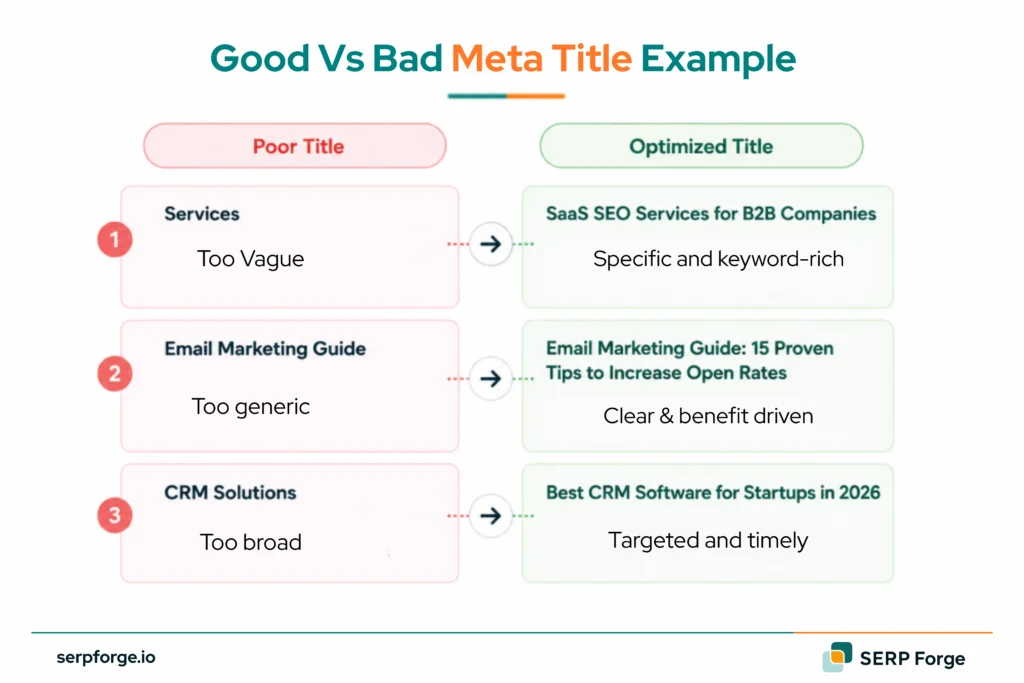
Page A Title: Services
Page B Title: SaaS SEO Services for B2B Software Companies
Which page gives Google a clearer understanding of its content?
The second example provides context, relevance, and keyword signals that help search engines determine when the page should appear in search results.
While title tags are only one ranking factor among many, they help search engines connect your content with relevant searches.
Click-Through Rate (CTR)
A strong meta title can increase the number of people who click your listing.
Consider these two search results:
Result 1: Email Marketing Guide
Result 2: Email Marketing Guide: 15 Proven Tips to Increase Open Rates
Most users are more likely to click the second result because it promises a specific outcome and provides more context.
Even if two pages rank similarly, the page with the more compelling title often receives more traffic.
User Experience
Meta titles help users quickly determine whether a page matches their needs.
A clear title sets accurate expectations before visitors click. This reduces confusion and improves the overall user experience.
For example:
How to Create an Ecommerce Marketing Plan
is much more informative than:
Marketing Solutions
Users should never have to guess what your page is about.
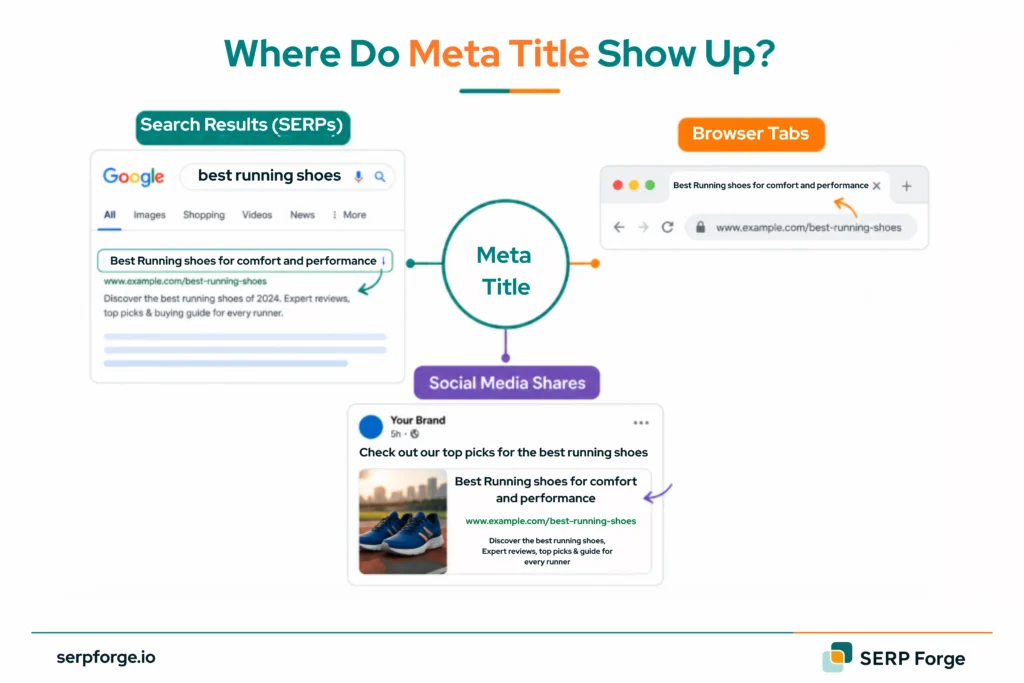
Where Meta Titles Appear
Meta titles are displayed in several places across the web, helping both users and search engines understand what a page is about. You’ll most commonly see them in the following locations:
Search Engine Results Pages (SERPs)
The most common place where meta titles appear is in search engine results.
If someone searches for “local SEO checklist,” Google may display a title such as:
Local SEO Checklist: 20 Steps to Improve Local Rankings
This headline often determines whether users click your result or choose a competitor’s page.
Browser Tabs
Meta titles also appear in browser tabs.
When users have multiple tabs open, descriptive titles make it easier to find the page they need.
Compare these two tabs:
- Home
- Link Building Services for SaaS Companies
The second option provides much more context.
Social Media Shares
When content is shared on LinkedIn, Facebook, or X, the title tag is often used as the preview headline.
An engaging title can improve social media engagement and generate additional traffic beyond search engines.
How Meta Titles Work
Meta titles act as a summary of your page, helping search engines understand its topic and helping users decide whether it matches what they’re looking for. Here’s how they contribute to SEO and search visibility:
Helping Search Engines Understand Content
Think of the meta title as a summary of the page.
If a page targets the keyword “CRM software for startups,” a title such as:
Best CRM Software for Startups in 2026
gives search engines immediate context.
A vague title like:
Business Solutions
provides very little information and may make it harder for search engines to understand the page’s focus.
Matching Search Intent
Search intent refers to the reason behind a user’s search.
For example, someone searching for:
How to fix a leaking faucet
Wants step-by-step instructions.
A title that matches this intent might be:
How to Fix a Leaking Faucet in 5 Easy Steps
A title like:
Professional Plumbing Services
does not align with what the user is looking for.
The closer your title matches search intent, the better your chances of attracting relevant visitors.
Supporting Relevance Signals
Meta titles work alongside page content, headings, internal links, and other SEO elements.
When all these signals consistently support the same topic, search engines gain greater confidence in the page’s relevance.
How to Write an Effective Meta Title
A strong meta title should clearly describe the page, match what users are searching for, and encourage clicks.
Follow these best practices to create titles that support both SEO and user engagement:
Include the Primary Keyword
Include your primary keyword naturally within the title.
For example, if your target keyword is “project management software,” a title like:
Project Management Software for Small Businesses
is clear and relevant.
Avoid forcing keywords unnaturally into the title.
Poor example:
Project Management Software, Software Project Management, Best Project Management Software
This creates a poor user experience and can look spammy.
Match User Intent
Before writing a title, ask yourself what the searcher wants.
Informational searches:
What Is a Meta Title? Complete Beginner’s Guide
Commercial searches:
Best Project Management Software Compared
Transactional searches:
Buy Project Management Software for Small Teams
The title should align with the user’s goal.
Include Power Words
Power words can make titles more engaging.
Examples include:
- Complete
- Essential
- Proven
- Ultimate
- Practical
- Step-by-Step
Example:
The Complete Guide to Writing SEO-Friendly Meta Titles
These words help attract attention without sounding exaggerated.
Make it CTR Driven
Your title should encourage clicks while remaining accurate.
Compare:
Content Marketing Tips
with
15 Content Marketing Tips That Increased Organic Traffic by 45%
The second title is more specific and compelling because it highlights a clear benefit.
Meta Title Length Best Practices
The right title length helps ensure your most important information is visible in search results. Keeping titles concise and readable can improve both user experience and click-through rates. Consider the following guidelines when writing meta titles:
Recommended Character Count
Most SEO professionals recommend keeping meta titles between 50 and 60 characters.
This range helps ensure that titles display properly in most search results.
Mobile vs Desktop Display
Google displays titles differently depending on the device.
Desktop users generally see longer titles, while mobile users may see truncated versions sooner.
Because of this, place important keywords and information near the beginning of the title.
Title Truncation
When a title exceeds the available display space, Google may shorten it.
For example:
The Complete Guide to Writing Effective Meta Titles for Better SEO Performance and Higher Click-Through Rates
may appear as:
The Complete Guide to Writing Effective Meta Titles for Better SEO…
Keeping titles concise helps prevent important information from being cut off.
Meta Title Examples
Looking at real examples is one of the easiest ways to understand what makes a meta title effective. Below are examples for different page types, along with explanations of why they work:
Blog Post Example
Keyword: Content Marketing Strategy
Content Marketing Strategy: 12 Steps for Faster Growth
Why it works:
- Includes the target keyword
- Communicates value
- Uses a number to attract attention
Product Page Example
Keyword: Wireless Earbuds
Wireless Earbuds with Noise Cancellation | Brand Name
Why it works:
- Highlights the product
- Includes a key feature
- Adds brand recognition
Service Page Example
Keyword: SEO Agency
SEO Agency for SaaS Companies | Increase Organic Growth
Why it works:
- Targets a specific audience
- Includes the primary keyword
- Focuses on a business outcome
Common Meta Title Mistakes
Even small mistakes in your meta titles can affect search visibility and click-through rates.
Avoid these common issues to ensure your titles are clear, relevant, and optimized for both users and search engines:
Keyword Stuffing
Adding too many keywords can make titles look unnatural.
Poor example:
SEO Agency, SEO Services, SEO Company, Best SEO Agency
Better example:
SEO Services for SaaS Companies
Duplicate Titles
Every page should have a unique title.
Using the same title across multiple pages can confuse search engines and reduce SEO effectiveness.
Missing Target Keywords
A title should clearly communicate the page topic.
Instead of:
Our Solutions
use:
CRM Software for Sales Teams
This gives both users and search engines more context.
Misleading Titles
Avoid promising something the page cannot deliver.
For example:
#1 SEO Agency in the World
May attract clicks initially, but users will quickly lose trust if the content does not support the claim.
Always prioritize accuracy and relevance.
Conclusion
Meta titles are one of the most influential on-page SEO elements because they affect both search visibility and click-through rates. They help search engines understand your content while helping users decide whether your page is worth visiting.
A well-written meta title includes relevant keywords, aligns with search intent, communicates value, and remains concise enough to display properly in search results.
Whether you’re optimizing a blog post, product page, or service page, investing a few extra minutes in crafting a strong title can significantly improve your page’s performance in search.