



Target keywords are the specific search terms or phrases a webpage is optimized to rank for in search engine results.
For example, a page may target keywords like “SEO services” (5,000 monthly searches) or “content marketing agency” (2,500 monthly searches). They represent the topics users search for when looking for information, products, services, or solutions online.
Target keywords help search engines understand the main topic of a page and determine when it should appear for relevant search queries. An AI SEO agency can help you choose target keywords and prompts for AI search too.
While many pages naturally rank for hundreds of related terms, target keywords serve as the primary focus around which content is planned, structured, and optimized.
How Are Target Keywords Different from General Keywords?
General keywords refer to any words or phrases related to a topic.
Target keywords, on the other hand, are intentionally selected based on factors such as search intent, relevance, search volume, competition, and business goals.
For example:
- General keyword: SEO
- Target keyword: SEO keyword research guide
The target keyword is the specific term the page aims to rank for, while general keywords may simply support the overall topic.
Simple Example of a Target Keyword
Understanding target keywords is easier with a real example. Here’s how a target keyword helps define the focus of a webpage and the type of searches it aims to rank for:
Single Keyword Example
Suppose a digital marketing agency creates a page about backlinks.
Target keyword:
- Backlinks
Long-Tail Keyword Example
Instead of targeting a broad term, the page could focus on:
- How to build backlinks for SaaS websites
This long-tail keyword has a clearer search intent and often faces less competition.
Commercial vs Informational Examples
Not all keywords serve the same purpose. Some users are looking to learn something, while others are researching products or services before making a purchase decision. Here are examples of both keyword types:
Commercial Keyword
- Best SEO tools for agencies
The user is researching products before making a purchase decision.
Informational Keyword
- What is keyword research
The user is looking for educational information.
Both can be target keywords depending on the page’s purpose.
Why Are Target Keywords Important for SEO?
Target keywords play a central role in search engine optimization because they help connect content with relevant user searches.
Help Search Engines Understand the Page Topic
Search engines analyze keywords and related terms to determine what a page is about.
Improve Content Relevance
Well-chosen target keywords help ensure content aligns with user expectations and search behavior.
Support Ranking Opportunities
Optimizing for relevant keywords increases the likelihood of appearing in search results for valuable queries.
Improve User Experience
When content directly addresses the topic users are searching for, engagement and satisfaction often improve.
How Search Engines Use Target Keywords
Search engines do not rely on exact keyword matching alone. They evaluate a variety of signals to understand content relevance.
Topic Identification
Keywords help search engines identify the primary subject of a page.
Semantic Relevance
Modern search algorithms evaluate related concepts, synonyms, and supporting terms associated with the target keyword.
Entity Associations
Search engines connect keywords with recognized entities such as brands, products, people, and topics to better understand context.
Query Matching
Pages are matched with searches based on how well their content satisfies user intent.
Keyword Relevance
Search engines evaluate whether the target keyword naturally fits the page’s overall content.
Search Intent Matching
Content that aligns with informational, navigational, commercial, or transactional intent is more likely to rank.
Contextual Signals
Headings, internal links, metadata, and surrounding content provide additional context for keyword relevance.
Types of Target Keywords
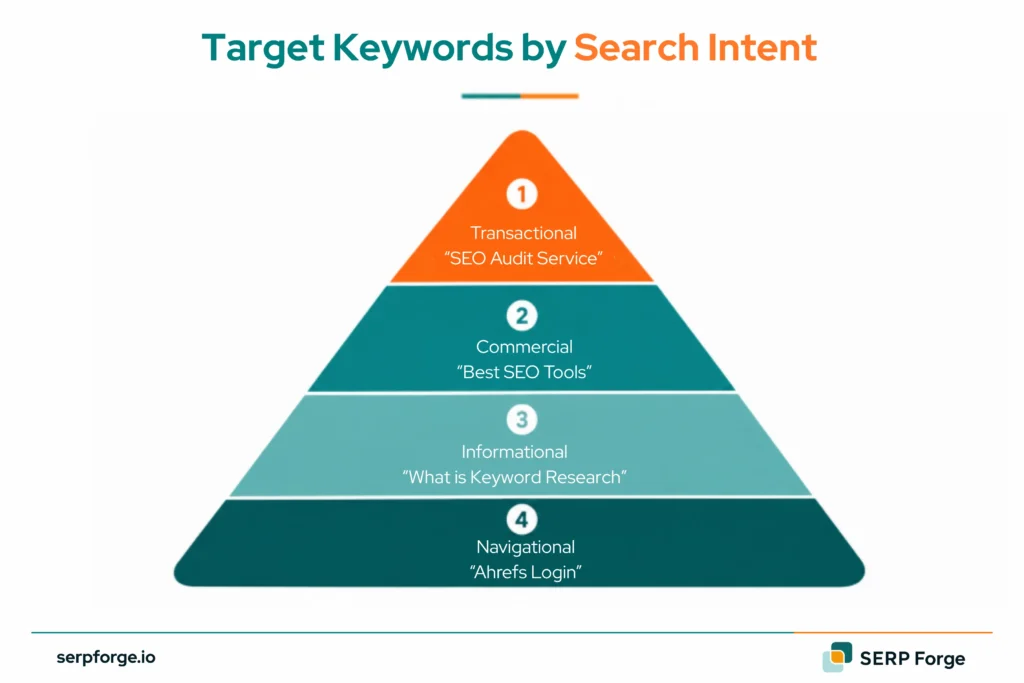
Not all target keywords are the same. Depending on your goals, you may target keywords based on search intent, keyword length, or where users are in the buying journey. Here are the most common types of target keywords used in SEO:
Primary Keywords
The main keyword a page is built around.
Example:
- Keyword research
Secondary Keywords
Related keywords that support the primary topic.
Examples:
- SEO keyword research
- Keyword analysis
- Search term research
Long-Tail Keywords
More specific phrases with lower search volume but clearer intent.
Example:
- How to find low-competition keywords
Branded Keywords
Keywords that include a company or product name.
Example:
- SERP Forge keyword research services
Transactional Keywords
Keywords indicating purchase or action intent.
Example:
- Buy SEO audit service
Informational Keywords
Keywords used by people seeking information.
Example:
- What are the target keywords
How to Choose Target Keywords
Identify Search Intent
Understand why users are searching for a keyword.
Common search intents include:
- Informational
- Commercial
- Transactional
- Navigational
Learn more about understanding search intent before selecting keyword targets.
Analyze Keyword Relevance
Choose keywords that closely align with your content, audience, and business goals.
A highly relevant keyword often performs better than a high-volume keyword with weak topical alignment.
Evaluate Search Volume
Review monthly search volume to estimate potential traffic opportunities.
Higher search volume may indicate greater demand but often comes with increased competition.
Consider Keyword Difficulty
Keyword difficulty estimates how challenging it may be to rank for a particular term.
Balancing difficulty and search volume helps identify realistic opportunities.
Review SERP Results
Analyze current search results to understand:
- Content formats
- Competitor strength
- Search intent alignment
- Ranking opportunities
Target Keywords vs Related Keywords
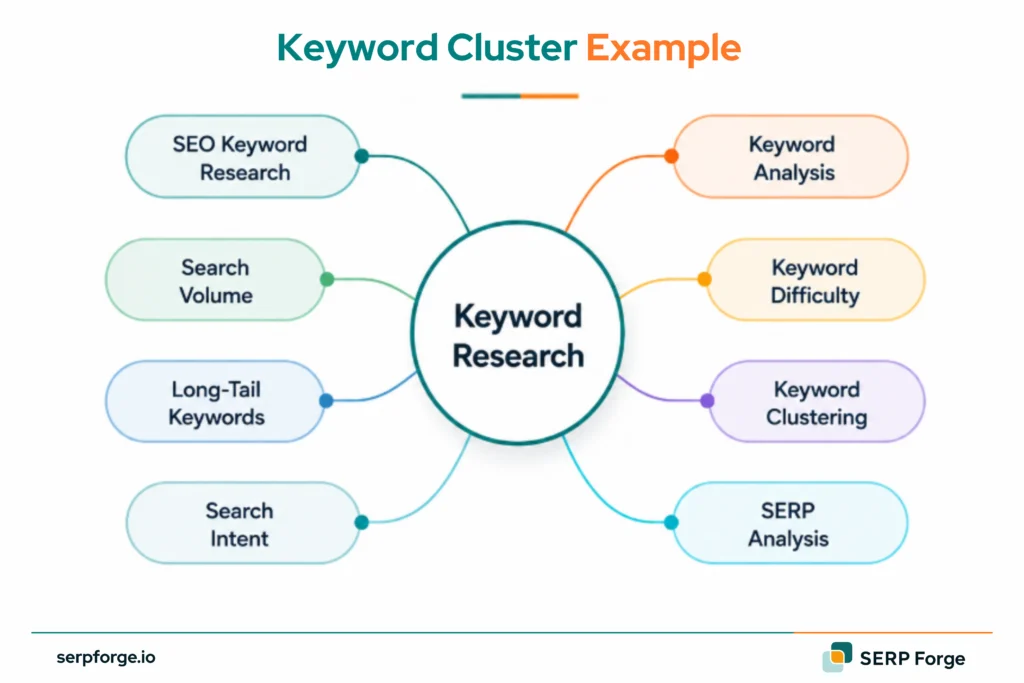
Target keywords are the primary search terms a page is optimized to rank for, while related keywords are supporting terms that help provide additional context and improve content relevance.
Understanding the difference helps create content that is both focused and comprehensive:
| Target Keywords | Related Keywords |
| Main keyword focus of a page | Supporting keywords and variations |
| Directly optimized throughout content | Used to provide context and topical depth |
| Typically one primary target per page | Multiple related terms may be included |
| Guides content strategy and optimization | Enhances semantic relevance |
For example:
Best Practices for Using Target Keywords
Using target keywords strategically helps search engines understand your content without compromising readability. Follow these best practices to improve relevance, rankings, and user experience:
Include Keywords in Strategic Locations
Place target keywords naturally in important SEO elements such as:
- Title tag
- H1 heading
- URL
- Meta description
- Introduction paragraph
- Relevant subheadings
Use Natural Language
Avoid keyword stuffing. Focus on creating content that reads naturally and provides value to users.
Include Semantic Variations
Use related terms, synonyms, and supporting phrases to strengthen topical relevance.
Align Content With Search Intent
Make sure the page format and content match what users expect when searching for the keyword.
Update Keyword Targets Regularly
Search behavior changes over time. Regular keyword reviews help identify new opportunities and maintain relevance.
Final Thoughts
Target keywords are the foundation of effective SEO and content optimization. They help search engines understand page topics, connect content with relevant searches, and improve ranking opportunities. A SaaS SEO agency can map target keywords to each stage of the buyer journey.
Choosing the right target keywords involves understanding search intent, evaluating relevance, reviewing competition, and analyzing search demand. When combined with high-quality content and proper optimization, target keywords can significantly improve organic visibility and search performance.
For a stronger keyword strategy, combine target keyword research with keyword clustering, keyword mapping, and search intent analysis to create content that better serves both users and search engines.