


Enterprise SaaS companies don’t struggle with demand; they struggle with visibility at scale. With thousands of pages, multiple products, and global audiences, getting the right users to find your solution at the right time becomes a real challenge.
Paid ads can bring quick results, but they don’t build long-term growth. SEO fills that gap by helping SaaS brands capture high-intent searches, improve organic visibility, and create a steady pipeline of qualified leads.
At the enterprise level, SaaS SEO goes beyond keywords and rankings. It’s about building scalable systems combining content strategy, technical SEO, and authority building to drive consistent traffic, better conversions, and long-term revenue growth.
[blog_summary]
What Is Enterprise SEO for SaaS?
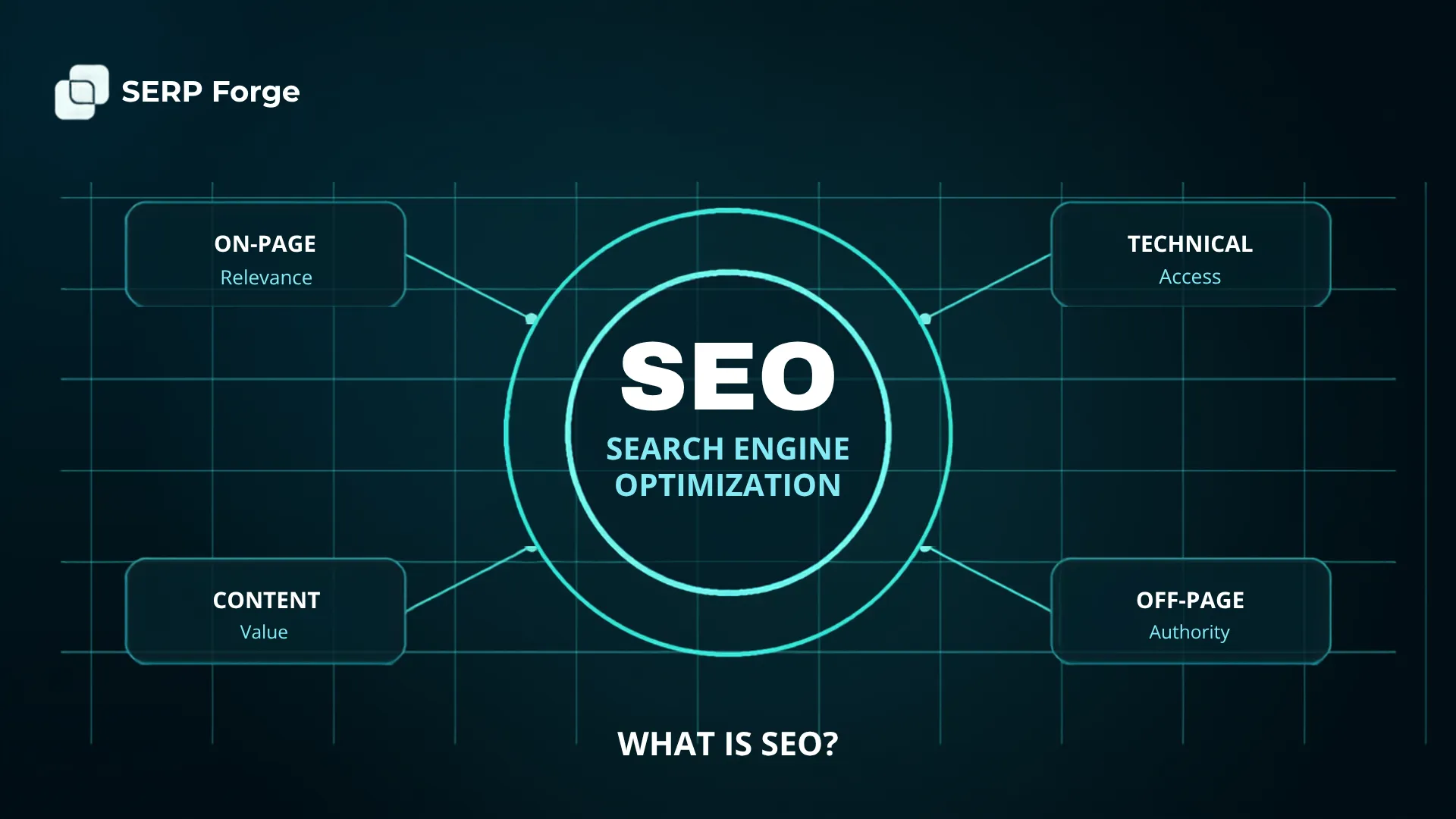
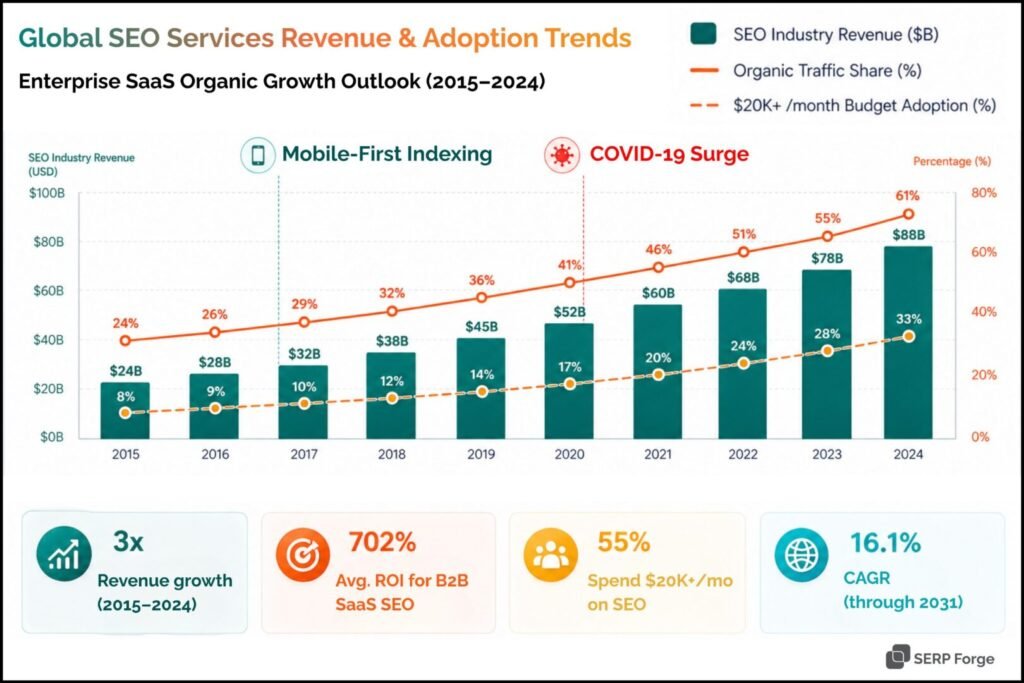
Enterprise SEO for SaaS is the process of improving search visibility, traffic, and conversions for large-scale SaaS websites by combining advanced content strategy, technical optimization, and scalable growth systems.
At its core, enterprise SaaS SEO focuses on helping businesses attract users who are actively searching for solutions that their product offers.
Compared to traditional SEO, it operates at scale, often involving thousands of pages, multiple product categories, and global audiences.
Why Is SEO Important for Enterprise SaaS?
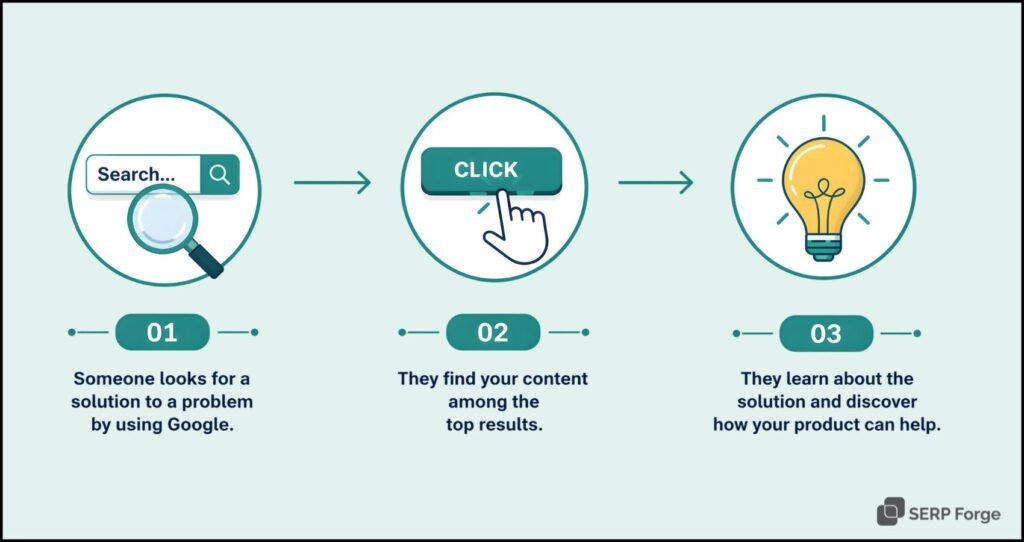
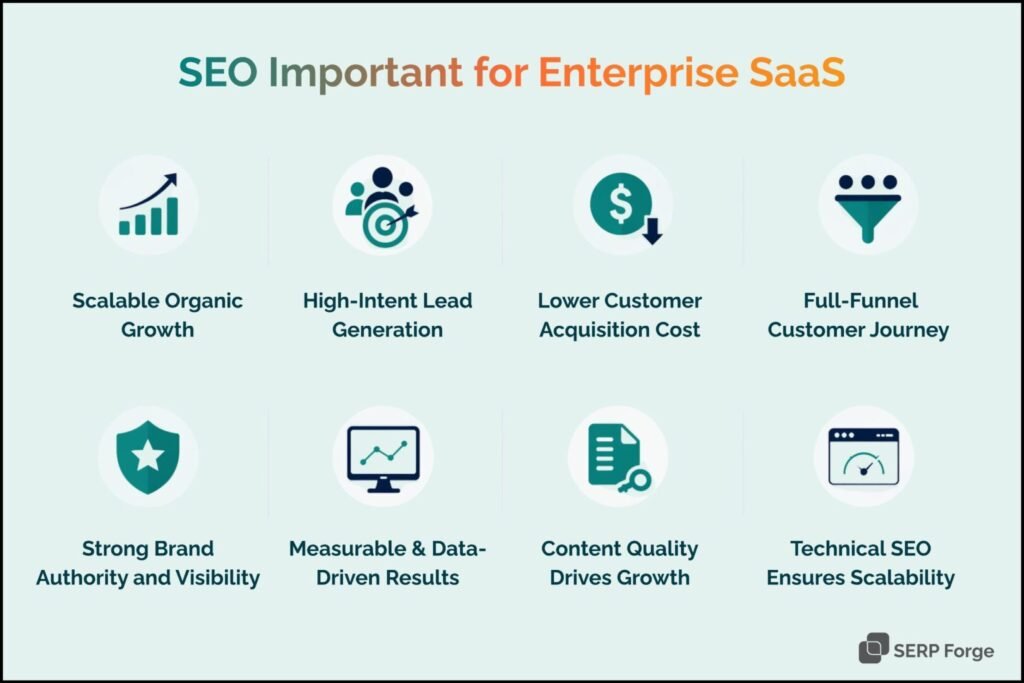
Search Engine Optimization is important for enterprise SaaS because it drives scalable organic growth, improves search visibility, and attracts high-intent users actively looking for solutions.
Scalable Organic Growth
SEO builds a long-term growth channel where traffic compounds over time without constant ad spend.
High-Intent Lead Generation
It captures users searching for solutions, comparisons, and use cases, leading to better conversion potential.
Lower Customer Acquisition Cost
Organic traffic reduces reliance on paid marketing, improving CAC and overall efficiency. Compare your numbers against current SaaS CAC benchmarks to see how organic stacks up
Full-Funnel Customer Journey Support
SEO supports awareness, consideration, and decision stages across long SaaS buying cycles.
Strong Brand Authority and Visibility
Ranking for key terms builds trust, credibility, and positioning in competitive SaaS markets.
Insights:
The global SaaS market is valued at approximately $358.33 billion in 2024 and is expected to grow significantly, reaching around $1.25 trillion by 2034.
Enterprise SaaS SEO vs Regular SEO
Enterprise SaaS SEO works at a much larger scale than traditional SEO.
Here’s what makes it different:
| Aspect | Enterprise SaaS SEO | Regular SEO |
| Scalability and Automation | Built for large-scale growth with automation, programmatic SEO, and systems handling thousands of pages | Limited scalability, mostly manual processes with fewer pages |
| Multiple Locations and Teams | Involves cross-functional teams and supports global markets with localization strategies | Usually managed by a small team with limited collaboration and local focus |
| Multiple Sites and Subdomains | Handles complex structures with multiple domains, subdomains, and product sections | Typically focuses on a single website with a simple structure |
| Reputation Management | Focuses on brand authority, SERP dominance, and managing branded search presence | Limited focus on brand reputation beyond basic SEO efforts |
| Content Strategy Depth | Covers full-funnel content (TOFU, MOFU, BOFU) with large-scale content production and optimization | Focuses on basic blog or landing page content with limited funnel coverage |
| Technical SEO Complexity | Requires advanced technical SEO, including crawl budget, indexing, and large-scale site architecture | Involves basic technical SEO with fewer pages and a simpler structure |
What Are the Top Challenges of Enterprise SaaS SEO?
Enterprise SaaS SEO comes with unique challenges due to large-scale websites, cross-functional teams, and complex buying journeys.
Managing SEO across content, technical systems, and business priorities requires strong coordination and structured processes.
These challenges often slow down execution and make it harder to scale organic growth effectively. Common issues include:
- Complex technical challenges: Managing crawlability, indexing, site architecture, and performance across thousands of pages
- Getting executive buy-in: Proving SEO ROI and securing leadership support for long-term initiatives
- Priority for the business: Limited development resources and competing priorities with product and engineering teams
- Tracking effectiveness: Difficulty in measuring SEO impact due to multi-touch attribution and long sales cycles
- Budget for tools and support: High investment required for enterprise SEO tools, skilled teams, and external support
What Are the Key Components of Enterprise SaaS SEO?
If you’re moving from regular SEO to enterprise-level, start by ensuring every item in the SaaS SEO checklist is covered before scaling up.
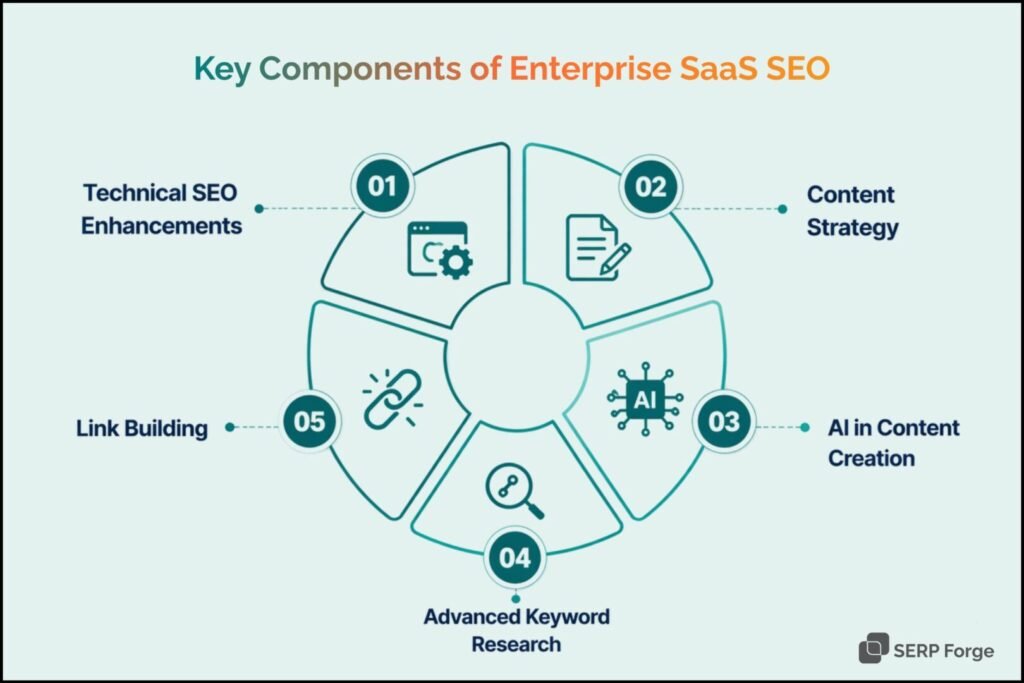
Enterprise SaaS SEO relies on a combination of technical systems, content strategy, keyword targeting, and authority building to drive scalable organic growth.
These components work together to improve visibility, rankings, and conversions across large websites.
Technical SEO Enhancements
Focuses on improving crawlability, indexing, and site structure for large-scale websites. Learn how to execute this through our complete technical SEO guide for SaaS.
Includes managing site architecture, fixing indexing issues, optimizing page speed, and handling JavaScript-based pages.
Content Strategy
Centers on creating content aligned with user intent and the SaaS funnel.
Includes building topic clusters, use-case pages, comparison content, and product-led content to drive traffic and conversions.
AI in Content Creation
Used to scale content production and improve efficiency.
Helps with content ideation, optimization, and maintaining consistency across large content operations.
Advanced Keyword Research
Focuses on identifying high-intent and business-relevant keywords.
Includes keyword clustering, competitor analysis, and mapping keywords to specific pages.
Link Building
Builds authority and improves rankings through backlinks.
Includes creating linkable assets, earning brand mentions, and using outreach strategies to acquire quality links.
How to Do Enterprise SEO for SaaS
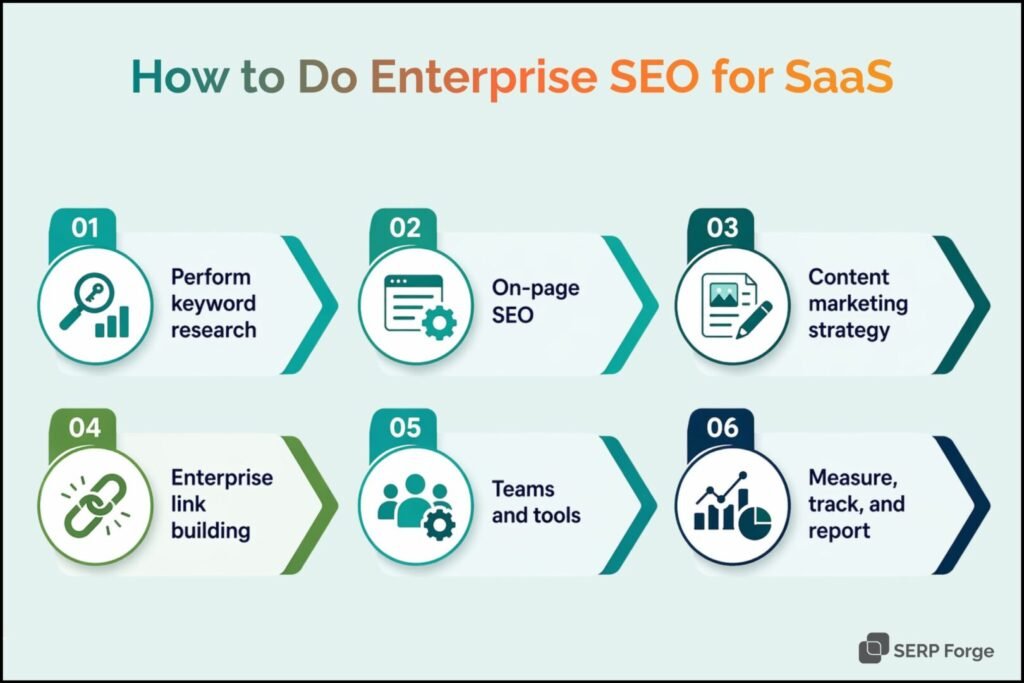
Search Engine Optimization for enterprise SaaS requires a structured approach with a proper SaaS SEO checklist that combines keyword research, technical optimization, content strategy, and scalable systems.
This helps drive organic growth, improve search visibility, and attract high-intent leads.
It connects product pages, content hubs, and technical infrastructure to support large-scale indexing, user journeys, and conversion paths across multiple markets and use cases.
Perform Keyword Research
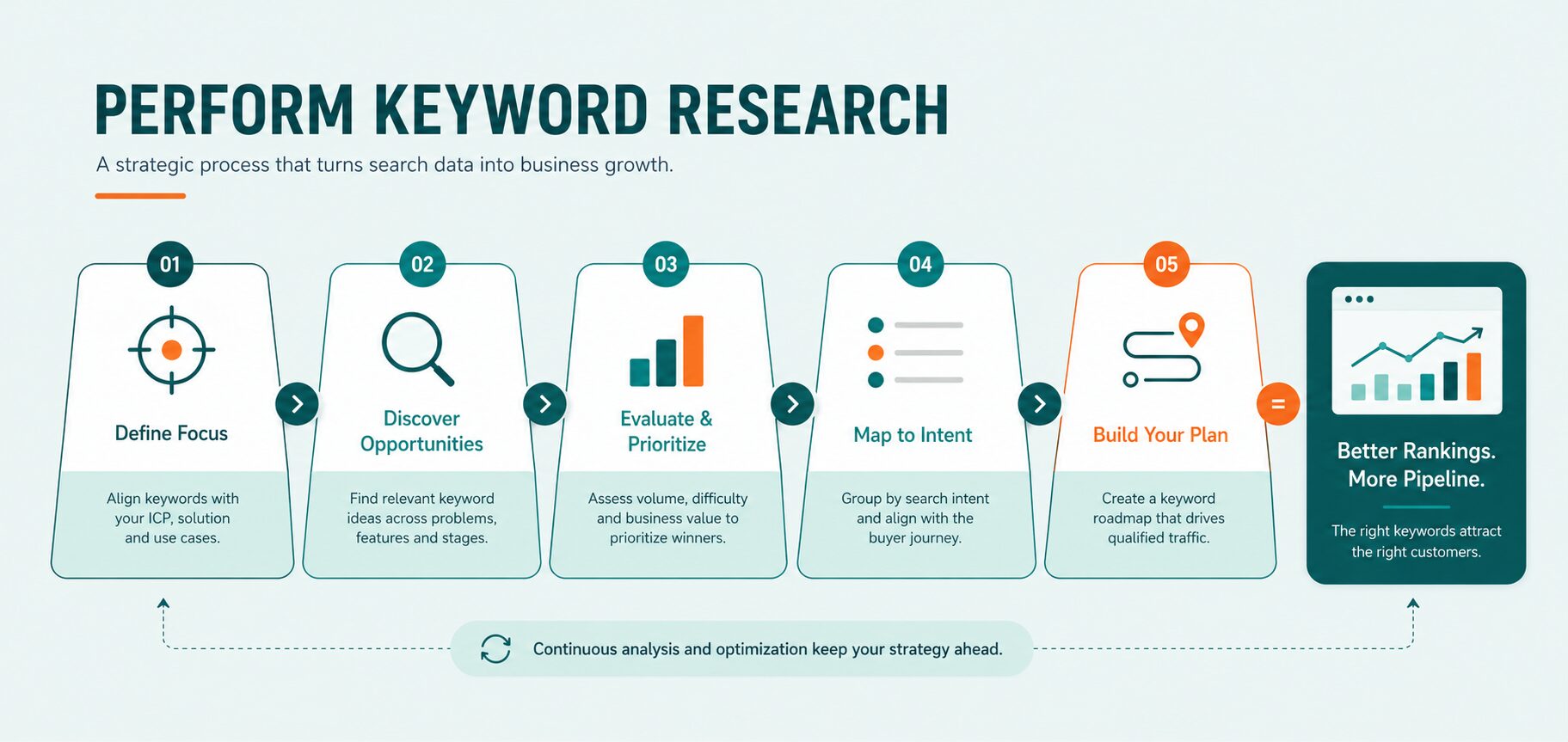
Keyword research in enterprise SaaS focuses on identifying high-intent, solution-driven queries across the entire funnel from informational searches to product comparisons and transactional keywords.
It also involves clustering keywords by topic, analyzing search intent, and prioritizing terms based on business value, search volume, and keyword difficulty. This ensures alignment between organic traffic, user intent, and revenue-generating pages.
Build Customer Persona
Define your ideal customer profiles based on industry, use cases, and pain points to align keywords with real user intent.
This includes segmenting users by roles (e.g., marketers, developers), industries, and job-to-be-done scenarios, helping you target more precise queries and create relevant landing pages.
Brainstorm and Research Keywords
Use tools like Ahrefs and Semrush to find keywords related to features, integrations, alternatives, and use cases. Learn how to export all keywords from Ahrefs to speed up clustering and gap analysis.
Advanced keyword research also includes competitor analysis, content gap identification, and clustering keywords into parent topics to build scalable content strategies.
Map Keywords to Important Pages
Assign keywords to landing pages, product pages, blogs, and comparison pages to avoid keyword cannibalization and improve rankings.
This process ensures each page has a clear target intent and supports internal linking, helping search engines understand page relevance and hierarchy.
On-Page SEO
On-page SEO ensures that each page is optimized for search engines and users by aligning content, structure, and intent.
It also includes optimizing semantic signals such as headings, keyword placement, entity relevance, and internal linking to improve topical authority and search engine understanding.
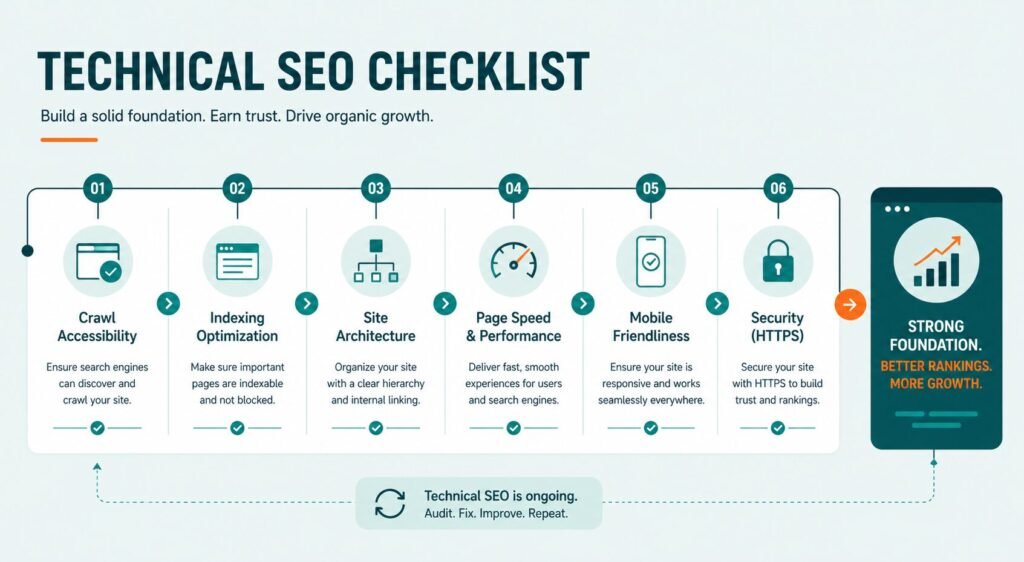
Technical SEO
Technical SEO helps search engines crawl, index, and understand large SaaS websites efficiently, improving overall site performance and visibility.
For enterprise sites, it involves managing crawl budget, resolving indexing issues, optimizing site architecture, and ensuring consistent performance across thousands of URLs.
Solve Google Search Console Issues
Use Google Search Console to identify indexing errors, coverage issues, and performance gaps.
Regular SEO audits help detect issues like excluded pages, crawl anomalies, and indexing delays that can impact large-scale visibility.
Improve Crawlability and User Experience
Optimize site architecture, internal linking, and navigation to ensure search engines and users can easily access important pages.
This includes creating logical URL structures, reducing crawl depth, and improving navigation paths to enhance both crawl efficiency and user engagement.
Improve Page Speed and Core Web Vitals
Enhance loading speed and performance metrics aligned with Core Web Vitals to improve rankings and user experience.
Focus on metrics like Largest Contentful Paint (LCP), First Input Delay (FID), and Cumulative Layout Shift (CLS) to ensure fast and stable page performance.
Make the Website Mobile-Friendly
Ensure responsive design and usability across devices, as mobile-first indexing impacts search visibility.
Optimizing mobile UX, touch elements, and loading speed helps improve engagement and rankings across mobile search results.
Use Proper Structured Data and Schema Markups
Implement schema markup to help search engines understand content and improve visibility through rich results.
Structured data enhances SERP features like FAQs, reviews, and product snippets, improving click-through rates and search presence.
Content Marketing Strategy
Content marketing drives organic traffic and supports the SaaS buyer journey through educational, solution-focused, and product-led content.
At the enterprise level, content strategy focuses on building topical authority, covering full-funnel intent, and creating scalable content systems.
Create Brand Content Guidelines
Establish consistent tone, messaging, and SEO standards to maintain quality across all content.
This ensures uniformity across teams and helps scale content production without compromising brand voice or search optimization.
Create a Blog and Resource Page
Build a content hub targeting informational and problem-solving queries to attract top-of-funnel traffic.
These hubs act as entry points for users and support internal linking to deeper, conversion-focused pages.
Have an Internal Pillar/Cluster Content Strategy
Use topic clusters and pillar pages to improve topical authority and internal linking structure.
This approach strengthens semantic relevance and helps search engines understand content relationships across your website.
Create Link-Worthy Content Assets
Develop guides, data studies, tools, and templates that naturally attract backlinks.
These assets act as authority builders, increasing domain strength and improving rankings for competitive keywords.
Upgrade Harmful Content
Audit and improve outdated or underperforming content to maintain quality and rankings.
This includes removing thin content, updating outdated information, and consolidating similar pages to avoid duplication.
Enterprise Link Building
Link building strengthens domain authority and improves rankings in competitive SaaS markets.
At the enterprise level, it focuses on earning high-quality backlinks through content, brand authority, and strategic outreach rather than manual link acquisition alone.
Building a Community
Engage with industry communities, forums, and audiences to build brand awareness and natural links.
Active participation increases brand mentions and creates opportunities for organic link acquisition.
Guest Posting on Reputed Sites
Publish high-quality content on authoritative websites to gain backlinks and visibility.
This helps build credibility, expand reach, and improve domain authority.
Monitoring Brand Mentions
Track unlinked mentions and convert them into backlinks to improve authority.
This is a scalable way to gain links from existing brand visibility.
Broken Link Building
Identify broken links on relevant sites and replace them with your content to earn backlinks.
This strategy provides value to site owners while improving your link profile.
see our link building services →
Leveraging Influencer Marketing
Collaborate with industry experts and creators to amplify reach and earn high-quality links.
Influencer-driven content increases trust, visibility, and referral traffic.
Teams and Tools
Enterprise SEO requires collaboration across teams and the use of advanced tools to manage scale and complexity.
A well-structured team ensures smooth execution across content, technical SEO, and analytics, while tools enable automation and data-driven decision-making.
Use Enterprise SEO Tools
Leverage platforms like Ahrefs, Semrush, and Google Analytics for data-driven decisions.
These tools help with keyword tracking, backlink analysis, technical audits, and performance monitoring.
Have a Proper Team Structure
Align SEO, content, product, and development teams to ensure smooth execution and scalability.
Cross-functional collaboration is essential for implementing large-scale SEO initiatives effectively.
Outsource to a Specialized Agency
Work with experienced SEO agencies for strategy, execution, and scaling efforts.
Agencies bring expertise, tools, and resources that help accelerate results and manage complex SEO operations. A marketing agency for SaaS companies can also connect enterprise SEO to wider growth.
Measure, Track, and Report
Tracking performance is essential to understand what’s working and where to optimize.
Enterprise SEO reporting focuses on connecting SEO metrics to business outcomes like pipeline growth, conversions, and revenue impact.
Monitor key SaaS metrics like organic traffic, keyword rankings, conversions, and revenue to measure SEO impact and continuously refine your strategy.
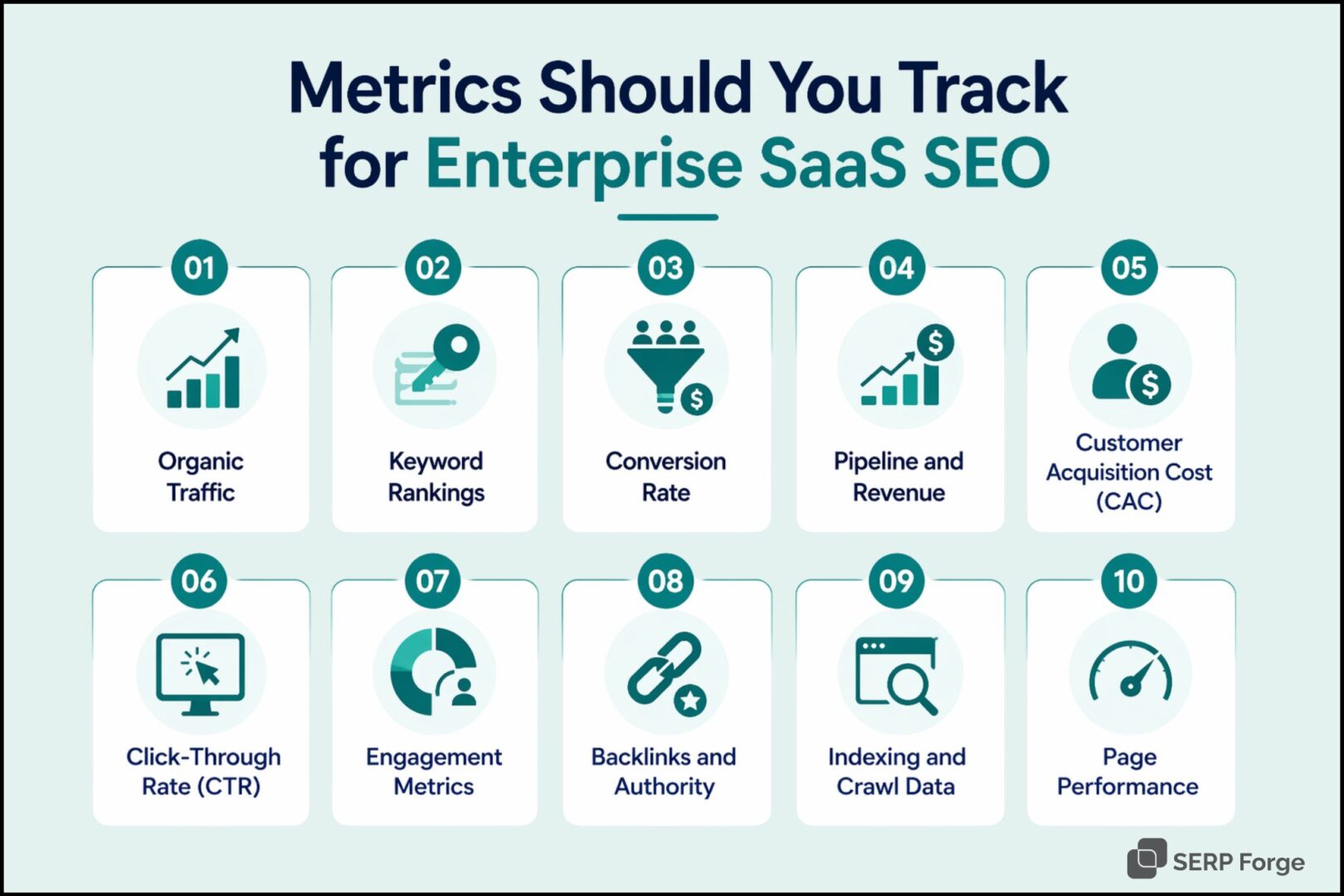
Which Metrics Should You Track for Enterprise SaaS SEO?
Measuring enterprise SaaS SEO focuses on linking organic performance to business outcomes like leads, pipeline, and revenue. It requires tracking both visibility and conversion-focused metrics.
According to Semrush, with search behavior evolving, tracking the right metrics is even more important, especially as roughly 60% of searches now end without a click, making visibility and engagement signals critical alongside traffic.
In the context of enterprise SaaS SEO, key metrics to track:
- Organic traffic: Growth in search-driven sessions across product, blog, and landing pages
- Keyword rankings: Position and visibility for high-intent, solution-based queries
- Conversion rate: Demos, sign-ups, and qualified leads from organic traffic
- Pipeline and revenue: Contribution of SEO to the enterprise sales pipeline and closed deals
- Customer acquisition cost (CAC): Efficiency of organic vs paid channels
- Click-through rate (CTR): Performance of pages in SERPs
- Engagement metrics: Bounce rate, time on page, and user behavior signals
- Backlinks and authority: Growth in referring domains and domain strength
- Indexing and crawl data: Coverage, crawl efficiency, and technical health
- Page performance: Core Web Vitals and overall site speed
Final Thoughts
Enterprise SaaS SEO is not a one-time effort; it’s a long-term system built to scale. It requires aligning content, technical SEO, and link building with business goals to drive consistent organic growth. An AI SEO agency can help extend that system to AI search.
Success comes from focusing on the right priorities: targeting high-intent keywords, building strong site architecture, and creating content that supports the full customer journey. At the same time, tracking performance and adapting to changes in search behavior is key to staying competitive.
When done right, enterprise SaaS SEO becomes a reliable growth channel helping generate qualified leads, improve visibility, and contribute directly to pipeline and revenue.
FAQ’s
How do you align enterprise SaaS SEO with product and sales teams?
Align SEO with product and sales by mapping keywords to product features, use cases, and buyer stages. Regular collaboration ensures content supports real customer pain points and sales conversations, improving conversions and pipeline impact.
What role does site architecture play in enterprise SaaS SEO?
Site architecture helps search engines crawl and understand large websites efficiently. A clear structure with logical URLs, internal linking, and content hierarchy improves indexing, rankings, and user navigation.
How do you handle SEO for multiple products or feature pages?
Create dedicated pages for each product, feature, and use case. Map specific keywords to each page and avoid overlap to prevent keyword cannibalization while improving relevance and rankings.
How often should enterprise SaaS websites update or refresh content?
Content should be reviewed regularly, typically every 3–6 months. Update pages with declining traffic, outdated information, or changing search intent to maintain rankings and performance.
What are the best ways to improve crawl efficiency on large SaaS sites?
Improve crawl efficiency by optimizing internal linking, reducing duplicate content, fixing broken links, and managing crawl budget. Keeping important pages easily accessible helps search engines prioritize them.