


A strong backlink profile can be the difference between ranking on the first page of search results and struggling to gain visibility. Search engines use backlinks as trust signals, helping them determine whether a website is credible, authoritative, and relevant to a particular topic.
However, not all backlinks provide value. While high-quality links from trusted websites can strengthen your SEO performance, spammy or irrelevant links may limit your growth and create unnecessary risks.
According to Google, links remain one of the key signals used to determine the relevance and authority of webpages.
In this guide, you’ll learn what a backlink profile is, what separates a healthy profile from an unhealthy one, how to audit your backlinks, and proven strategies to improve your backlink profile over time.
What Is a Backlink Profile?
A backlink profile is the complete collection of backlinks pointing to a website, webpage, or domain.
Ahrefs analyzed nearly 1 billion webpages and found that 96.55% of pages receive no organic traffic from Google, often due to a lack of backlinks.
A website may have 2,500 backlinks from 320 referring domains, with links coming from blogs, news websites, directories, and industry publications. It includes information about referring domains, anchor text, link types, link quality, and the overall distribution of backlinks across the web.
The stronger and more relevant the backlink portfolio, the more likely a website is to build trust with search engines and improve its organic search visibility.
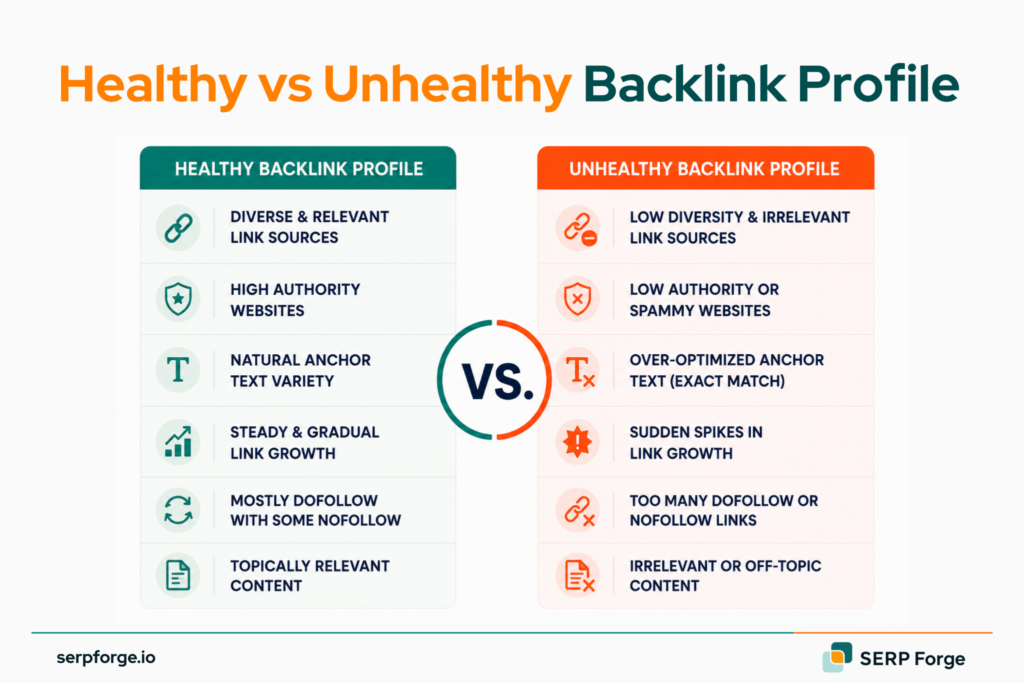
What Makes a Healthy Backlink Profile?
A healthy backlink profile demonstrates authority, relevance, and trust. It consists of backlinks that are earned naturally from credible websites, helping search engines understand that your content provides value within its niche.
Key characteristics of a healthy backlink profile include:
High-Quality Referring Domains
Backlinks from authoritative and trustworthy websites carry stronger ranking signals than links from low-quality sources.
For example, a backlink from a well-known industry publication often provides more SEO value than dozens of links from low-quality directories or inactive websites.
Topical Relevance of Backlinks
Relevant backlinks help strengthen topical authority. For example, a SaaS company earning links from technology blogs, software review sites, and business publications sends a stronger relevance signal than receiving links from unrelated industries such as fashion or travel.
Natural Anchor Text Distribution
A strong backlink profile includes a natural mix of branded, generic, URL-based, and keyword-rich anchor text. If most backlinks use anchors like “SERP Forge,” “visit website,” and the website URL, the profile appears more natural than having hundreds of links using the exact same keyword.
Link Diversity Across Sources
Backlinks should come from different sources, such as blogs, news websites, resource pages, directories, and industry publications.
For example, earning links from 50 different websites is generally more valuable than receiving the same number of links from only a handful of domains.
Balanced Follow and Nofollow Links
Natural backlink profiles contain both follow and nofollow links. A website may earn follow links from guest posts and editorial mentions while receiving nofollow links from social media platforms, forums, and business listings. This balance reflects natural link acquisition.
Consistent Link Growth Patterns
A healthy backlink profile grows steadily as content earns mentions and citations over time. Gaining 10–20 new referring domains each month through content marketing and digital PR appears more natural than acquiring hundreds of backlinks overnight without a clear reason.
Only 5.7% of newly published pages reach Google’s top 10 results within one year, making authority-building tactics such as earning high-quality backlinks essential for long-term SEO growth.
What Makes an Unhealthy Backlink Profile?
An unhealthy backlink profile contains links that appear manipulative, irrelevant, or low-quality.
These backlinks can weaken trust signals, reduce SEO performance, and increase the risk of search engine penalties.
Toxic Backlinks
In practice, these look like links from sites with no organic traffic, no real audience, and content that exists only to host outbound links. Run the referring domain through Ahrefs.
If it has zero traffic and links out to hundreds of unrelated sites, it’s toxic.
Spam Networks and Link Farms
These show up as clusters of backlinks acquired within a short window, often from domains with similar IP blocks, identical site structures, and thin or auto-generated content.
In a backlink report, you’ll see the same pattern of anchor text repeated across dozens of low-DR domains that have nothing in common except linking to you.
Over-Optimized Anchor Text
This looks like 40–60% of your anchors using the exact keyword you’re trying to rank for “b2b saas marketing agency,” repeated verbatim across unrelated sites.
A real editorial link profile rarely lands on the same phrase that precisely and consistently.
Irrelevant Backlinks
A cybersecurity tool earning links from wedding blogs, casino sites, or foreign-language lifestyle directories.
The mismatch is visible at a glance. There’s no editorial reason for that link to exist, which is exactly how search engines read it.
Manipulative Link Schemes
These surface as paid links with dofollow attributes on sites that publish sponsored content without disclosure, or reciprocal link arrangements where site A links to site B and site B links back within days. The timing and symmetry make the pattern detectable.
Unnatural Link Velocity
This looks like a flat referring domain curve for six months, followed by 200 new domains in three weeks with no product launch, press coverage, or viral content to explain it. Steady organic growth doesn’t move in spikes.
How to Audit a Backlink Profile
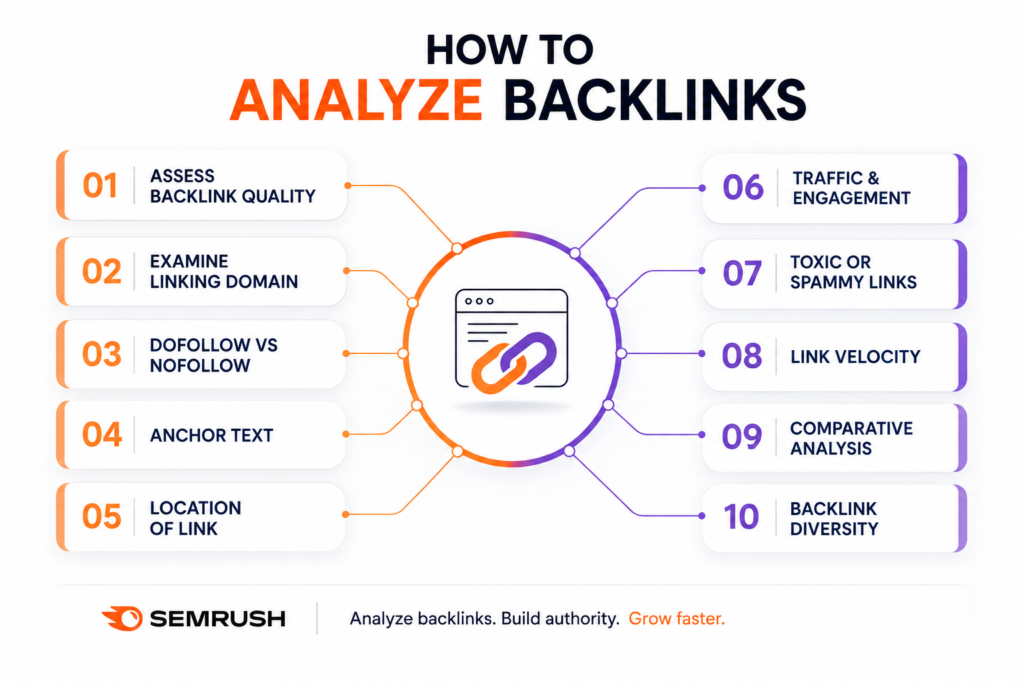
A backlink profile audit helps you evaluate the quality, relevance, and diversity of your backlinks. Regular audits make it easier to identify SEO risks, uncover new opportunities, and maintain a healthy backlink profile.
How to Audit a Backlink Profile
A backlink profile audit evaluates the quality, relevance, and diversity of your links to identify SEO risks and opportunities before they affect rankings.
Step 1: Collect Backlink Data
Pull data from at least two tools: Ahrefs, SEMrush, or Moz alongside Google Search Console, since no single tool captures every backlink.
For each link, record the referring domain, anchor text, follow/nofollow status, linked page, and first/last seen dates. Export everything into a spreadsheet before moving to analysis.
Step 2: Categorize Backlinks by Quality
Evaluate each referring domain against these criteria:
- A backlink is high quality if the domain has a DR/DA of 50+, receives consistent organic traffic, and the link sits editorially within body copy on a topically relevant page
- A backlink is moderate quality if DR/DA falls between 20–49, traffic exists, but topical overlap is limited, or the placement is non-editorial, like a resource page
- A backlink is low quality if DR/DA is below 20 with minimal traffic these carry little value but typically cause no harm
- Flag any link showing active warning signs for the next step
Step 3: Identify Toxic Links
A toxic link is one that risks a manual penalty or algorithmic suppression. Prioritize links where:
- The referring domain has zero organic traffic and exists solely to distribute links
- A single page links out to hundreds of unrelated domains
- Multiple links from the same domain all use your exact-match target keyword as anchor text
- The domain scores above 30% on Moz’s Spam Score or is flagged by Google Safe Browsing
- A sudden spike in links appeared in a short window, especially with keyword-heavy anchors
Attempt webmaster outreach for removal first. If unsuccessful, submit a disavow file through Google Search Console.
Step 4: Analyze Anchor Text Distribution
A natural anchor text profile looks like this:
- Branded anchors – 30–40%
- Naked URLs – 20–30%
- Generic anchors (“click here,” “read more”) – 10–20%
- Partial-match keywords – 10–15%
- Exact-match keywords – under 5%
If exact-match anchors exceed 10–15% of your profile, especially for primary target keywords, that’s a manipulation signal worth addressing in your outreach going forward.
Step 5: Review Link Diversity
Check whether your links are distributed across source types, not concentrated in one place:
- A high backlink count but low referring domain count signals artificial link patterns
- Multiple domains sharing the same IP block may indicate a private blog network
- A healthy profile mixes editorial links, resource pages, news citations, and directory listings, not one format exclusively
Step 6: Benchmark Competitors
Compare your profile against the top three to five ranking competitors for your target keywords:
- Identify domains linking to two or more competitors but not to you these are your warmest outreach targets since they’ve already shown willingness to link in your niche
- Find which content assets earn them the most links this reveals the formats and topics worth investing in
- Compare DR/DA ranges and anchor text patterns to see where your profile is weaker
Use Ahrefs Link Intersect or SEMrush Backlink Gap to surface these opportunities quickly.
Step 7: Build an Improvement Plan
Sequence actions by impact:
- Disavow confirmed toxic links that webmasters won’t remove
- Reclaim lost links using the “Lost” filter in Ahrefs or SEMrush and reach out to restore or redirect
- Target competitor link gap domains with outreach
- Build passive link assets original research, data studies, and free tools attract links without ongoing effort
- Set automated alerts in Ahrefs or SEMrush to catch new toxic links before they accumulate
How to Improve a Backlink Profile
The most effective strategies focus on creating value, building relationships, and providing resources that others naturally want to reference:
Earn Editorial Links
Editorial backlinks are earned when websites naturally reference your content because it provides useful information, insights, or data. These links are among the most valuable because they are given voluntarily rather than requested. Search engines view editorial links as strong trust signals.
If you publish an original study on SaaS customer churn rates, industry blogs and marketing publications may cite your findings and link back to your research.
Publish Linkable Assets
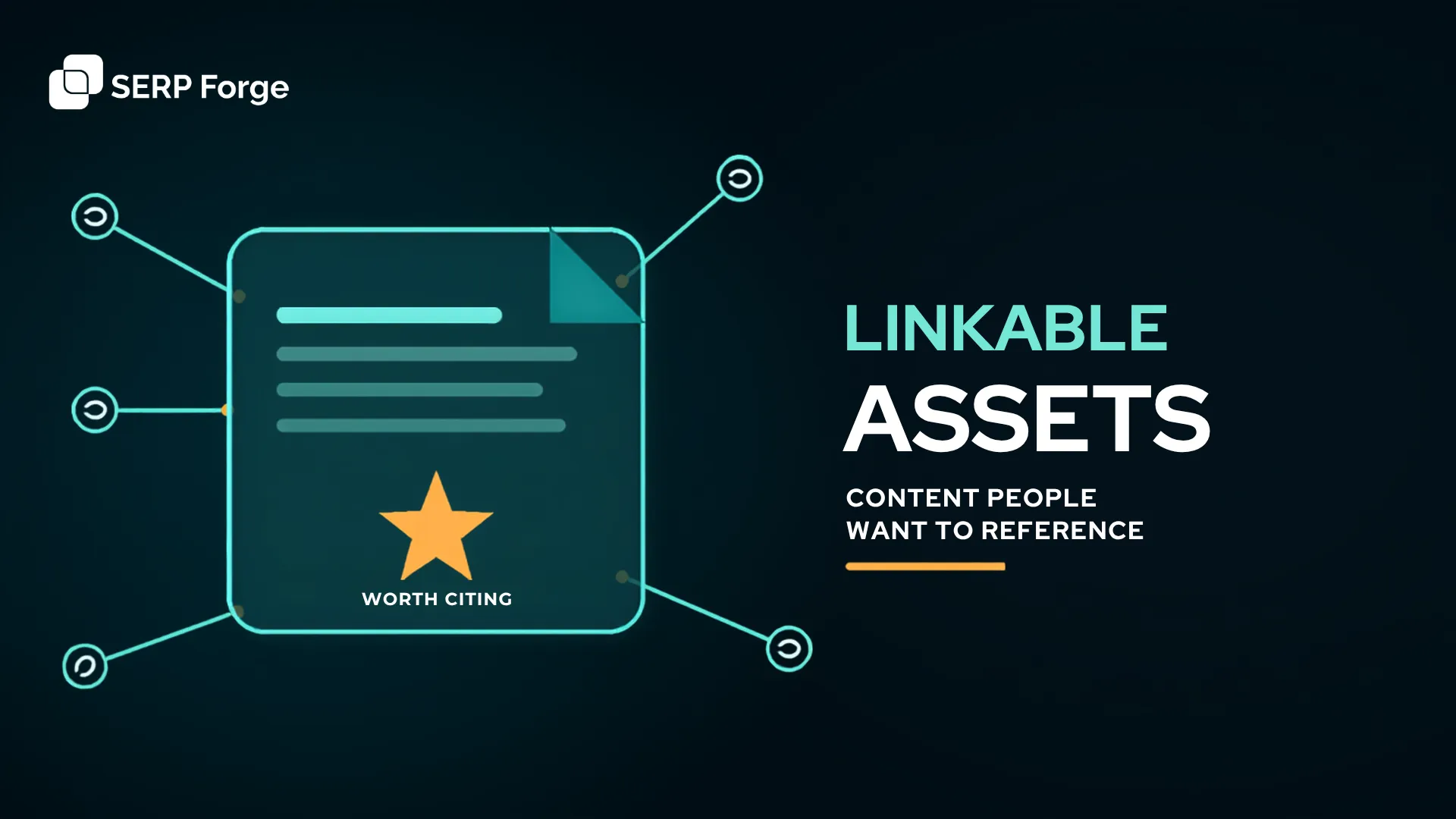
Linkable assets are content pieces specifically designed to attract backlinks. These often include industry statistics, original research, calculators, templates, guides, and infographics.
Examples of linkable assets:
- Industry benchmark reports
- Free templates and checklists
- Original surveys
- Interactive tools
- Data-driven studies
HubSpot’s marketing statistics pages attract backlinks because writers and marketers frequently cite their data in articles and reports.
Only 2.2% of published content earns backlinks from multiple websites. Most content attracts zero or just one linking domain.
Use Digital PR Campaigns
Digital PR combines data, storytelling, and media outreach to earn coverage from journalists and publishers. Successful campaigns often generate backlinks from news websites and industry publications.
A cybersecurity company could release research on the most common data breach causes and pitch the findings to technology journalists. News coverage often results in authoritative editorial backlinks.
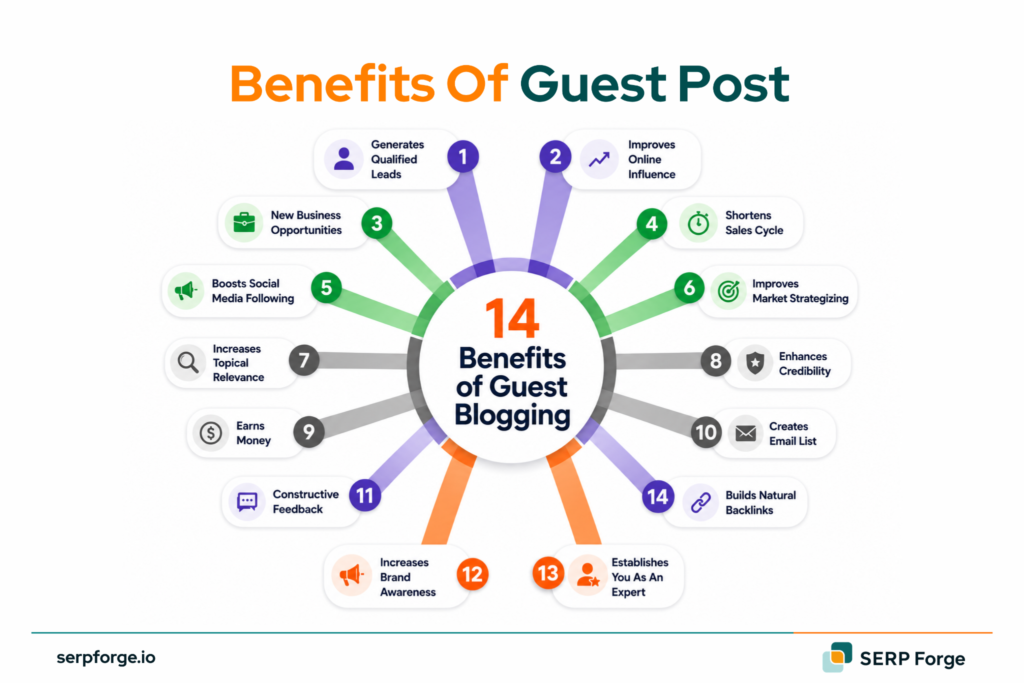
Guest Posting Strategies
Guest posting involves contributing valuable content to reputable websites within your industry. When done correctly, it helps build authority, expand reach, and earn relevant backlinks.
Best practices:
- Target industry-relevant websites
- Share unique insights and expertise
- Prioritize audience value over link placement
- Avoid low-quality guest post networks
Broken Link Building Opportunities
Broken link building involves finding dead links on relevant websites and suggesting your content as a replacement. This creates value for website owners while generating backlink opportunities.
If a marketing blog links to a deleted SEO statistics page, you can offer your updated statistics resource as an alternative. This helps the publisher fix a broken link while earning a relevant backlink.
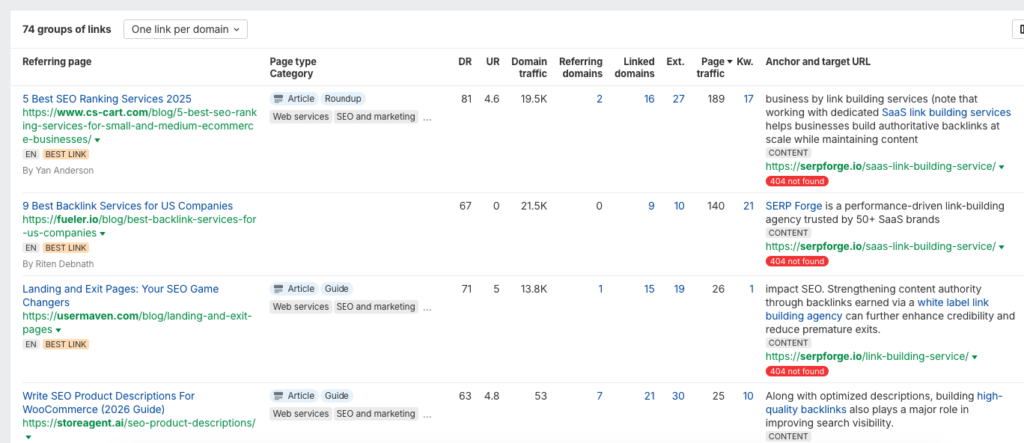
Resource Page Link Acquisition
Many websites maintain resource pages that recommend helpful tools, guides, and references for their audience. Resource links are often highly relevant because they are curated for user value.
A website offering a free SEO audit template could reach out to marketing resource pages and request inclusion if the content genuinely benefits their audience.
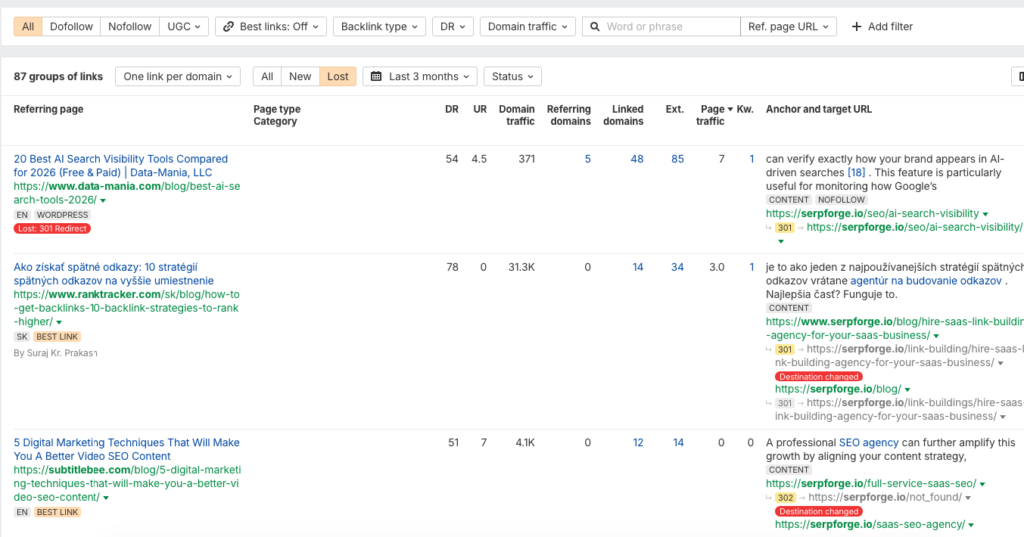
Reclaim Lost Backlinks
Over time, websites may remove links, update pages, or delete content, causing valuable backlinks to disappear. Reclaiming lost backlinks is often one of the quickest ways to strengthen a backlink profile.
Common recovery methods:
- Contact websites that removed the link
- Fix broken pages and redirects
- Restore deleted content
- Update outdated resources
Practical example:
If a blog previously linked to your guide but the linked URL now returns a 404 error, setting up a redirect or updating the page can help recover the backlink value.
Conclusion
A strong backlink profile is built on quality, relevance, diversity, and consistency. Regular backlink profile analysis helps you identify valuable link opportunities, remove potential risks, and maintain a healthy link portfolio.
By focusing on earning authoritative backlinks from relevant sources and monitoring your backlink profile over time, you can strengthen your website’s credibility, improve search visibility, and support long-term SEO growth.
Frequently Asked Questions
1. What is a good backlink profile?
A good backlink profile contains high-quality, relevant backlinks from trusted websites within your industry. It typically includes diverse referring domains, natural anchor text distribution, a mix of follow and nofollow links, and consistent growth over time.
2. How often should a backlink profile be audited?
Most websites should audit their backlink profiles at least once every quarter. However, websites actively investing in SEO or link building may benefit from monthly audits to identify toxic links, monitor growth, and uncover new opportunities.
3. Can toxic backlinks hurt rankings?
Yes. Toxic backlinks from spam websites, link farms, or other low-quality sources can weaken trust signals and potentially impact search performance. Regular backlink audits help identify and monitor these links before they become a larger issue.
4. What is backlink diversity?
Backlink diversity refers to earning links from a variety of sources rather than relying on a small number of websites. A diverse backlink profile may include links from blogs, news websites, industry publications, resource pages, directories, and community platforms.
5. How many backlinks does a website need?
There is no fixed number. The number of backlinks needed depends on your industry, competition, and target keywords. In many cases, earning backlinks from a smaller number of authoritative and relevant websites is more valuable than acquiring hundreds of low-quality links.
6. Which backlink profile metrics matter most?
Some of the most important backlink profile metrics include referring domains, backlink quality, domain authority or authority score, anchor text distribution, follow versus nofollow link ratio, link relevance, and overall backlink growth trends. These metrics provide a clearer picture of a website’s authority and SEO health.