


Every website owner wants more traffic, but qualified traffic is what actually drives revenue. Instead of attracting random visitors, the goal is to reach people who match your ideal customer profile (ICP) and have strong purchase intent. To reach them in AI search too, explore SERP Forge AI SEO services.
These users arrive through relevant search queries, understand the value of your solution, and are far more likely to convert into customers, subscribers, or leads.
Whether you’re optimizing for organic traffic, improving search intent alignment, or increasing your conversion rate, understanding qualified traffic helps you focus on visitors who matter most.
Learn what qualified traffic is, why it matters, and how search intent, target audience fit, and content optimization help attract visitors who are more likely to convert.
Qualified Traffic vs General Traffic
The gap between qualified marketing traffic and general traffic determines your conversion rate more than any other variable.
Here is how the two compare:
| Criteria | Qualified Traffic | General Traffic |
| Intent | Actively searching for a solution | Browsing or researching broadly |
| Conversion likelihood | High | Low |
| Source | Targeted SEO, paid ads, relevant referrals | Broad keywords, untargeted campaigns |
| Engagement | Long session, multiple pages, low bounce | Short session, high bounce rate |
| ROI | Strong and measurable | Weak without further qualification |
If you run broad awareness campaigns, you might see fifty thousand monthly sessions and a 0.3% trial conversion rate. Target bottom-of-funnel comparison keywords instead and you might see eight thousand sessions and a 4% trial conversion rate. Fewer visitors, more trials.
Note: For SaaS and B2B businesses, one qualified enterprise lead can represent twelve months of recurring revenue. Every unqualified visitor wastes budget and pulls your sales team toward deals that will never close.
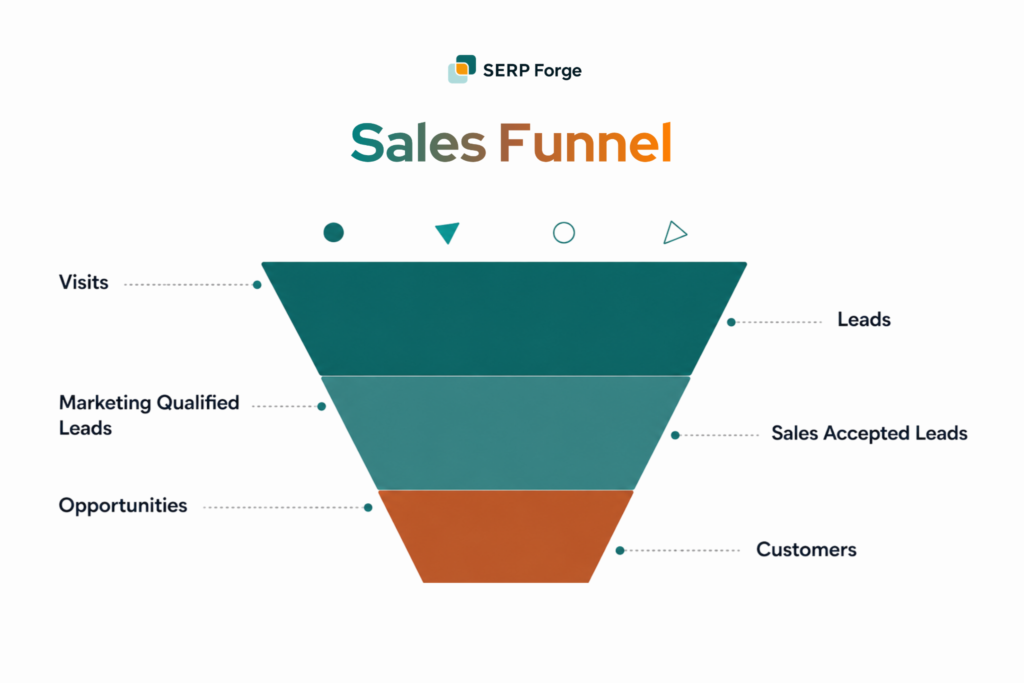
What Are the Key Characteristics of Qualified Traffic?
Audit your current visitors against these five characteristics to find out whether your traffic is qualified or just large:
Intent-Based Visitors
A visitor searching “project management software for remote engineering teams” is ready to evaluate a solution. A visitor searching “what is project management” is still in research mode. Build your targeted traffic SEO strategy around search intent and solution-specific keywords. You’ll pull in high intent traffic at the right moment.
Demographic and ICP Alignment
If you sell cybersecurity software to enterprise CISOs, traffic from IT students researching coursework will never convert. Qualified visitors match your ideal customer profile on job title, company size, industry, and buying authority.
Check your traffic sources against your ICP before you draw any conclusions about campaign performance. Customer acquisition costs rise fast when your demand generation efforts target the wrong audience.
Behavioral Indicators
A qualified visitor reads your features page, checks your pricing, visits your integrations page, and returns two days later before converting. Watch for multiple page visits, CTA interactions, and return sessions. These behavioural signals confirm a visitor is moving through a real purchase decision.
Source Quality
A referral from a G2 review page comparing your product against a competitor delivers a visitor who already knows they have a problem. Where your visitor comes from predicts how qualified they are before they even land on your page.
Engagement Levels
Low bounce rate, scroll depth on your pricing and product pages, and multiple page views per session confirm a visitor found what they needed. If you have high traffic and a two-second average session duration on your features page, you have a targeting problem.
What Are the Types of Qualified Traffic?
Qualified marketing traffic arrives through four channels.
Here is what each one looks like in practice for SaaS and B2B businesses:
Organic Search Traffic
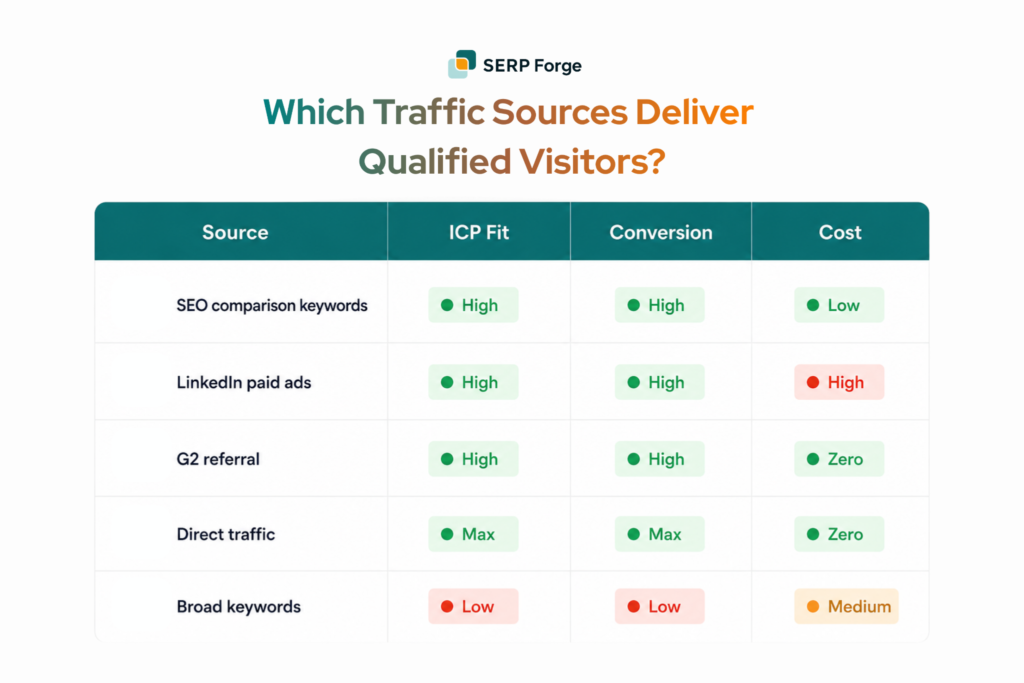
If your CRM ranks for “best CRM for small sales teams,” every visitor arriving through that keyword is a potential buyer. Targeted traffic SEO around comparison keywords, alternatives pages, and use case pages converts at higher rates than broad informational content because the visitor arrives with a specific problem already defined.
Paid and Targeted Ad Traffic
If you run LinkedIn ads targeted at CFOs at companies with fifty to five hundred employees, you reach your exact ICP with every impression. Add negative keywords to your Google Ads campaigns to remove irrelevant searches before they consume your budget.
Note: LinkedIn paid traffic delivers the highest qualification level for B2B SaaS because targeting runs on verified professional data. The CPM is higher than other platforms and the lead quality consistently justifies it for high-value contracts.
Referral Traffic From Relevant Sources
If your HR software gets featured in a Capterra comparison article, the referral traffic arrives from buyers actively evaluating HR tools. These visitors arrive as qualified leads closer to a purchase decision.
Direct Traffic From Existing Customers
If a customer bookmarks your product dashboard and returns weekly, that is direct traffic with zero acquisition cost and maximum intent. High direct traffic volume signals strong retention and an actively engaged customer base.
How to Attract Qualified Traffic to Your Site
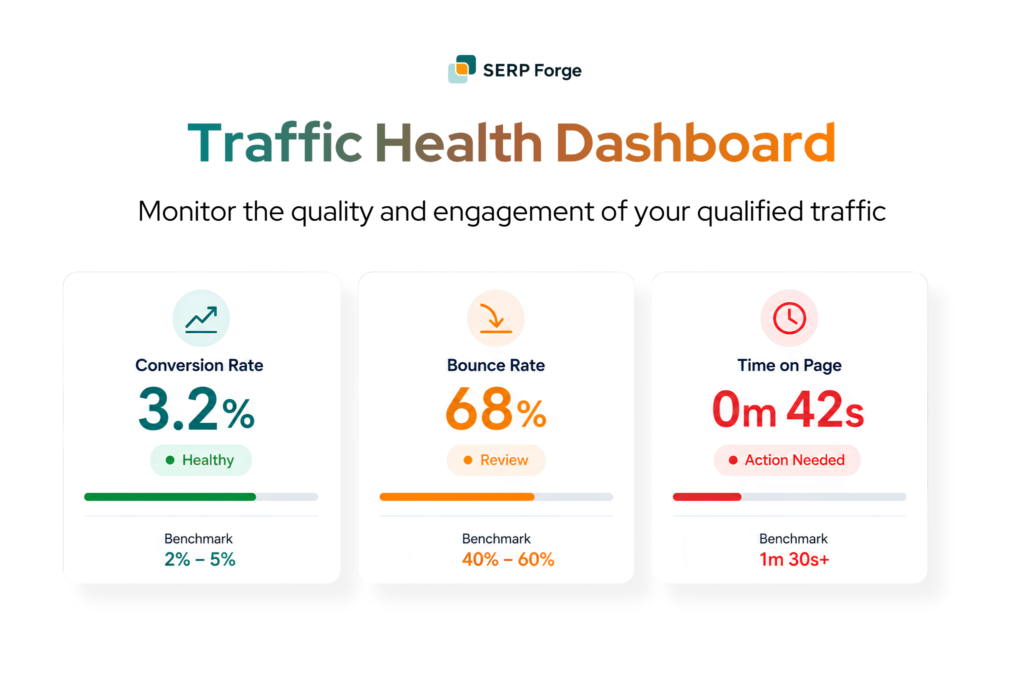
These three metrics tell you whether your marketing funnel is pulling in the right visitors or just driving volume. HubSpot’s marketing benchmarks show average landing page conversion rates sit between 2 and 5% across industries. Use that as your baseline when auditing qualified traffic quality.
Here is how to use each one:
SEO
Create a dedicated page targeting “Salesforce alternative for small business.” You’ll attract visitors who:
- have already decided they want a CRM
- are dissatisfied with the market leader
- are ready to evaluate alternatives.
Google ‘s SEO starter guide confirms that relevance between query intent and page content drives both ranking and conversion performance. Focus your SEO on bottom-of-funnel pages first. A B2B SaaS SEO agency can prioritize those pages around your ICP.
Paid Ads
If you run Google Ads for “expense management software for finance teams,” add negative keywords like “free,” “DIY,” and “template” from day one. On LinkedIn, target finance directors at companies with 100-1000 employees and exclude students and entry-level titles. Every click should come from a relevant prospect.
Content Marketing
Publish a comparison guide between your product and three competitors. Visitors who find that guide are already aware they need your type of solution and are choosing between providers. That single page pulls qualified traffic with strong purchase intent at every stage of the decision process without paid distribution.
Email Marketing
Send a behaviour-triggered email to trial users who visited your pricing page twice without converting. That segment converts at a higher rate than any campaign because the message matches where the visitor is in their decision process.
Partnerships
Co-market with a complementary SaaS tool whose customers share your ICP. The referral traffic arrives from buyers who already understand the problem your product solves, which shortens your sales cycle.
Co-marketing only delivers qualified traffic when your partner’s audience genuinely overlaps with your ICP. A misaligned partnership sends volume without qualification and raises your CAC without improving pipeline.
How to Measure Whether Your Traffic Is Qualified
These three metrics below tell you whether your marketing funnel is pulling in the right visitors or just driving volume:
Conversion Rate
Divide completed desired actions by total visitors and multiply by one hundred. A low conversion rate despite strong visitor numbers tells you your targeting is pulling in the wrong audience. Adding more volume to a qualification problem produces more of the same result.
Bounce Rate
A high bounce rate on your product or pricing pages means visitors are leaving without finding what they expected. Fix the alignment between the keyword or ad that drove the visit and the content on the page. Your bounce rate drops without any change to traffic volume.
Time on Page
Short average session durations on your pricing or solution pages mean visitors are leaving before they engage with your value proposition. Track time on page alongside scroll depth to find out whether visitors are reading through to your CTA or abandoning.
Note: Use conversion rate, bounce rate, and time on page together. A low bounce rate alongside a low conversion rate means your page is holding attention but your offer or messaging is not closing the gap. Fix the offer before you add more traffic.
Conclusion
Most teams discover the traffic problem too late. Sessions look healthy, bounce rate seems fine, and then the pipeline review reveals deals that never had a chance.
Qualified traffic fixes that before it starts. Audit your sources, align them to your ICP, and build every campaign around intent from the first click. The conversion rate follows.