


Email marketing is the highest-ROI channel SaaS companies have, and yet most teams underuse it. They blast newsletters, ignore behavioral signals, and treat email like a megaphone instead of a conversation.
This playbook is the opposite. It’s a step-by-step system for using email to acquire users, activate them inside your product, retain them through value, and expand revenue, with real examples and tactics you can ship this quarter.
If you run growth, lifecycle, or product marketing at a SaaS company, this is your 2026 reference.
What is Email Marketing for SaaS?
Email marketing for SaaS is the practice of using email to move users through the entire product lifecycle, from the moment they first hear about you to the day they become a paying advocate.
Every email is triggered by, or responds to, what a user does inside your product. A signup triggers a welcome series. An unused feature triggers an activation nudge. A failed payment triggers a dunning sequence. Inactivity triggers a win-back campaign.
In other words, SaaS email marketing is less about “sending campaigns” and more about building automated, behavior-driven systems that guide users to their next valuable action, at scale.
Why Email Marketing is Critical for SaaS Businesses
SaaS economics live and die on retention. Email is the most direct lever you have to influence retention, expansion, and reactivation, all without paid media spend.
Here’s why email marketing continues to be essential for SaaS growth:
- According to Forbes, acquiring a new SaaS customer costs 5–7x more than retaining an existing one. Lifecycle emails help improve retention, extend customer lifetime, and maximize recurring revenue.
- In PLG SaaS, email keeps users engaged between product sessions. Triggered emails guide onboarding, reactivate users, and drive activation for platforms like Notion, Figma, and Linear.
- Many SaaS users churn because they stop using the product. Re-engagement campaigns, feature reminders, and upgrade emails help reduce churn and support MRR growth.
What Are the Types of Email Campaigns for SaaS?
A mature SaaS email program isn’t one campaign; it’s a portfolio. Each type plays a specific role in the user lifecycle.
Here are the most important email campaign types SaaS companies use:
1. Welcome Emails
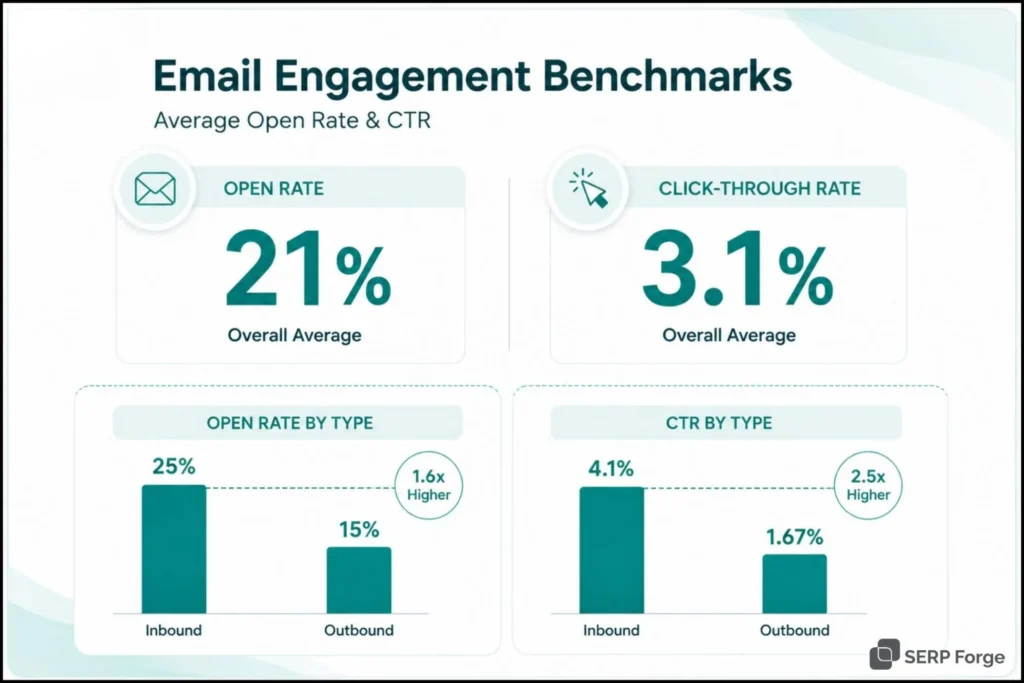
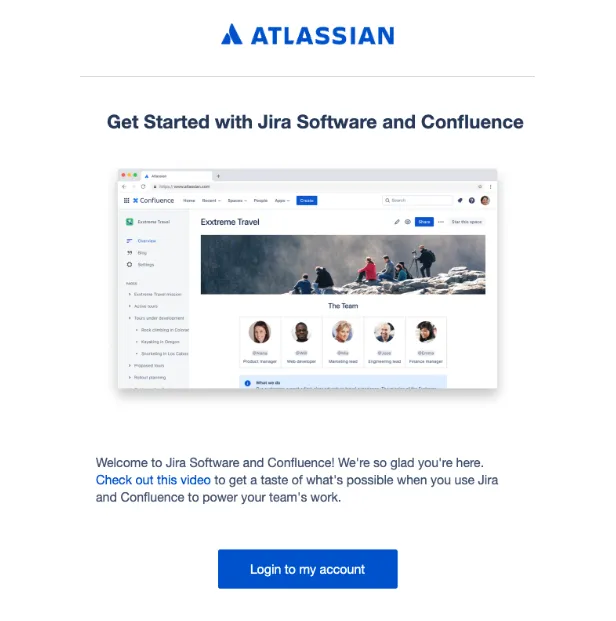
The first email a user receives after signing up. This is your highest-engagement email, often hitting open rates above 50%, compared to the widely accepted 1% to 5% average response rate across most cold emails.
Welcome emails introduce users to your product immediately after signup. These emails usually include:
- Product introduction
- Quick-start instructions
- Login links
- Help resources
- Next-step guidance
A strong welcome email sets expectations and increases activation rates.
2. Onboarding Sequences
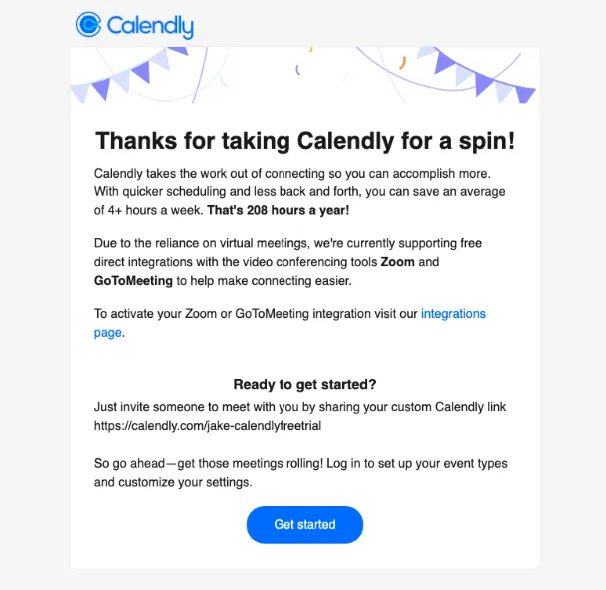
A series of emails (typically three to seven) is sent over the first one to two weeks.
Onboarding emails guide users step-by-step during their initial product experience.
These sequences often include:
- Setup instructions
- Product walkthroughs
- Feature education
- Use cases
- Customer examples
The main goal is to help users experience value quickly.
3. Drip Campaigns
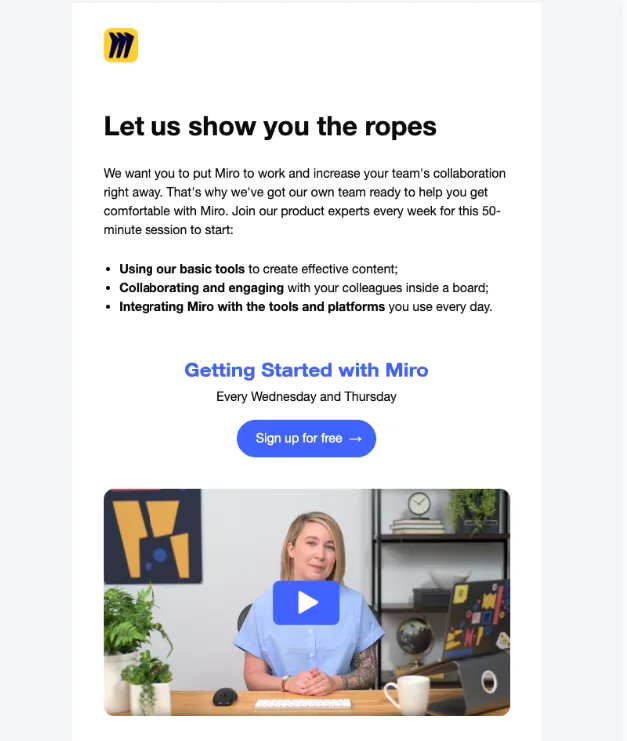
Long-running, educational sequences that nurture users who aren’t ready to convert or activate.
Drip campaigns are automated sequences triggered over time or based on actions.
They help nurture users gradually through:
- Educational content
- Product tips
- Case studies
- Upgrade prompts
- Engagement reminders
4. Product Update Emails
Announcements of new features, improvements, and changelogs. The mistake most teams make is treating these as press releases.
These emails inform users about:
- New features
- Product improvements
- Integrations
- UI changes
- Bug fixes
Product updates help increase feature adoption and user engagement.
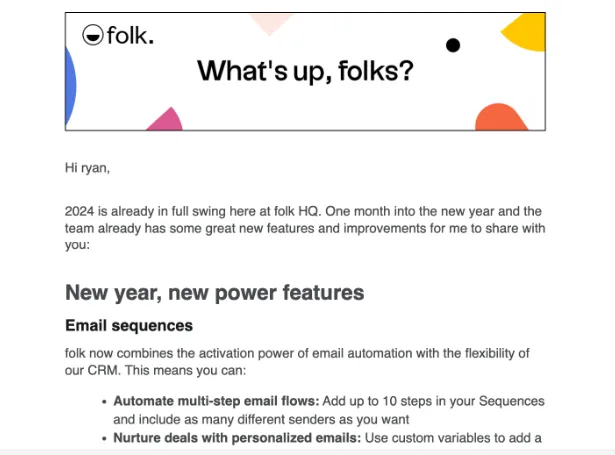
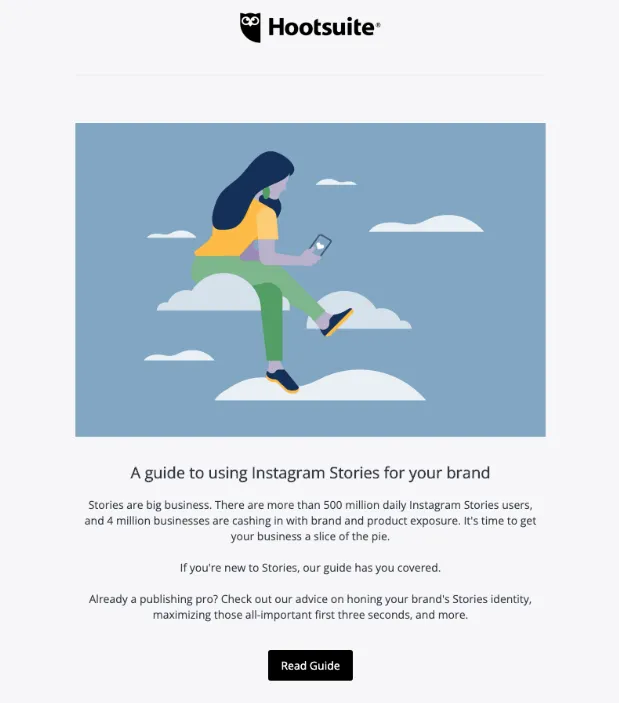
Newsletter Emails
A regular cadence (weekly, biweekly, or monthly) that keeps your brand top-of-mind.
SaaS newsletters share:
- Industry insights
- Product tips
- Educational content
- Customer stories
- Company announcements
Regular newsletters help maintain engagement with active and inactive users.
Transactional Emails
Receipts, password resets, invitation confirmations, and payment notifications. These are functional, but they’re also the most-opened emails you send.
Transactional emails are system-generated messages, such as:
- Password resets
- Billing notifications
- Account verification
- Subscription confirmations
- Usage alerts
These emails often receive high open rates and improve customer experience.
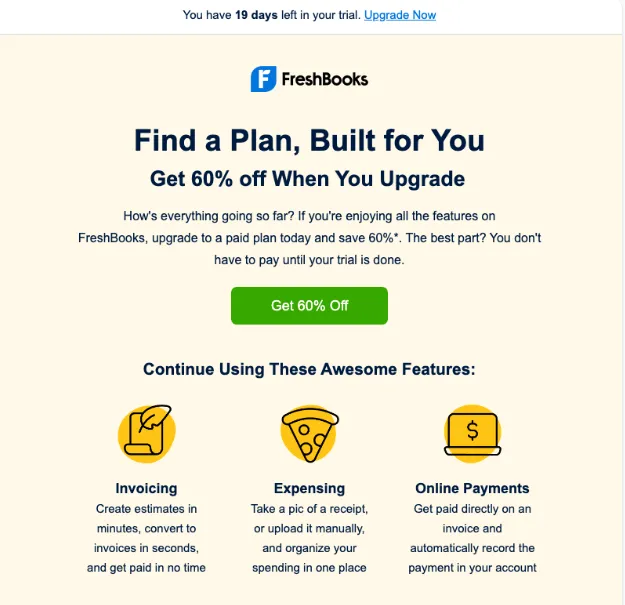
Re-engagement Campaigns
Targeted at users who have gone quiet. These emails ask a direct question (“Still finding value?”), surface what they’re missing, or offer help.
Re-engagement emails target inactive users who stopped using the product.
These campaigns may include:
- Feature reminders
- Product updates
- Personalized offers
- Win-back discounts
- Usage summaries
Done well, re-engagement campaigns can recover 5 to 15 percent of dormant users.
10 Actionable SaaS Email Marketing Strategies
These are the strategies that separate teams shipping high-performing email programs from teams blasting newsletters into the void.
1. Segment users based on behavior, not lists
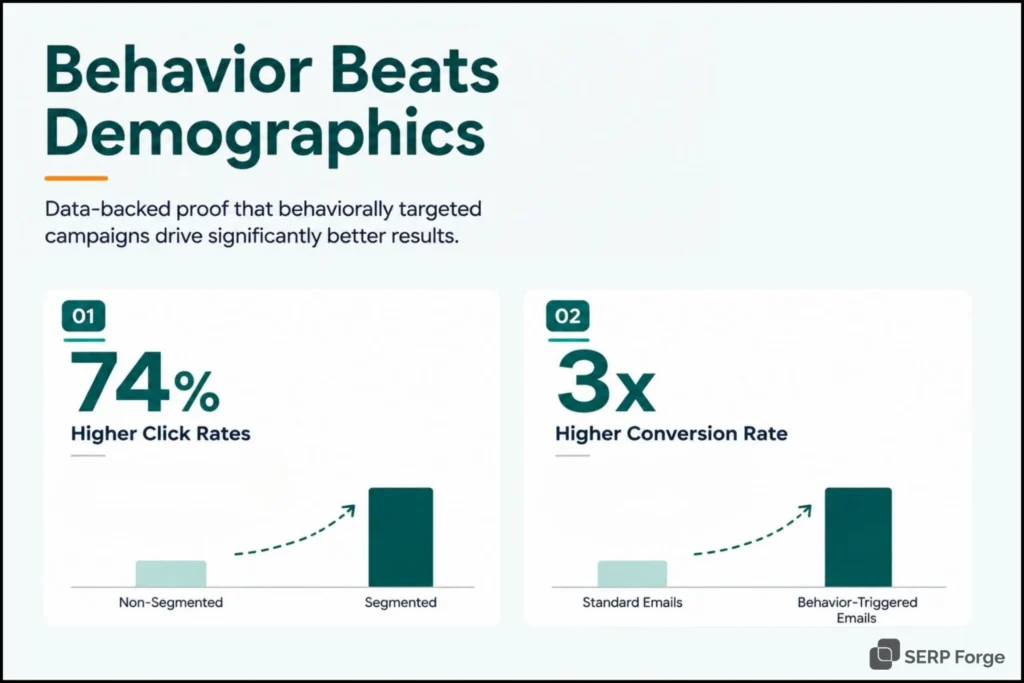
Static lists (“trial users”, “paid users”) are too coarse. The teams segmented emails based on user actions.
This included users who stopped during onboarding, inactive feature users, and users who reached 80% of their plan limit.
Behavioral segments map directly to actions and convert dramatically better than demographic ones.
Static email lists no longer work effectively. Segment users based on:
- Product activity
- Features used
- Trial stage
- Login frequency
- Subscription type
Behavioral segmentation increases relevance and engagement.
2. Write emails based on user intent
Before drafting copy, ask: what was the user trying to do when this email was triggered?
An onboarding email for a user who just connected their Slack workspace should reinforce that win and point to the next step, not start from scratch. Match the email’s content to the user’s mental state.
Understand what users want at each stage.
For example:
- Trial users need activation help
- Paying users need feature education
- Inactive users need motivation to return
Intent-driven messaging improves conversions.
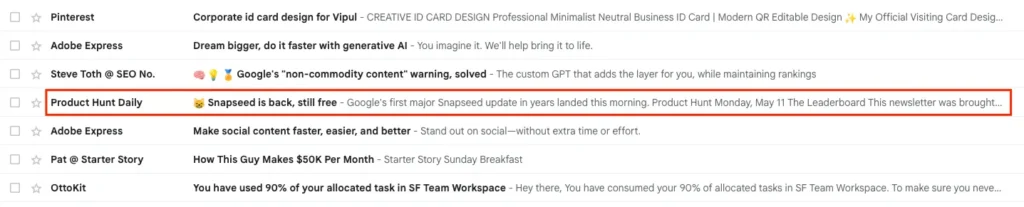
3. Optimize subject lines for curiosity and clarity
The two highest-performing subject line patterns in SaaS are clarity (“Your invoice for October”) and curiosity.
Avoid clever wordplay that obscures the value. A/B test ruthlessly, and remember that what wins on a Tuesday might lose on a Friday.
Strong subject lines improve open rates.
Good SaaS subject lines are:
- Clear
- Specific
- Short
- Benefit-focused
Example:
- “Your team setup is almost complete.”
- “3 features you haven’t tried yet”
4. Improve preview text and first line
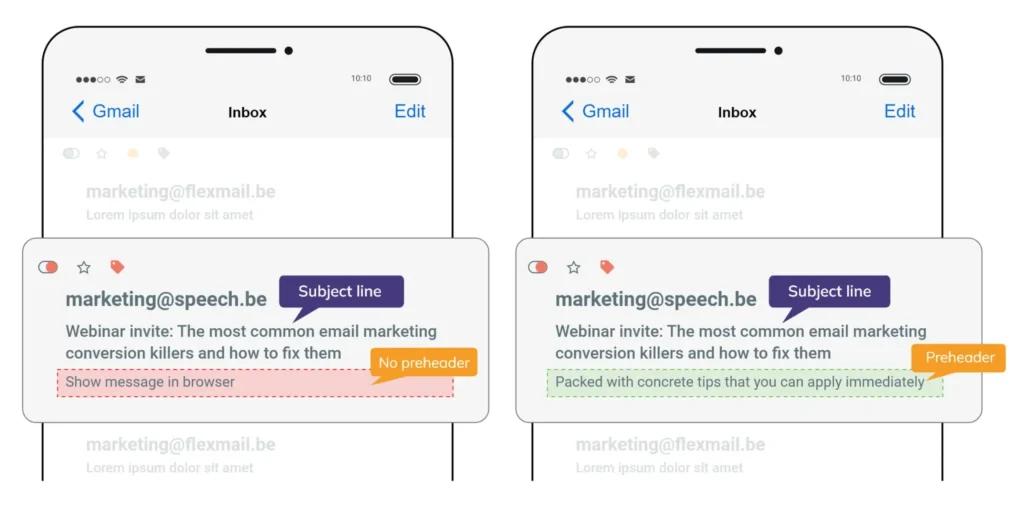
Preview text is the second subject line. Most teams waste it with “View in browser” or default fallback copy.
Use those 90 characters to extend the subject line’s promise. Then make the first line of the email itself a hook, not a greeting.
Preview text heavily influences opens.
Use the first line to:
- Continue the subject line
- Add curiosity
- Explain the value quickly
5. Personalize emails using product data
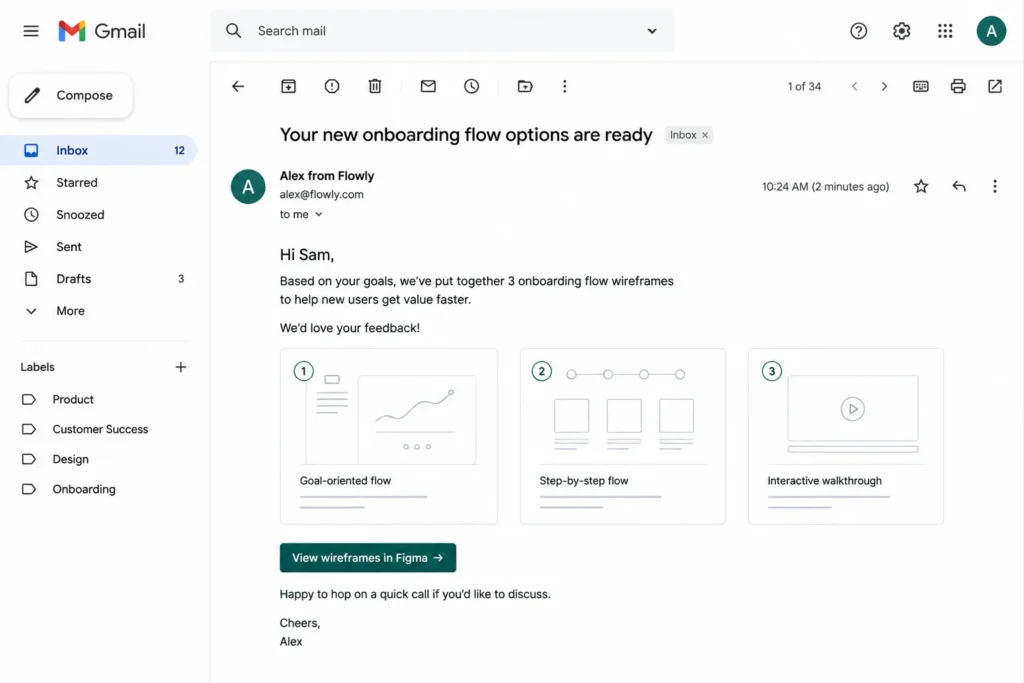
“Hi [First Name]” is not personalization. Personalization is “You’ve created 12 projects this month, but only 3 have been shared with your team.”
Use real product behavior data for personalization.
Examples include:
- Usage activity
- Feature adoption
- Workspace size
- Trial progress
- Subscription usage
Personalized emails outperform generic campaigns.
6. Focus on one goal per email
Every email should have one call to action. If you’re announcing a feature and inviting users to a webinar and asking for a review, you’ll get none of the three.
Pick the single most valuable action for that user, that moment, and design the entire email around it.
Avoid mixing:
- Product education
- Upsells
- Surveys
- Promotions
- Support content
A single CTA improves action rates.
7. Run structured A/B tests regularly
Test one variable at a time: subject line, send time, CTA copy, hero image. Document results. Most teams “test” by changing five things at once and have no idea what moved the needle.
Test:
- Subject lines
- CTA buttons
- Send times
- Copy length
- Personalization elements
Continuous testing improves long-term performance.
A simple cadence of one structured test per major campaign compounds into massive learning over a year.
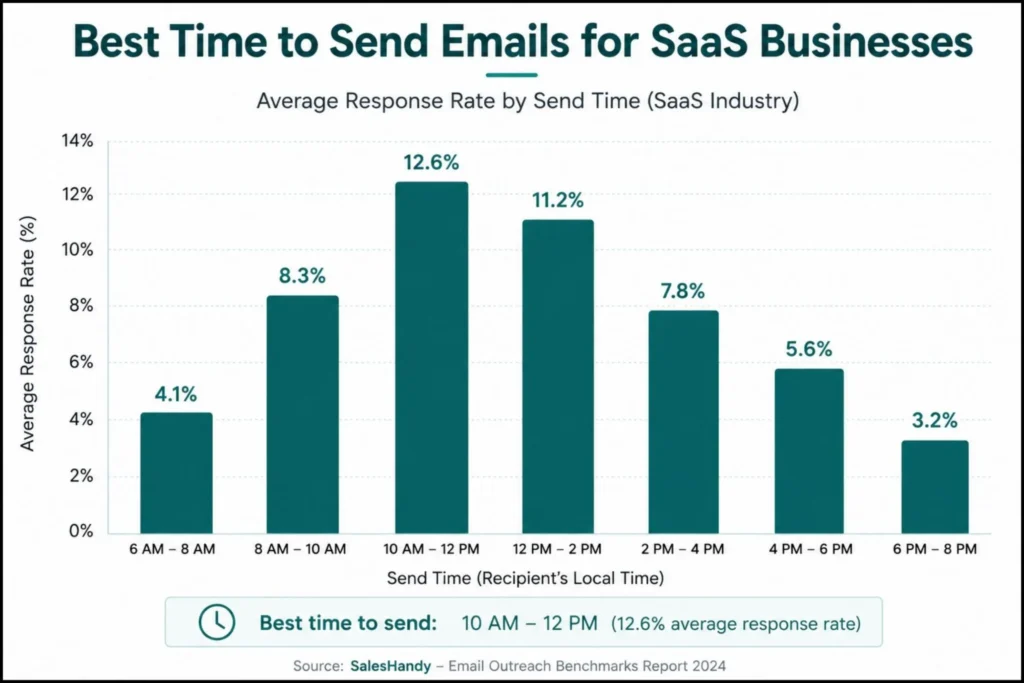
8. Send emails at user-specific active times
The “best time to send” debate is mostly noise. The real answer: send when each individual user is most likely to be active.
Instead of generic send times, optimize delivery based on:
- Previous opens
- Product activity
- Time zones
- User habits
This improves engagement rates.
Modern ESPs can detect a user’s typical engagement window and send accordingly. If yours can’t, segment by time zone at a minimum.
9. Write emails that encourage replies
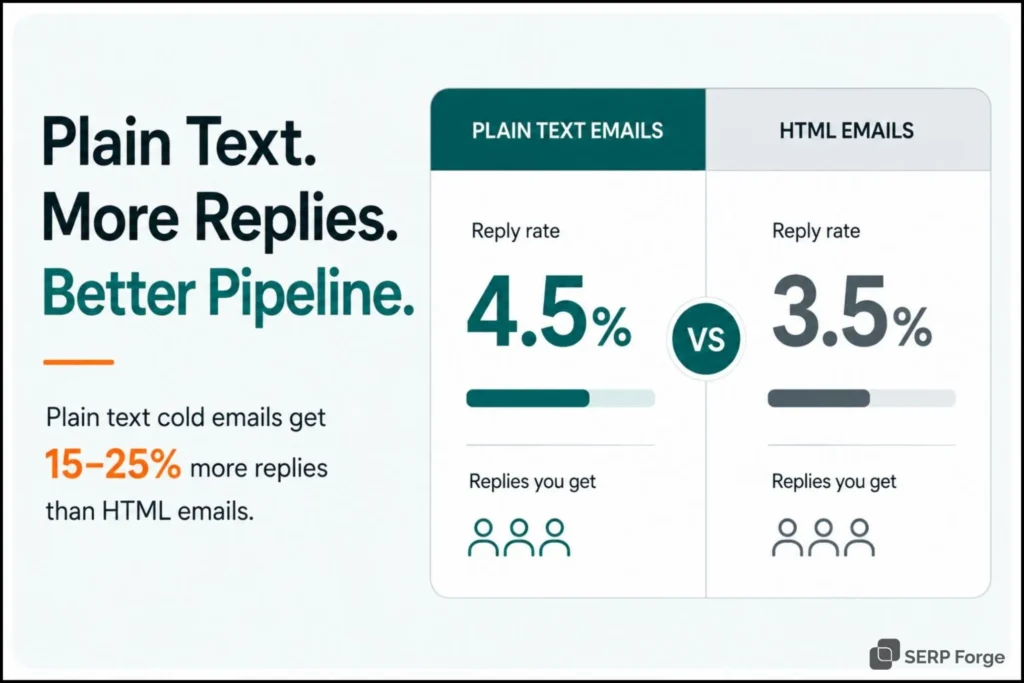
Replies are the single strongest deliverability signal. They tell inbox providers your email is wanted.
Plain-text emails from a real person, ending with a real question, dramatically outperform polished HTML newsletters in both engagement and inbox placement.
Reply-driven emails increase engagement and improve deliverability.
Simple prompts work well:
- “Need help getting started?”
- “What’s stopping your setup?”
Use them strategically in onboarding and re-engagement.
10. Optimize campaigns using cohort data
Don’t just look at aggregate open and click rates. Look at how each cohort, users who signed up in a given month, performs over time.
Analyze cohorts based on:
- Signup month
- Plan type
- Industry
- Activation status
- Retention behavior
Cohort analysis helps improve lifecycle performance over time.
This reveals whether your onboarding is improving, whether a feature launch lifted retention, and which acquisition channels produce the most engaged users.
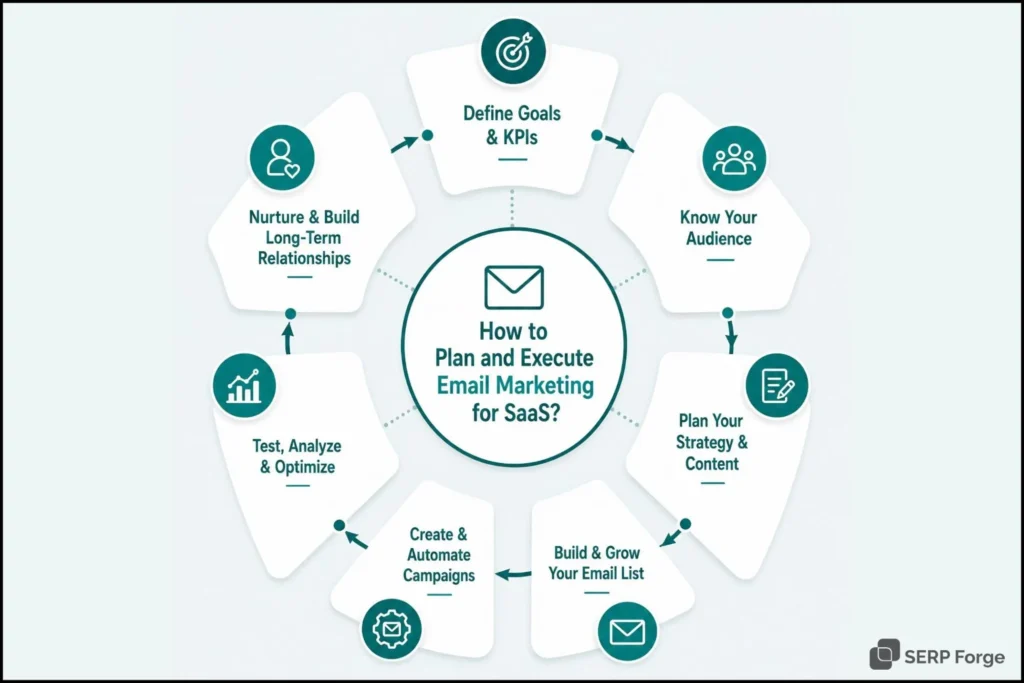
How to Plan and Execute Email Marketing for SaaS?
Strategy is worthless without execution. The operating system for actually shipping a SaaS email program from scratch or rebuilding one that’s broken.
Here’s how SaaS companies can build and execute an effective email marketing strategy:
Map customers based on lifecycle stages
Start by mapping every stage a user passes through: visitor, signup, activated, paying, expanded, dormant, churned.
For each stage, define the goal of the email at that stage. Visitors need education. New signups need activation. Paying users need expansion and retention. Dormant users need reactivation.
Build your email list from product users
In SaaS, your most valuable list is your product database. Every signup is a subscriber.
Make sure your product and email tool are connected so that every new user, every plan change, every feature usage event flows into your email platform automatically.
Segment users based on behavior and plan
Within each lifecycle stage, segment further by behavior and plan.
A free user who’s used the product daily for two weeks is in a very different state from a free user who signed up and never returned. Treat them differently.
Plan email content for each segment
For each segment, define the message that will move them to the next stage.
Document this in a simple grid: segment, goal, message, CTA, success metric. This grid becomes your roadmap.
Decide when emails should be sent
Map every email to a trigger. Time-based (“two days after signup”) works for some, but behavioral triggers (“user invited a teammate”) almost always perform better.
Define the trigger explicitly for each email in your plan.
Set up email sequences for each segment
Build the actual sequences in your email tool. Start with the highest-impact segment, usually new signups, and ship a complete onboarding sequence before moving on. Don’t try to launch ten campaigns at once.
Connect your email tool with your CRM
Your CRM (or product database) is the source of truth for user data. Your email tool needs real-time access to it.
Without this integration, your emails will be stale, irrelevant, or both. This is non-negotiable infrastructure.
Send emails to each segment
Once sequences are built and tested, turn them on. Start with a small percentage of users to catch errors, then scale up.
Track key email performance metrics
Open rate, click rate, and unsubscribe rate are the basics. The metrics that actually matter for SaaS are downstream: did this email increase activation, retention, or expansion revenue? Tie every email back to a business outcome.
Test different versions of emails
A/B test subject lines, copy, send times, and CTAs. Run tests with statistical significance, not on samples of 200 users.
Improve emails based on results
Review performance monthly. Kill emails that aren’t working. Double down on the ones that are. Email programs decay if they’re not actively maintained.
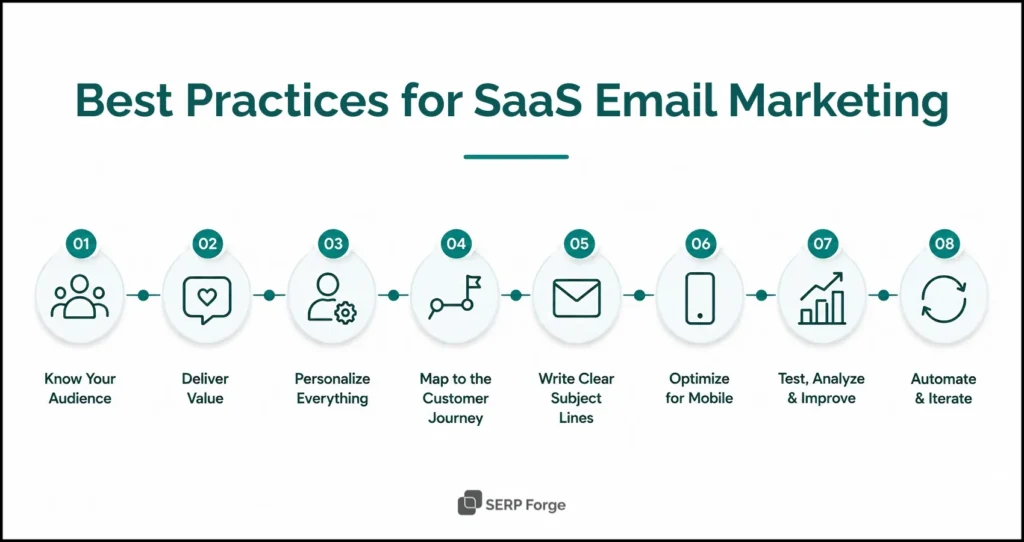
Best Practices for SaaS Email Marketing
These are the meta-principles that separate good email programs from great ones.
Here are the best practices that drive stronger SaaS email marketing results:
Keep messaging consistent across email and product
If your email promises “set up your first dashboard in 5 minutes” and the product onboarding takes 20 minutes and three integrations, you’ve broken trust. Email and product must tell the same story.
Maintain clean and updated user data
Garbage in, garbage out. Suppress bounced addresses, deduplicate users, and keep your segmentation rules current as your product evolves. A monthly hygiene routine prevents the slow rot that destroys deliverability.
Ensure high email deliverability and open rate
Authenticate your domain with SPF, DKIM, and DMARC. Warm up new sending domains gradually. Monitor your sender reputation. The best subject line in the world doesn’t matter if you’re landing in spam.
Design emails for quick reading and action
Most users read email on mobile in under 10 seconds. Use short paragraphs, clear hierarchy, and a single, prominent CTA. If your email needs a scroll bar to read on mobile, it’s too long.
Document and standardize your email workflows
As your program grows, complexity explodes. Document every campaign: trigger, audience, goal, content, and owner. This documentation is what lets you scale beyond a single lifecycle marketer.
Common Mistakes in SaaS Email Marketing
These are the patterns that quietly kill SaaS email programs. Avoid all five.
Here are the most common email marketing mistakes SaaS companies should avoid:
Over-emailing Users
Sending too many emails is the fastest way to train users to ignore you, or worse, mark you as spam.
If a user is on three sequences at once, they’re getting an email a day from you. Build global frequency caps and respect them.
Poor Segmentation
Sending the same email to everyone is the email equivalent of TV advertising in a programmatic world.
Even basic segmentation, free vs. paid, active vs. dormant, will lift performance significantly.
Ignoring User Intent
Sending a “buy now” email to a user who just signed up two hours ago, before they’ve experienced any value, is intent-blind.
Respect where the user is in their journey.
Lack of Personalization
Generic emails get generic results. If you have product data, use it; if you don’t, invest in the integration that gives you access. There’s no excuse for “Dear valued customer” in 2026.
Weak Onboarding Sequences
Onboarding is the highest-leverage email sequence you’ll ever build. A weak onboarding flow caps the ceiling of every other metric: activation, retention, and expansion. Invest disproportionately here.
Real Examples of SaaS Email Marketing (Case Studies)
Some of the most successful SaaS companies use email marketing to improve onboarding, increase product adoption, and drive upgrades throughout the customer lifecycle.
These examples show how well-timed and behavior-focused emails can directly influence engagement and retention.
Here are some real SaaS email marketing examples and why they work:
Onboarding Email Example
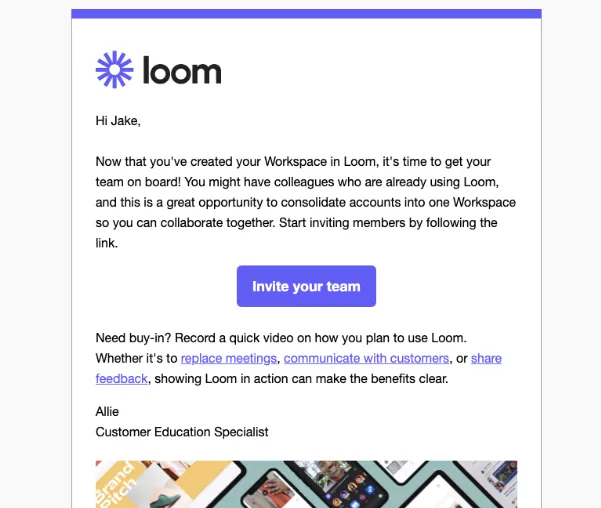
Loom’s onboarding sequence is a masterclass. The first email arrives within minutes of signup with a 30-second video from the founder, recorded in Loom itself, demonstrating the product while welcoming the user.
The CTA isn’t “log in”, it’s “record your first Loom in 60 seconds.” The email demonstrates the product’s value while delivering the activation prompt.
Conversion to the first recording is the metric, and this email moves it.
Retention Campaign Example
Grammarly sends a weekly “writing report” email to active users: words checked, productivity score, and top mistakes. It works on three levels.
It reinforces the value they’re already getting (most users underestimate how much they’ve used the product).
It surfaces a number that creates loss aversion (canceling means losing this). And it provides a personalized, data-rich experience that no competitor can easily replicate. Retention impact: significant.
Upsell Email Example
Notion’s plan-limit emails are a clean example of behavioral upselling.
When free users approach their block limit, they receive an email showing how many blocks they have used and what they have created so far.
Instead of focusing on restrictions, the message positions the upgrade as a sign that they have outgrown the free plan.
The email converts because it arrives at the moment of maximum intent.
What is the Best Email Marketing Software Need for Your SaaS?
The right tool depends on your stage and complexity.
For early-stage SaaS (under 10,000 users), tools like Loops, Customer.io, and Resend offer modern infrastructure, behavioral triggers, and developer-friendly APIs without enterprise pricing.
For growth-stage SaaS, Customer.io, Braze, and Iterable provide the segmentation depth, multi-channel orchestration, and reporting maturity you’ll need as your program scales past dozens of campaigns.
For enterprise SaaS, Marketo, HubSpot, and Salesforce Marketing Cloud bring the integrations, governance, and team-collaboration features required at scale, though they trade off some of the agility of newer tools.
Conclusion
SaaS email marketing in 2026 isn’t about clever subject lines or templated newsletters. It’s about building a behavior-driven system that meets users where they are, in the product, in their journey, in their inbox, and moves them forward.
The companies winning at this aren’t the ones with the biggest teams or the fanciest tools. They’re the ones who treat email as a core part of the product experience, who segment by behavior, who personalize with real data, and who relentlessly measure what’s working.
Start with one sequence. Make it excellent. Then build the next. Within a year, you’ll have a lifecycle program that compounds, every month, into more activated users, lower churn, and higher MRR.
SaaS Email Marketing FAQs
How often should a SaaS company send marketing emails?
There’s no universal answer, but a useful rule of thumb is: as often as you have something genuinely valuable to say. For most SaaS companies, that’s two to four behavioral emails per user per week during active lifecycle stages, plus a weekly or biweekly newsletter. Set global frequency caps to prevent fatigue.
What’s a good open rate for SaaS emails?
Benchmarks vary by email type. Transactional emails should hit 60 to 80 percent. Welcome and onboarding emails should hit 40 to 60 percent. Behavioral emails should hit 25 to 40%. Broadcast newsletters typically land at 20 to 30 percent. If you’re well below these ranges, deliverability is usually the culprit.
Should I use plain-text or HTML emails?
Both, depending on context. Plain-text emails from a real person work best for onboarding, re-engagement, and sales follow-ups. HTML emails work best for newsletters, product launches, and visual announcements. Test both for each campaign type.
How do I improve my SaaS email deliverability?
Authenticate your domain (SPF, DKIM, DMARC), warm up new sending domains gradually, suppress bounced and unengaged users, and prioritize content that drives replies and clicks. Deliverability is a long game; there are no shortcuts.
When should I hire a dedicated lifecycle email marketer?
When email becomes a meaningful revenue lever and the complexity of your campaigns exceeds what a generalist can manage, typically around $1M to $3M ARR. Before that, a strong product marketer or growth marketer can run the program with the right tooling.
Can email marketing replace paid acquisition for SaaS?
No, but it’s the highest-ROI complement to it. Paid acquisition fills the top of the funnel; email is what converts those acquisitions into activated, retained, and expanded customers. The two work together; you need both.

