




Measure how efficiently your SaaS business turns sales and marketing investments into recurring revenue growth.
For example, if you generate $500,000 in new ARR from $150,000 in sales and marketing spend while growing ARR from $1.6M to $2M, your SaaS Magic Number helps show whether that growth is efficient.
Use this calculator to instantly calculate your sales efficiency, ARR growth rate, and overall growth performance.
Whether you’re a founder, CFO, revenue leader, investor, or SaaS operator, this calculator helps you understand if your go-to-market spend is generating sustainable growth.
What Is the SaaS Magic Number?
The SaaS Magic Number is a sales efficiency metric that measures how effectively a SaaS company converts sales and marketing spending into recurring revenue growth.
It helps businesses evaluate whether their customer acquisition efforts are generating enough revenue to justify the investment.
A higher SaaS Magic Number generally indicates stronger growth efficiency, while a lower number may suggest that sales and marketing spending is not producing enough recurring revenue.
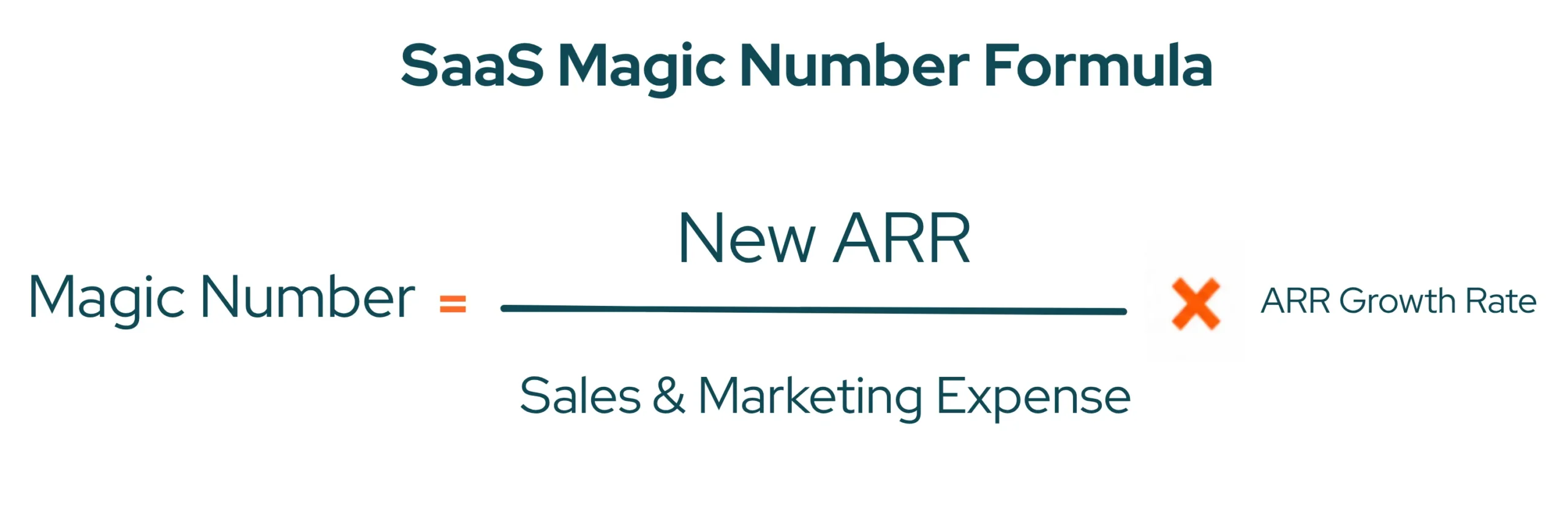
SaaS Magic Number Formula
\text{Magic Number}=(\text{New ARR} \div \text{Sales & Marketing Expense}) \times \text{ARR Growth Rate}
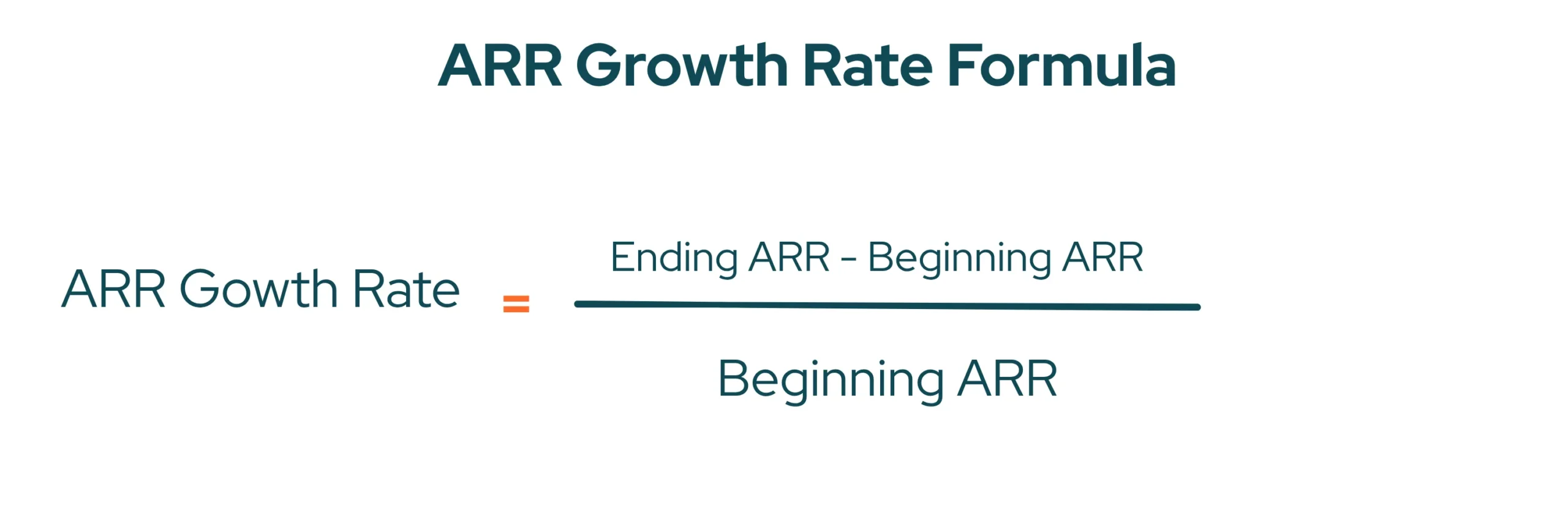
ARR Growth Rate Formula
\text{ARR Growth Rate}=(\text{Ending ARR}-\text{Beginning ARR})\div\text{Beginning ARR}
Investors, founders, and revenue teams often use this metric to evaluate the effectiveness of growth investments and benchmark performance over time.
How to Use the SaaS Magic Number Calculator
Follow these simple steps to calculate your SaaS Magic Number and evaluate sales and marketing efficiency.
Step 1: Enter Your New ARR
Input the total Annual Recurring Revenue (ARR) generated from new customers during the selected period.
Formula Used:
[
\text{New ARR} = \text{Revenue from New Customers}
]
Example: Enter $500,000 if new customers generated $500,000 in ARR.
Step 2: Add Sales & Marketing Expense
Enter your total sales and marketing spend for the same period.
Formula Used:
[\text{Sales Efficiency Ratio} = \text{New ARR} \div \text{Sales & Marketing Expense}]
Example:
[500,000 \div 150,000 = 3.33]
This means the company generated $3.33 in new ARR for every $1 spent on sales and marketing.
Step 3: Enter Beginning ARR
Provide the ARR at the start of the selected month, quarter, or year.
Formula Used in Growth Calculation:
[\text{ARR Growth Rate} = (\text{Ending ARR} – \text{Beginning ARR}) \div \text{Beginning ARR}]
Example: Enter $1,600,000.
Step 4: Enter Ending ARR
Input the ARR at the end of the period.
Formula Used in Growth Calculation:
[(2,000,000 – 1,600,000) \div 1,600,000 = 25%]
Example: Enter $2,000,000.
This indicates ARR grew by 25% during the selected period.
Step 5: Select the Time Period
Choose whether the data represents a Month, Quarter, or Year.
Important: All values must belong to the same reporting period to ensure accurate results.
Example:
- Quarterly New ARR → Quarterly S&M Expense → Quarterly ARR values
- Annual New ARR → Annual S&M Expense → Annual ARR values
Step 6: Calculate
Click the Calculate Magic Number button to generate your results.
Final Formula:
\text{Magic Number}=(\text{New ARR}\div\text{Sales & Marketing Expense})\times\text{ARR Growth Rate}
Example Calculation:
[(500,000 \div 150,000) \times 25%]
[3.33 \times 0.25 = 0.83x]
The calculator will instantly display:
- SaaS Magic Number: 0.83x
- Performance Rating: Good
- ARR Growth Rate: 25%
- New ARR / S&M Expense Ratio: 3.33x
- Calculation Breakdown: Complete formula and intermediate calculations
This helps you quickly understand whether your sales and marketing investments are generating efficient recurring revenue growth.
SaaS Magic Number Benchmarks
Use these industry-standard benchmarks to evaluate your SaaS Magic Number performance:
| Magic Number | Rating | Meaning |
| Below 0.5x | Poor | Inefficient growth |
| 0.5x – 0.75x | Fair | Needs improvement |
| 0.75x – 1.0x | Good | Healthy efficiency |
| Above 1.0x | Excellent | Strong growth efficiency |
These benchmarks provide a quick way to evaluate how effectively your SaaS company is converting growth investments into recurring revenue.
What Does a Good SaaS Magic Number Mean?
A good SaaS Magic Number indicates that your company is generating meaningful recurring revenue growth from each dollar invested in sales and marketing.
Generally:
- Numbers above 1.0x suggest highly efficient growth.
- Values between 0.75x and 1.0x typically indicate healthy performance.
- Values below 0.75x may signal opportunities to improve customer acquisition efficiency, conversion rates, pricing, or retention.
Keep in mind that benchmarks can vary based on company size, growth stage, pricing model, and market conditions.
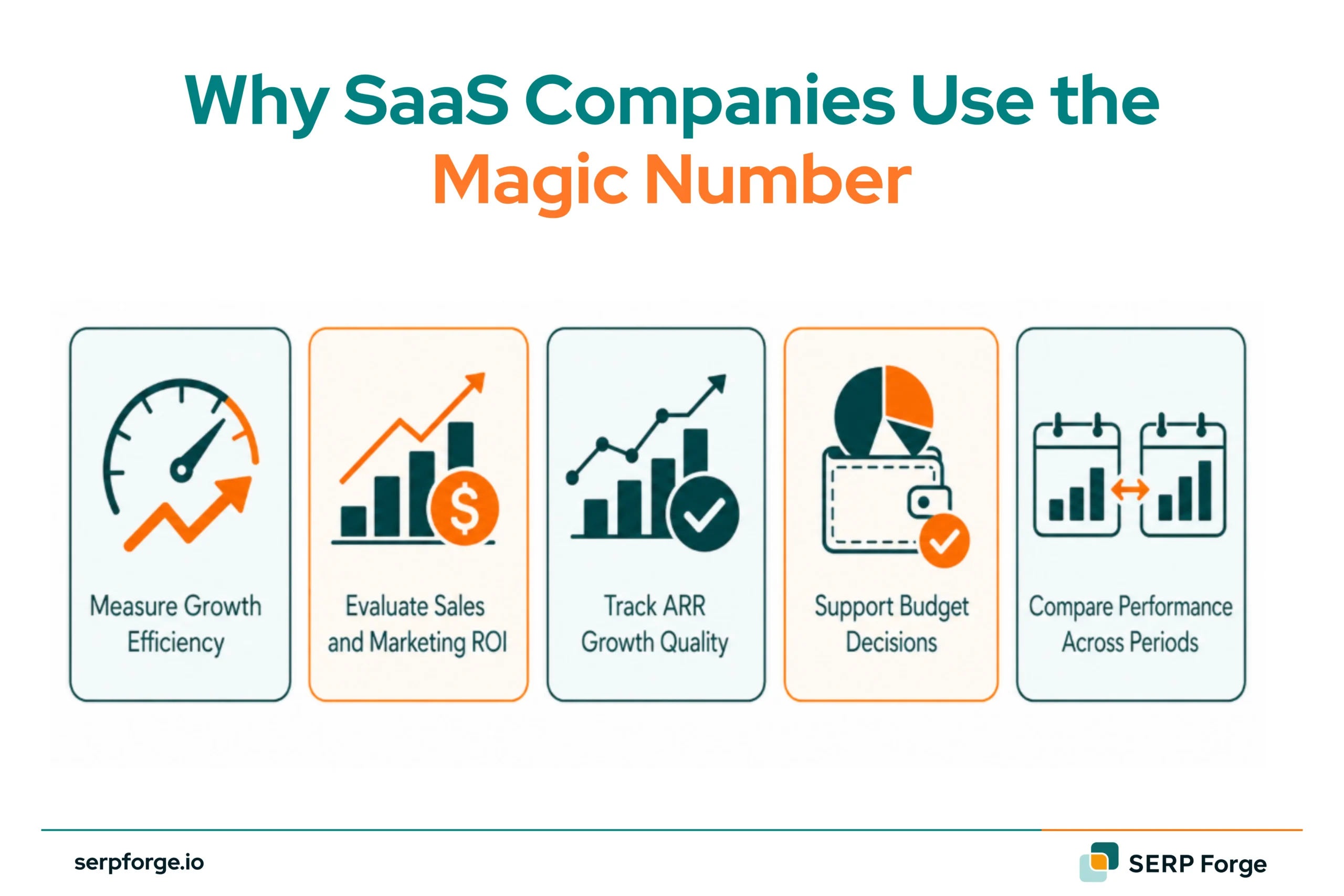
Why SaaS Companies Use the Magic Number
The SaaS Magic Number helps businesses measure the efficiency of their sales and marketing investments by showing how effectively spending translates into recurring revenue growth:
Measure Growth Efficiency: Understand how effectively revenue teams convert spending into recurring revenue growth.
Evaluate Sales and Marketing ROI: Assess whether customer acquisition investments are producing strong returns.
Track ARR Growth Quality: Look beyond revenue growth alone and evaluate the efficiency behind that growth.
Support Budget Decisions: Use performance data to determine whether sales and marketing budgets should be increased, optimized, or reduced.
Compare Performance Across Periods: Monitor trends over time by calculating the metric monthly, quarterly, or annually.
What Common Errors Should You Avoid When Calculating the SaaS Magic Number?
Avoid these mistakes when calculating your SaaS Magic Number:
Using Zero Sales and Marketing Expense: The calculation requires sales and marketing spend. A value of zero creates a divide-by-zero error.
Entering Beginning ARR as Zero: ARR growth rate cannot be calculated when Beginning ARR equals zero.
Mixing Monthly and Annual Values: All inputs should use the same reporting period to maintain accuracy.
Using Negative Values: Negative revenue or expense values should not be included in the calculation.
Confusing New ARR With Ending ARR: New ARR represents revenue added during the period, while Ending ARR represents total recurring revenue at the end of the period.
Want Better SaaS Growth Efficiency? SERP Forge Can Help
The SaaS Magic Number is one of the most widely used SaaS growth efficiency metrics. It combines sales efficiency and ARR growth into a single number, helping businesses understand whether their revenue growth justifies their sales and marketing investment.
By regularly tracking this metric, SaaS companies can make smarter budgeting decisions, improve acquisition efficiency, and build a more sustainable growth strategy.
Frequently Asked Questions
What is a good SaaS Magic Number?
A SaaS Magic Number between 0.75x and 1.0x is generally considered healthy, while anything above 1.0x is often viewed as excellent.
Can the SaaS Magic Number be negative?
Yes. If Ending ARR is lower than Beginning ARR, the ARR growth rate becomes negative, resulting in a negative Magic Number.
Why is sales and marketing expense required?
The metric measures how efficiently sales and marketing investments generate recurring revenue growth. Without spending data, the calculation cannot be performed.
What happens if Beginning ARR is zero?
ARR growth rate cannot be calculated because the formula requires Beginning ARR as the denominator.
Should I calculate it monthly, quarterly, or yearly?
You can calculate it using any period, provided all inputs represent the same time frame. Quarterly calculations are commonly used by SaaS companies.
Is SaaS Magic Number the same as CAC payback?
No. SaaS Magic Number measures overall sales efficiency and revenue growth, while CAC Payback Period measures how long it takes to recover customer acquisition costs from gross profit.