


B2B SaaS has a discovery problem. The market adds new tools every month and purchase decisions now involve six or more stakeholders.
By the time a buyer talks to your sales team, the shortlist is already set. They have read G2 reviews, asked peers and run comparisons through ChatGPT and Perplexity before a single email lands.
That means most outreach arrives too late. Spreading the budget across every channel makes it worse. The B2B SaaS marketing channels that win in 2026 reach buyers while they are still forming opinions.
The latest SaaS marketing trends explain why these channels are gaining momentum.
Below, we break down ten channels by cost, pipeline speed and stage fit.
What Are the Most Effective B2B SaaS Marketing Channels in 2026?
There is no universal answer. That said, data consistently points to ten channels that drive the most pipeline for B2B SaaS companies in 2026.
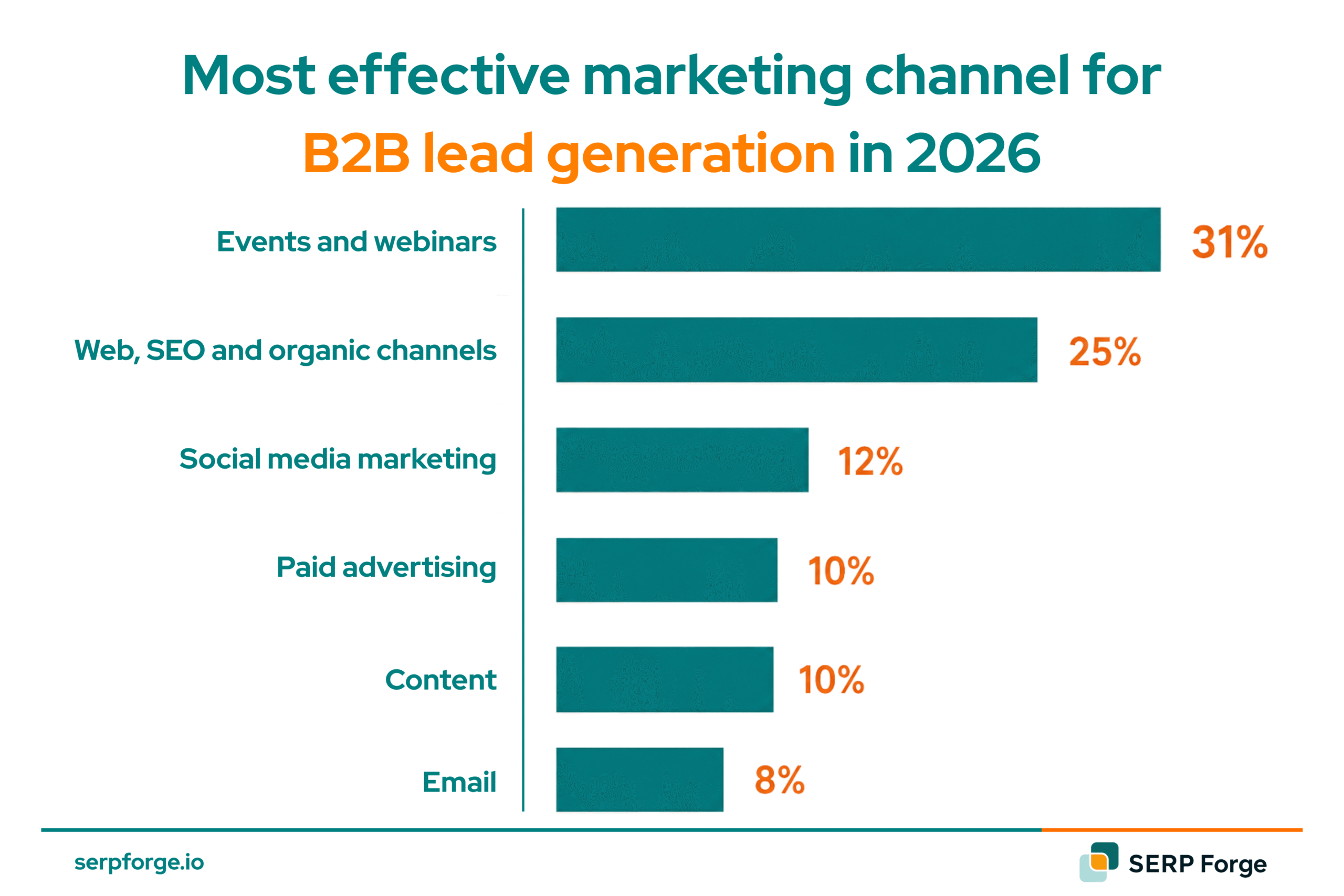
Here is how the ten best B2B SaaS marketing channels compare across cost, pipeline speed and stage fit:
| Channel | Monthly Cost | Time to Pipeline | Sales Motion |
|---|---|---|---|
| SEO + Content | $12K–$15K | 4–6 months | Inbound-led |
| Generative Engine Optimization (GEO) | $8K–$12K | 3–5 months | Top-of-awareness inbound |
| LinkedIn Advertising | $5K–$20K | 3–4 months | Outbound-to-inbound bridge |
| Account-Based Marketing (ABM) | $25K–$35K | 4–8 months | Enterprise sales-led |
| Paid Search (PPC) | $3K–$30K | 1 month | High-intent direct response |
| Product-Led Growth (PLG) | $15K–$50K | 6–12 months | Product-to-sales handoff |
| Referral & Partner Programs | $8K–$25K | 6–9 months | Warm inbound |
| Webinars & Virtual Events | $15K–$35K | 2–4 months | Mid-funnel accelerator |
| Cold Email | $1K–$5K | 3–6 months | Outbound conversation opener |
| Organic Social Media | $3K–$10K | 6–12 months | Awareness-to-inbound |
1. SEO and Content
At 748% ROI, SEO is the highest-returning channel in B2B SaaS and the only one that keeps generating leads after you stop paying.
Content published in month 4 still drives pipeline in month 24. No paid channel offers that.
The 2026 edge is AI citation visibility. Getting cited inside ChatGPT, Perplexity, and Google AI Overviews puts your brand in front of buyers as they form their vendor shortlist, at zero incremental cost per impression.
AI models cite content with specific claims, original data, and a clear point of view. Hedged “it depends” content gets ignored entirely.
Build a content strategy that drives organic traffic, earns AI citations, and positions your brand as the authoritative answer in your category.
| Metric | Value |
|---|---|
| Yearly Cost | $144K–$180K |
| Expected ROI | 748% |
| Timeline | 4–6 months |
| Sales Motion | Inbound-led. Prospects arrive pre-educated, allowing SDRs to focus on addressing objections and closing gaps rather than providing basic education. |
2. Generative Engine Optimization (GEO)
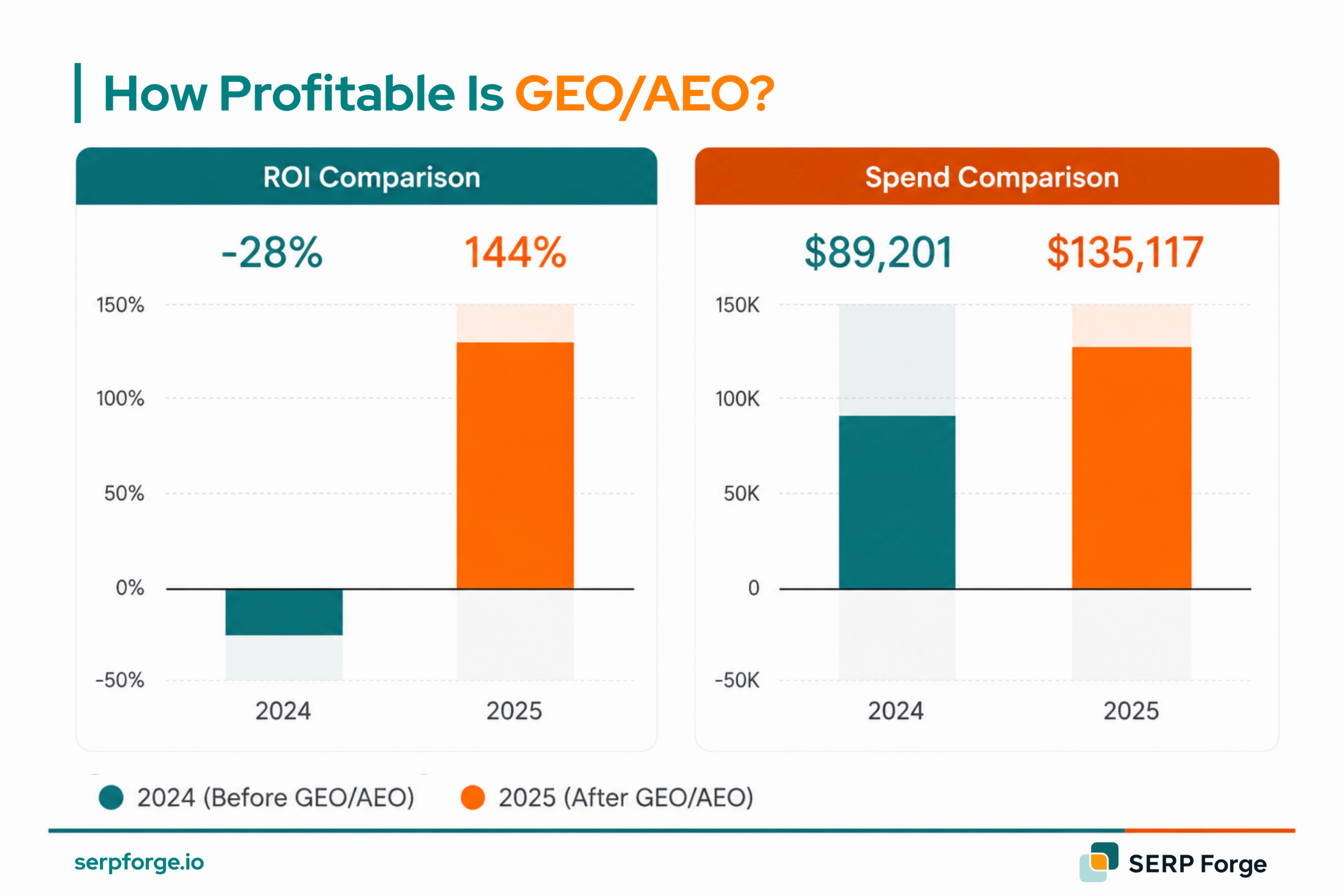
GEO returns 520% ROI and is still largely unclaimed territory. Most SaaS companies have no GEO strategy, meaning early movers build AI citation authority before competitors realize it is a channel worth owning.
GEO captures buyers before they form a vendor shortlist, before they run a Google search, and before a competitor is named.
One well-optimized piece of content cited across AI platforms generates continuous, zero-cost impressions across thousands of daily buyer conversations.
30 to 40% of informational B2B queries now resolve without a click. That is pipeline leaking before it forms.
Optimize your content and brand presence to appear inside AI-generated answers before a competitor is ever mentioned.
| Metric | Value |
|---|---|
| Yearly Cost | $96K–$144K |
| Expected ROI | 520% |
| Timeline | 3–5 months |
| Sales Motion | Top-of-awareness. Captures buyers before a competitor is considered or enters the evaluation process. |
3. LinkedIn Advertising
LinkedIn delivers 192% ROI with the most precise B2B targeting of any paid platform. Job title, seniority, company size, and industry in one place means budget reaches actual ICP members, not demographic approximations.
The bigger benefit is pipeline quality. LinkedIn-sourced leads arrive having already seen your content and engaged with your thinking.
That pre-warm state shortens discovery calls, reduces sales cycle length, and increases close rates over cold outbound. Teams running a single cold “book a demo” layer waste that advantage entirely.
Layer 1 builds ICP recognition through thought leadership and short video. Layer 2 retargets only engaged viewers with a low-friction offer like a benchmark report or ROI calculator.
That retargeted audience converts at 3 to 5x cold rates.
Run a sequenced LinkedIn campaign that builds ICP trust first and converts warm audiences into pipeline second.
| Metric | Value |
|---|---|
| Yearly Cost | $60K–$240K |
| Expected ROI | 192% |
| Timeline | 3–4 months |
| Sales Motion | Warms cold ICPs into inbound motions before sales engages, increasing familiarity and intent prior to direct outreach. |
4. Account-Based Marketing (ABM)
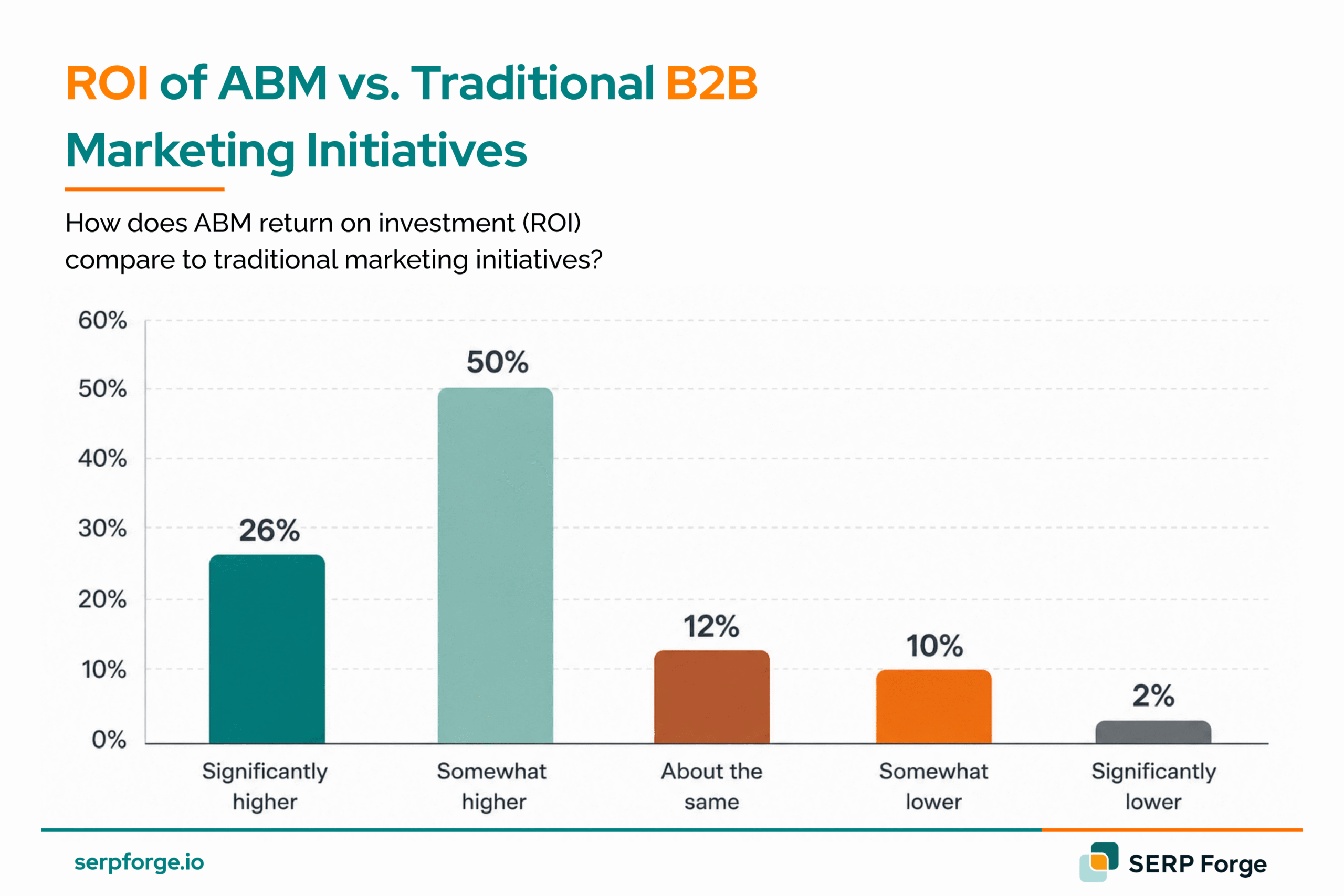
ABM delivers 240% ROI and the highest average deal size of any channel on this list. You are not fishing with a net.
You are targeting the exact companies most likely to buy, expand, and become reference customers.
The ROI case is deal quality, not volume. One ABM-sourced enterprise contract at $200K ARR returns the entire program cost.
ABM also generates pre-sales intelligence: which stakeholders are active, what content they consume, what objections they carry, all before a sales conversation starts.
It fails when teams target too many accounts, quit too early, or touch only one stakeholder.
Focus on 15 to 50 named accounts using intent signals from Bombora and G2 Buyer Intent, reach 3 or more stakeholders simultaneously, and commit to at least 6 months.
Most buying committees need 8 to 12 touchpoints before acting.
Launch a precision ABM program targeting your highest-value accounts with coordinated, multi-stakeholder outreach over a sustained timeline.
| Metric | Value |
|---|---|
| Yearly Cost | $300K–$420K |
| Expected ROI | 240% |
| Timeline | 4–8 months |
| Sales Motion | Enterprise-led. Account Executives receive intent-qualified accounts along with engagement data and buying signals, enabling more focused and efficient sales conversations. |
5. Paid Search (PPC/SEM)
PPC has the lowest ROI on this list at 36% but the fastest results: 30 days. For SaaS companies testing new positioning or needing pipeline quickly, that speed has real dollar value.
The real benefit is validated signal, not volume. Three weeks of PPC spend reveals which messaging converts, which segments respond, and which keywords carry real purchase intent.
That intelligence funds a more confident organic strategy and reduces wasted spend across other channels. At $15 to $50 CPC and 2 to 5% conversion rates, cost per lead runs $500 to $1,500.
Use it for positioning tests, defensive brand bidding, and competitor comparison campaigns that capture buyers already in decision mode, not as a primary volume engine.
Responding to a PPC lead within 5 minutes increases conversion by over 400% (LeadConnect).
Use PPC to validate positioning fast, protect your brand from competitors, and capture high-intent buyers already in decision mode.
| Metric | Value |
|---|---|
| Yearly Cost | $36K–$360K |
| Expected ROI | 36% |
| Timeline | 1 month |
| Sales Motion | High-intent, fast-path acquisition. These prospects typically demonstrate the strongest purchase intent and are often the hottest leads in the funnel. |
6. Product-Led Growth (PLG)
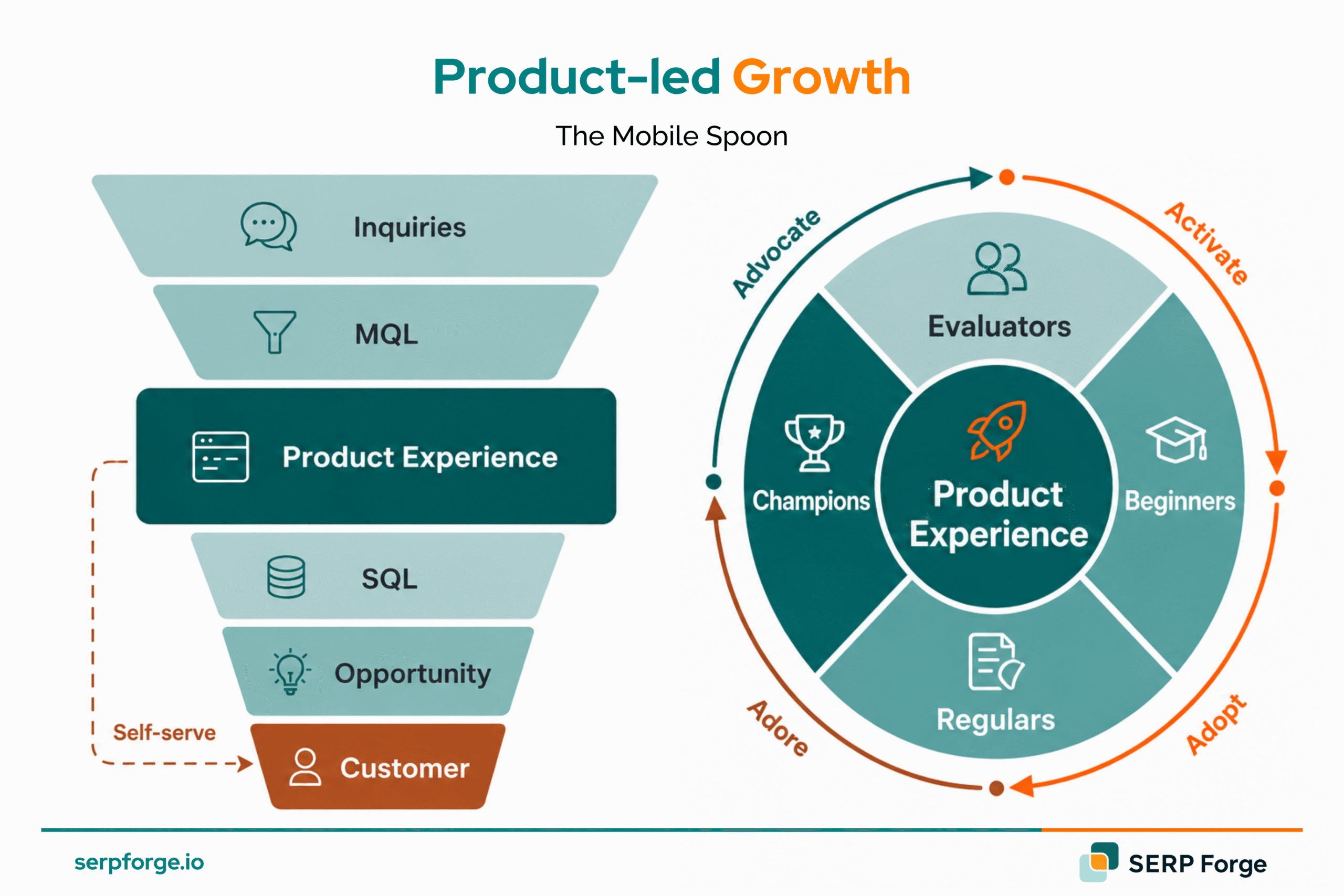
PLG delivers 300 to 600% ROI and uniquely reduces CAC as you scale. Most channels get more expensive with volume. PLG gets cheaper.
Activation infrastructure compounds, referrals grow organically, and PLG-sourced customers cost 3 to 5x less to acquire than outbound-sourced ones while churning at lower rates because they experienced product value before talking to sales.
The critical mistake is treating free trial signups as pipeline. A Product Qualified Lead is a user who has crossed activation milestones confirming core value: invited a teammate, completed a third project, or integrated a third-party tool.
Route PQL alerts to sales with full usage context. If fewer than 40% of signups reach the activation milestone, fix activation before scaling acquisition.
Design a product experience that turns free users into PQLs and hands sales a warm, usage-qualified lead with full context.
| Metric | Value |
|---|---|
| Yearly Cost | $180K–$600K |
| Expected ROI | 300%–600% |
| Timeline | 6–12 months |
| Sales Motion | Product-to-sales handoff. Users experience value inside the product before engaging with sales, often resulting in higher conversion rates, shorter sales cycles, and larger deal sizes than outbound-generated opportunities. |
7. Referral and Partner Programs
Referral programs return 350 to 500% ROI and produce the highest-quality leads of any channel. Referred leads close at 4x the rate of cold inbound and churn 18% less.
Compounded across a customer base, that retention advantage is permanent and significant.
Beyond conversion rate, referrals transfer trust. A referred prospect arrives pre-vouched by a peer, shortening sales cycles by 30 to 40% and reducing objection-handling.
You are not getting a lead. You are getting a pre-sold lead. Most programs fail because they are passive. CSMs need to ask happy customers at the 90-day mark for peer referrals in live conversation, not via drip email.
On the partner side, one active certified implementation partner community generates more pipeline than 50 passive reseller agreements.
Build an active referral system driven by your CS team and a certified partner program that creates a pipeline of pre-sold, high-trust leads.
| Metric | Value |
|---|---|
| Yearly Cost | $96K–$300K |
| Expected ROI | 350%–500% |
| Timeline | 6–9 months |
| Sales Motion | Warm inbound. Prospects enter the funnel through trusted referrals, partnerships, or ecosystem relationships, resulting in sales cycles that are typically 30%–40% shorter than cold inbound opportunities. |
8. Webinars and Virtual Events
Webinars return 430% ROI and simultaneously generate leads, nurture pipeline, and build brand authority in a single event.
The cost per influenced pipeline opportunity is among the lowest of any channel when precision beats volume.
The compounding benefit is content leverage. One 45-minute micro-webinar produces a recording for SEO, clips for LinkedIn, quotes for cold email, and talking points for sales decks. One investment feeds five other channels.
The mistake is optimizing for registrant count. A broad topic pulls a broad audience with low purchase intent: big email list, empty pipeline.
Run micro-webinars on one specific use case or replace standard webinars with peer roundtables of 8 to 15 people.
A personalized follow-up referencing something specific from the conversation within 72 hours converts to sales meetings at 2 to 3x the rate of a generic sequence.
Host focused micro-webinars and peer roundtables that accelerate mid-funnel pipeline and generate reusable content assets across every other channel.
| Metric | Value |
|---|---|
| Yearly Cost | $180K–$420K |
| Expected ROI | 430% |
| Timeline | 2–4 months |
| Sales Motion | Mid-funnel accelerator. Helps move warm leads from consideration to evaluation, increases engagement, and shortens the time required to reach a demo or sales conversation. |
9. Cold Email
Cold email returns 312% ROI at the lowest cost of any outbound channel on this list.
A $3,000/month investment reaching 1,500 decision-makers with precisely relevant messaging can open more enterprise conversations than a $30,000/month LinkedIn campaign with poor targeting. The economics are asymmetric.
The 2026 advantage is speed of access. Cold email reaches a CTO at a 200-person SaaS company directly, at the right moment, triggered by a real signal. No other channel matches that combination of cost efficiency and targeting precision.
Generic personalization is dead. Relevance infrastructure wins: trigger outreach from new funding, specific hires, or technology changes via Clay or Apollo.
Cap sends at 50 to 100 highly personalized emails per rep per day. Use dedicated sending domains with gradual warmup. Burned infrastructure is the top failure point in 2026.
Build a signal-triggered cold email system that reaches the right decision-maker with the right message at the right moment.
| Metric | Value |
|---|---|
| Yearly Cost | $12K–$60K |
| Expected ROI | 312% |
| Timeline | 3–6 months |
| Sales Motion | Conversation opener. The primary objective is to generate meaningful replies that progress into discovery calls and sales conversations rather than attempting to close deals directly through email threads. |
10. Organic Social Media (LinkedIn)
Organic LinkedIn returns 150 to 250% ROI, but its greater value is influence on every other channel. Prospects who follow a founder’s content for 6 months before a sales conversation close at higher rates, expand more often, and refer more peers. It makes cold email warmer, ads more familiar, and sales cycles shorter.
The compounding benefit is brand equity no paid channel can replicate. A founder with 20,000 engaged followers reaches their ICP on every product launch and customer story at zero incremental cost.
That audience appreciates with every post. The company page is not where pipeline originates. Founder and executive personal content is.
Contrarian, data-backed takes outperform generic tip lists consistently. Twice a week for 12 months builds more pipeline than one viral post.
Build a founder-led LinkedIn presence that compounds brand trust across your ICP and makes every other channel in your stack perform better.
| Metric | Value |
|---|---|
| Yearly Cost | $36K–$120K |
| Expected ROI | 150%–250% |
| Timeline | 6–12 months |
| Sales Motion | Awareness-to-inbound. Prospects arrive at sales conversations with trust and familiarity already established, improving conversion rates and increasing the effectiveness of other acquisition channels running alongside it. |
How to Choose the Right Marketing Channel for Your B2B SaaS
Most SaaS teams pick channels based on what competitors are doing or what a marketing influencer recommended last quarter. Neither is a strategy.
The right channel is not universal. It is the one that matches where your business is today, who your buyer is, and what your budget can sustain long enough to see returns.
Here is how to decide.
1. Start with your ACV
Your average contract value determines which channels are economically viable:
- ACV below $10K: PLG, SEO, cold email, and organic social. Low-touch, scalable, cost-efficient.
- ACV $10K to $50K: LinkedIn ads, webinars, referral programs, and paid search.
- ACV above $50K: ABM and high-touch outbound. A single closed deal justifies the investment.
Running ABM on a $5K ACV product is a math problem, not a strategy problem.
2. Match the channel to your sales motion
Every channel is built for a specific motion, pick the one that aligns with how your team sells:
- Product-led motion: PLG and SEO compound over time and align naturally.
- Inbound motion: SEO, GEO, webinars, and organic social feed it.
- Outbound motion: Cold email and LinkedIn ads are purpose-built for it.
- Enterprise motion: ABM is the only channel designed for multi-stakeholder, long-cycle deals.
Mixing a product-led motion with a heavy outbound channel creates friction on both sides.
3. Factor in your timeline
Your runway and growth stage should dictate how much patience the channel requires:
- Need results in 30 days: PPC and cold email.
- Can wait 3 to 6 months: LinkedIn ads, webinars, referral programs.
- Building for 12 to 24 months: SEO, GEO, PLG, organic social.
Organic channels compound and deliver the highest ROI. Paid channels are fast but stop the moment spend stops. Most teams need both running simultaneously.
4. Audit what you already have
Before buying reach, check what you already own that a channel can be built on:
- Strong product with viral potential: PLG first.
- Happy customer base: Referral program before any new paid channel.
- Founder with a point of view: Organic LinkedIn before paying for reach.
- Existing content library: GEO optimization costs less than building from scratch.
The cheapest channel is often the one built on assets you already own.
5. Run one channel well before adding another
The biggest mistake is spreading budget across five channels simultaneously and running all of them at half execution.
One channel executed with full focus will outperform three channels running at 30% effort every time.
Pick the channel that matches your ACV, motion, and timeline. Prove the return. Then stack the next one on top.
Conclusion
The best B2B SaaS marketing channels are the ones that match your ACV, your sales motion and your current stage. SEO and content deliver the highest long-term ROI.
Cold email works the fastest. ABM gets access to enterprise pipeline. PLG leads to growth for self-serve products. Referral marketing SaaS programmes generate the lowest CAC of any channel when NPS supports them.
No single channel wins on its own. Pick two or three that fit your stage, prove they work and then scale.
FAQs
What is the highest ROI B2B SaaS marketing channel?
SEO delivers the highest long-term ROI of any B2B marketing channel. Domain authority compounds over time, so a page ranking today keeps generating MQLs in month 24 and month 36 without additional spend.
How long does SEO take to generate leads for SaaS?
Most B2B SaaS sites see meaningful organic pipeline within 4 to 6 months. Bottom-funnel comparison and alternative pages rank faster than broad educational content because purchase intent is explicit and competition is lower.
What is the best marketing channel for early-stage SaaS?
Cold email gives the fastest feedback on ICP fit and messaging. You can launch a sequence in days and get replies in weeks.
Community participation in relevant Slack groups and Reddit threads builds early brand credibility at zero cost. Both channels work before you have a defined keyword set or enough customers for referral programmes to gain traction.
How do B2B SaaS companies allocate marketing budgets?
Growth-stage companies typically put 40 to 50% into demand generation, 25 to 30% into content and brand and 15 to 20% into events and partnerships. The 60/30/10 framework works across most stages. Review allocation quarterly and adjust based on pipeline ROAS per channel.
Is cold email still effective for B2B SaaS in 2026?
Yes, when list precision and deliverability infrastructure are in place. Sequences targeting a clean ICP list with technographic and intent signal enrichment consistently hit 8 to 15% reply rates.
Generic blasts to purchased lists rarely clear 1 to 2%. Domain warming, SPF/DKIM/DMARC configuration and inbox rotation are non-negotiable for sustained inbox placement rate above 90%.