


A SaaS product can have useful features, early interest and a sharp team, yet still struggle to grow.
The problem usually is in the go-to-market system. Marketing may target one audience, sales may chase another and onboarding may fail to deliver the promised value fast enough.
That is why a SaaS go-to-market strategy, often shortened to SaaS GTM, needs connected decisions. Market choice, ICP, positioning, pricing, channels and onboarding all shape whether buyers convert and stay.
This guide explains how SaaS go-to-market works and where a b2b SaaS go-to-market strategy fits inside the wider system.
What Is a SaaS Go-to-Market (GTM) Strategy?
A SaaS go-to-market strategy, or SaaS GTM strategy, is the way a software company brings a product to market and turns demand into recurring revenue.
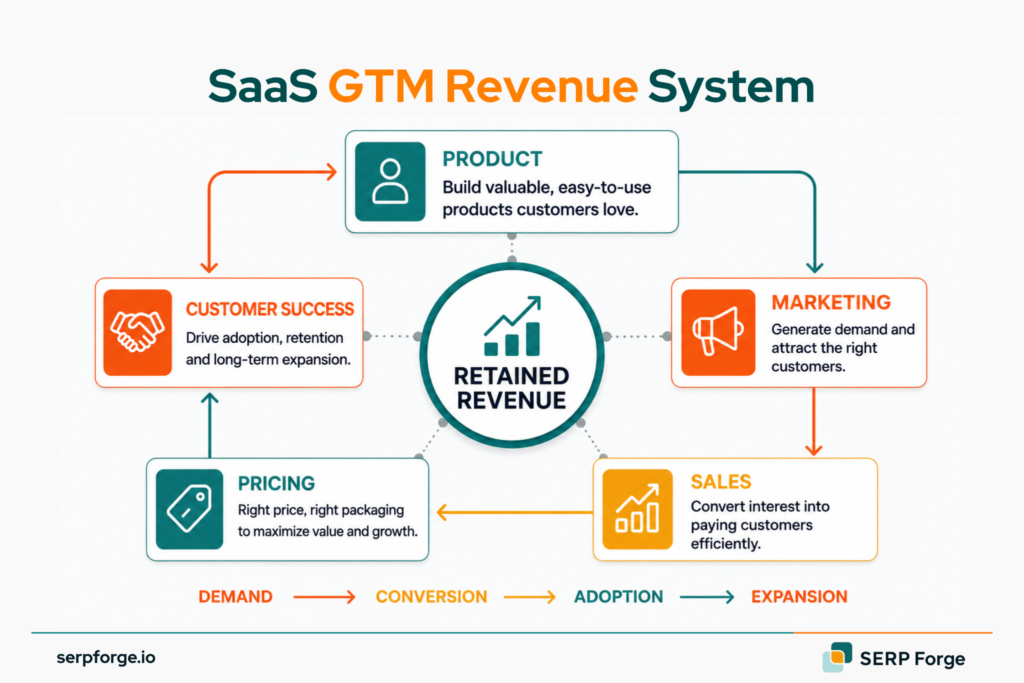
It connects product, marketing, sales, pricing, onboarding and customer success around one buyer journey. A b2b SaaS go to market strategy also needs to account for buying committees, procurement, security review and longer sales cycles.
Use one test before increasing spend: Can product, marketing, sales and customer success describe the same customer, promise, buying path and first value event?
Why Is SaaS GTM Different From a Product Launch?
A SaaS product launch focuses on release activity. SaaS go-to-market covers the full revenue system before and after launch.
The first purchase starts the relationship. Revenue grows when customers adopt the product, renew their subscription and expand usage over time. So GTM needs to plan beyond awareness and conversion.
Five conditions make SaaS go-to-market different:
| SaaS GTM Factor | Why It Changes the Plan |
|---|---|
| Recurring revenue | Customers need ongoing value after purchase |
| Longer buyer journey | Buyers research reviews, pricing and competitors first |
| Buying committee | Users, finance, IT and security all assess different risks |
| Onboarding | First value affects activation and retention |
| Expansion | Pricing and adoption shape future revenue |
A launch can create attention. A GTM system turns that attention into retained customers.
What Are the Core Components of a SaaS Go-to-Market Strategy?
A SaaS go-to-market strategy has eight core components:
Market → ICP → Positioning → Motion → Pricing → Channels → Onboarding → Retention
If the market is too broad, the ICP gets weak. If the ICP is weak, positioning becomes vague. If positioning is vague, channels bring mixed-fit leads. If onboarding fails to prove the promise, acquisition turns into churn.
Here is how the components connect:
| Component | What It Decides |
|---|---|
| Market | Where the product can win first |
| Segment | Which buyer group has the strongest need |
| ICP | Which accounts are worth targeting |
| Buyer group | Who uses, blocks, approves and signs |
| Positioning | Why the product should win |
| GTM motion | How buyers enter and buy |
| Pricing | How value turns into revenue |
| Channels | Where demand comes from |
| Onboarding | How customers reach first value |
| Retention | Whether accounts renew and expand |
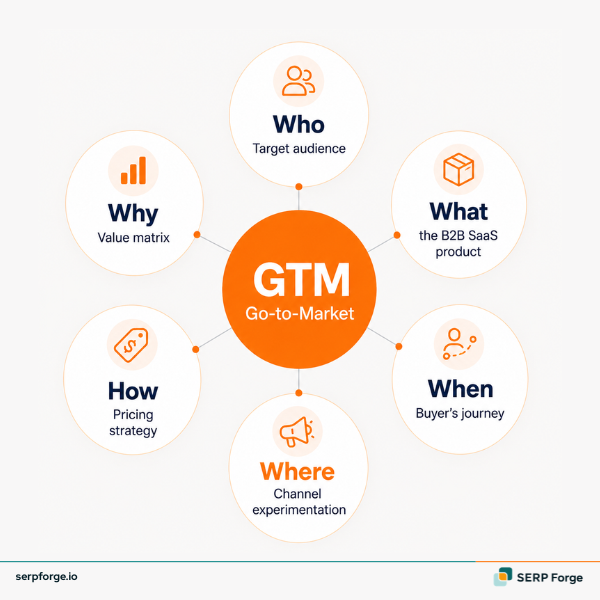
Weak go-to-market choices create waste later in the journey. A broad market often leads to vague positioning, which makes channels harder to scale profitably. If onboarding then fails to prove the original promise, new customers can quickly become churn risk.
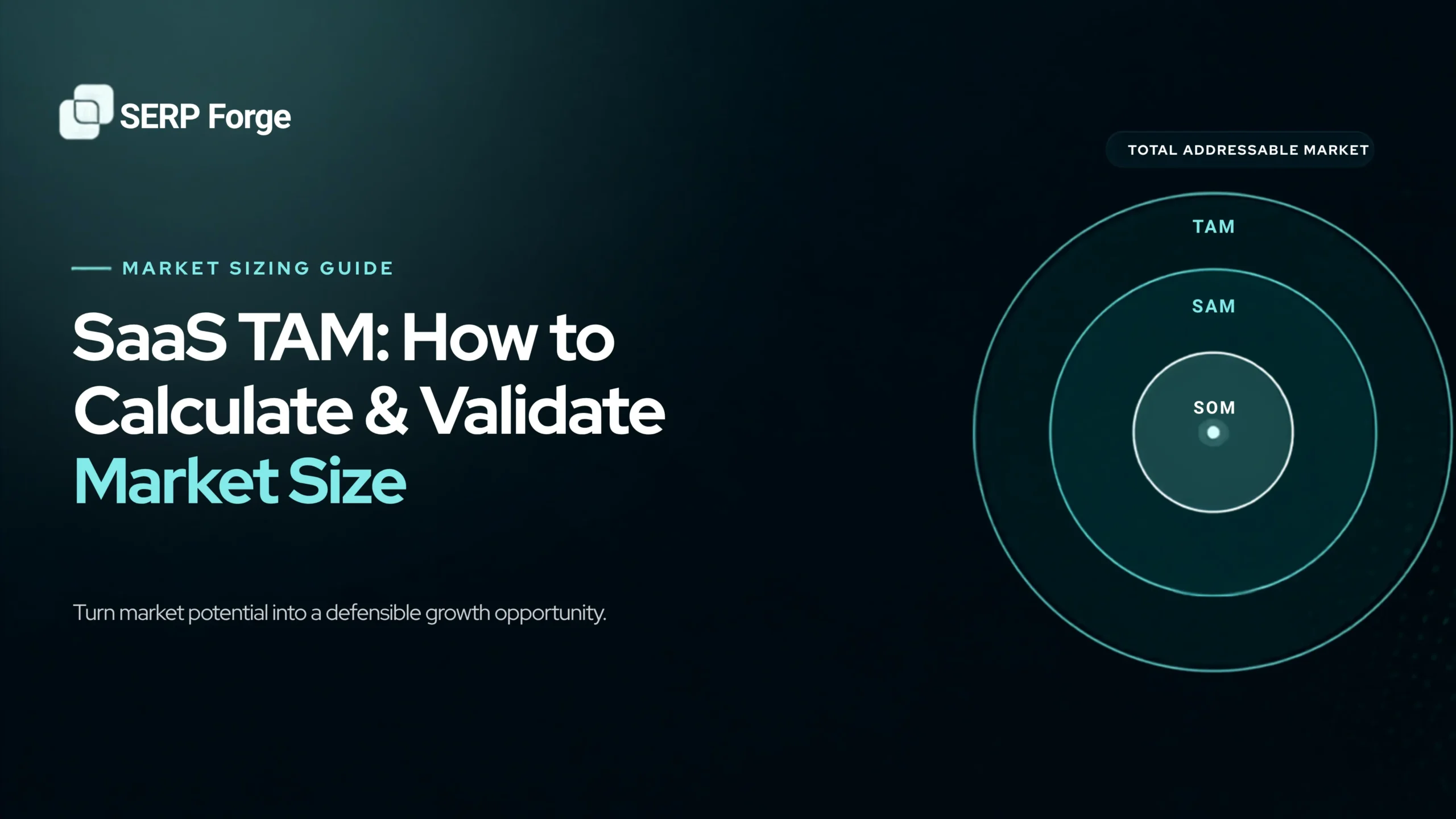
How to Define SaaS Market Size Using TAM, SAM and SOM
Define SaaS market size by separating the total opportunity from the portion your product can realistically serve and capture.
SaaS TAM, SAM and SOM help teams avoid two common mistakes. One is using a huge market number that looks good in a pitch deck but gives no go-to-market direction. The other is choosing a narrow segment without checking whether it can support meaningful revenue.
Use this flow:
TAM → SAM → SOM → Entry Segment → GTM Plan
Start with the full market. Then narrow it by product scope, geography, industry, company size, buyer maturity, budget and GTM reach.
Each layer answers a different market-sizing question:
| Market Layer | What It Shows |
|---|---|
| TAM | Total revenue opportunity across the full market |
| SAM | Portion your product can serve with its current scope |
| SOM | Portion you can capture with current GTM capacity |
Simple formula:
Number of target accounts × expected annual contract value = market opportunity
For example, 5,000 target accounts at $12,000 ACV creates a $60 million annual opportunity.
Then test the market quality:
- Is the problem urgent?
- Does the segment spend on alternatives?
- Can the product solve the workflow today?
- Can the team reach these buyers efficiently?
- Can customers retain and expand?
A smaller market with urgent pain can give a better entry point than a broad category with weak buying intent.
Market size shows the opportunity. Segmentation shows where to enter first.
How to Segment a SaaS Market Before Defining ICP?
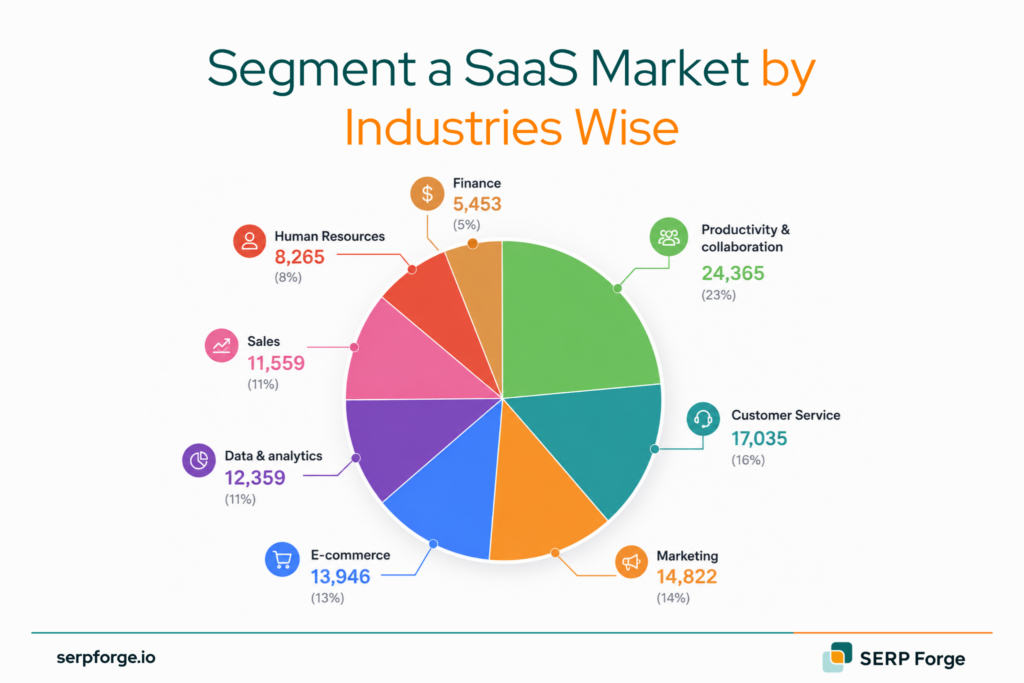
Segment a SaaS market by grouping buyers with similar needs, risks, budgets and adoption patterns.
This helps the team avoid one message for every buyer. Go-to-market strategy for startups, mid-market companies, and regulated enterprises may need different proof, pricing and sales support.
Use these SaaS market segmentation filters:
| Segment Filter | What It Reveals |
|---|---|
| Industry | Workflow, compliance and language differences |
| Company size | Budget, process and implementation needs |
| Tech stack | Integration fit and switching complexity |
| Trigger event | Why the buyer is active now |
| Use case | Which workflow creates value |
| ACV potential | Whether sales effort makes economic sense |
| Support burden | Whether the account can retain profitably |
The best first segment usually combines urgency, product fit and retention potential. That segment becomes the GTM wedge.
Once the team chooses the right segment, the next step is to define which accounts inside that segment deserve focus.
How Do You Define a SaaS Ideal Customer Profile?
Build the SaaS ideal customer profile around accounts most likely to buy, activate, retain and expand.
The ICP works at the company level. It tells the team which accounts deserve focus and which accounts create risk.
Use four ICP dimensions:
| ICP Dimension | What to Include |
|---|---|
| Fit | Industry, size, geography and tech stack |
| Pain | Severity, frequency and current cost |
| Readiness | Budget, owner and process maturity |
| Economics | ACV, retention potential and support burden |
Add exclusion rules early:
- No implementation owner
- Required integration unavailable
- Budget below delivery cost
- Compliance need outside scope
- Weak urgency
- Low adoption capacity
Exclusion rules reduce poor-fit pipeline before it turns into slow onboarding or churn.
Once the account profile is clear, the team has to understand who inside the account makes the buying decision.
How Do SaaS Buyer Personas Fit Into the Buying Committee?
A SaaS buyer persona describes a person involved in the buying decision.
The ICP defines the account. Buyer personas explain the roles inside that account. In B2B SaaS, those roles often judge different risks before the deal can move forward.
Map the buying group like this:
| Persona | What They Care About | Proof They Need |
|---|---|---|
| User | Easier daily work | Product walkthroughs and tutorials |
| Champion | Team performance | ROI examples and internal pitch decks |
| Economic buyer | Cost and business impact | TCO, payback and pricing logic |
| Technical validator | Integration and reliability | API docs, uptime and architecture |
| Security reviewer | Data protection | Security pages and compliance proof |
| Procurement | Vendor and contract risk | Terms, SLAs and legal details |
This turns personas into GTM inputs. Each role gets the proof needed to reduce risk and support the buying decision.
After the team knows the account and buying committee, positioning decides how the product should be understood in that market.
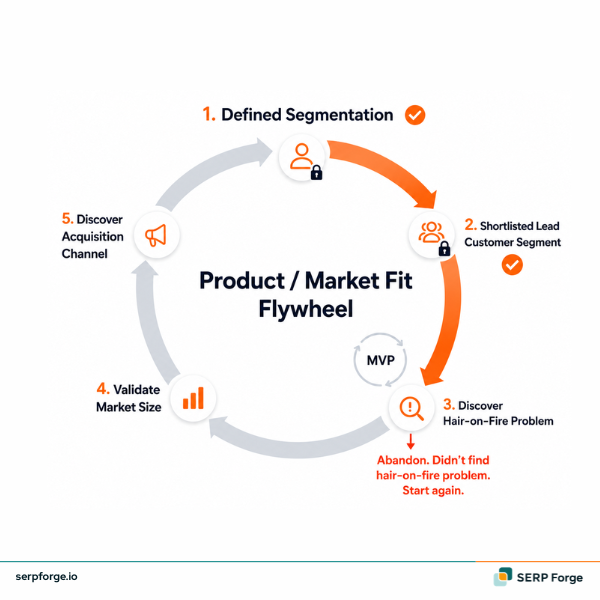
How to Find Product-Market Fit Before Scaling GTM?
Look for repeated buying, fast activation, retention and shared customer language before scaling GTM.
A prospect saying they like the product is useful. A customer using it weekly, renewing and expanding gives better evidence. That behaviour shows the product has entered real work.
Track these product-market fit signals:
- Customers describe the problem in similar words
- Sales cycles become easier to forecast
- Users reach the first value event quickly
- Usage continues after the first month
- Retention improves without constant rescue work
- Expansion appears in the same segment
The Sean Ellis test can add another signal. Ask active users how they would feel if they could no longer use the product. A high “very disappointed” response shows emotional dependence.
Pair that answer with usage and retention data. Product-market fit becomes more credible when customer emotion and product behaviour point in the same direction.
Once the team confirms that a real segment is adopting and retaining the product, the next step is to size that opportunity.
What Makes a SaaS Value Proposition Useful?
A useful SaaS value proposition names the buyer, problem, outcome, mechanism and proof in one simple promise.
It has to show the business gain and the workflow change. Buyers also need enough evidence to believe the promise before they enter a demo.
Use this structure:
| Value Proposition Part | Question It Answers |
|---|---|
| Audience | Who is this for? |
| Problem | What costly issue does it solve? |
| Outcome | What improves? |
| Mechanism | How does the product create the result? |
| Proof | Why can buyers trust the claim? |
Weak value proposition:
AI-powered revenue operations platform
Better value proposition:
Help RevOps teams spot forecast risk earlier by connecting CRM, billing and usage data in one workflow.
The second version names the buyer, workflow and outcome. That makes the promise easier to evaluate.
After this, the team can decide how buyers should discover, try, evaluate and purchase the product.
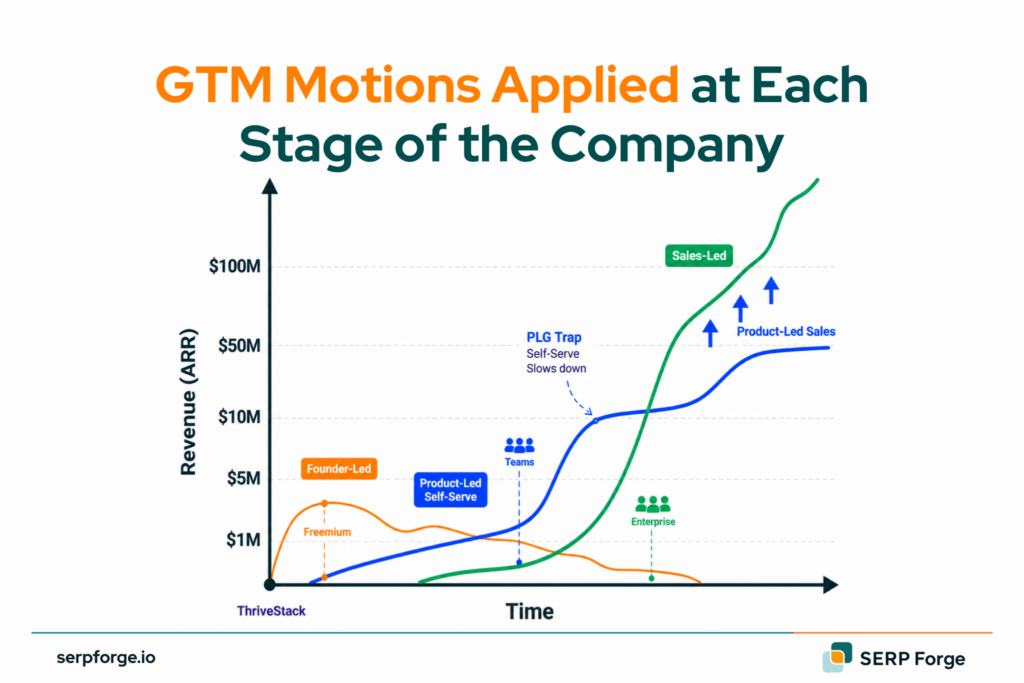
Which SaaS GTM Motion Fits Your Product?
Choose the GTM motion based on product complexity, buyer risk, ACV and time to value.
The motion controls how buyers enter the product and how much human support they need. It also shapes channel strategy, sales cost, onboarding and customer success.
Use this comparison:
| GTM Motion | Best Fit | Main Risk |
|---|---|---|
| Product-led growth | Simple product with fast activation | Signups hide weak usage |
| Sales-led growth | Complex product with high ACV | Sales cost grows quickly |
| Marketing-led growth | Educated market with active demand | Leads lack buying intent |
| Partner-led growth | Markets needing trust or delivery support | Buyer experience has less control |
| Hybrid GTM | Mixed segments or product-assisted sales | Routing becomes complex |
ACV gives a starting point:
- Under $5K ACV: self-serve or product-led motion
- $5K to $50K ACV: product-led sales or hybrid motion
- Above $50K ACV: sales-led, partner-led or account-based motion
Define routing rules early. Sales needs to know when to enter, when to wait and when to hand off to customer success.
After this, pricing decides how value turns into revenue.
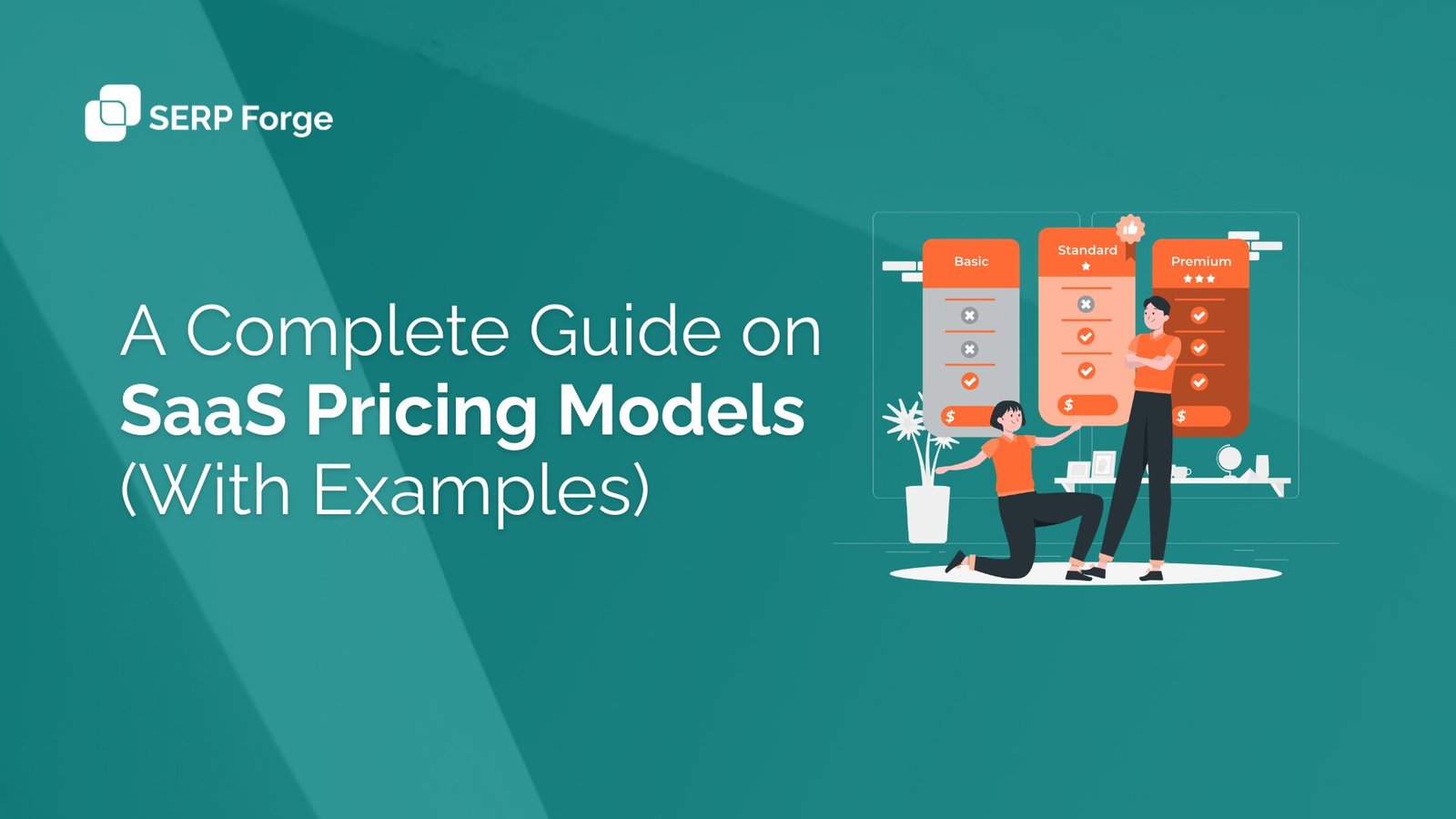
How Do SaaS Pricing Models Affect GTM?
SaaS pricing models affect who buys, how fast they approve and whether accounts expand.
Pricing shapes demand quality. A low entry price can attract users who never retain. Complex pricing can slow buyers who need budget approval.
Common SaaS pricing models include:
| Pricing Model | Best Fit |
|---|---|
| Flat rate | Simple products with one main package |
| Per seat | Collaboration products with user-based value |
| Tiered pricing | Products with different customer needs |
| Usage-based pricing | Products where value grows with consumption |
| Hybrid pricing | Products needing base revenue plus usage growth |
| Outcome-based pricing | Products tied to measurable business results |
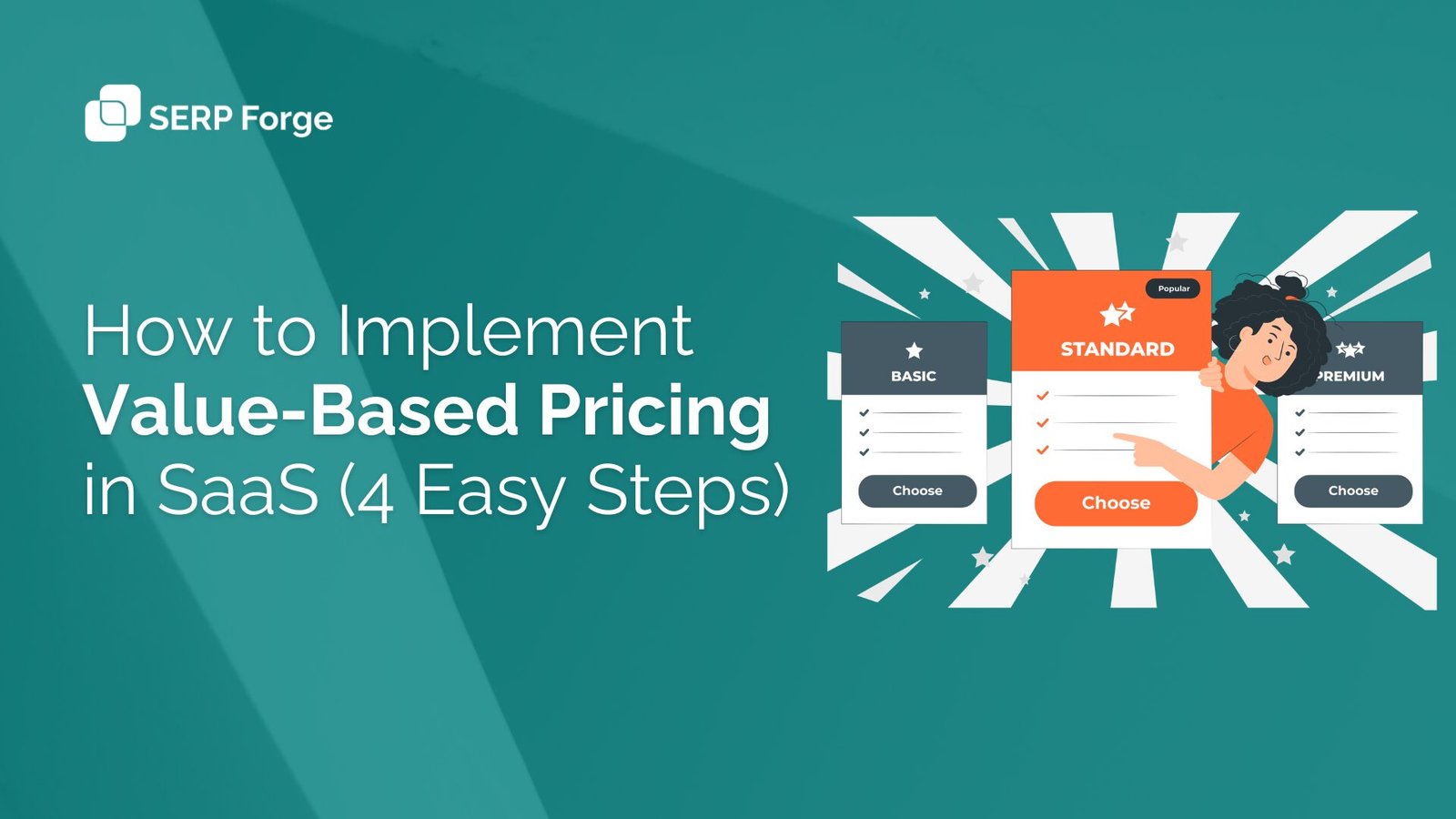
Value Based Pricing in SaaS
Use value-based pricing in SaaS by choosing a metric that grows as the customer receives more value.
If the product saves hours, increases conversion, reduces risk or processes more work, the pricing metric can connect to that value.
Use this process:
| Step | Action |
|---|---|
| Identify value | Find how the product increases revenue or reduces cost |
| Select metric | Choose the unit that grows with value |
| Test willingness | Interview customers by segment |
| Package tiers | Group customers by value and complexity |
| Track expansion | Measure usage growth, upgrades and NRR |
Useful value metrics include:
- Transactions
- Workflows completed
- Data volume
- Managed accounts
- Locations
- Revenue processed
- Tickets resolved
A useful value metric is easy to understand, measurable inside the product and linked to customer outcomes.
After pricing and motion are clear, channel selection becomes easier because each channel has a specific job.
How Do You Build a SaaS Positioning Strategy?
Build a SaaS positioning strategy by deciding where the product fits and why the chosen ICP should prefer it.
Begin with SaaS competitive analysis. Review direct competitors and indirect alternatives such as spreadsheets, agencies, internal tools and manual work.
Compare these areas:
| Comparison Area | What to Review |
|---|---|
| Target segment | Who competitors serve |
| Core promise | What outcome they lead with |
| Product category | How they frame the product |
| Pricing model | How they charge |
| Sales motion | How buyers purchase |
| Proof | Reviews, case studies and claims |
| Implementation | Setup effort and switching cost |
Then turn the gap into a positioning statement:
For [ICP] facing [urgent problem], [product] is a [category] that delivers [outcome] through [distinct mechanism].
Test the message with prospects. Ask them to explain the product after one exposure. Their answer shows whether the positioning is easy to understand and remember.
Positioning defines the market frame. The value proposition turns that frame into a promise buyers can quickly evaluate.
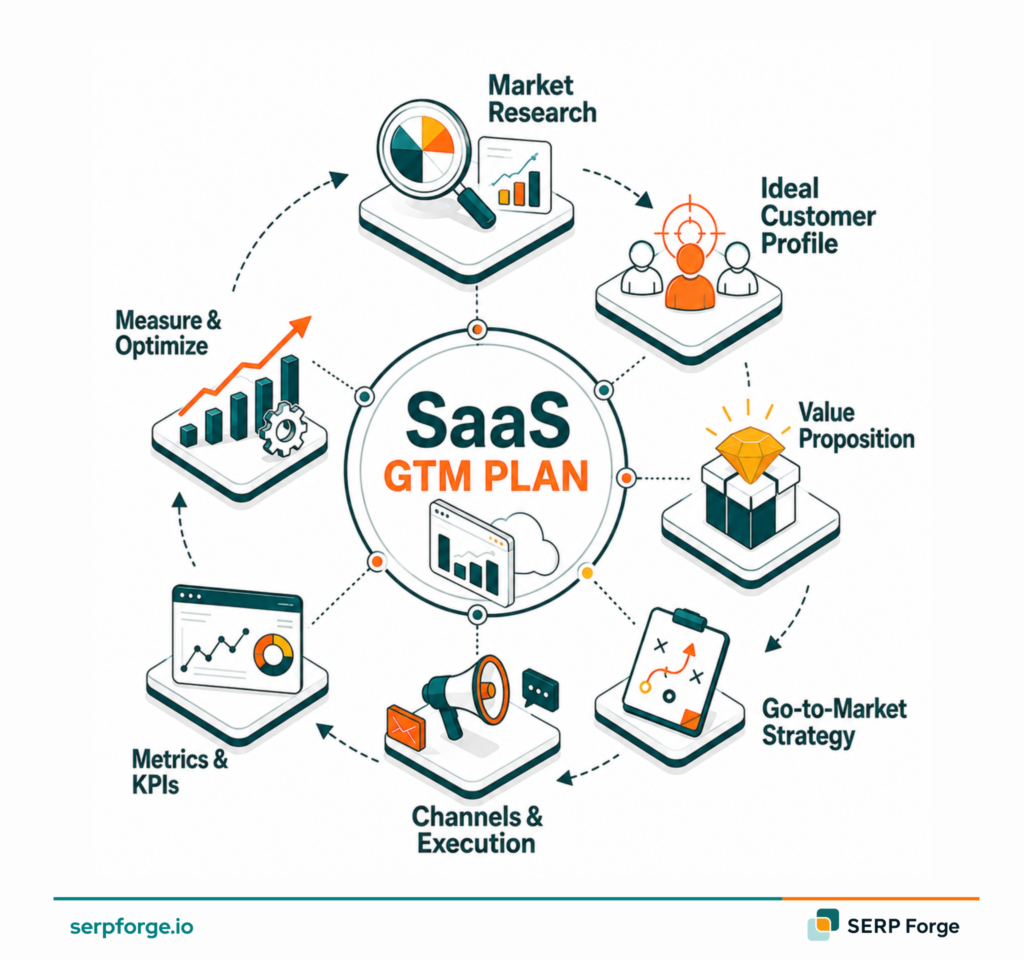
How Do You Build a SaaS GTM Plan Step by Step?
A SaaS go-to-market plan turns strategy into operating decisions.
Use this sequence to connect the work:
1. Research the Market
Interview customers, review lost deals, analyse product usage and study competitors.
Then estimate SaaS TAM, segment the market and choose the first entry point.
2. Validate Product Market Fit
You may have questions about how to find product market fit.
Check whether a defined segment buys, activates, retains and expands.
Use retention data, activation milestones and customer language to confirm fit.
3. Define the ICP and Personas
Build the SaaS ideal customer profile first.
Then map SaaS buyer personas across users, champions, finance, IT, security and procurement.
4. Set Positioning and Value Proposition
Use SaaS competitive analysis to find the market gap.
Then create a SaaS positioning strategy and SaaS value proposition around one measurable outcome.
5. Choose the Go-to-Market Motion
Match the motion with ACV, product complexity, buyer risk and time to value.
Add routing rules for self-serve, sales assist and customer success.
6. Set Pricing and Packaging
Choose SaaS pricing models that buyers understand and the product can measure.
For high-value workflows, test value based pricing SaaS around the customer outcome.
7. Launch, Measure and Refine
Track where the system breaks.
Traffic without pipeline points to targeting or offer issues. Trials without activation point to product friction. Customers without renewal point to weak fit, onboarding or value delivery.
What Should a SaaS GTM Launch Plan Include?
A SaaS go-to-market (GTM) launch plan needs enough detail to test the market, message and buyer journey.
The launch is where the go-to-market assumptions meet real demand. It shows whether the target segment cares, whether the message lands and whether onboarding can deliver the promised value.
Include these parts:
| Launch Element | What to Decide |
|---|---|
| Target segment | Which audience the launch serves |
| Message | Which problem and outcome lead the campaign |
| Offer | Trial, demo, waitlist, package or pilot |
| Channels | Where the launch will reach buyers |
| Sales enablement | What sales needs to explain the value |
| Onboarding capacity | How new users will reach first value |
| Success metric | What proves the launch worked |
| Review date | When the team will adjust the plan |
Track where the launch fails:
- Traffic without qualified interest
- Demos without decisions
- Trials without activation
- Customers without adoption
- Adoption without renewal
Each signal points to a different GTM decision.
How Do You Measure SaaS GTM Performance?
Measure SaaS GTM (go-to-market) by the full path from acquisition to retention.
A single metric can hide the real issue. High traffic with weak pipeline points to targeting. High trials with low activation points to product or onboarding friction. High win rates with weak retention points to overselling or poor fit.
Use this dashboard:
| GTM Level | Core Metrics |
|---|---|
| Acquisition | Qualified traffic, account engagement, pipeline created |
| Conversion | Trial activation, opportunity rate, win rate, sales cycle |
| Efficiency | CAC, CAC payback, pipeline efficiency |
| Retention | GRR, NRR, churn, expansion ARR |
| AI visibility | AI citations, brand mentions, cited pages |

What Has Changed in SaaS GTM in 2026?
AI search, pricing pressure and buyer independence have changed how SaaS teams build GTM.
The biggest shift is that it is now easier to build a SaaS product, but harder to stand out.
AI tools help teams research markets, write code, build workflows, create content and run outreach faster. That means more products can enter the same category with similar features, claims and pricing pages.
This creates three go-to-market problems:
- More competitors can launch faster
- Product features are easier to copy
- Buyers need better proof before they trust a vendor
The buyer journey has changed too.
Buyers now compare vendors through AI tools, search results, review platforms, LinkedIn, communities and competitor pages. Semrush’s 2026 AI Visibility Index analysed 126 million U.S. AI search prompts and found that 45% of marketing leaders cannot measure brand visibility in AI-generated answers, while only 9% have tools to track all relevant metrics across platforms.
Internal go-to-market execution is also changing.
HubSpot for Startups reports that 65% of founders increased AI investment in the past year, showing how startup teams now use AI across research, sales and marketing workflows.
Pricing has become another pressure point.
Zylo’s 2026 SaaS Management Index reports that 78% of IT leaders faced unexpected charges tied to AI features or consumption pricing, while 61% cut projects due to unplanned SaaS cost increases.
That gives SaaS teams a practical lesson. Features alone are easier to copy now. SaaS GTM needs defined ICPs, better pricing logic, clearer differentiation and measurable AI visibility before scale. AI SEO for SaaS is one way to build that AI visibility.
Which SaaS GTM Channels Work Best?
SaaS GTM channels work best when each channel has one job.
SEO can capture problem, category and comparison demand. LinkedIn can reach buying committees. Outbound can open conversations with narrow ICP accounts. Partners can add trust, delivery support or market access.
Use this channel map:
| Channel | Best Use |
|---|---|
| SEO | Capture problem, category and comparison searches |
| Content marketing | Educate buyers and support internal approval |
| Paid search | Test high-intent demand and message fit |
| Reach buying committees and named accounts | |
| Outbound | Engage narrow ICP accounts with timely triggers |
| Webinars | Educate several stakeholders at once |
| Partners | Add trust, distribution or implementation support |
| Communities | Learn customer language and build credibility |
Ahrefs found that “best X” blog lists were the most common page type in its study of ChatGPT source links. That supports the role of list-style and comparison content in AI-influenced buyer evaluation.
For SaaS go-to-market, content needs to help buyers compare, justify and act. Traffic alone cannot show whether the right accounts are moving forward.
Build a SaaS GTM System Around Retained Revenue
A useful SaaS go-to-market system answers a few commercial questions well.
Are you targeting accounts that can buy, activate and retain? Does your positioning make the product easy to understand? Does pricing help buyers approve the decision? Can onboarding prove value before interest fades?
If growth is stuck between traffic, trials, demos and revenue, the GTM system needs a closer review. The issue may sit in positioning, pricing, onboarding, sales handoff or the way customer fit is defined. A SaaS marketing agency can audit that system alongside your channels and messaging.
Frequently Asked Questions
What does GTM mean in SaaS?
GTM means go to market. In SaaS, it covers how a company brings software to the right buyers, converts them and grows recurring revenue after the first sale.
What is a SaaS GTM strategy example?
A B2B analytics SaaS may target RevOps teams at mid-market companies.
Its GTM could use SEO for category demand, comparison pages for evaluation, LinkedIn for buying committees and sales-assisted demos for larger accounts.
What should a SaaS GTM playbook include?
A SaaS GTM playbook usually includes ICP, positioning, messaging, pricing, channels, sales motion, onboarding and success metrics.
It helps product, marketing, sales and customer success follow the same revenue plan.
What is product GTM?
Product GTM is the launch and growth plan for a specific product, feature or market entry. It covers the audience, message, offer, channels, sales enablement and success metric.
What is the difference between GTM strategy and sales strategy?
A sales strategy focuses on how the sales team converts qualified opportunities into customers.
A GTM strategy covers the wider system, including market selection, ICP, positioning, pricing, channels, onboarding and retention.
What is the difference between GTM and product marketing?
GTM defines how a company takes a product to market and turns demand into revenue.
Product marketing supports GTM through positioning, messaging, launch planning, sales enablement and competitive research.
Is a SaaS go-to-market strategy the same as a launch strategy?
A launch strategy covers the release of a product, feature or campaign. A SaaS go-to-market strategy covers the full revenue system before and after launch, including acquisition, pricing, onboarding, retention and expansion.