



Imagine asking a question online and getting a complete answer without clicking through multiple websites.
That’s exactly how millions of people now search for information.
Instead of scrolling through pages of search results, users are turning to AI-powered platforms that can answer questions, compare products, summarize complex topics, and provide personalized recommendations within seconds.
From Google’s AI-powered search experiences to conversational assistants, the way people discover information is evolving faster than ever before.
If your competitors become the sources AI recommends while your content remains invisible, you could lose visibility even if your website ranks well in traditional search results.
So what happens to your website when people stop clicking? It’s already happening at scale; research shows that as many as 68% of Google searches in the US now end without a single click to any outside website.
AI SEO is the practice of optimizing your website and content for both traditional search engines and AI-driven search experiences. It combines proven SEO fundamentals with semantic optimization, topical authority, structured information, and user-focused content to improve visibility across modern search platforms.
By the end of this guide, you’ll understand not only what AI SEO is but also how to build a long-term strategy that helps your content remain discoverable as search continues to evolve.
Let’s start with the fundamentals.
What Is AI SEO?
AI SEO (Artificial Intelligence Search Engine Optimization) is the practice of optimizing websites and digital content so they can be discovered, understood, and recommended by both traditional search engines and AI-powered search platforms.
Beyond improving rankings on search engine results pages (SERPs), AI SEO focuses on increasing visibility wherever users search for information, including conversational AI assistants, AI-generated search experiences, and answer engines.
Instead of asking:
“Which page ranks #1?”
Businesses are increasingly asking:
“Which source does the AI trust enough to mention?”
That difference changes how content should be created.
Modern AI systems don’t simply match keywords. They evaluate context, topical depth, entity relationships, factual consistency, and overall content quality before generating responses.
Think of AI SEO as making your content easy to trust, not just easy to find.
If an AI assistant cannot confidently understand who created your content, what problem it solves, or why it should be trusted, it is less likely to reference your page even if it ranks well in traditional search.
How Does AI Search Work?
AI search doesn’t simply match keywords. Instead, it uses Retrieval-Augmented Generation (RAG) to understand a user’s question, retrieve the most relevant information, and generate a conversational answer backed by reliable sources.
The process typically follows these four stages:
| Step | What Happens? |
|---|---|
| 1. Query Understanding | A Large Language Model (LLM) uses Natural Language Processing (NLP) to understand the user’s intent, identify important entities, and interpret the meaning behind the query rather than just the words used. |
| 2. Semantic Retrieval | The system converts the query into embeddings and uses vector search to retrieve the most relevant content. It also relies on knowledge graphs, entities, and semantic search to find information based on meaning not just exact keywords. |
| 3. Answer Generation | Using Retrieval-Augmented Generation (RAG), the LLM combines the retrieved content to generate a clear, contextual response. It grounds the answer in trusted sources, considers search intent, and uses its context window to maintain conversational context. |
| 4. Citation & Attribution | The AI presents a conversational response and, where supported, includes citations or links to the original sources so users can verify the information and explore it further. |
Traditional search primarily ranks web pages. AI search first understands the question, then retrieves semantically relevant information, generates a grounded answer, and finally attributes its sources, making retrieval quality and semantic understanding just as important as traditional rankings.
How Is AI SEO Different From Regular SEO?
Old-style SEO cares about one main thing: where you rank, because a higher rank used to mean more clicks. That’s changing fast.
When an AI Overview shows up on a search, the click-through rate for the #1 organic result drops by around 58%. Being #1 no longer guarantees a click, or even a mention, in an AI answer.
Pages that don’t even sit in the top 10 sometimes still get picked, while some #1 pages get skipped completely.
Here’s the easy way to think about it:
- Regular SEO cares about your rank and how many people click on you.
- AI SEO cares about whether the AI picks your content and uses it in the answer.
The shift is subtle but important.
Instead of asking,
“How do I rank higher?”
businesses increasingly need to ask,
“Would an AI confidently use this page to answer someone’s question?”
That change in perspective often leads to better content decisions.
People sometimes call this AIO vs SEO, AI Optimization compared to normal Search Engine Optimization. AIO doesn’t throw away the old rules. It just adds a new layer on top, so your content is easy to trust and easy for a machine to lift out and reuse without losing its meaning.
Why Does E-E-A-T Matter for AI SEO?
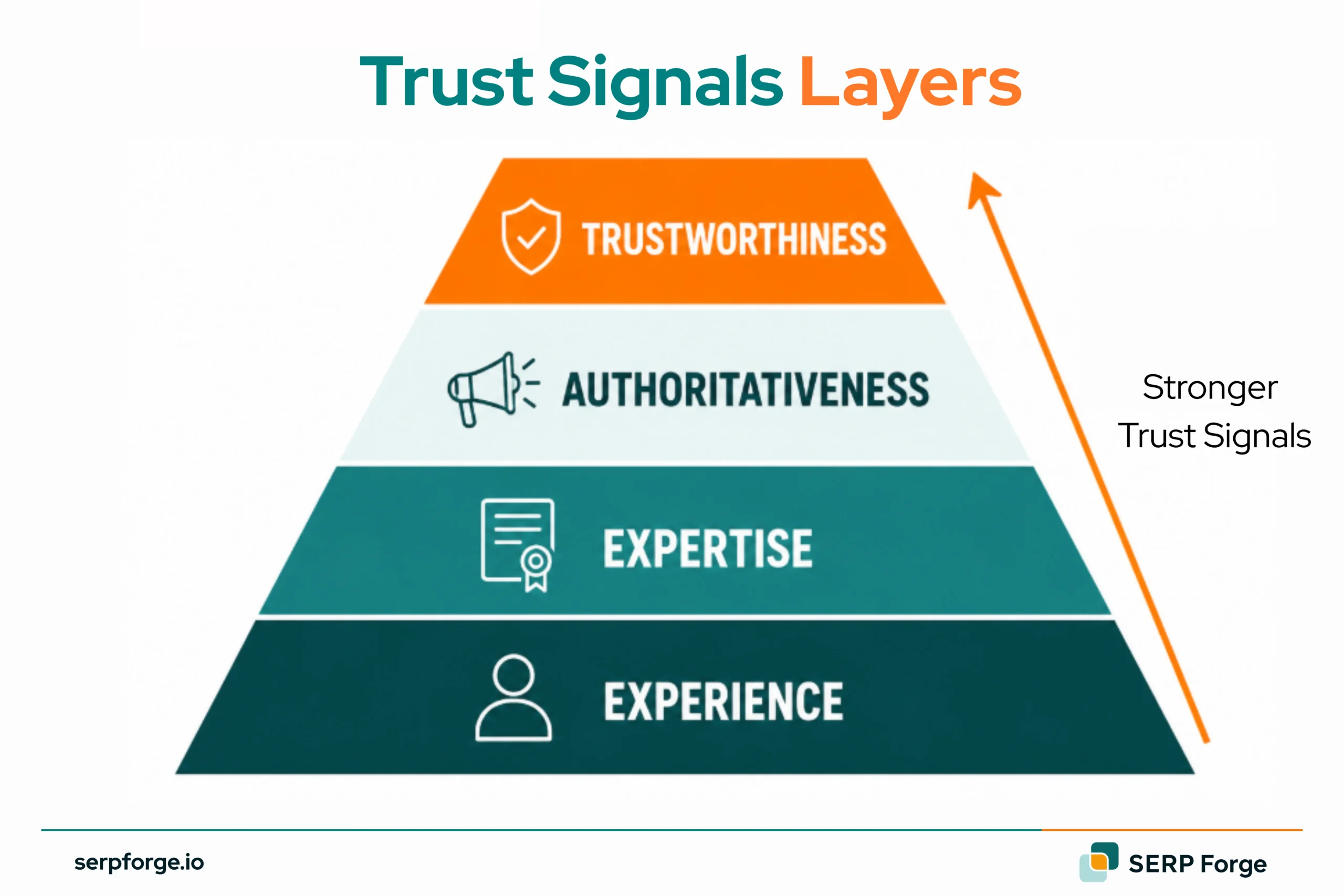
E-E-A-T stands for Experience, Expertise, Authoritativeness, and Trustworthiness, Google’s long-standing framework for judging content quality. AI systems lean on very similar signals when deciding what to trust and cite, which is why a named, credible author and real first-hand experience matter just as much for LLM SEO as they do for traditional rankings.
It’s also worth knowing that AI systems can hallucinate, sometimes misquoting or inventing details when a source is vague. The clearer, more specific, and more fact-based your content is, the less room there is for an AI to guess when citing you.
AI Overview or AI Mode: Which One Are You Seeing on Google?
Google’s own AI tools cause the most confusion, so let’s make them simple:
What is Google AI Overview?
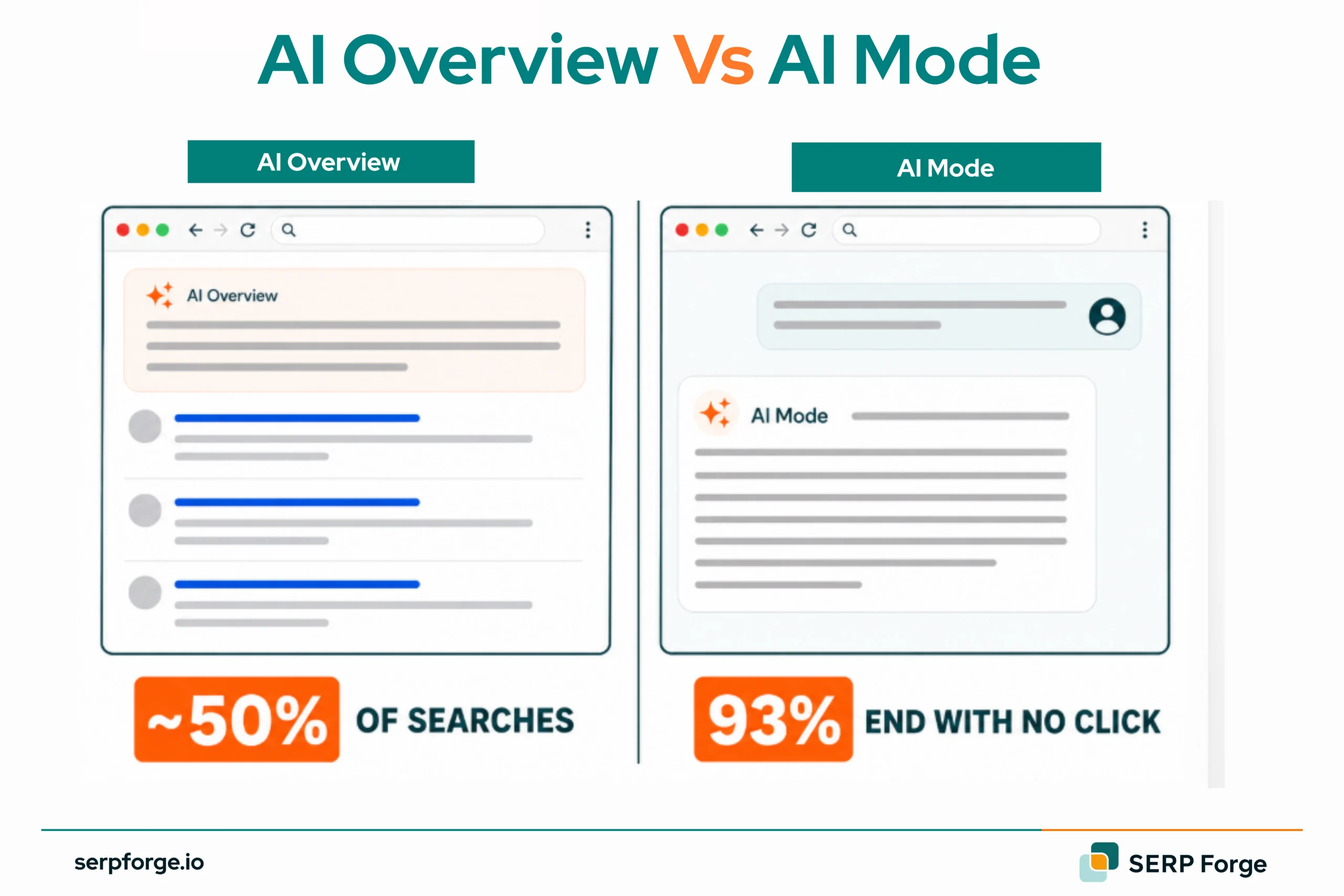
It’s the short AI-written summary that shows up above the normal results for many questions. It’s built from pages that already rank well, uses Google’s Gemini AI to write a short answer, and adds links back to where the info came from.
It doesn’t use a separate crawler; it pulls from the same list of pages that already show up in normal search, then adds an AI summary on top. It’s also far from rare: around 50% of searches in the US now trigger an AI Overview.
What is Google AI Mode?
AI Mode is more like a chat. It’s a separate space where you can ask longer, multi-part questions and get a full answer, often without seeing a normal list of links at all. It feels more like a conversation than a single search.
So what’s the real difference between AI Overview vs AI Mode? Think of AI Overview as a short answer box added above normal results for certain questions. AI Mode is a whole different chat-style search experience.
Here’s a stat that shows just how different it really is:
- AI Mode usually sends far fewer people to outside websites some studies put it as high as 93% of AI Mode searches ending with no click at all, since the whole conversation happens right inside Google.
- Google has also said AI Mode already has over 1 billion monthly users, and that number keeps growing.
AI Mode is a whole different chat-style search experience. AI Mode usually sends far fewer people to outside websites, since the whole conversation happens right inside Google.
How Do You Rank in AI Overview?
Since AI Overview pulls from pages that already rank well, you still need good basic SEO first. On top of that, a few things really help:
- Answer the main question clearly in the first few lines, instead of writing a long intro first.
- Use clear formatting in headings, short paragraphs, bullet points, and FAQs so a clean piece of text can be pulled out easily.
- Add simple schema markup (Article, FAQPage, HowTo, Product) so Google understands what’s on the page.
- Show real expertise; named writer, real experience, original data, and clear sources all help a lot.
Think about your content from Google’s perspective if the AI had to answer a user’s question using only one section from your article.
Would that section be complete, accurate, and understandable without additional context? If the answer is yes, you’re moving in the right direction.
How Do You Rank in AI Mode?
Ranking in Google AI Mode requires optimizing for conversations rather than isolated keywords. Instead of answering a single query.
AI Mode often expands the user’s request into multiple fan-out queries, related questions, subtopics, comparisons, and follow-up searches that help the AI build a complete answer before generating a response.
To increase your visibility, your content should satisfy not only the primary search intent but also the entire query path AI is likely to explore.
Here’s what matters most:
- Optimize for fan-out queries: Cover the primary topic along with related subtopics, comparisons, definitions, use cases, advantages, limitations, and common follow-up questions users are likely to ask next.
- Build topical authority instead of standalone pages: Create interconnected topic clusters with strong internal linking so AI can retrieve supporting information from multiple pages within your website.
- Answer questions with semantic completeness: Every page should fully explain its topic using relevant entities, attributes, examples, and contextual relationships instead of relying on exact-match keywords alone.
- Provide information gain: Publish original insights, first-hand experience, unique data, expert opinions, or practical examples that go beyond what’s already available on competing pages.
- Use a clear retrieval-friendly structure: Descriptive headings, concise answers, comparison tables, FAQs, bullet points, and well-organized sections make it easier for AI systems to extract and cite your content accurately.
- Maintain contextual relevance across your site: AI Mode frequently combines information from multiple documents. Consistent terminology, entity relationships, and logical internal links help search systems understand how your pages connect.
Ultimately, AI Mode rewards websites that can answer an entire conversation not just a single search query.
The more completely your content covers the user’s journey through fan-out queries, the more likely it is to be retrieved, cited, and referenced in AI-generated responses.
How Do You Get Found on ChatGPT, Gemini, and Perplexity?
AI search isn’t just Google anymore. A lot of people now ask chatbots and answer tools directly, so brands need to show up there too.
How Do You Rank on ChatGPT?
ChatGPT tends to favor sources that are talked about a lot across the internet, written clearly, and easy to trust. Getting picked here is less about clever keywords and more about being genuinely mentioned and discussed on other trusted sites, not just your own homepage.
How Do You Rank on Gemini?
Since Gemini also powers Google’s AI Overview, a lot of the same rules apply. Gemini pays close attention to how clearly you explain ideas and connect them to related topics, so building real depth on your subject matters more than repeating one keyword.
How Do You Rank on Perplexity?
Perplexity works like a research helper that shows its sources right inside the answer. This means it likes content with fresh facts, clear numbers, and up-to-date information. Content backed by real data usually beats a generic overview here.
ChatGPT vs Gemini vs Perplexity: What’s the Difference?
Comparing ChatGPT vs Gemini vs Perplexity side by side:
| Factors | ChatGPT | Gemini | Perplexity |
|---|---|---|---|
| How it finds info | Training data plus live browsing | Tied closely to Google Search | Live web search with inline citations |
| What it favors | Brands that are widely known and talked about | Clear, well-organized content (same as AI Overview) | Fresh, well-sourced, fact-based writing |
| Best for | General brand visibility | Showing up in Google’s own AI answers | Being a trusted, cited source |
| Content style that wins | Content mentioned across many trusted sites | Structured, entity-rich, topic-deep content | Original data, stats, up-to-date facts |
They don’t all work the same way, which is why a real AI SEO plan needs to think about more than one platform at a time.
That brings up a common question: what’s the best LLM for SEO work? There’s no single winner. Gemini-based tools are strong for understanding how you’ll do in Google’s own AI answers. ChatGPT is good for checking your general brand visibility.
Perplexity is useful for testing if your content works well as a trusted, fact-based source. Most solid AI SEO plans keep an eye on all three instead of picking just one.
How Do You Optimize Content for AI?
Here’s a simple, step-by-step way to think about how to optimize content for AI across search engines and chatbots:
- Answer first: Put a clear, direct answer near the top of the page before adding more detail.
- Write in small, complete pieces: Keep sections short (around 100–160 words) and make sure each one makes sense on its own, since that’s exactly how AI tools pull out content.
- Use real structure: Clear headings, FAQs, numbered steps, and simple tables all make your content easier for a machine to read and reuse.
- Name real people and things: Mention real experts, companies, and related ideas clearly instead of using vague words. This helps AI connect your content to what it already knows.
- Add structured data: FAQ, HowTo, Article, and Organization schema give AI tools clear signals about what your page contains.
- Show real expertise, not just relevance: Original data, real experience, and a named, credible author beat generic keyword-stuffed writing every time.
- Build groups of related pages: Link related content together so both search engines and AI tools can see how deep your knowledge on a topic really goes.
These steps only work if you change the question you’re actually optimizing for.
Instead of asking:
“How many times did I use my main keyword?”
Ask:
“Could an AI lift this paragraph out and use it, with zero editing, and still trust it?”
That single shift in mindset is what separates content that gets quoted from content that just sits there ranking quietly.
Because large language models operate within limited context windows, organizing information into clear, self-contained sections helps AI understand and retrieve your content more effectively.
What Tools Help With AI SEO?
As this whole space has grown, a new group of tools has shown up to help.
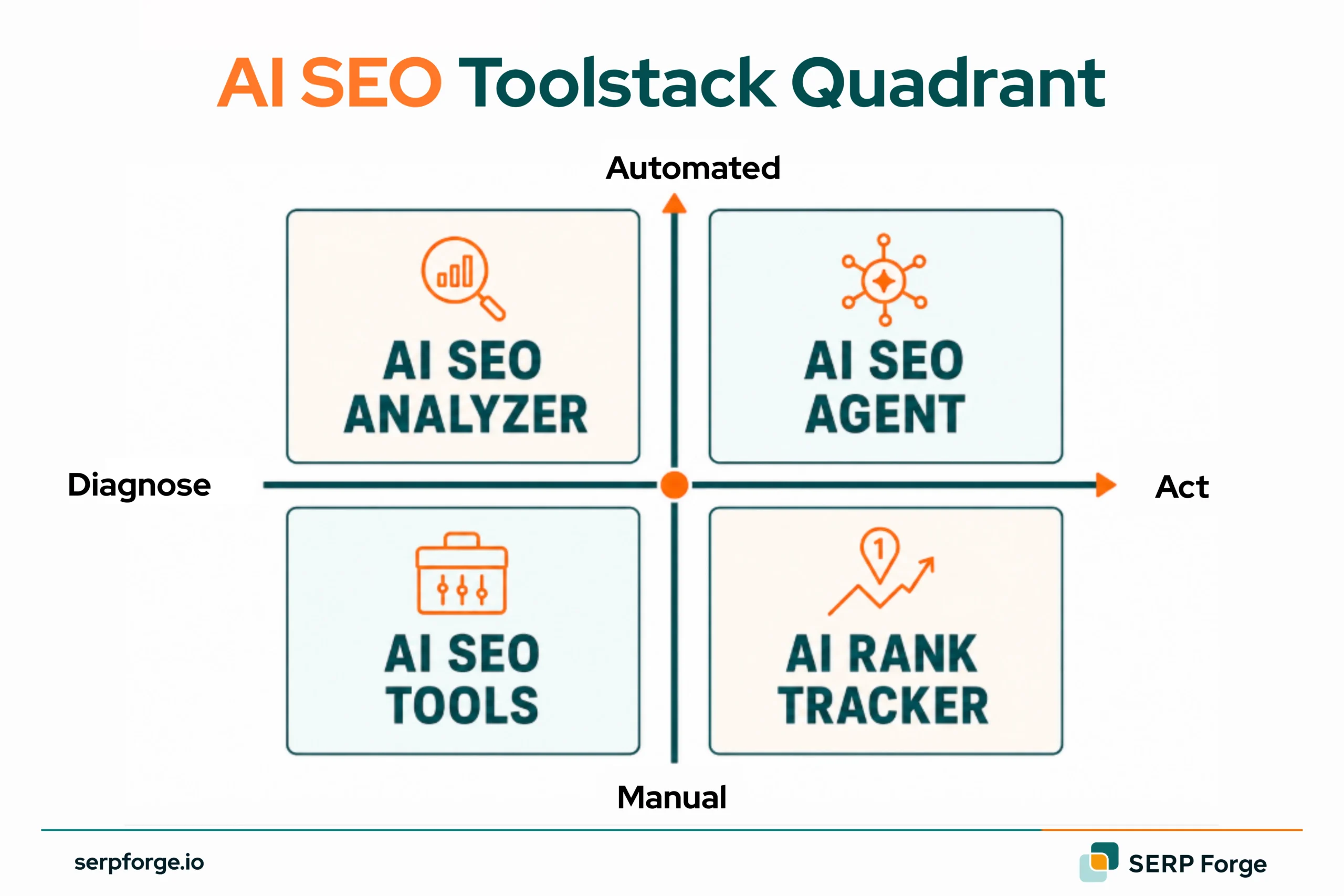
They usually fall into four types:
- AI SEO tools are the broad name for software that helps with keyword research, content structure, schema, and site checks, now built with AI search in mind.
- An AI SEO analyzer is a more specific tool that checks a page against the exact things AI tools care about, like how easy it is to pull out a clean answer, how well topics are covered, and whether schema is set up right and gives you a score or a to-do list.
- An AI SEO agent goes a step further. It can crawl your site on its own, find gaps compared to AI-search best practices, and in some cases even write or fix content for you, instead of just handing you a report.
- An AI rank tracker watches how often your brand shows up and gets mentioned across AI tools AI Overview, ChatGPT, Gemini, Perplexity instead of just tracking your old-style rank on a results page.
How Do You Rank in LLMs Overall?
Since being seen now means “was I mentioned,” not just “did I rank,” this kind of tracking is becoming just as important as normal rank tracking.
If you zoom out, learning how to rank in LLMs really comes down to three simple things:
- A healthy website: Your site should be fast, easy to crawl, and supported by clean, structured schema markup. These technical fundamentals remain essential for helping search engines and AI tools discover, understand, and trust your content.
- Clear, well-organized content: Answer the user’s question first, write in concise and complete sections, and group related topics together. This structure makes it easier for AI systems to extract, interpret, and confidently reference your content.
- Real, verifiable expertise: Publish content written by identifiable authors, include original research or data whenever possible, and build a brand that is recognized across the web.
AI tools are more likely to trust and cite sources with established credibility and authority.
These principles reinforce one another. A technically perfect website won’t perform well if the content lacks depth, while outstanding content can struggle if search engines can’t efficiently crawl or understand it.
While prompt engineering can influence how users interact with AI assistants, creating authoritative and well-structured content remains the most sustainable way to improve visibility.
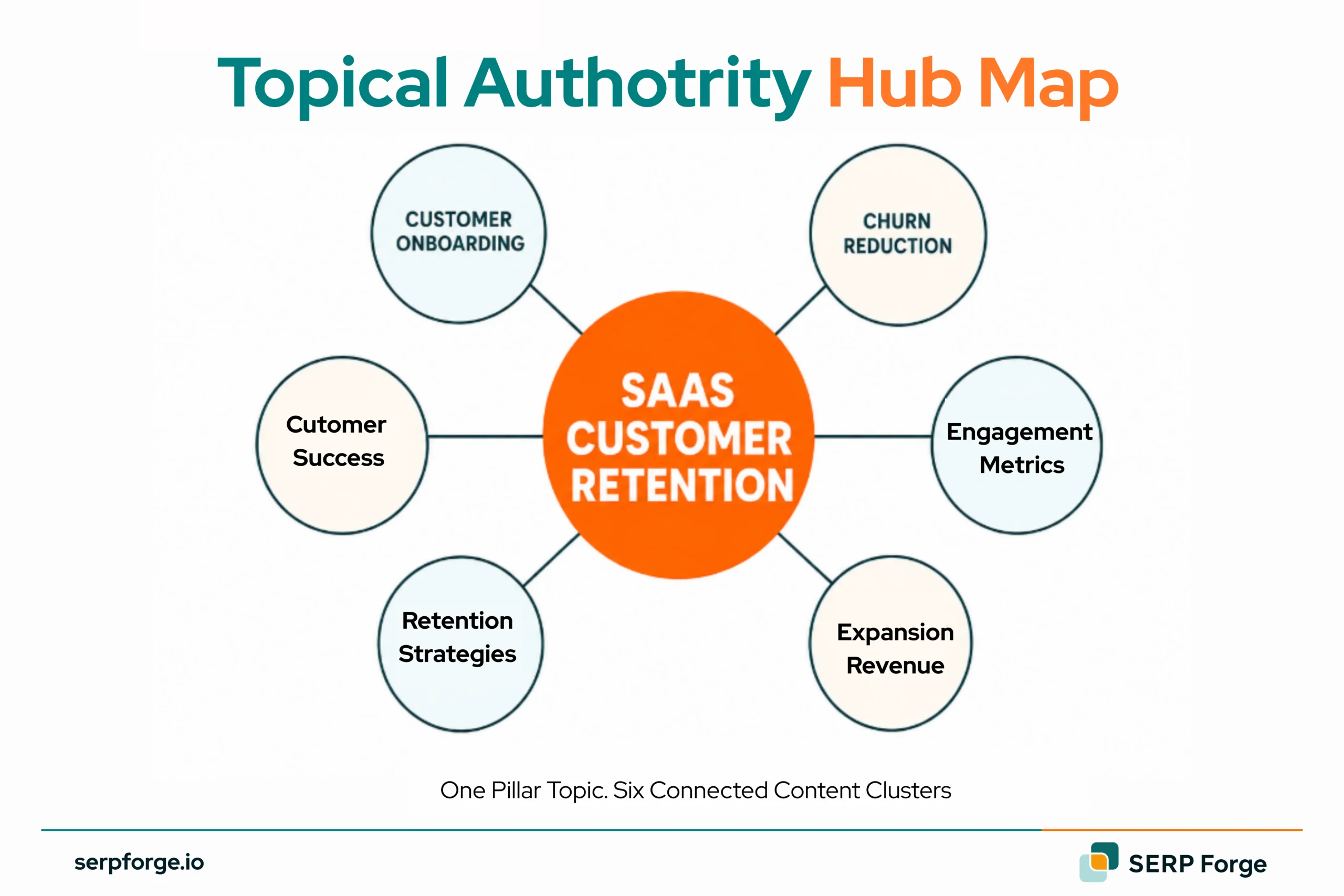
Why Does Topical Authority Matter More Than Ever?
As AI-generated search becomes increasingly sophisticated, isolated articles struggle to establish credibility.
Instead, search engines evaluate how comprehensively a website covers an entire knowledge domain.
This is where topical authority becomes essential:
- Rather than publishing disconnected articles, successful websites create semantic content networks that connect related topics through logical internal linking and contextual relationships.
- Comprehensive topical coverage helps search engines understand expertise while improving relevance and responsiveness across the entire website.
- Strong citation signals, such as mentions from reputable publications and trusted websites, increase the likelihood that AI systems will recognize your content as a credible source.
Building recognizable brand entities through consistent branding, author profiles, and trusted mentions across the web helps AI connect your organization with a specific area of expertise.
How Do You Know If It’s Working?
Old SEO numbers rank, traffic, click-through rate still matter, but they don’t tell the full story anymore.
A page can lose clicks while still getting mentioned a lot inside AI answers, and that kind of visibility can still build trust and awareness even without a click.
In fact, sources that do get cited inside AI Overviews tend to earn around 35% more organic clicks than sources that go uncited. A full way to measure success today should include:
- Normal rankings and website traffic (the classic numbers)
- How often you’re mentioned in AI Overview, AI Mode, ChatGPT, Gemini, and Perplexity
- How much of the “AI answer space” you own for your main topics
- Any traffic that does come in from links inside AI answers
None of these numbers work well on their own together; they give you a fuller picture of how visible your brand really is. Once you start tracking them side by side, it becomes much easier to see where your AI SEO efforts are actually paying off.
Ready to Put AI SEO Into Practice?
Understanding AI SEO is only the first step. The real challenge is knowing whether your website is actually optimized for AI search platforms like ChatGPT, Google AI Overviews, Gemini, and Perplexity.
Download our free AI SEO Checklist to audit your website, identify optimization gaps, and ensure your content follows the best practices discussed in this guide.
The Bottom Line
AI SEO isn’t just a trend; it’s a real change in how people find information. Search engines and chatbots aren’t just pointing people to websites anymore; they’re answering the question directly, and the sources they use become the new way people discover your content.
Brands that adapt now, writing clear, well-structured, expert content and treating ChatGPT, Gemini, and Perplexity as real places to be found, not just Google, will stay visible as this shift keeps going.
Brands that only chase the old results page may keep “ranking,” while almost nobody actually scrolls down far enough to see them.
The most successful AI SEO strategies also focus on information gain, publishing unique insights, original research, or perspectives that add value beyond what’s already available online.
FAQ’s
1. Is SEO dead now that AI SEO exists?
No. AI SEO builds on top of normal SEO; it doesn’t replace it. You still need a fast, well-built site and good content; AI SEO just adds one more layer.
2. How long does it take to see results from AI SEO?
It varies, but most sites see AI citations start to shift within a few months of solid changes, since it depends on how often AI tools re-crawl and re-index your content.
3. Do backlinks still matter for AI SEO?
Yes. Backlinks still help build trust and authority, which AI tools use as a signal when deciding which sources to cite.
4. Can small businesses do AI SEO, or is it only for big brands?
Small businesses can absolutely do it; clear writing, honest expertise, and good structure often matter more than size or budget.
5. Do I need to update old content for AI SEO, or just write new pages?
Both help, but updating old content is often faster; refreshing outdated pages with clearer answers and better structure can quickly make them more citable.