


A website with 50 high-quality backlinks can often outperform a competitor with 500 low-quality links. That’s because successful link building isn’t about collecting the most backlinks; it’s about earning links that are relevant, trustworthy, and valuable.
Unfortunately, many businesses unknowingly make link-building mistakes that limit rankings, reduce traffic potential, and weaken their backlink profiles. Some focus too heavily on link quantity, while others chase high-authority websites without considering relevance.
The challenge is that these issues rarely cause immediate damage. Instead, they accumulate over time, making it harder to compete in search results and maximize the value of your link-building efforts.
In this guide, you’ll learn 17 common link-building mistakes, why they happen, and practical ways to avoid them.
Why Link Building Mistakes Can Hurt SEO
Link building can improve rankings, authority, and organic traffic, but poor link-building practices can have the opposite effect. Search engines evaluate backlinks based on relevance, quality, trust, and natural placement, not just quantity.
As a result, common link-building mistakes can lead to weaker SEO performance, missed ranking opportunities, and wasted resources. In some cases, tactics such as buying spammy backlinks or using PBNs may even increase the risk of search engine penalties.
Some of the most common consequences of poor link-building practices include:
- Reduced search engine rankings due to low-quality or irrelevant backlinks
- Wasted resources on link-building activities that provide little SEO value
- Lower domain authority and trust signals
- Increased risk of manual actions or algorithmic penalties
- Missed opportunities to earn valuable, high-quality backlinks
- Poor referral traffic from irrelevant websites
- Difficulty competing against websites with stronger backlink profiles
The good news is that most link-building errors are preventable. By understanding what causes these mistakes and how to avoid them, you can build a healthier backlink profile that supports sustainable SEO growth and long-term visibility.
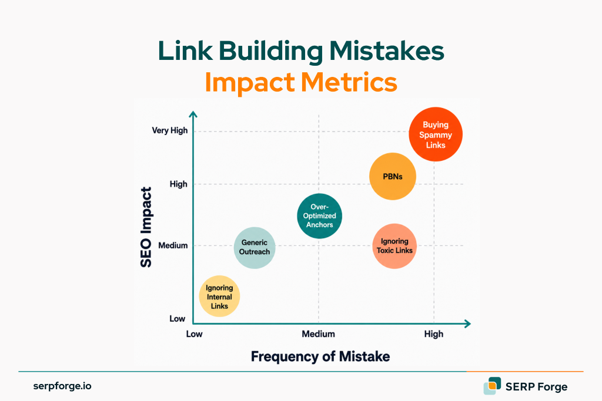
What Are the Most Common Link Building Mistakes to Avoid?
Below are some of the most common link-building mistakes that can reduce SEO performance, limit ranking growth, and weaken the value of your backlink profile:
Mistake 1 – I Focused on Quantity Instead of Quality
When I first started building backlinks, I believed more links would automatically improve rankings.
I spent weeks collecting hundreds of directory and low-quality backlinks, expecting quick SEO gains. Instead, the rankings barely moved, and the links added little value to the website.
The biggest lesson I learned was that search engines care far more about the quality and relevance of backlinks than the total number.
A handful of editorial links from trusted websites had a much bigger impact than hundreds of weak backlinks.
How I fixed it: I stopped chasing backlink numbers and focused on earning links from authoritative, niche-relevant websites through guest posting, digital PR, and valuable content. That shift improved both rankings and referral traffic over time.
What I learned: Semrush’s study of 1,000 domains found that backlink quality and authority have a much stronger relationship with visibility than backlink volume alone.
Mistake 2 – I Tried Taking the Shortcut With Spammy Backlinks
Like many beginners, I was tempted by services promising hundreds of backlinks for a small fee. It sounded like an easy way to speed up SEO.
The reality was completely different. Most of those links came from irrelevant, low-quality websites and delivered no meaningful results. Instead of building authority, they increased the risk of algorithmic issues.
That experience taught me that shortcuts rarely create sustainable SEO growth.
How I fixed it: I replaced paid spammy links with ethical strategies like guest posting, digital PR, original research, and relationship-based outreach. Although it required more effort, the backlinks I earned were relevant, trustworthy, and produced lasting results.
What I learned: Google’s Spam Policies discourage buying links intended to manipulate rankings, and websites relying on link schemes risk losing search visibility.
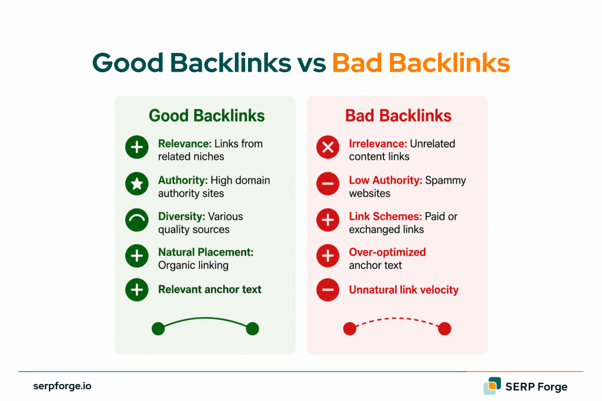
Mistake 3 – I Ignored Website Relevance
Earlier in my link-building journey, I paid too much attention to Domain Rating and ignored whether the website was actually relevant to my niche.
I once secured backlinks from high-authority websites that had nothing to do with my industry, expecting them to improve rankings.
They didn’t perform nearly as well as links from smaller but highly relevant websites.
That completely changed how I evaluated link opportunities.
How I fixed it: Before reaching out, I now check whether the website serves the same audience, covers similar topics, and naturally fits my content.
Relevance became just as important as authority when deciding where to build links.
What I learned: Google evaluates links within context, and backlinks from topically relevant websites generally provide stronger ranking signals than unrelated links with higher authority.
Mistake 4 – I Over-Optimized My Anchor Text
When I first started building backlinks, I assumed using my target keyword as the anchor text for every link would help pages rank faster. For a while, almost every backlink pointed to my content using the exact same keyword. Instead of looking natural, my backlink profile became repetitive and overly optimized.
I quickly realized that search engines expect anchor text to vary naturally. A backlink profile filled with identical keyword-rich anchors can appear manipulative rather than earned.
How I fixed it: I started using a healthy mix of branded, generic, partial-match, and natural anchor text. This created a more balanced backlink profile while still helping search engines understand the context of my pages.
What I learned: Google’s Spam Policies identify manipulative anchor text patterns as a form of link spam, making natural anchor text diversity an important part of sustainable link building.
Mistake 5 – I Considered Using Private Blog Networks (PBNs)
At one point, I was tempted by Private Blog Networks because they promised faster rankings with minimal effort. It sounded like an easy shortcut compared to spending weeks on outreach and content promotion.
However, after researching how search engines treat PBNs, I realized the short-term gains weren’t worth the long-term risk.
Many websites initially see ranking improvements, but those gains can disappear once unnatural links are detected or devalued.
How I fixed it: Instead of relying on PBNs, I invested my time in legitimate strategies such as guest posting, digital PR, relationship-based outreach, and creating content that people genuinely wanted to reference.
The results took longer, but they were far more sustainable.
What I learned: Google’s link spam systems are designed to detect unnatural link schemes, including network-based linking practices intended to manipulate search rankings.
Mistake 6 – I Guest Posted on Low-Quality Websites
When I first started guest posting, I accepted almost every opportunity that came my way. My only goal was getting backlinks, so I rarely checked the website’s traffic, content quality, or audience relevance.
Although I earned plenty of links, very few of them improved rankings or generated referral traffic.
That experience taught me that where you publish matters just as much as earning the backlink itself.
How I fixed it: I became much more selective by evaluating every guest posting opportunity based on content quality, topical relevance, organic traffic, editorial standards, and audience engagement.
Fewer guest posts delivered far better SEO results than publishing on dozens of weak websites.
What I learned: High-quality guest posts on trusted, niche-relevant websites build stronger authority, while links from low-quality websites often provide little SEO value and reduce the overall credibility of your backlink profile.
Mistake 7 – I Tried Building Too Many Links Too Quickly
Like many people eager to see faster rankings, I once tried accelerating my link-building efforts by acquiring a large number of backlinks in a short period.
Although the strategy looked productive on paper, the backlink growth felt unnatural because most links came from similar sources over a very short timeframe.
I realized that sustainable SEO is built through consistency, not sudden spikes.
How I fixed it: I shifted my focus to earning backlinks steadily through ongoing content promotion, relationship building, digital PR, and regular outreach. This created a more natural link growth pattern and produced better long-term results.
What I learned: Natural backlink profiles typically grow over time as content gains visibility. A consistent link-building strategy is more sustainable and aligns better with how authoritative websites naturally earn backlinks.
Mistake 8 – I Ignored Internal Linking
When I first started building backlinks, I focused almost entirely on getting links from other websites.
Every new backlink felt like a win, but I overlooked one important thing: I wasn’t helping those links pass value across my own website. Some blog posts earned quality backlinks, while important service pages remained isolated.
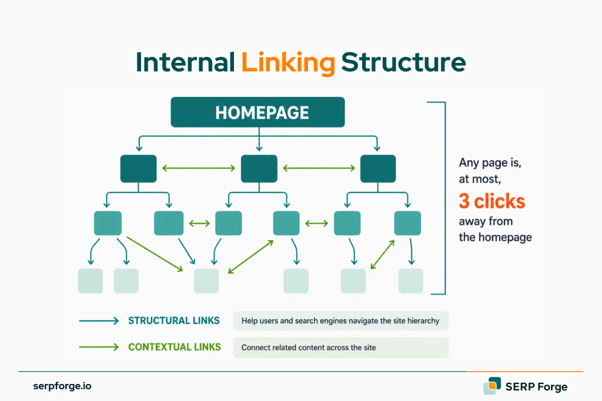
I eventually realized that backlinks deliver far better results when they’re supported by a strong internal linking structure.
How I fixed it: I started connecting related blog posts, service pages, guides, and resource pages using relevant internal links.
This helped distribute authority throughout the site, improved navigation, and made it easier for search engines to understand the relationship between pages.
What I learned: Google recommends using internal links to help search engines discover important pages and understand your website’s structure, making them an essential part of any link-building strategy.
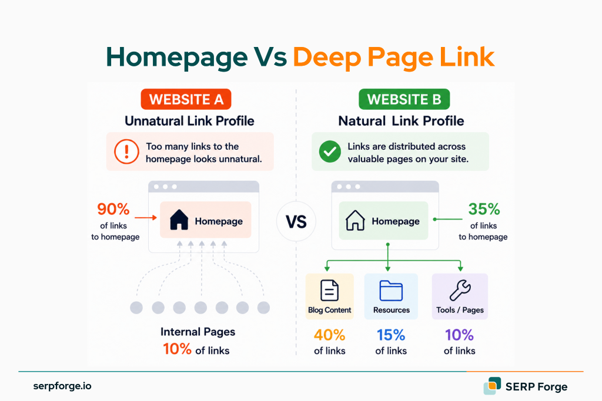
Mistake 9 – I Sent Every Backlink to My Homepage
In the beginning, I thought the homepage was the safest destination for every backlink I earned.
As a result, most of my outreach campaigns pointed there, while valuable blog posts, research pages, and guides received very little attention. Those content pages struggled to rank because they weren’t earning authority directly.
Over time, I realized I was wasting opportunities to strengthen the pages people were actually searching for.
How I fixed it: Instead of promoting only my homepage, I started building backlinks to in-depth guides, statistics pages, tools, and other link-worthy resources. This created a more natural backlink profile and helped individual pages rank for relevant keywords.
What I learned: A healthy backlink profile includes links across different parts of a website, allowing multiple pages to build authority and attract organic traffic.
Mistake 10 – I Ignored Toxic Backlinks
For a long time, I assumed every backlink was beneficial, so I rarely checked my backlink profile after building links.
During one audit, I discovered spammy directory links, unrelated foreign-language websites, and suspicious domains pointing to my content. Although I hadn’t created many of them, leaving them unchecked wasn’t a good long-term strategy.
That experience showed me that monitoring backlinks is just as important as earning them.
How I fixed it: I began reviewing my backlink profile regularly using SEO tools, removing harmful links whenever possible, and using Google’s Disavow Tool only when necessary. Regular audits helped me maintain a cleaner and healthier backlink profile.
What I learned: Reviewing unnatural backlinks carefully and using the Disavow Tool only when there is a clear pattern of harmful or manipulative links that cannot be removed manually.
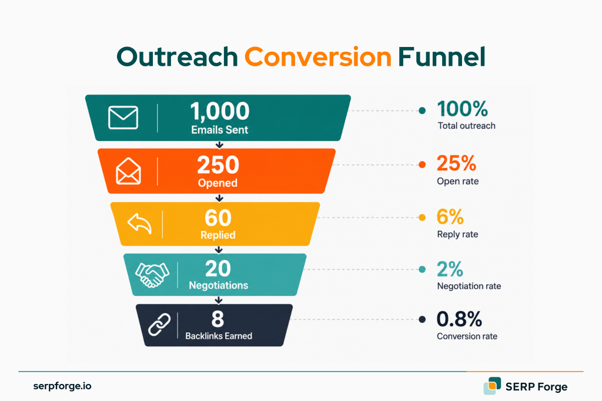
Mistake 11 – I Sent Generic Outreach Emails
I believed sending the same email template to hundreds of websites would save time. It certainly saved time, but it also produced very few replies.
Most emails were ignored because they didn’t explain why my content would be valuable to the recipient.
I soon realized that outreach is about building relationships, not sending bulk emails.
How I fixed it: I began personalizing every outreach email by mentioning the recipient’s content, explaining why I chose their website, and showing how my resource could benefit their audience. Although I contacted fewer websites, my response and placement rates improved noticeably.
What I learned: Personalized outreach performs significantly better than mass email campaigns, making relevance more valuable than volume.
Mistake 12 – I Created Content Nobody Wanted to Link To
Earlier in my SEO journey, I focused heavily on publishing keyword-targeted articles. The content ranked for some terms, but very few websites wanted to reference or link to it because it didn’t offer anything unique.
Even my outreach campaigns struggled because there wasn’t a strong reason for others to link.
That taught me that successful link building starts long before outreach begins.
How I fixed it: I shifted my focus toward creating assets people naturally wanted to reference, including original research, statistics pages, detailed guides, free tools, and practical resources. Once the content became more valuable, earning backlinks became much easier.
What I learned: Original research, unique data, and genuinely helpful resources consistently attract more editorial backlinks because they provide information that other websites want to cite.
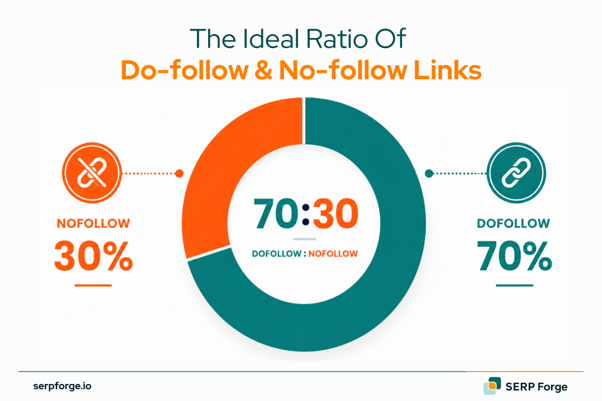
Mistake 13 – I Focused Only on Dofollow Links
For a long time, I ignored opportunities simply because the backlink would be marked as nofollow.
I assumed those links had no SEO value, so I turned down mentions from reputable websites that could have brought qualified visitors and strengthened my brand.
Looking back, I realized I was focusing too much on SEO metrics and not enough on overall marketing value.
How I fixed it: I started evaluating every opportunity based on its audience, visibility, referral traffic, and credibility instead of the link attribute alone. Some nofollow mentions generated valuable traffic and opened the door to future backlink opportunities.
What I learned: Google has confirmed that nofollow, sponsored, and UGC attributes are treated as hints rather than strict directives, meaning these links can still help with discovery, visibility, and overall brand awareness.
Mistake 14 – I Chased High DR Websites Only
When I first started building backlinks, I judged every opportunity by Domain Rating. If a website had a high DR score, I considered it a great prospect, even if its audience had nothing to do with my niche.
Meanwhile, I ignored smaller industry blogs that were highly relevant to my content.
Over time, I realized that relevance often had a bigger impact than chasing authority metrics alone.
How I fixed it: I stopped using DR as my only filter and started evaluating websites based on topical relevance, audience alignment, content quality, and organic traffic. This helped me build backlinks that supported both rankings and referral traffic.
What I learned: High authority metrics are useful, but the best backlinks come from websites that are both authoritative and relevant to your industry.
Mistake 15 – I Ignored Unlinked Brand Mentions
I used to focus only on finding new backlink opportunities, completely overlooking websites that had already mentioned my brand.
During one content audit, I discovered several articles referencing my company without linking to my website. Those were some of the easiest backlink opportunities I had missed.
That experience taught me that not every backlink requires a fresh outreach campaign.
How I fixed it: I started monitoring brand mentions regularly using SEO and media monitoring tools. Whenever I found an unlinked mention, I sent a polite email asking whether the publisher could add a relevant link to improve the reader experience. Many were happy to update the article.
What I learned: Unlinked brand mentions often convert into backlinks more easily because the publisher is already familiar with your business and has chosen to reference it.
Mistake 16 – I Ignored Nofollow Link Opportunities
For a long time, I dismissed any opportunity that included a nofollow attribute. I believed only dofollow links were worth pursuing, so I passed on mentions from respected industry websites, communities, and publications.
Looking back, I realized I was missing valuable referral traffic and brand exposure.
Not every successful link-building opportunity should be judged by SEO metrics alone.
How I fixed it: I started evaluating every opportunity based on audience reach, referral traffic, credibility, and brand visibility rather than focusing only on the link attribute.
Some of those nofollow mentions introduced my content to entirely new audiences and even led to future editorial backlinks.
What I learned: Google has confirmed that nofollow, sponsored, and UGC links are treated as hints, meaning they can still support content discovery, visibility, and broader marketing goals.
Mistake 17 – I Built Links Without Measuring Results
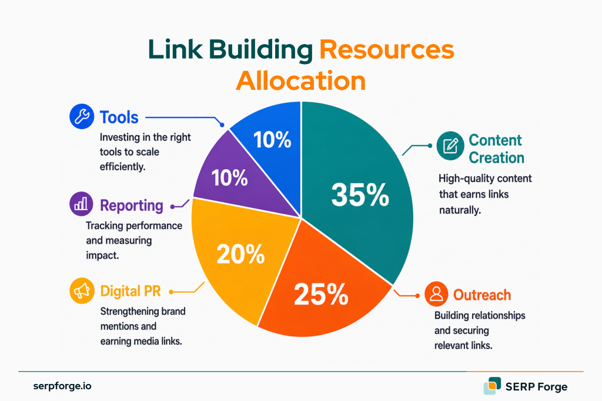
Earlier in my SEO journey, I celebrated every new backlink without asking an important question: was it actually producing results?
I tracked how many links I built but rarely measured whether they improved rankings, drove referral traffic, or generated conversions. That made it difficult to identify which strategies deserved more investment.
Eventually, I realized that link building without measurement is just guesswork.
How I fixed it: I started tracking referral traffic, keyword rankings, conversions, and backlink performance using SEO and analytics tools.
Measuring these metrics helped me identify high-performing backlinks, refine my outreach strategy, and focus my efforts where they delivered the best return.
What I learned: Research shows that nearly 66.5% of backlinks become inactive after nine years, making regular backlink monitoring, recovery, and performance tracking an essential part of maintaining long-term SEO success.
Conclusion
Link building remains one of the most important factors in SEO success, but the wrong approach can do more harm than good. Many common link-building mistakes stem from prioritizing shortcuts, focusing on vanity metrics, or overlooking relevance and quality.
Whether it’s buying spammy backlinks, over-optimizing anchor text, ignoring website relevance, or failing to track performance, these mistakes can limit growth and reduce the effectiveness of your SEO efforts.
The most successful link-building strategies focus on earning relevant, high-quality backlinks that provide value to users.
FAQ’s
What is the biggest link-building mistake?
Prioritizing quantity over quality is often considered the biggest link-building mistake. Hundreds of low-quality backlinks typically provide less value than a small number of links from relevant and authoritative websites.
Can bad backlinks hurt rankings?
Yes. Backlinks from spammy, irrelevant, or low-quality websites can weaken your backlink profile and may negatively affect rankings. While search engines can ignore many poor-quality links, excessive spammy backlinks can still create SEO risks.
Should I disavow toxic backlinks?
Not every low-quality backlink needs to be disavowed. However, if you identify a significant number of toxic or manipulative backlinks that could harm your website, using the Google Disavow Tool may be appropriate after conducting a thorough backlink audit.
How many backlinks are too many?
There is no specific number that is considered too many. The quality, relevance, and natural growth of backlinks matter far more than the total count. A natural backlink profile can contain thousands of links if they are earned legitimately.
Are paid backlinks against Google’s guidelines?
Google considers buying or selling links that pass ranking value a violation of its spam policies. Paid links intended to manipulate search rankings can result in penalties or loss of ranking visibility.
What makes a backlink high quality?
A high-quality backlink typically comes from a trustworthy, relevant website and is placed naturally within valuable content. Factors such as topical relevance, website authority, organic traffic, and contextual placement all contribute to backlink quality.
How often should I audit my backlink profile?
Most websites should perform a backlink audit at least once every quarter. Websites actively investing in link building or operating in competitive industries may benefit from monthly backlink reviews to identify opportunities and potential issues more quickly.