



Link Velocity is the rate at which your website gains or loses backlinks over a specific period. It helps measure how quickly your backlink profile changes. For example, if your website receives 60 new backlinks in 2 months, your link velocity is 30 backlinks per month.
Why Link Velocity Matters for SEO Rankings?
Google has consistently emphasised that it evaluates the naturalness of backlink patterns. Link velocity is a core part of that naturalness check.
Here’s why it directly influences your rankings:
- Trust Signal: A steady link acquisition pattern signals an authoritative, active site that people genuinely reference. Erratic patterns can reduce algorithmic trust.
- Penalty Risk: Unnatural velocity, especially tied to bulk link purchases or link schemes, can trigger manual actions or algorithmic penalties under Google’s spam policies.
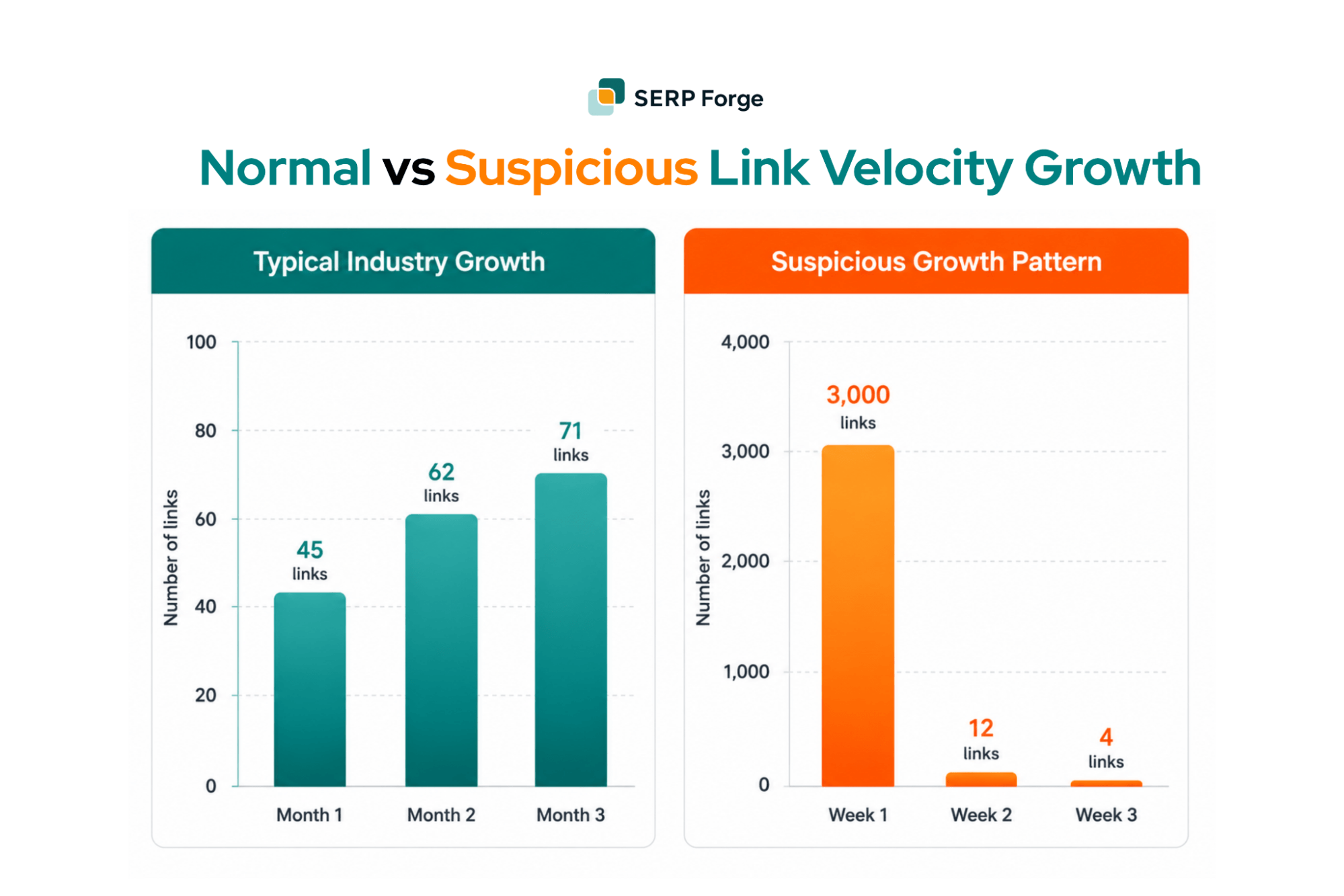
- Competitive Benchmarking: If your competitors in a niche typically gain 50–100 new referring domains per month and you gain 3,000 in a single week, that contrast is a clear outlier signal.
- Indexation Rate: Healthy link velocity can accelerate how quickly Googlebot discovers and indexes new content, since crawl priority is influenced by how much the web points to a URL.
Understanding the impact of link velocity on SEO means recognising that velocity is a multiplier; it can amplify the power of a strong link profile or expose the weakness of an artificial one.
You can learn more about maximizing the value of each link in our guide to the benefits of link building.
How Do Search Engines Detect Unnatural Link Velocity?
Google’s algorithms, alongside manual review teams, are sophisticated at identifying link velocity anomalies.
Here’s what triggers scrutiny:
1. Sudden Spikes in Backlink Acquisition
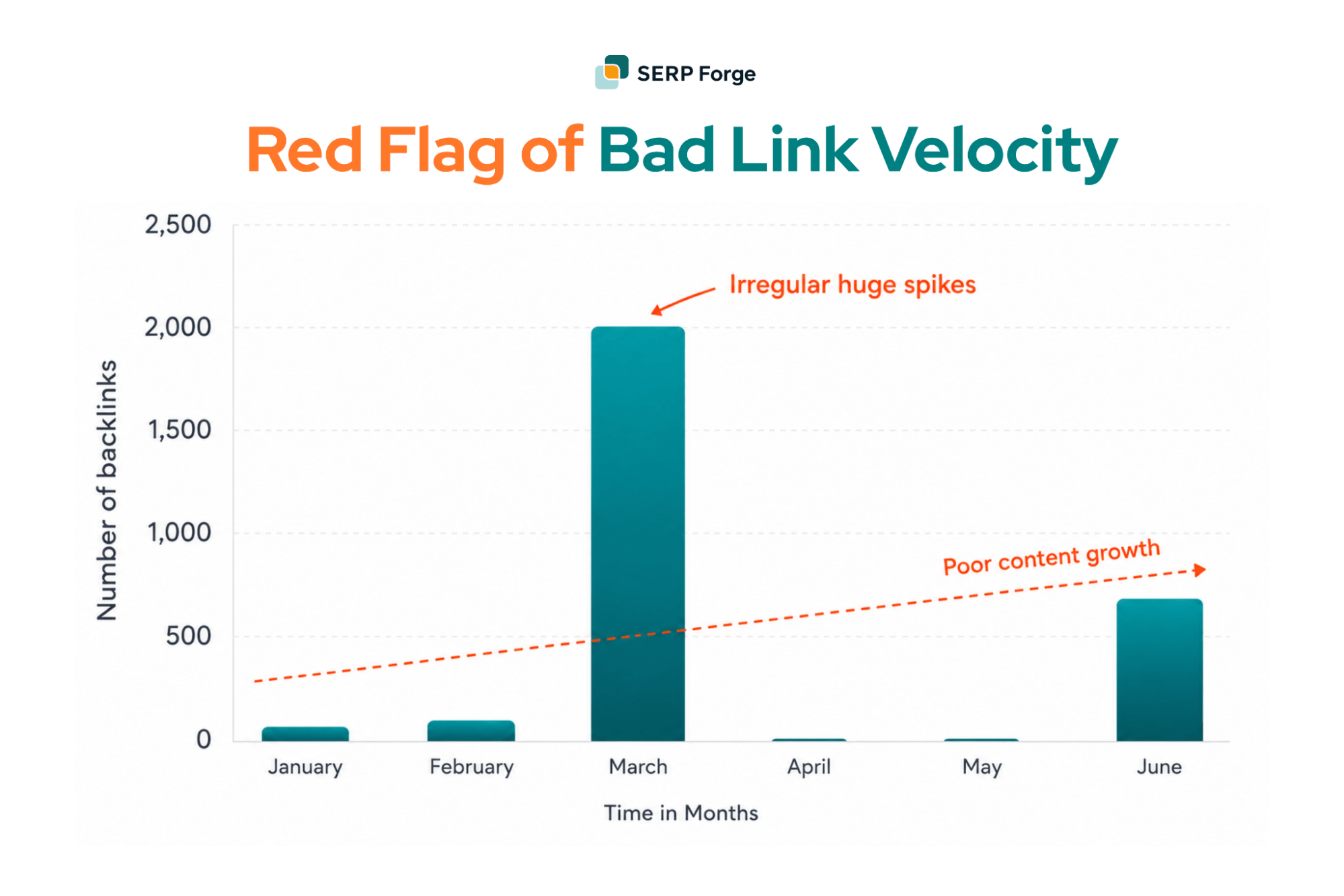
If a website normally gains 20–30 backlinks per month and suddenly acquires thousands within days, it immediately creates scrutiny unless there is a clear reason like PR coverage, viral content, or a product launch.
Google cross-references this with traffic data, brand search volume, and social signals. If none of those spikes in tandem, the link pattern looks manipulated.
Algorithmic systems look for corroboration. A genuine spike in links usually comes with a corresponding spike in branded searches, social mentions, and referral traffic. |
2. Random Topics
A sudden increase in backlinks from unrelated industries, foreign-language blogs, casino sites, or generic article networks often signals artificial link building.
Natural backlink growth usually comes from websites operating in similar or closely related topics. Random topical patterns weaken trust and make velocity spikes look less organic.
Refer to our link-building checklist for guidance on maintaining healthy anchor ratios.
3. Robot Patterns
Search engines also detect repetitive acquisition behavior. Examples include:
- identical anchor text patterns
- backlinks published on the same dates
- similar page structures
- repeated linking formats across multiple domains
These patterns are often detected as part of unnatural links that can result in a manual penalty.
4. Zero Traffic
Large backlink spikes from websites with no real traffic, engagement, or ranking visibility are another common spam signal.
Even if the referring domains appear indexed, links from low-activity websites rarely reflect genuine authority.
Search engines increasingly evaluate whether linking sites have actual users, topical relevance, and organic visibility before passing trust signals.
What Is a Natural Link Velocity Pattern?
Natural link velocity looks different for every site depending on its niche, content output, brand strength, and promotional activities.
However, several core traits define what Google considers “organic” growth:
1. Gradual Backlink Growth Over Time
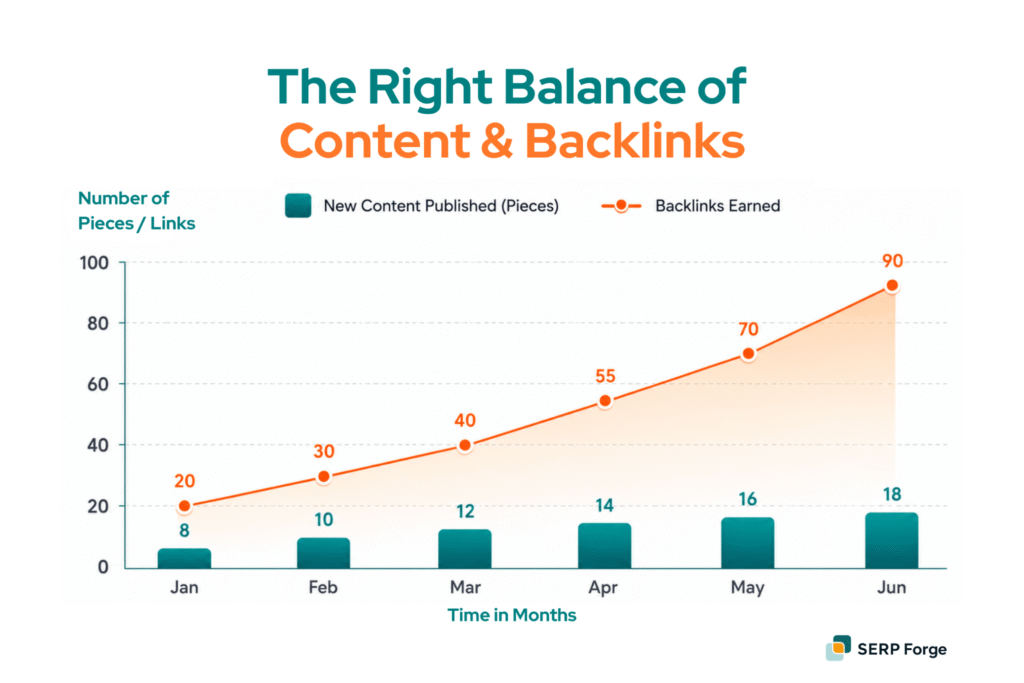
A natural link velocity pattern generally shows a slow but consistent upward trend in referring domains. New content attracts links. Old content continues to accrue links as it gets cited. The overall growth curve is smooth, not jagged.
For a new site, even zero links per month for the first few months is normal. What matters is that once growth starts, it’s consistent, not a cliff that goes vertical overnight.
2. Content Publication Momentum and Link Acquisition
There’s a direct relationship between how frequently you publish high-quality, linkable content and how many links you accrue.
Sites that publish consistently tend to have smoother link velocity curves because there’s a steady pipeline of new content for publishers and journalists to reference.
When velocity dips, it often correlates with publishing pauses. This is a natural, healthy pattern.
3. Brand Mentions and Organic Link Growth
As brand recognition grows, so does the volume of organic, editorial links. This creates a compounding velocity effect.
Each link builds domain authority, which increases search visibility, which brings more organic discovery, which leads to more links. This is what’s known as link juice building on itself over time.
How Content Velocity Influences Link Velocity?
Content velocity, the rate at which you publish new, substantive content, is one of the most underappreciated drivers of link velocity.
The relationship is direct: more high-quality content means more link opportunities, which translates to a healthier and more consistent link acquisition rate.
Here’s how content velocity and link velocity interact:
- Every piece of research-driven content creates a new citable resource.
- Data studies, original surveys, and expert interviews attract editorial backlinks naturally.
- Regular publication signals to search engines that the site is active and trustworthy.
- Content clusters create internal link momentum, which distributes link equity to newer pages.
Sites that publish 4–8 high-quality pieces per month consistently outperform competitors in link velocity over a 12-month window, regardless of starting domain authority.
How to Build Healthy Natural Link Velocity?
Healthy link velocity refers to acquiring backlinks at a natural and consistent pace over time.
Search engines expect websites to earn links gradually as they publish content, gain visibility, and build authority.
A sustainable link-building strategy should focus on:
- Earning links consistently rather than in sudden spikes
- Building links from relevant and authoritative websites
- Diversifying backlink sources across blogs, news sites, directories, and niche resources
- Balancing branded, generic, and keyword-rich anchor text
- Creating link-worthy content that naturally attracts references
- Monitoring new and lost backlinks regularly
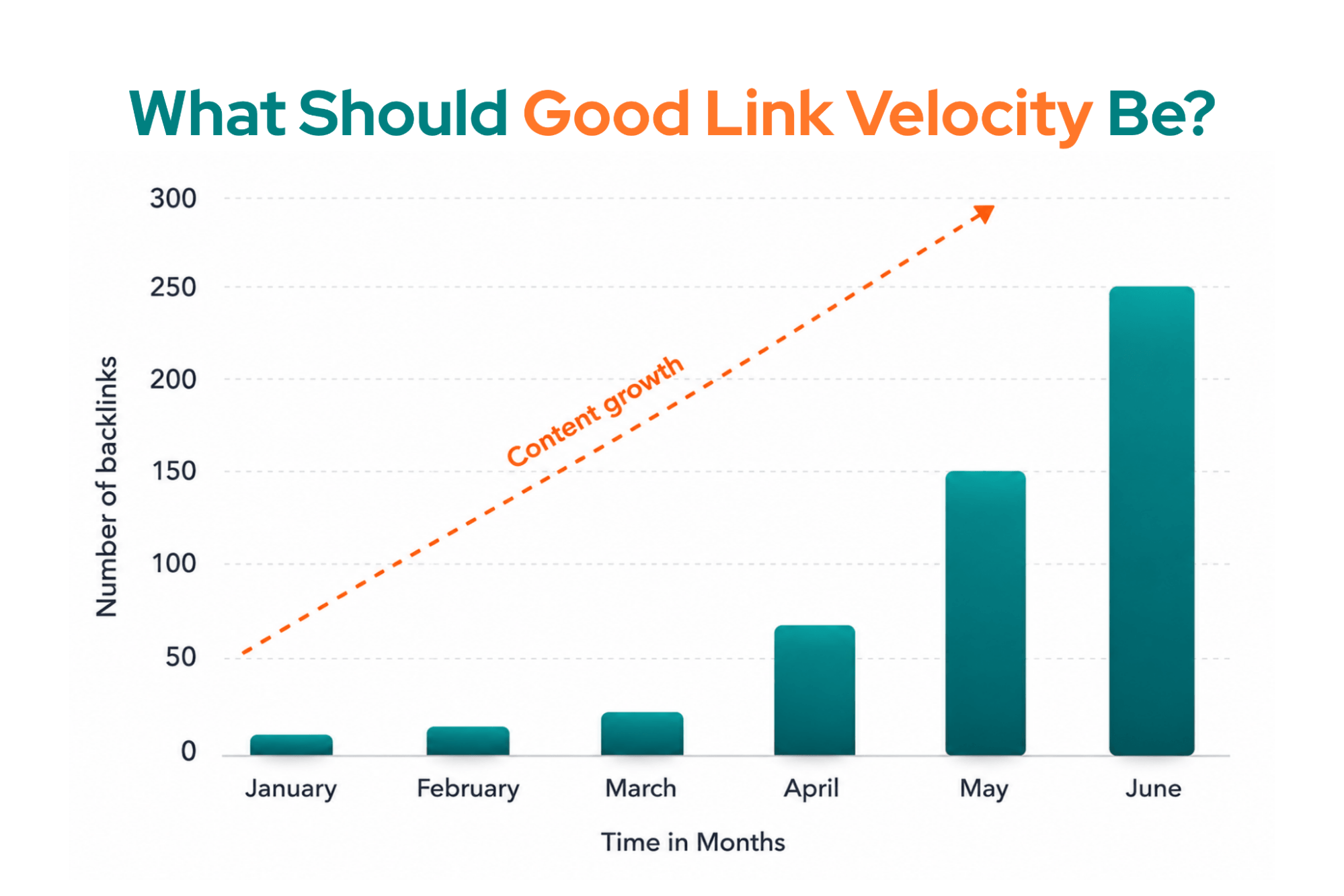
A healthy link profile typically shows steady growth month after month. Large fluctuations in link acquisition can appear unnatural, especially for newer websites with limited authority.
Here are the best practices we follow at our agency:
- Publish high-quality content on a regular schedule
- Prioritize relevance over backlink volume
- Acquire links from multiple referring domains
- Replace lost links through ongoing outreach efforts
- Track link growth trends using backlink monitoring tools
By maintaining consistent link acquisition and focusing on quality sources, websites can strengthen their authority while minimizing the risk of algorithmic penalties.
Link Velocity Metrics and Tools
Monitoring your link velocity requires the right toolset.
Here’s what the major platforms offer and the metrics you should track:
Ahrefs New/lost referring domains graph, backlink velocity chart, and domain rating trend Semrush Backlink Analytics with date-range filters and competitor comparison Moz Link Explorer with spam score context for velocity spikes Google Search Console Links report for monitoring manual link growth (limited velocity data) Majestic Historic Index for long-term velocity trends and citation flow |
For SEO link velocity monitoring, we recommend using Ahrefs as your primary tool and supplementing with Google Search Console to cross-reference organic performance with link acquisition trends.
Key benchmarks to monitor monthly:
- Net new referring domains (target: positive, gradual growth)
- Ratio of do-follow to no-follow new links (natural profiles include both)
- Average DR/DA of new linking domains
- Anchor text distribution of new links
- Topical relevance score of new linking pages
Common Link Velocity Mistakes to Avoid
Even experienced SEO teams can create unnatural link patterns without realizing it.
The biggest mistakes usually come from inconsistent acquisition behavior rather than link quantity alone.
1. Copying a Competitor’s Exact Link Growth
Many SEO teams use Ahrefs or Semrush to copy a competitor’s monthly backlink count exactly. The problem is that competitors have different authority levels, brand demand, content velocity, and historical trust signals.
A newer website trying to match an established brand’s link growth too aggressively can create unnatural acquisition patterns.
2. Letting Large Numbers of Links Expire Together
Rented links, sponsored placements, or short-term campaigns often disappear at the same time once payments stop. Sudden backlink loss can create unstable link velocity signals and weaken authority over time.
Link acquisition should remain consistent instead of depending heavily on temporary placements.
3. Building Hundreds of Links Too Early
One of the fastest ways to create suspicious velocity patterns is blasting a brand-new domain with hundreds of backlinks during the first few months.
New websites need gradual authority growth. A steady acquisition pace supported by content publishing, branded searches, and organic traffic appears far more natural than aggressive early spikes.
4. Stopping Link Building Completely
A one-time link campaign followed by months of inactivity creates an unnatural growth curve. Healthy link velocity usually looks consistent over time, even if acquisition volume changes seasonally.
Smaller but continuous link acquisition patterns tend to look more trustworthy than aggressive short-term bursts followed by complete silence.
Conclusion
Link velocity is one of the most telling signals in your SEO profile, not because high velocity is inherently good or bad, but because the pattern it creates reveals whether your backlink growth is natural, intentional, and sustainable.
Top-ranking websites usually earn backlinks naturally over time from relevant sources with diverse anchors. Focus on great content, real relationships, and consistent link building, and healthy link velocity will follow.
Ready to build a link profile that earns long-term authority? Focus on earning backlinks from diverse, relevant, and trustworthy sources to create a natural backlink profile that supports sustainable SEO growth.