


Running a content gap analysis is one of the most important parts of any SEO strategy. It helps you identify the keywords your competitors rank for, but you do not understand where you stand in your niche, and uncover missed opportunities that can increase organic traffic.
I have used Ahrefs for years, and content gap analysis is always the first step I take whenever I work on a new website or prepare an SEO roadmap. It gives a clear picture of the keywords, pages, and backlinks competitors use to outperform you.
In this guide, I will explain how to conduct a content gap analysis using Ahrefs and share a few practical tips based on what has worked for me.
Steps to Do Content Gap Analysis in Ahrefs
1. Go to Competitive Analysis
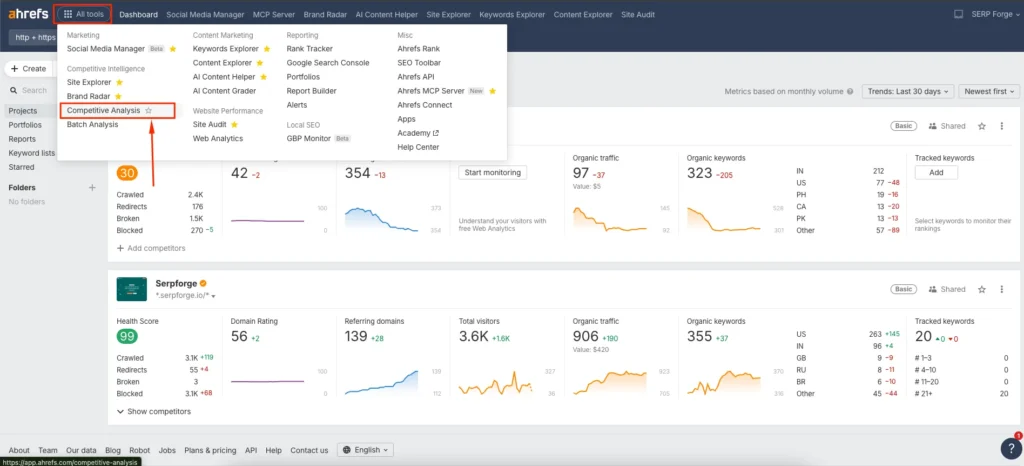
Start by opening Ahrefs and clicking on “All tools” from the top navigation. Select “Competitive analysis”. This section compares your website with competitors and highlights ranking gaps and missed opportunities.
2. Enter Your Website and Competitors
Enter your website in the first input box. Add up to 10 competing websites in the remaining fields. I usually enter at least three direct competitors and a few indirect ones to get more data variety.
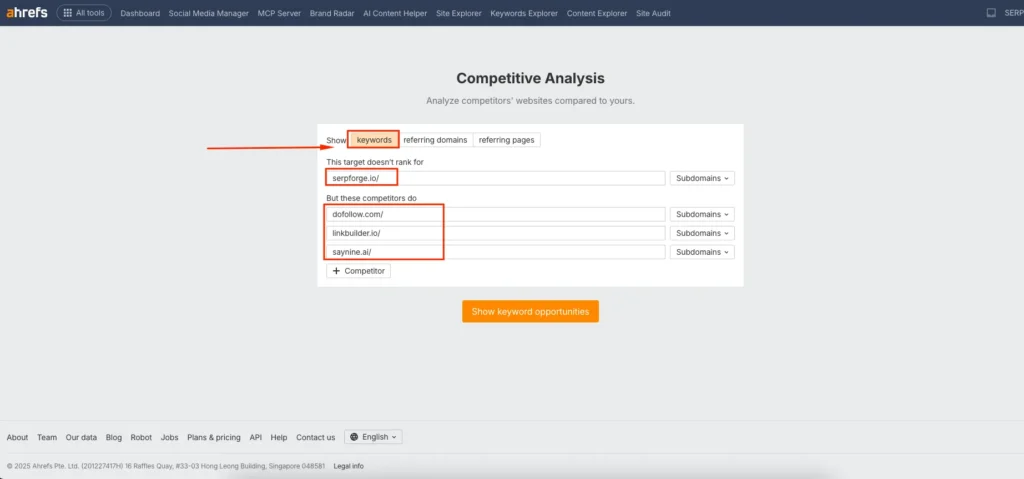
You can also analyze content gaps at the page level. Simply enter the exact URL of your page and your competitors’ URLs. Make sure to select “Path” instead of “Subdomain” when working with specific pages.
3. Choose Keyword Opportunities
From the top menu, choose “Keywords” under the “Show” dropdown and click on “Show keyword opportunities”. Ahrefs will then display all keywords your competitors rank for but you do not.
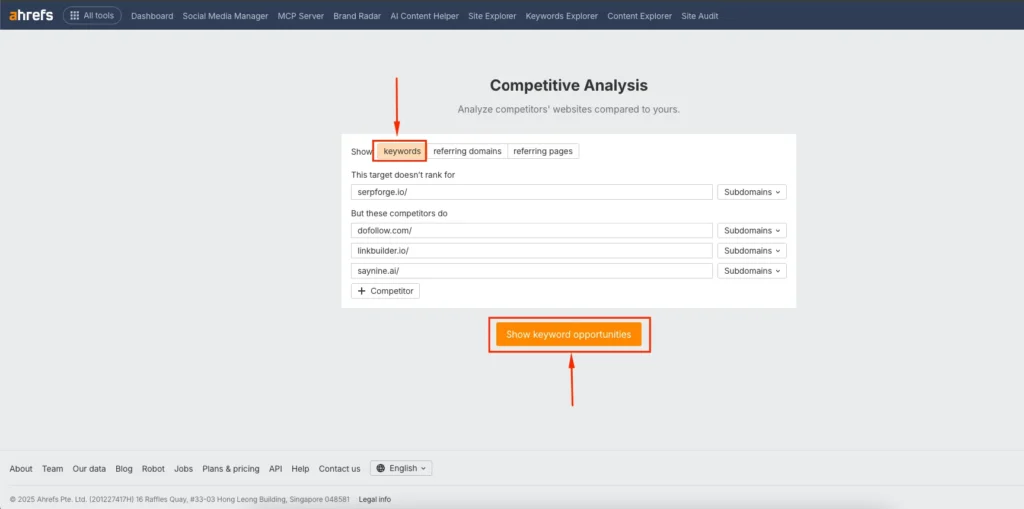
You will also see additional options such as:
- Referring domains: Helps you find backlinks competitors have but you are missing.
- Referring pages: Shows specific competitor pages that link to their site but not to yours.
These are extremely helpful when building both content and backlink strategies.
4. Apply Filters and Export the Data
Use the filters at the top to refine your results. You can filter by:
- Monthly search volume
- Country
- Keyword Difficulty
- CPC
- Keywords
- SERP features
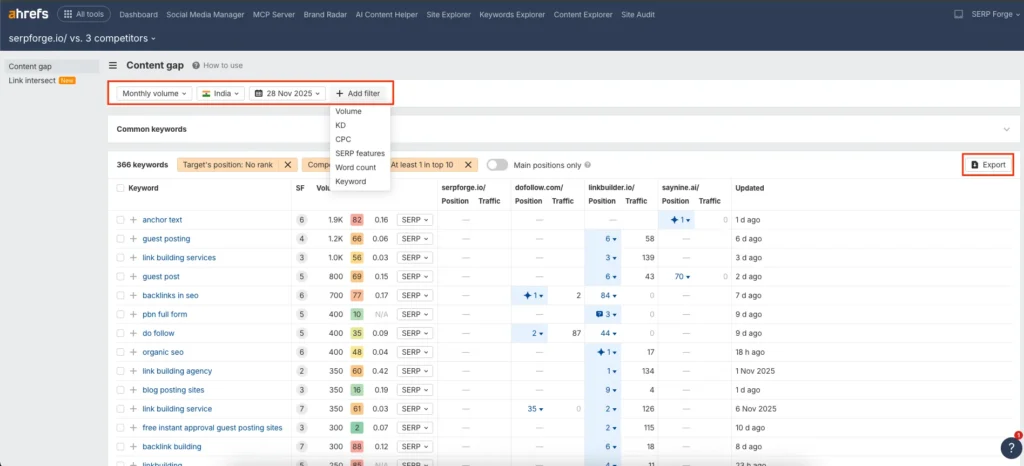
These filters help you focus on valuable keywords that match your goals. After refining the results, export the list in CSV or Google Sheets format.
5. Analyze the Data and Apply the Insights
Once you export the keyword data, start analyzing the opportunities. Here is how I typically work with it:
- Group similar keywords into clusters.
- Identify search intent for each cluster.
- Prioritize keywords that have low difficulty but high relevance.
- Check competitor pages to see how they cover the topic.
- Plan new pages or update existing ones based on the findings.
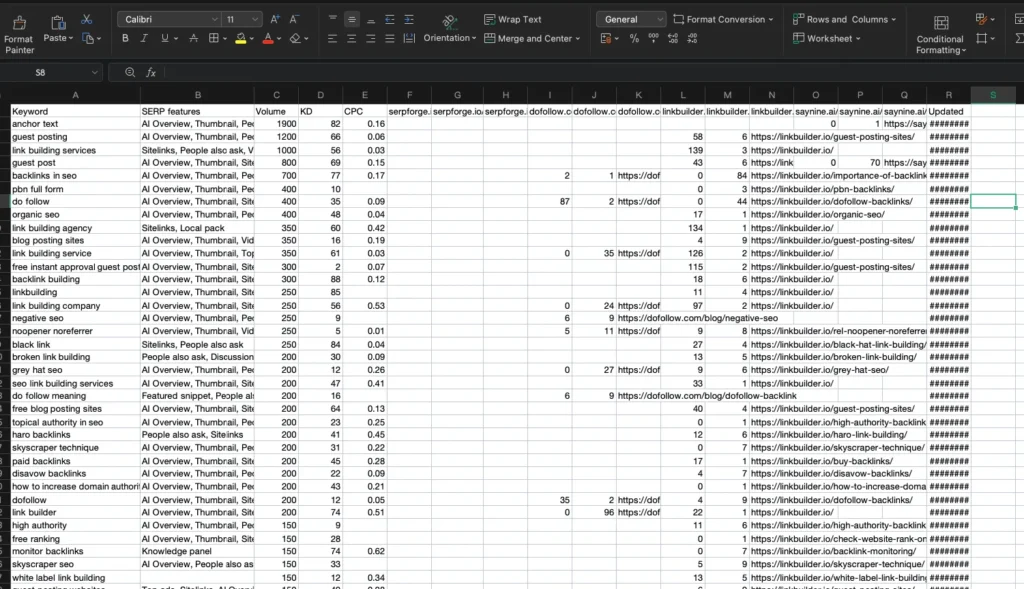
This process helps you build a content roadmap based on real competitive insights instead of assumptions.
Tips for Content Gap Analysis in Ahrefs
Here are some practical tips that helped me get better results while performing content gap analysis:
- Include both big competitors and smaller niche websites to get more diverse keyword opportunities.
- Look at competitor content formats. Some pages rank because they match search intent better, not because of stronger backlinks.
- Use the referring domains gap to plan backlink outreach. Competitors often get links from websites in your industry that are open to linking to similar content.
- Always check the SERP before targeting a keyword. The live results can reveal what type of content Google prefers.
- Revisit content gap analysis every few months. Competitor rankings and keyword trends change frequently.
Conclusion
A detailed content gap analysis in Ahrefs gives you a clear roadmap for improving your SEO strategy. It helps you identify keywords, topics, and backlinks that competitors use to gain visibility.
According to industry research, more than 70% of high-performing websites update or expand their content based on competitive data every quarter.
This makes content gap analysis not just a helpful practice but a core part of long-term SEO growth.
By regularly analyzing keyword gaps and competitor insights, you can create content that ranks better and aligns with what users search for.


