
Driving traffic to your SaaS website is rarely the problem; the real challenge often starts after users sign up. Many SaaS teams struggle with trial users who never activate and demos that don’t convert, and then face high churn that eats into revenue.
In fact, average free trial-to-paid conversion rates for B2B SaaS typically sit between 15%–25%, meaning 75% or more of trial users don’t convert without a strong funnel and onboarding experience.
Without a structured funnel, leads drop off, onboarding feels rushed, and long-term engagement becomes difficult to maintain.
This is where a SaaS marketing funnel makes the difference. Compared to traditional funnels that end at the sale, it focuses on the full customer lifecycle from awareness to retention and referrals, ensuring users see value early, stay engaged, and become long-term advocates.
In this guide, we break down the SaaS marketing funnel stage by stage, explain the frameworks behind it, and show how to build a funnel that drives sustainable, long-term growth, not just sign-ups.
What is a SaaS marketing funnel?
A SaaS marketing funnel explains the full journey a user takes with a SaaS product from the first time they hear about it to becoming a long-term customer and even a brand advocate.
This is because SaaS growth depends heavily on recurring revenue, renewals, and customer lifetime value, not just one-time conversions.
Important to note:
According to a study, a healthy SaaS churn rate is generally around 3 %–8 % per month, meaning high retention is critical for long-term revenue.
This makes retention just as important as acquisition.
For readers new to SaaS terminology, referring to a clear SaaS glossary can help them better understand common funnel, growth, and retention concepts used throughout this guide.
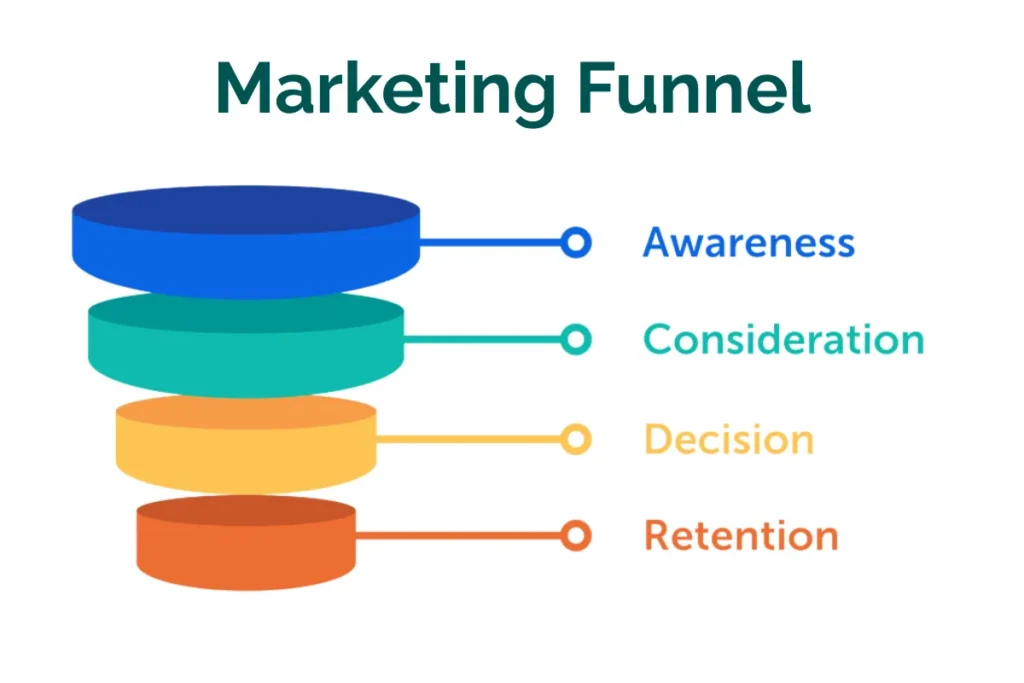
In simple terms, the funnel doesn’t stop at “buy,” it extends to use, stay, upgrade, and recommend.
Why SaaS funnels are different
Traditional marketing funnels usually end once a customer makes a purchase. The success metric is often just the sale itself.
SaaS funnels work differently:
- The real value starts after the signup or subscription.
- Businesses must focus on onboarding, product usage, retention, and long-term engagement.
- Retaining existing users and reducing churn is just as important as acquiring new ones.
- Referrals and advocacy play a major role in sustainable SaaS growth.
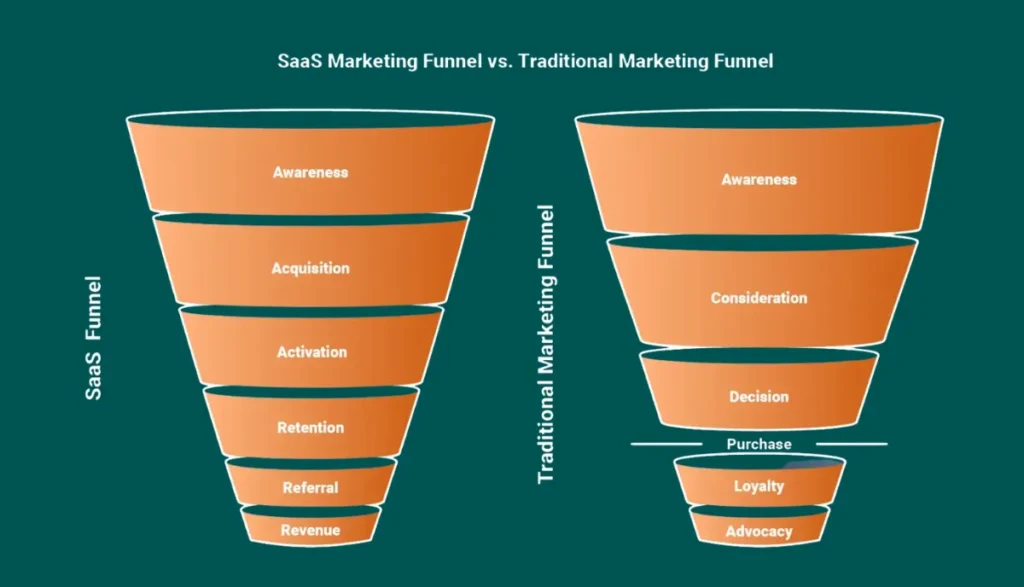
Because of this, SaaS funnels include post-purchase stages such as activation, retention, expansion, and referrals, making them more lifecycle-driven than linear.
Example
Take Netflix as a simple, real-world example:
–Awareness (TOFU): A user hears about Netflix through ads, social media, or word of mouth.
–Consideration (MOFU): They explore plans and sign up for a free trial.
–Conversion (BOFU): They subscribe to a paid plan.
–Retention: They continue watching shows regularly and renew their subscription month after month.
-Referral: They recommend Netflix to friends or family, bringing in new users.
This ongoing cycle shows why SaaS marketing funnels are designed to support long-term relationships, not just quick conversions.
Core frameworks you can use
To build a strong SaaS marketing funnel, frameworks help you plan actions, track performance, and spot gaps quickly.
The two most practical frameworks for SaaS are AARRR (Pirate Metrics) and TOFU–MOFU–BOFU. Here’s how to use them with real examples.
AARRR (Pirate Metrics)
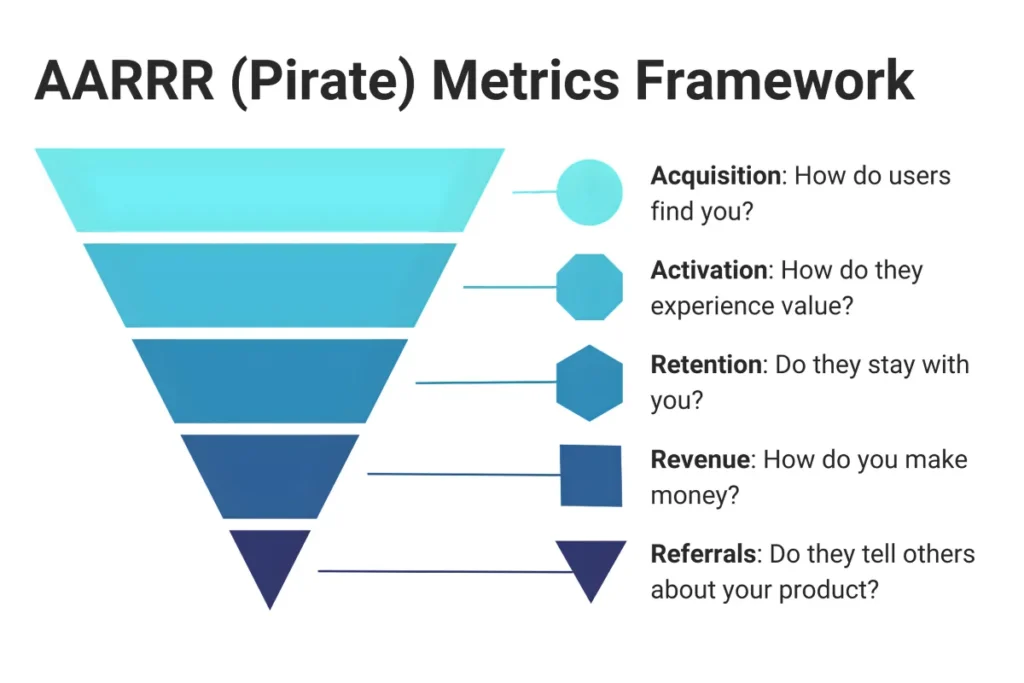
AARRR focuses on the entire SaaS customer lifecycle, making it ideal for subscription-based products where retention and expansion matter as much as acquisition.
How to use AARRR (Step-by-step)
Acquisition – How users find you
Acquisition focuses on bringing new users to your SaaS product through different marketing channels. The goal is to attract the right audience who has a genuine need for your solution.
Channels: SEO blogs, paid ads, social media, partnerships
Example: A project management SaaS publishes blogs targeting “best tools for remote teams” to attract organic traffic.
Activation – First value moment
Activation is the point where a user experiences real value from your product for the first time. This is usually defined by a specific action that shows they understand and can use the core feature.
Example: A CRM considers a user “activated” when they add 5 contacts and log their first deal.
Retention – Ongoing usage
Retention measures how consistently users return to your product and continue using its core features over time. Strong retention means users see long-term value and are less likely to churn.
Example: Weekly product usage emails and in-app tips to bring inactive users back.
Referral – Word-of-mouth growth
Referral focuses on encouraging satisfied users to recommend your product to others, helping you acquire new users through trust and social proof.
Example: Offer one free month for every successful referral.
Revenue – Monetisation and expansion
Revenue tracks how users convert to paid plans, renew subscriptions, or upgrade to higher-value plans and add-ons.
Example: Prompt users to upgrade once they hit feature limits.
This approach helps increase customer lifetime value by encouraging upgrades at the moment users clearly see the need for advanced features.
Pro tip:
Don’t track everything at once. For early-stage SaaS, focus first on Activation and Retention; fixing churn often delivers faster growth than increasing traffic.
How to combine both frameworks (Best practice)
- Use TOFU–MOFU–BOFU to attract and convert users through content and campaigns.
- Use AARRR to measure what happens inside the product after signup.
Example in Action
-Blog post (TOFU) → Webinar signup (MOFU) → Free trial (BOFU)
-Track trial activation, retention, referrals, and revenue using AARRR metrics.
This combined approach ensures your SaaS marketing funnel doesn’t just generate leads, it builds long-term, repeatable growth.
Stage-by-stage breakdown with examples & steps
Each stage of the SaaS marketing funnel serves a specific purpose. The sections below explain how to approach every stage with examples and actionable steps.
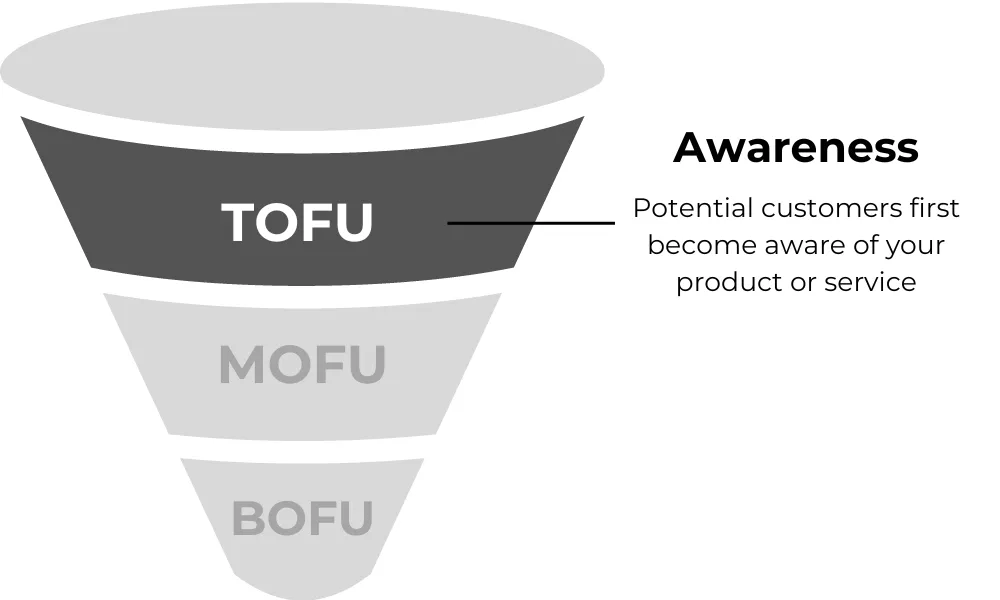
Stage 1: Awareness (Top of Funnel — TOFU)
The Awareness stage is the entry point of the SaaS marketing funnel. It focuses on attracting the right audience by addressing their problems, questions, or interests before introducing your product. The goal is visibility and trust, not conversion.
Did you know?
According to HubSpot’s 2025 marketing statistics, 74 % of marketers say content marketing helped them generate demand and leads, reinforcing how valuable top-of-funnel content is for reaching new audiences.
At this stage, your brand should appear helpful and informative, positioning itself as a reliable source of insights in your niche.
Goal:
Get on your target customer’s radar and make them aware that a solution to their problem exists. At this stage, users are not looking to buy; they are looking to learn, explore, or understand a challenge.
Typical channels
- SEO-optimized blog posts
- Social media content (LinkedIn, X, Instagram, communities)
- Digital PR mentions and guest posts
- Paid ads (search and social)
- Organic search traffic
To strengthen organic discovery at this stage, SaaS teams often rely on structured keyword research techniques, such as those outlined in bulk keyword research in Ahrefs, to identify high-intent awareness topics.
These channels help your content reach users who are actively searching for information or casually discovering solutions.
Example:
Educational blog content answering questions like “how to check Google rankings” or “email marketing for beginners.”
This content targets early-stage search queries, attracts organic traffic, and introduces users to the Mailchimp brand long before they consider signing up.
How to do it
1. Keyword research
Find early-stage search queries your audience uses, such as “best onboarding tools for SaaS” or “how to reduce churn.”
2. Content planning
Choose problem-first topics that educate, not sell.
Example: Common onboarding mistakes in SaaS.
3. Content creation
Write clear, helpful content using simple language and practical examples.
4. Promotion
Share blogs on social media, newsletters, and niche communities. Repurpose into short posts.
5. Tracking
Monitor impressions, clicks, website visits, and organic traffic to measure reach.
These metrics help you understand whether your content is reaching and attracting the right audience.
This stage sets the foundation for the rest of the funnel. If Awareness is weak, every stage after it becomes harder to scale.
Stage 2: Engagement/interest (Middle of funnel — MOFU)
The Engagement or Interest stage focuses on users who are already aware of your brand and want to learn more.
At this point, prospects are exploring solutions, comparing options, and looking for deeper insights before making a decision. The goal is to build trust, capture leads, and move users closer to product consideration.
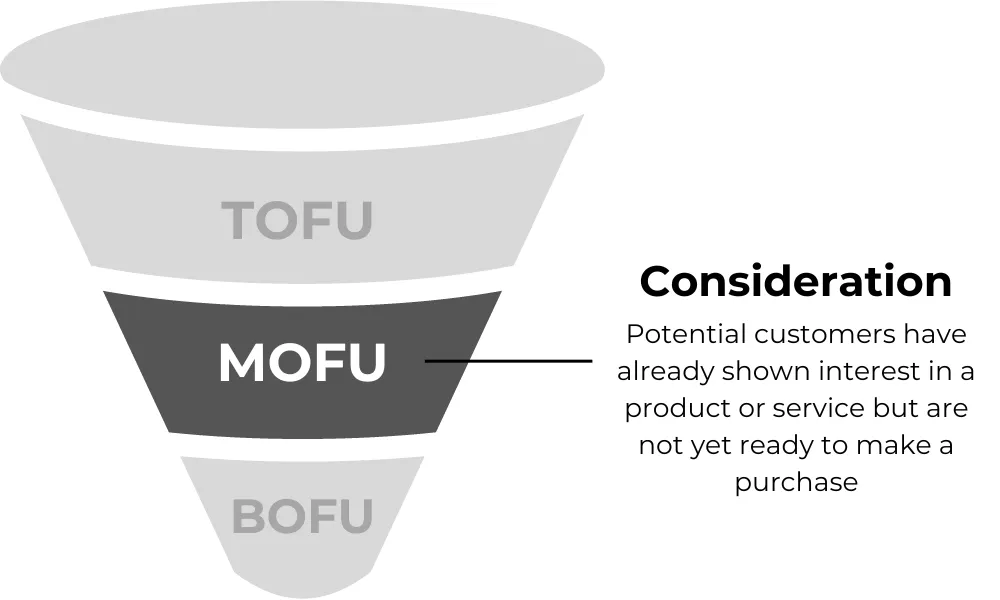
Here, your content should help users evaluate their problem and possible solutions while positioning your SaaS as a credible option.
Goal:
Get prospects to interact more deeply with your brand and willingly share their contact information so you can continue the conversation.
Typical engagement actions
- Downloading ebooks, guides, or checklists
- Signing up for webinars or workshops
- Subscribing to newsletters or email updates
These actions indicate genuine interest and intent to learn more.
Example:
A SaaS company hosts a webinar on “Reducing churn in SaaS” and collects email addresses during registration. This allows the brand to educate prospects while adding qualified leads to its email list.
How to do it
1. Create MOFU offers
Develop high-value resources such as PDFs, webinars, or workshops that solve a specific problem users are facing.
2. Use clear calls-to-action (CTAs)
Place relevant CTAs within blog posts, landing pages, and social ads to guide users toward these resources.
3. Collect and nurture leads
Capture email addresses and start a simple email nurturing journey with helpful follow-ups and insights.
4. Track engagement metrics
Monitor email sign-ups, webinar registrations, and content engagement rates to understand what content is driving interest.
This stage bridges awareness and conversion. Strong engagement here ensures your leads are informed, qualified, and ready to move forward in the funnel.
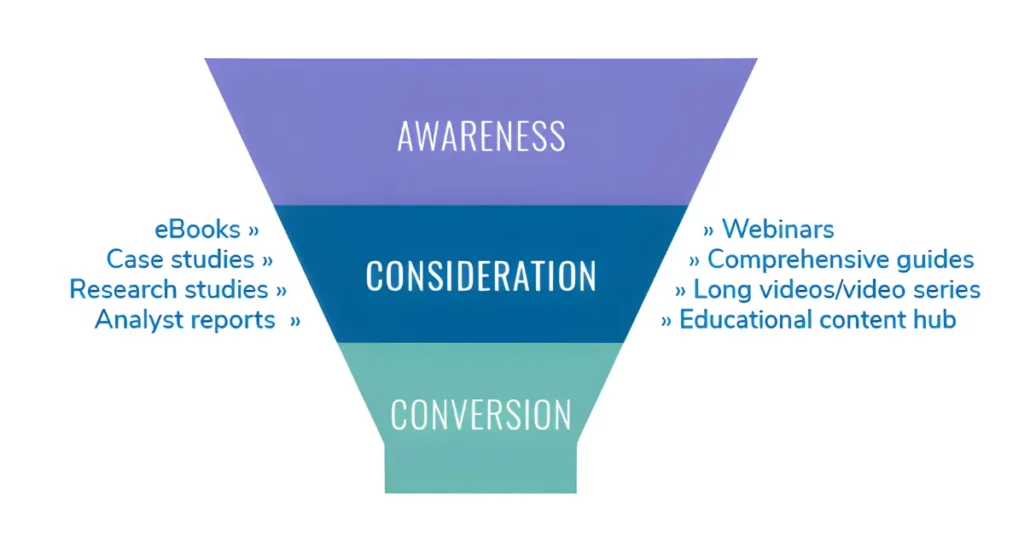
Stage 3: Consideration/activation
The Consideration or Activation stage is where prospects move from learning about your SaaS to actively experiencing its value. This stage can be defined slightly differently depending on the framework you use.
In the AARRR model, Activation means the user reaches their first meaningful product experience. In a traditional funnel, Consideration reflects a strong intent to purchase and evaluate a solution in depth.
Good to know:
According to Userpilot’s SaaS benchmarks, the average SaaS activation rate is around 37.5%, meaning nearly two-thirds of users never reach their first meaningful product experience without proper onboarding and guidance.
At this point, users are deciding whether your product is worth their time, effort, and money. The focus should be on helping them see quick, tangible results.
Goal:
Show real value as early as possible so prospects experience immediate benefits from using your product.
Typical engagement actions
- Starting a free trial
- Requesting a product demo
- Completing onboarding steps or setup walkthroughs
These actions indicate a serious interest and readiness to evaluate your product.
Examples:
A SaaS product offers a 14-day free trial with a guided onboarding flow that helps users complete key actions within their first session, such as setting up their account and using a core feature.
How to do it:
1. Offer free trials or demos
Allow users to explore key features without commitment so they can evaluate real product value.
2. Build strong onboarding flows
Use in-product tutorials, tooltips, and help prompts to guide users through essential actions.
3. Use onboarding email sequences
Send simple onboarding emails on Day 1, Day 3, and Day 7 to highlight features and best practices.
4. Track activation metrics
Measure activation rate by tracking how many users complete onboarding or use core features. This shows whether users are reaching their first value moment.
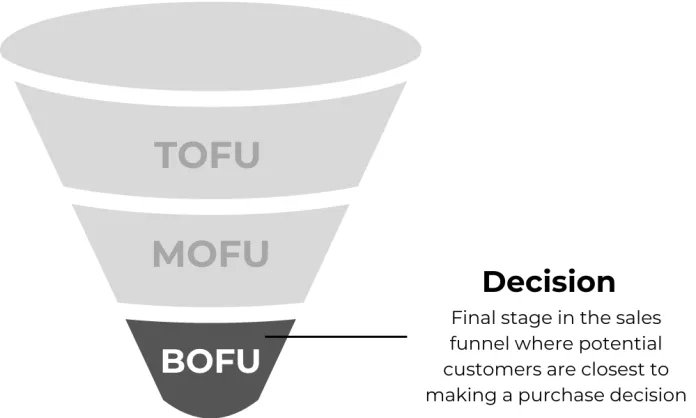
Stage 4: Conversion (BOFU)
The Conversion stage is where activated users decide whether to become paying customers.
At this point, users understand your product, have experienced its value, and are comparing pricing, plans, or alternatives before making a final decision.
The focus here is on removing friction, addressing last-minute doubts, and making the upgrade to a paid plan feel like a natural next step.
Goal:
Convert activated users, such as trial users or demo prospects,s into paying customers.
Typical conversion actions
- Free trial users upgrading to a paid subscription
- Demo attendees selecting and purchasing a paid plan
These actions signal a clear commitment to your product.
Retention-focused SaaS brands also monitor how their visibility evolves over time, especially with changing search behaviour, making AI search visibility an important consideration for long-term discoverability and growth.
Examples
An AI SEO tool converts trial users into paying customers by offering a limited-time upgrade discount before the trial expires or by highlighting the value users will lose if they don’t upgrade.
How to do it:
1. Use trial and paid plan incentives
Offer limited-time discounts, bonus features, or plan upgrades to encourage faster decisions.
2. Add exit-intent offers
If users are about to leave or their trial is ending, show a targeted offer such as a discount code or extended trial.
3. Sales outreach for high-value leads
For enterprise or high-ticket SaaS, use personalised demos and targeted outreach emails to follow up with prospects and address specific concerns.
4. Track conversion metrics
Measure the conversion rate from trial to paid users to understand how effectively your funnel turns interest into revenue.
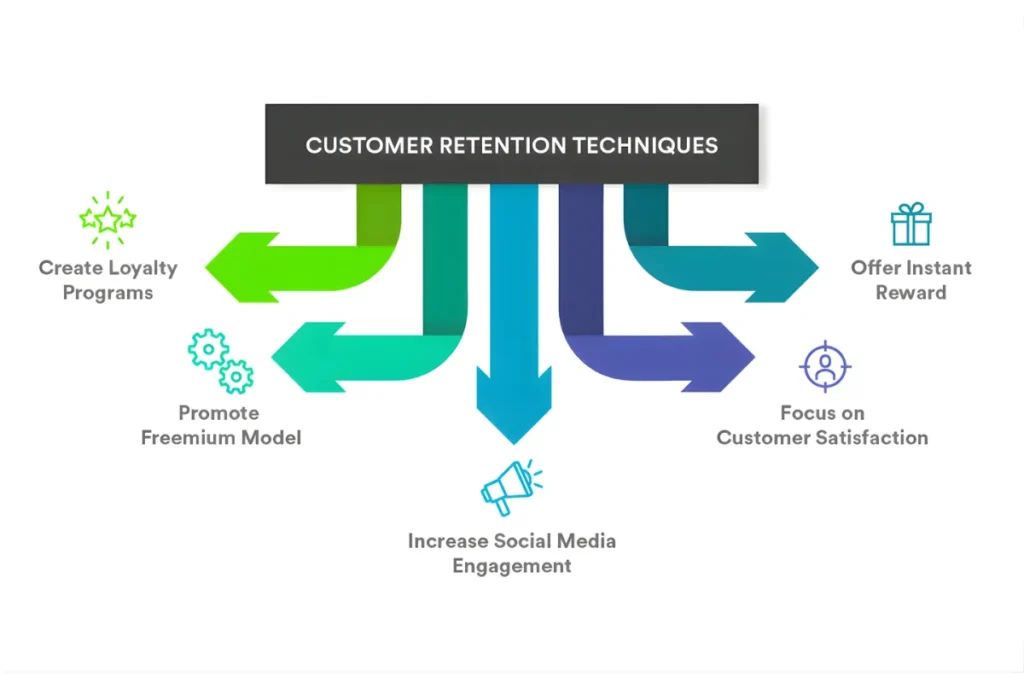
Stage 5: Retention
The Retention stage focuses on keeping customers engaged and active after they convert to a paid plan.
Quick insight:
According to a study, top SaaS companies focus heavily on retention, with net revenue retention (NRR) benchmarks around 106 % and top performers exceeding 120 %, meaning they grow revenue from existing customers even after accounting for churn.
In SaaS, success depends on long-term usage, renewals, and ongoing value delivery, not one-time purchases. Strong retention ensures customers continue to see value and remain subscribed.
Why it matters:
- SaaS businesses rely on recurring subscriptions, not single transactions.
- Higher retention increases customer lifetime value and lowers churn.
- Retained users are more likely to upgrade and refer others.
Goal:
Keep customers actively using the product and satisfied in the long term.
Typical retention activities
- In-product onboarding and usage emails
- Help centres, knowledge bases, and tutorials
- Loyalty rewards or usage-based perks
Examples:
A SaaS platform sends ongoing in-product emails with feature tips, provides a searchable help centre, and rewards long-term users with early access to new features.
How to improve retention
1. Use product usage triggers
Detect inactivity and send re-engagement emails or in-app prompts to bring users back.
2. Create feedback loops
Collect insights through in-app surveys or short customer interviews to understand user needs.
3. Build a customer community
Create Slack or Discord groups where users can ask questions, share feedback, and learn from others.
4. Offer extra value
Share feature highlights, product updates, and invite customers to exclusive webinars or training sessions.
Retention is where SaaS growth compounds. The better you retain users, the more predictable and sustainable your revenue becomes.
Stage 6: Referral/advocacy
The Referral or Advocacy stage focuses on turning satisfied customers into active promoters of your SaaS product.
When users genuinely benefit from your product, they are more likely to recommend it to others, creating a strong and cost-effective growth channel.
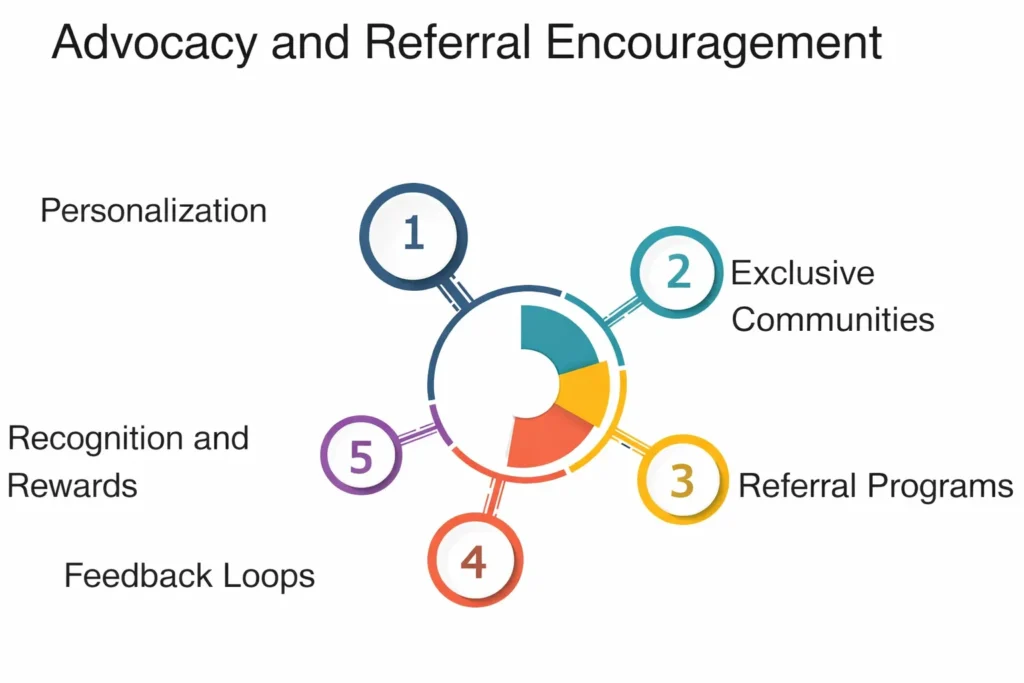
This stage leverages trust, social proof, and real customer experiences to attract new users.
Goal:
Turn happy users into word-of-mouth promoters who bring in new customers organically.
Typical referral actions
- Sharing referral links or invite codes
- Leaving testimonials or reviews
- Recommending the product on social media or communities
Examples:
A SaaS company runs a referral program that offers subscription credits or discounts when existing users successfully refer new customers. The brand also showcases customer testimonials and reviews on its website.
How to do it:
1. Incentivise referrals
Offer meaningful rewards such as account credits, discounts, or free months for every successful referral.
2. Highlight success stories
Publish customer case studies, testimonials, and reviews on your blog, landing pages, and emails.
3. Measure advocacy
Track Net Promoter Score (NPS) by asking users how likely they are to recommend your product to others. This helps identify promoters and areas for improvement.
Referral-driven growth is one of the most sustainable ways to scale a SaaS business, powered by trust and real customer satisfaction.
Metrics to track at each stage of the SaaS marketing funnel
Tracking the right metrics at every stage of the SaaS marketing funnel helps you understand where users are dropping off, what’s working well, and where optimization is needed.
Each stage has a different goal, so the success metrics also change accordingly.
| Funnel Stage | Key Metrics | What These Metrics Tell You |
|---|---|---|
| Awareness | Website traffic, search rankings, impressions, organic clicks | Shows how visible your brand is and whether your content is reaching the right audience through search and other discovery channels. |
| Engagement | Email sign-ups, content downloads, webinar registrations, time on page | Indicates how interested users are and whether they find your content valuable enough to interact or share their contact details. |
| Activation | Time to first value, onboarding completion rate, trial engagement | Measures how quickly users experience value and whether they understand how to use your product after signing up. |
| Conversion | Trial-to-paid conversion rate, demo-to-paid rate, upgrade rate | Helps evaluate how effectively your funnel turns activated users into paying customers. |
| Retention | Churn rate, repeat usage, active users, renewal rate | Shows whether customers continue to see value and stay subscribed over time. |
| Referral | Net Promoter Score (NPS), referral count, reviews, testimonials | Reflects customer satisfaction and how likely users are to recommend your product to others. |
When these metrics are reviewed together, they provide a clear view of funnel health. Improving even one stage, especially activation or retention, can significantly impact overall SaaS growth.
How to create saas marketing funnel(with example)
Creating a SaaS marketing funnel starts with understanding that growth doesn’t come from sign-ups alone.
A strong funnel is built to guide users from discovery to long-term usage, ensuring they experience value early and stay engaged over time.
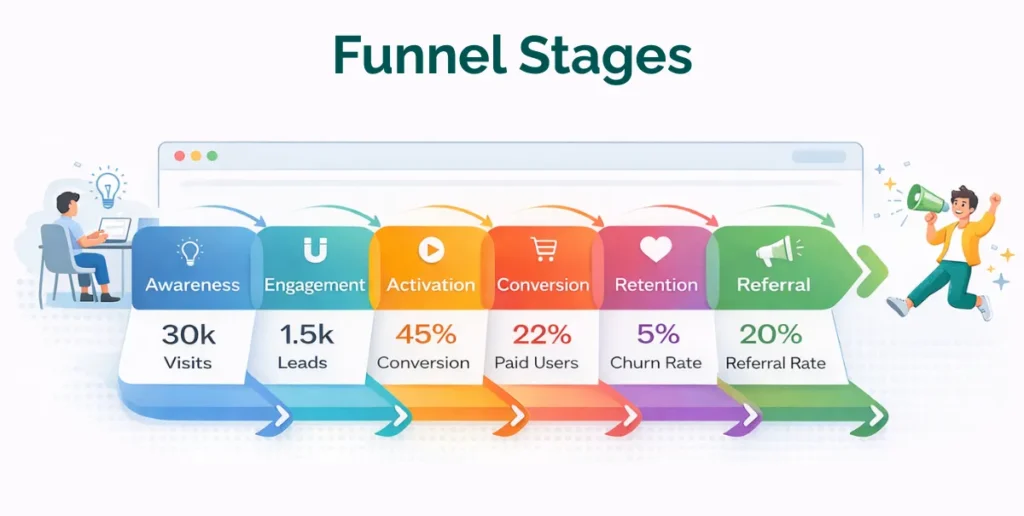
Step 1: Define your funnel stages
Map the full journey: Awareness → Engagement → Activation → Conversion → Retention → Referral. This gives clarity on what users need at each step and prevents drop-offs after sign-up.
Step 2: Match content and actions to each stage
At the Awareness stage, focus on educational SEO content that answers user problems. For Engagement, offer lead magnets like guides or webinars.
During Activation, remove friction with free trials, demos, and clear onboarding. Conversion should make upgrading feel natural, while Retention relies on ongoing product education and support.
Step 3: Decide your “activation moment”
Clearly define what action proves value in your product (for example, completing setup or using a core feature). Everything in onboarding should push users toward this moment.
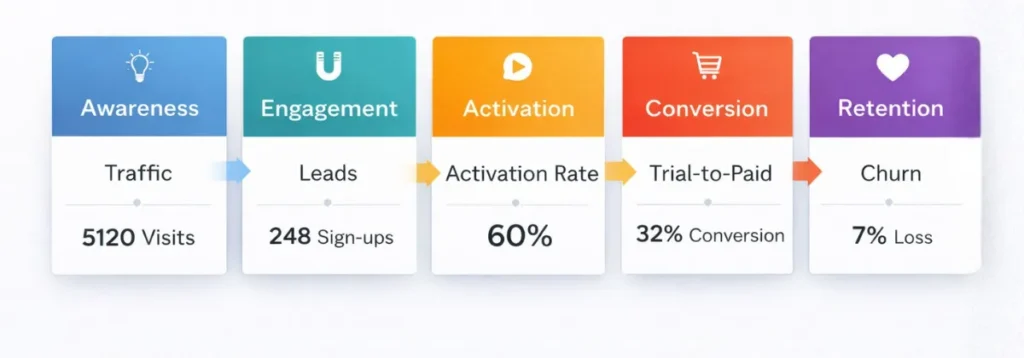
Step 4: Track the right metrics
Measure different KPIs at each stage, such as traffic, activation rate, trial-to-paid conversion, and churn. This helps you fix weak stages instead of guessing.
Live Example: HubSpot’s SaaS Marketing Funnel
HubSpot is a well-known SaaS brand with a clear, effective funnel.
- Awareness: HubSpot attracts users through SEO blogs, templates, and free resources that rank for marketing and CRM-related queries.
- Engagement: Visitors download gated content, joining HubSpot’s email ecosystem.
- Activation & Conversion: HubSpot offers a free CRM, allowing users to experience value immediately. As needs grow, users naturally upgrade to paid plans.
- Retention: In-app guidance, certifications, and educational emails keep users active and reduce churn.
This approach shows how a well-structured SaaS marketing funnel drives sustainable growth, not just traffic or sign-ups.
Conclusion
A SaaS marketing funnel is not a one-time path to purchase; it’s a complete lifecycle that continues well beyond the first signup.
Each stage of the funnel plays a specific role and requires clear tactics, from attracting the right audience to keeping customers engaged and turning them into promoters.
When every stage is supported with the right content, product experience, and follow-ups, the funnel becomes more predictable and scalable.
Most importantly, tracking the right metrics at every stage allows you to identify gaps, improve performance, and optimize conversions on an ongoing basis.
When done well, a SaaS marketing funnel doesn’t just drive sign-ups, it builds sustainable, long-term growth.
Contact us today to start building a funnel that turns users into long-term customers.


