
If you’ve ever spent hours building content only to wonder why your website still isn’t getting enough visibility, you’re not alone.
Most site owners eventually hit a point where their website authority stalls, keyword rankings won’t move, or their overall visibility plateaus and they start looking for practical ways to strengthen these signals. That’s where link exchange comes into the picture, a method many websites quietly use to grow faster, build trust, and reach the right audience.
Every website is fighting for attention. And while some backlinks come naturally, others require effort, collaboration, and smart partnerships. Link exchange is one of those methods that can give your site a helpful push when done the right way.
But here’s the catch: link exchange can help you grow, or it can damage your site if misused. The difference lies in how you approach it.
Before we get into link exchange, it’s important to understand what a link actually is. In simple terms, a link is a clickable connection that directs users from one page to another, helping search engines discover and understand your content.
This guide breaks down everything you need to know about link exchange, including what it is, why websites do it, the types, the risks, and the safest way to use it without harming your rankings.
What is link exchange?
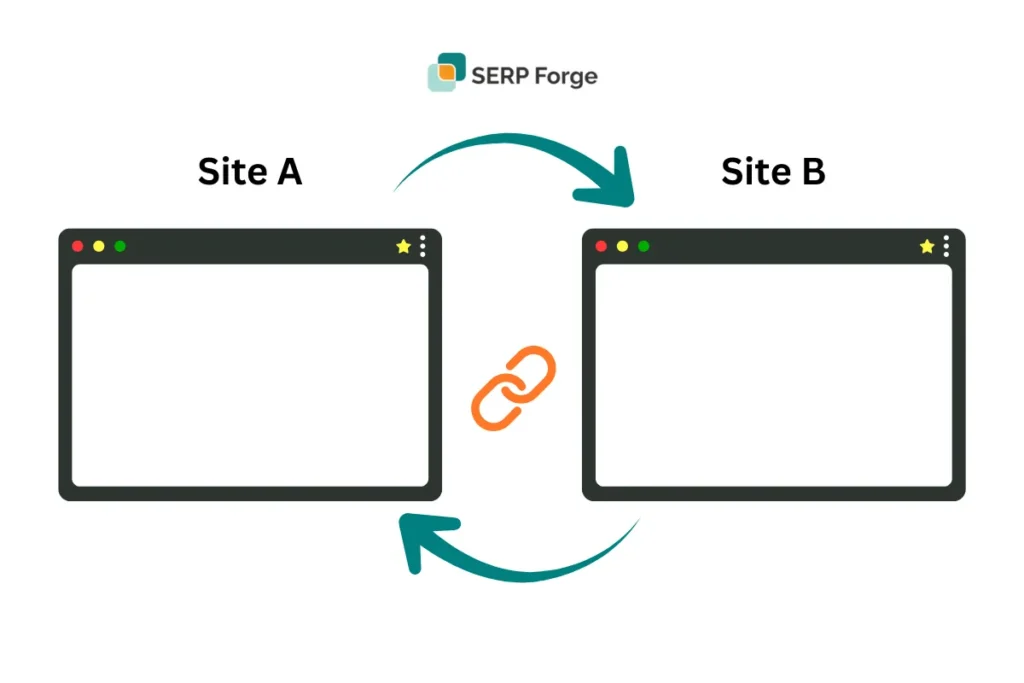
Link exchange, often called reciprocal linking, is an SEO practice where two websites agree to link to each other’s content. The idea is simple: by sharing links, both sites aim to improve their visibility and rankings on search engines.
Link exchange is one of the link-building methods; you should check other techniques like HARO link building, the Skyscraper method, guest posting, niche edits, and resource page link building.
Linking to these guides internally helps readers understand how link exchange fits into the wider link-building strategy.
What Google says about link exchange
Google’s guidance treats manipulative link swapping as part of “link schemes” that can harm a site’s presence in Search. In short, one-off, natural links between related sites aren’t the same as systematic reciprocal linking done to game rankings.
Google’s Search Essentials and spam policies make clear that any links intended to manipulate PageRank or search results may be considered part of a link scheme and can be ignored or acted on by automated systems and human reviewers.
Google staff have also said similar things in public forums: reciprocal links are not automatically “bad,” but when they’re systematic, excessive, or clearly done to manipulate rankings, Google’s algorithms and quality teams will detect them and may devalue those links or take manual action.
Pro tip:
Before accepting any exchange, run the site through Ahrefs. If their top pages are thin, irrelevant, or show spammy outbound links, skip the exchange. One bad link can create long-term issues.
When detected, these links may lose their value, and in some cases, the site could face manual penalties or ranking drops.
Facts:
According to research, 93.8% of link builders say link quality matters more than link quantity, which is exactly why thoughtful, relevant exchanges are far more effective than mass swapping.
When done thoughtfully, link exchanges can strengthen relationships and add value for users.
For example, two websites within the same niche might link to each other’s helpful content or resources not for manipulation, but to genuinely benefit their audiences. This type of link exchange is both natural and beneficial for SEO.
In short, link exchange is a simple idea with impactful results when handled responsibly. It can naturally support visibility and user value, but it must be done with relevance, moderation, and genuine intent.
And if you’d rather focus on safer, long-term techniques beyond exchanges, our link-building services can help you earn quality, contextual backlinks without risking penalties or over-optimization
Why do websites use link exchange?
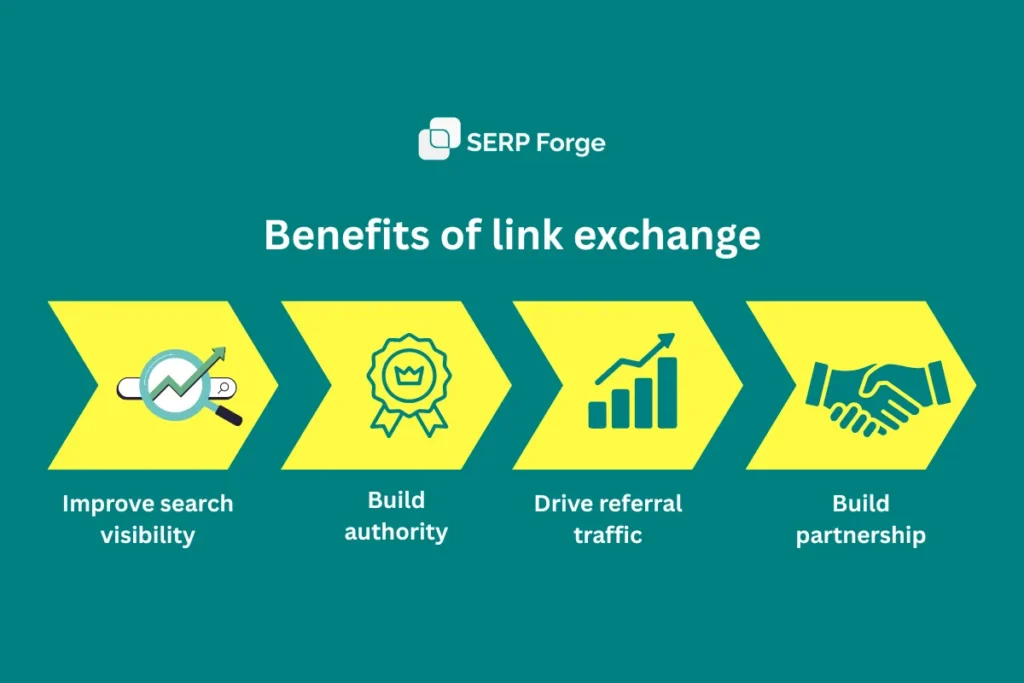
Websites use link exchange because it helps them grow visibility, reach the right audience, and increase overall website traffic. When done thoughtfully, it can support long-term SEO and brand credibility. Here’s how:
Improve search visibility
Search engines see links as signals of trust. When two relevant websites link to each other, it helps search engines understand that both sites offer useful information.
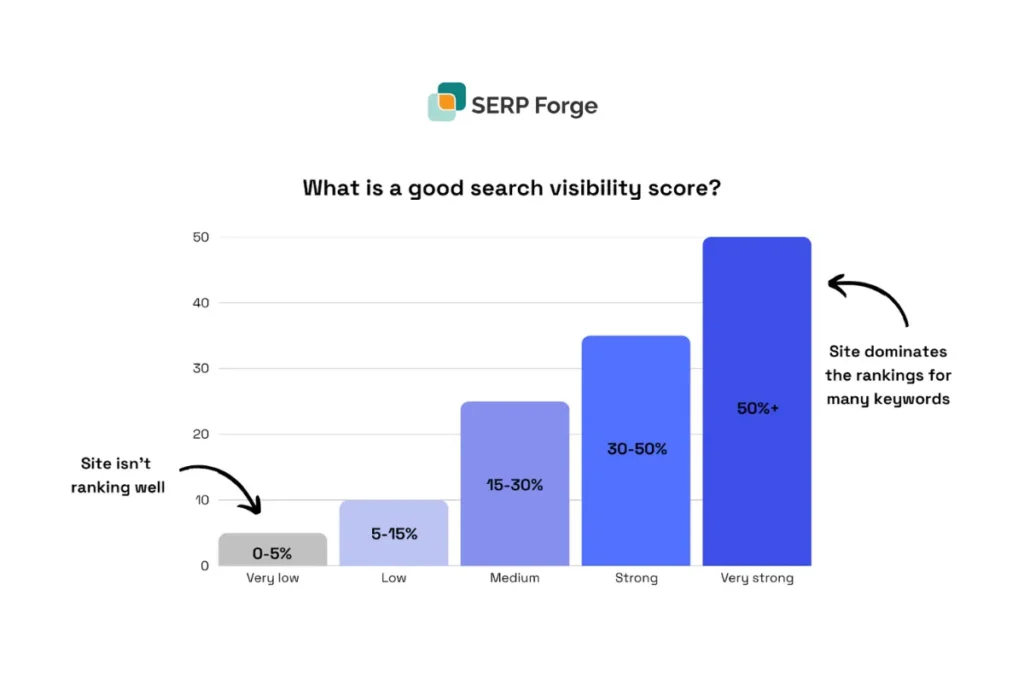
This can improve how often the pages appear in search results and strengthen your overall link equity, making it easier for authority to pass between pages naturally.
Good to know:
Before agreeing to any exchange, check whether the other site ranks for its own brand terms. If a site can’t even rank for its name, it’s usually a red flag for poor authority or technical issues.
Link exchanges, when done with the right website, can help a site appear for more keywords and attract steady organic traffic over time.
Build authority within a niche
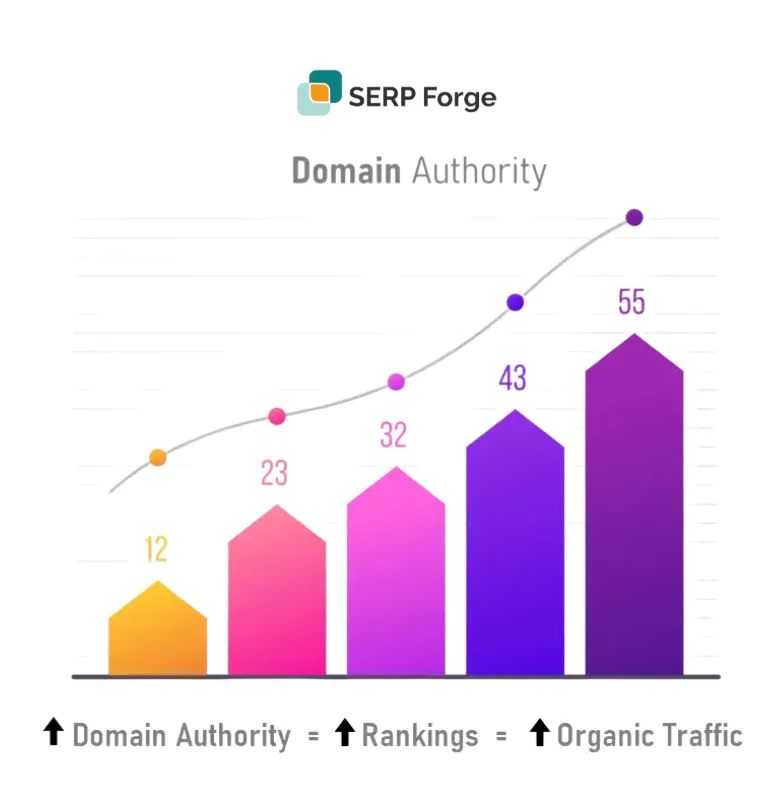
Links from trusted websites in the same industry boost your site’s credibility. A relevant link tells both search engines and readers that your content is valuable.
Did you know?
A niche-relevant backlink is more impactful than a generic high-DR backlink because search engines value topical relevance over raw authority.
When multiple sites in your niche link to you, it strengthens your authority and positions your brand as a reliable source of information. This is especially important in competitive industries where expertise and trust matter.
Drive referral traffic
A link exchange doesn’t just help with rankings; it also brings direct visitors. When users click a link from another website and land on your content, that’s referral traffic.
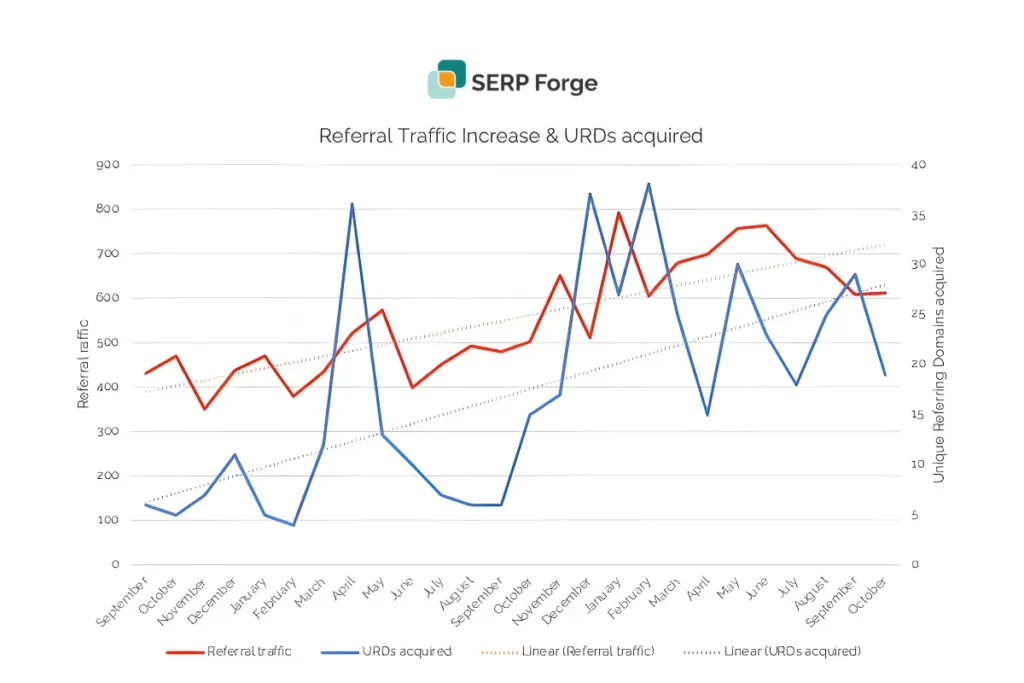
If the partner site has an audience that matches yours, this traffic is highly valuable. These visitors are more likely to stay longer, explore your pages, and convert because they’re already interested in similar topics.
Build partnerships with relevant websites
Link exchanges often lead to long-term relationships. When you collaborate with other websites, it becomes easier to coordinate guest posts, co-branded content, interviews, or future link-building opportunities.
Quick stat:
According to a study, 73.6% of domains exchange links, with both websites linking to one another.
These partnerships help expand your reach, improve networking, and create a supportive ecosystem within your niche. Over time, such collaborations can open doors to new audiences and more growth opportunities.
Real examples of link exchanges
Example of a good link exchange
- Your site: “saasgrowthlab.com” (DR 38)
- Partner site: “b2bmarketingscoop.com” (DR 41)
Your page links to: Their “SaaS link-building guide”
Their page links to: Your “B2B SEO strategies”
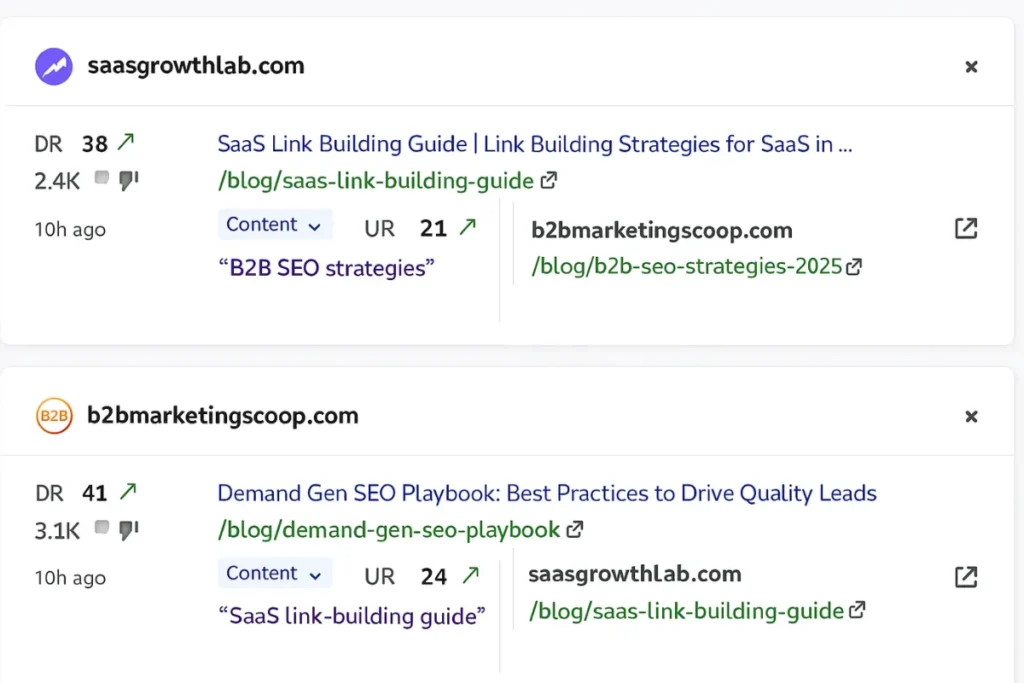
Both audiences benefit because the topics are closely related, and the exchange adds genuine value to readers.
Example of a bad link exchange
A health blog linking to a crypto casino site.
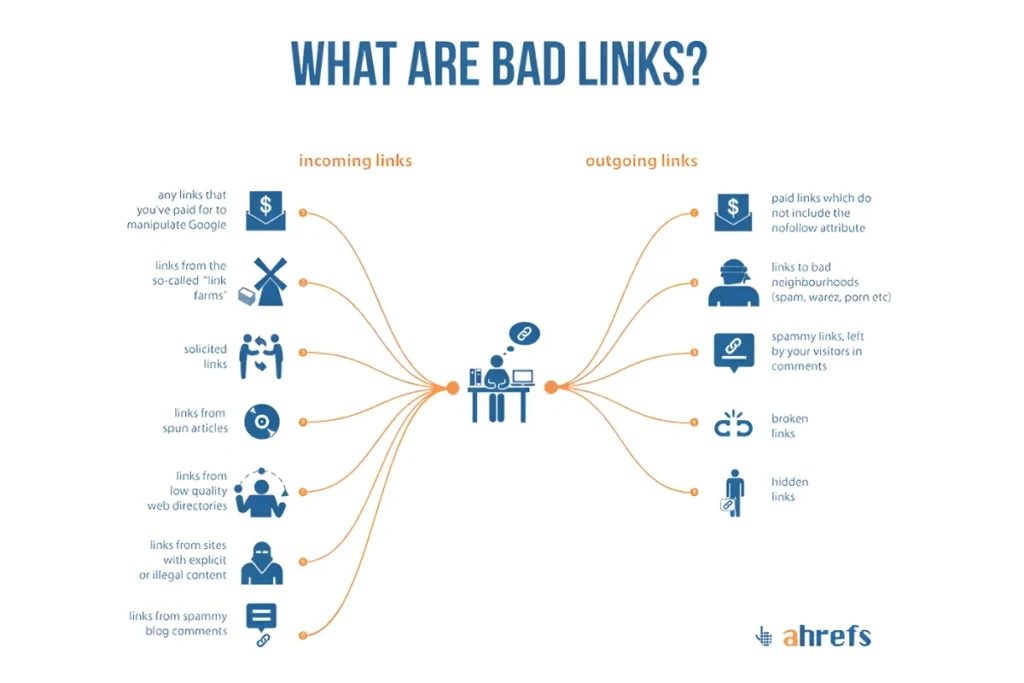
This kind of exchange is irrelevant, spammy, and can easily trigger search engine penalties because the topics have zero connection and violate trust signals.
In short, websites use link exchange because it supports visibility, credibility, and genuine connections within their niche.
When done with the right partners, it not only boosts rankings but also brings targeted traffic and long-term collaborations that strengthen overall growth.
Types of link exchange
Different websites use link exchanges in different ways, and each method comes with its own benefits and risks. Here’s a quick breakdown of the most common types you’ll come across.
1. Reciprocal exchange
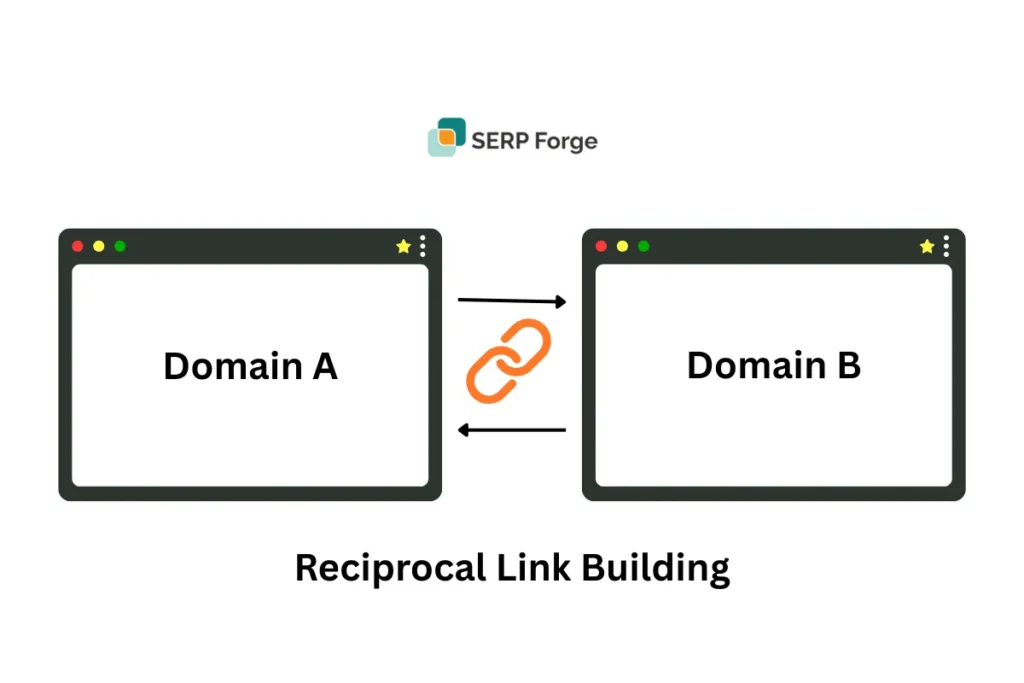
This is the most common form of link exchange. In a reciprocal exchange, Site A links to Site B, and in return, Site B links back to Site A. It’s usually beneficial when both sites have similar authority or domain ratings (DR).
Example:
If your website has a DR of 30, exchanging links with a DR 28–35 site makes sense. On the other hand, getting a link from a DR 4 site offers little SEO value. The key is to keep exchanges balanced and relevant.
2. One-way (Unilateral) exchange
A one-way exchange happens when one site links to another without receiving a link in return. Although it’s not technically an “exchange,” it’s the most valuable form of backlink for SEO.
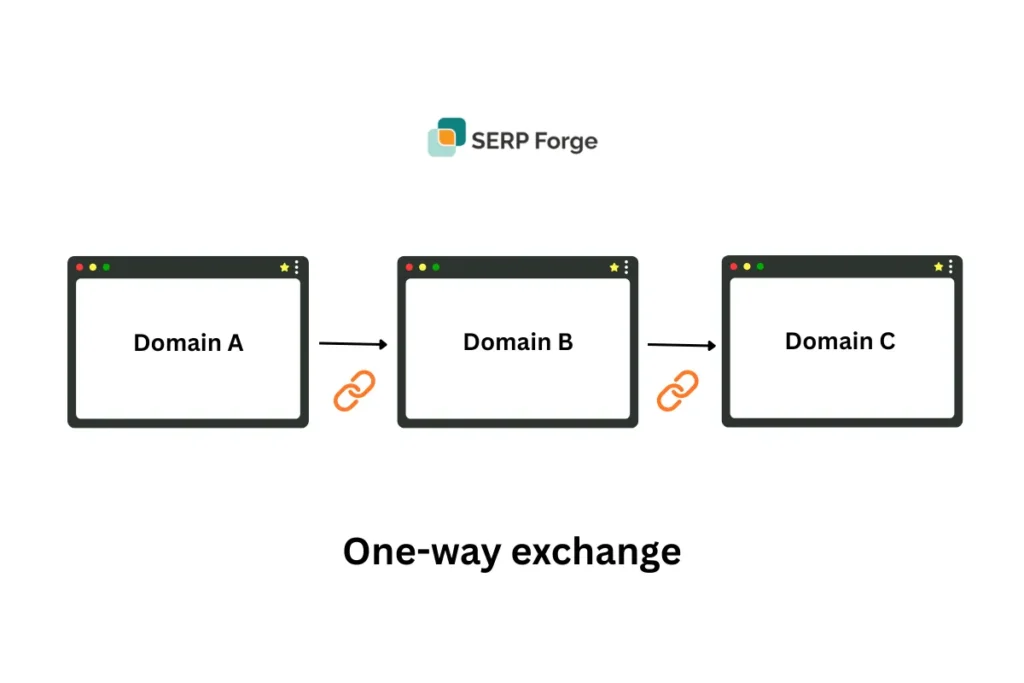
Example:
A marketing blog writes an article on “Top SEO Tools” and includes a link to your keyword research tool because they genuinely found it helpful without you linking back anywhere. This kind of mention looks natural and passes strong authority.
These links appear natural to search engines and carry higher authority since they’re earned rather than traded.
Want these high-value links without doing exchanges?
With our outreach-driven link-building service, we secure genuine one-way editorial mentions for your brand.
You don’t need to offer swaps or participate in exchanges; we handle the entire process through real relationships and relevant placements.
3. Triangular exchange
A triangular or three-way exchange involves three different websites. For instance:
- Site A (owned by X) links to Site B (owned by Y)
- Site B links to Site C (owned by X).
This method helps make the exchange appear more natural to search engines since there’s no direct link swap between two sites.
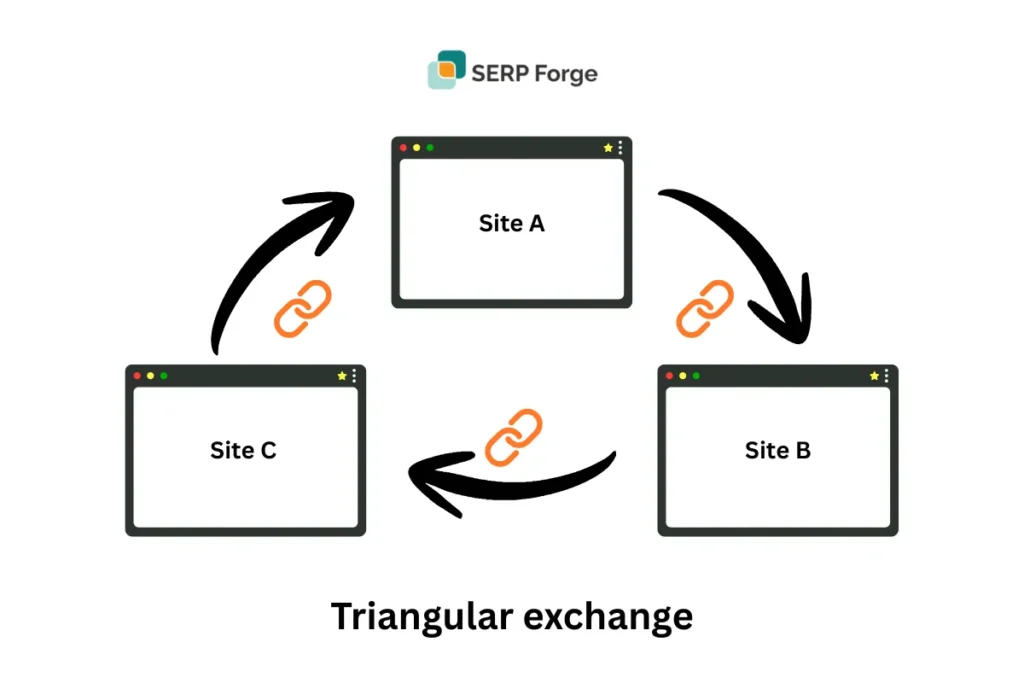
Example:
You own two sites: a SaaS blog (Site A) and a tools directory (Site C).
A partner owns a marketing blog (Site B).
Your SaaS blog links to their marketing post → Site A → Site B
Their blog links to your tools directory → Site B → Site C
Search engines see no direct swap, making the exchange less predictable and more organic.
When used thoughtfully, triangular exchanges can diversify link profiles and reduce the risk of detection. In short, each type of link exchange comes with its own level of value and risk.
According to the data, links should be editorial and relevant. A link placed because a page genuinely references useful content is far safer and more valuable than a link placed only for SEO.
Case studies and industry analyses show that a small number of reciprocal links is normal, but relevance and context determine whether links help or harm.
How to evaluate a link exchange partner (Checklist)
Before agreeing to any link exchange, it’s important to make sure the other website won’t harm your SEO. Here’s a quick checklist to evaluate them properly:
1. Check domain rating (DR)
Aim for websites that are within DR ± 10 of your site.
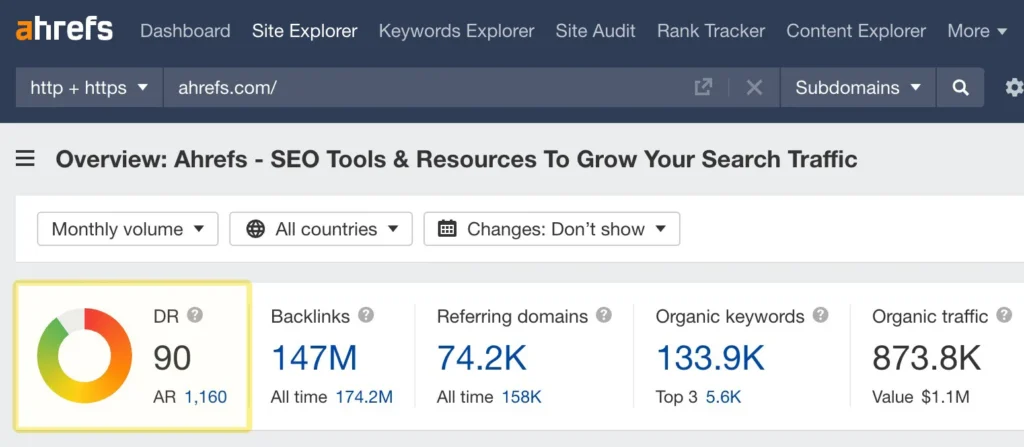
Example:
Your DR → 32
Safe range → DR 25–40
Avoid exchanging with DR 5–10 sites—they offer little value.
2. Check organic traffic
Look for sites with at least 500–1,000 monthly visitors.
Low-traffic sites often have weak content or no search visibility.
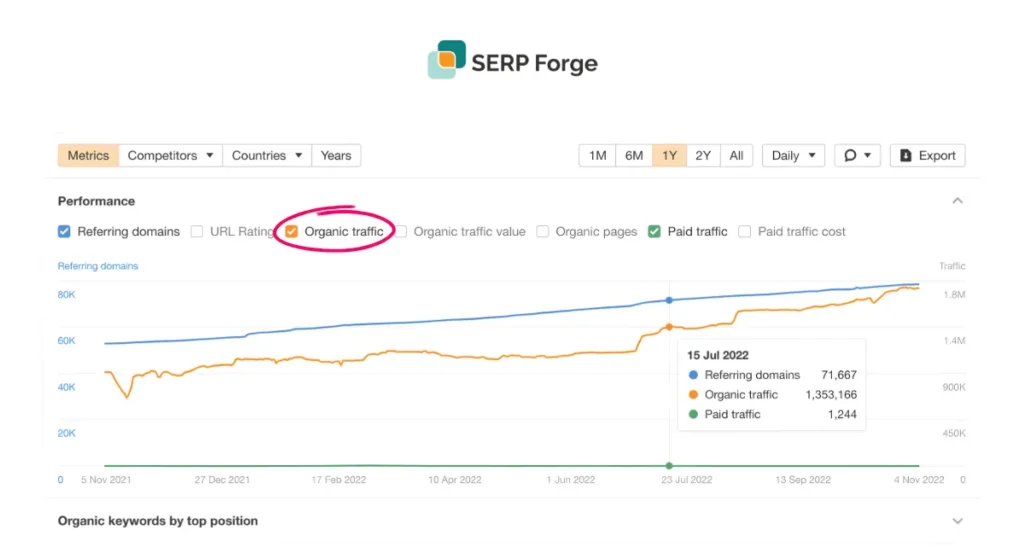
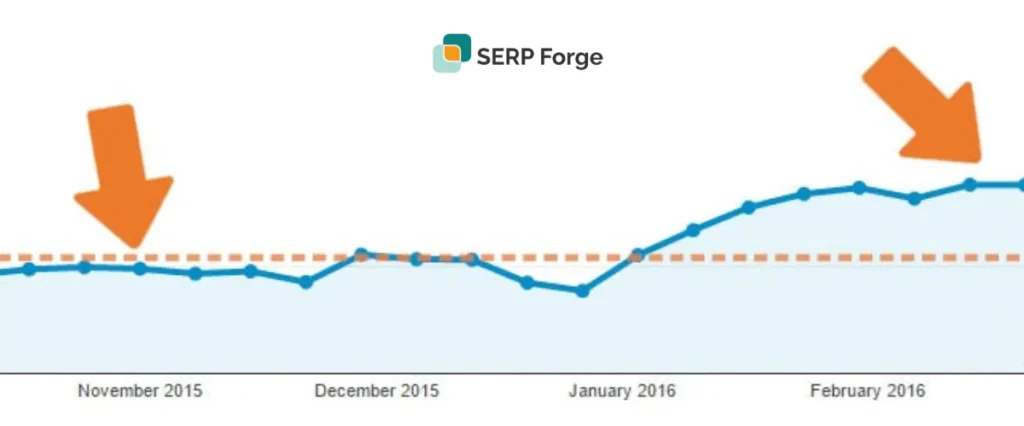
3. Check traffic trend
Choose websites with stable or increasing traffic, not declining.
4. Review outbound links
Avoid sites that link to:
- Casinos
- CBD
- Adult sites
- Payday loans
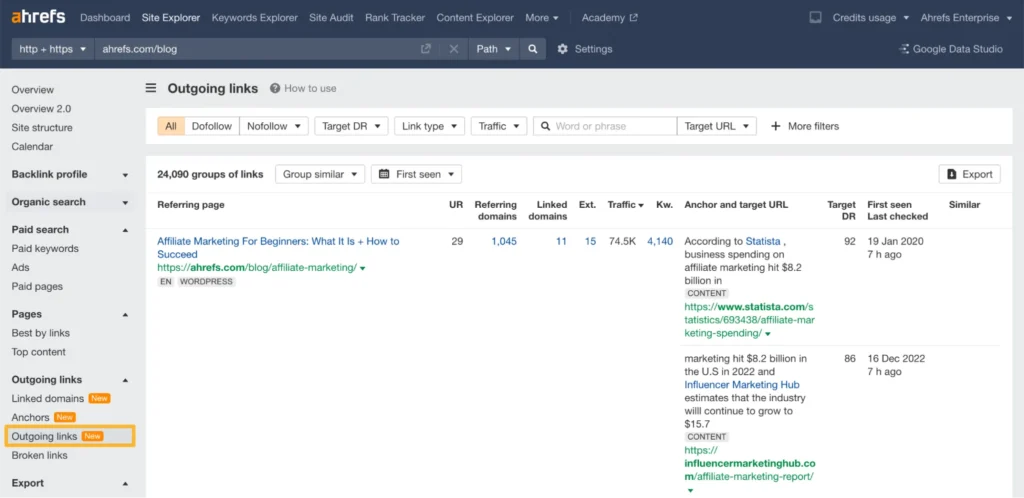
These niches create spammy footprints.
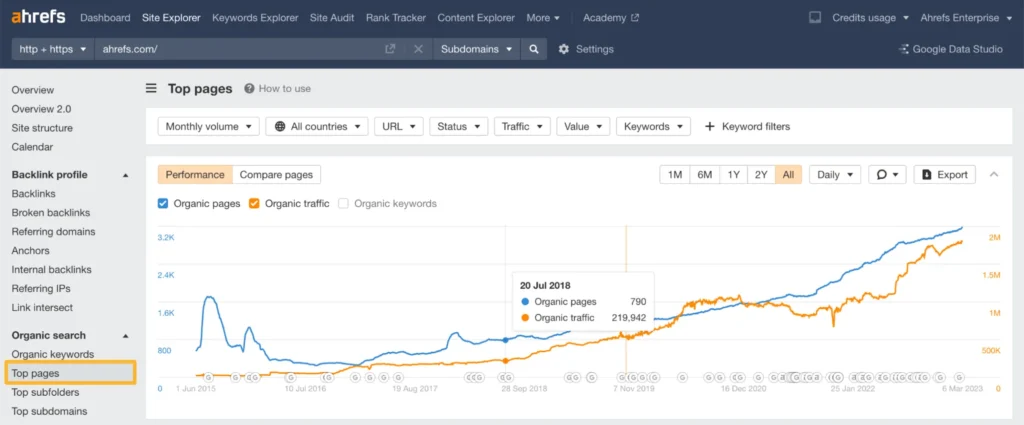
5. Scan the top pages
If all their top pages are AI-generated, thin content, or irrelevant to your industry, skip them.
6. Confirm niche relevance
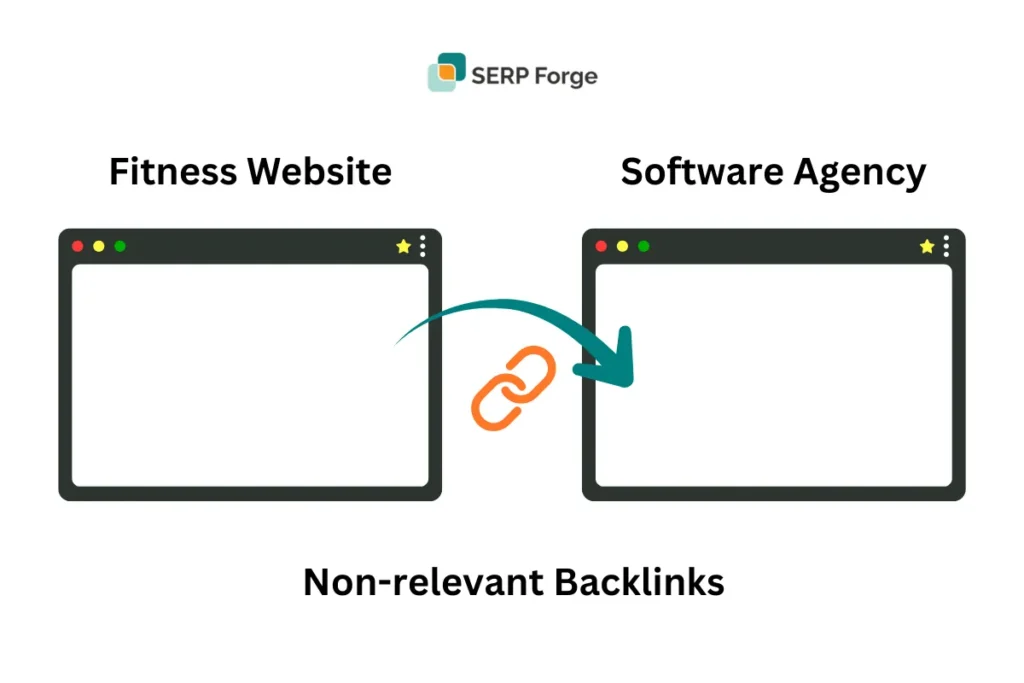
A SaaS blog exchanging with a fitness site makes no sense.
Always choose partners in your:
- Niche
- Sub-niche
- Related category
Pros and cons of link exchange
Before you start using link exchanges, it’s important to understand both the advantages and the risks. Here’s a quick comparison to help you decide whether this strategy fits your website’s long-term SEO goals.
| Pros | Cons |
| Faster link acquisition | Manual penalties from Google |
| Brings relevant, niche-focused traffic | Links may be devalued if detected as part of a scheme |
| Helps build relationships with publishers and site owners | Over-optimization of anchors can hurt rankings |
| Boosts authority when partnered with quality sites | Risk of associating with low-quality or spammy websites |
| Low-cost compared to paid link placements | Time-consuming to vet websites and maintain balance |
| Helps diversify your backlink profile | Creates a footprint if done repeatedly with obvious swaps |
| Supports content discovery for new audiences | May limit long-term SEO growth if overused |
| Encourages collaboration (guest posts, joint content) | Hard to scale without raising red flags |
How to do link exchange safely
Link exchanges can be useful, but the key is to keep them natural and low-risk. Here’s how you can do them safely without harming your website’s SEO.
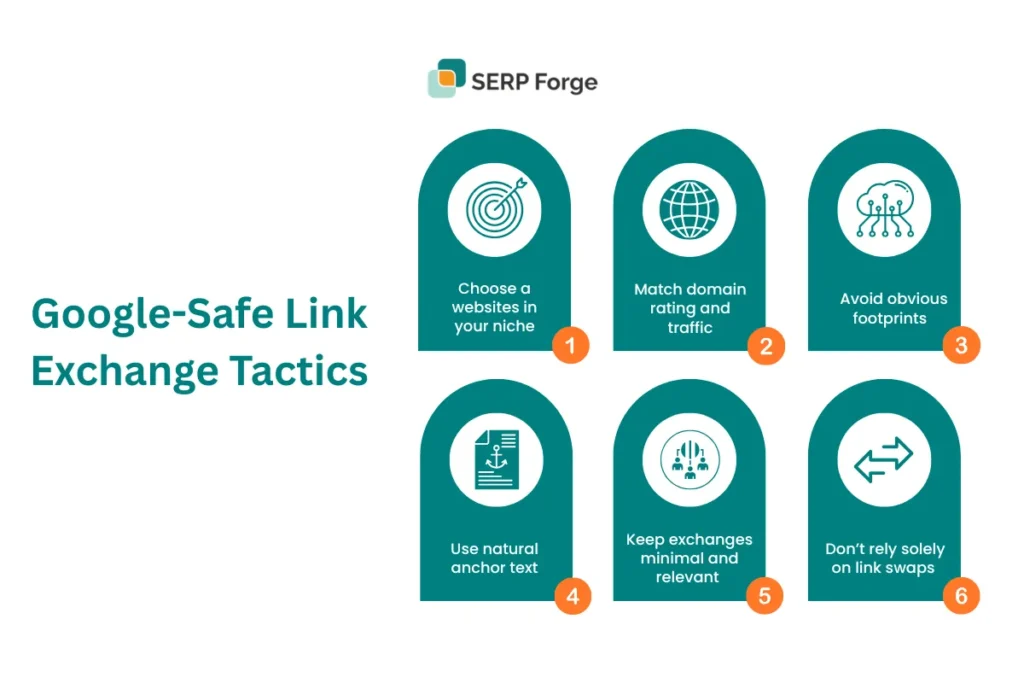
Choose websites in your niche
Always exchange links with sites that operate in the same industry or closely related topics.
This keeps the links relevant and meaningful. Search engines prefer connections that make sense for users, not random swaps across unrelated categories.
Match domain rating and traffic
Before agreeing to an exchange, compare the other site’s Domain Rating (DR), organic traffic, and overall quality.
A site with similar or slightly higher metrics adds value, while a very low-authority site may do more harm than good. Balanced exchanges benefit both sides and look more natural.
Avoid obvious footprints
Don’t exchange links from the same pages repeatedly or swap links too frequently with the same sites. These patterns leave footprints that search engines can detect.
Quick insight:
Recent research shows that around 24.8% of SEO experts still actively use direct link exchanges in 2026, which means the practice is far from dead but must be done carefully to avoid detectable patterns.
Spread out your exchanges across different pages, formats, and content types to keep everything organic.
Use natural anchor text
Anchor text should feel natural within the content. Avoid using exact-match keywords repeatedly, as this can signal manipulation. Instead, use descriptive, branded, or long-tail anchors that fit the flow of the sentence.
Keep exchanges minimal and relevant
Don’t rely on link exchange as your main link-building strategy. Too many swaps can make your backlink profile look artificial. Keep exchanges limited, meaningful, and grounded in relevance. Focus on value rather than volume.
Don’t rely solely on link swaps
Link exchanges should complement your broader strategy, not replace it. Combine them with guest posting, digital PR, niche edits, and content-driven link building. This creates a healthier, more diverse backlink profile and reduces dependency on any single method.
And while evaluating link partners, it also helps to stay aware of signals that may look like unnatural links so you avoid exchanges that could harm your site in the long run.
In short, safe link exchange is all about relevance, moderation, and variety. When you choose the right websites, use natural anchors, and avoid repetitive patterns, you can build links that support your SEO instead of hurting it.
Step-by-step process to track & manage link exchanges
Tracking your link exchanges helps you stay organized, avoid risky patterns, and ensure every partnership adds real value to your SEO efforts. Here’s a simple process to manage everything smoothly.
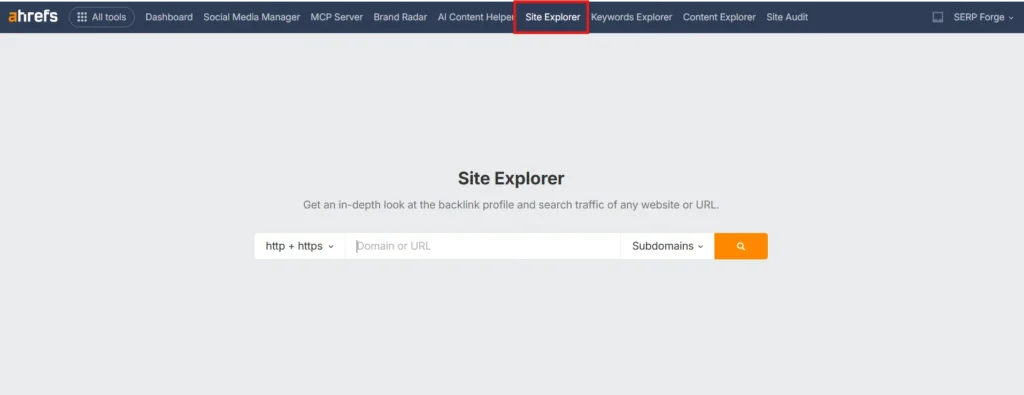
- Use Ahrefs Site Explorer to check a partner website’s DR, organic traffic, and overall quality before agreeing to an exchange.
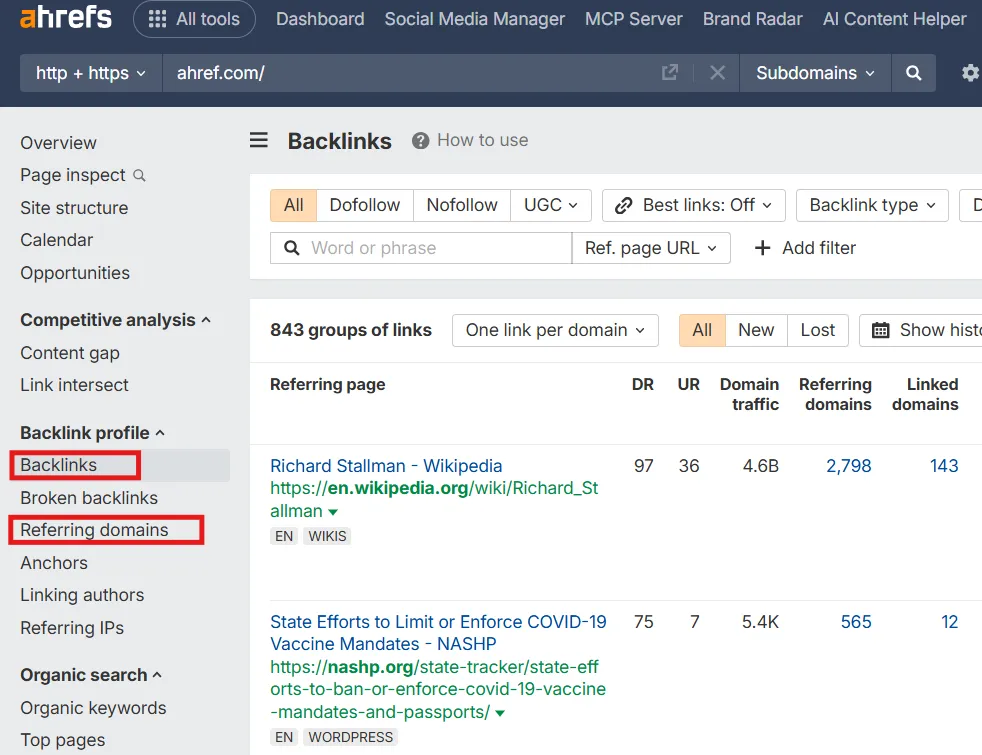
- Review their Backlinks and Referring Domains to spot spammy sources, unnatural link velocity, or low-quality patterns.
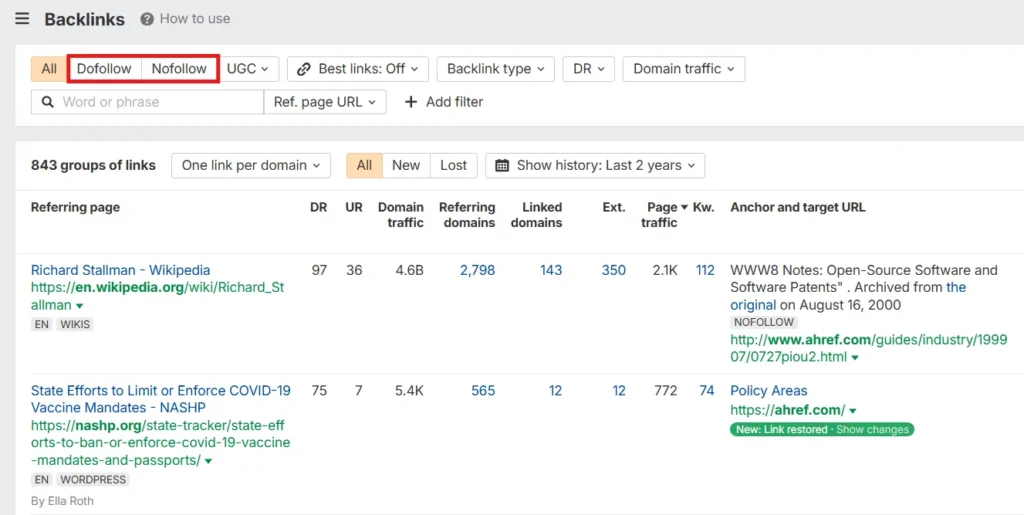
- Check the anchor text, link placement, and whether the link is dofollow or nofollow to ensure it looks natural and relevant.
- Use Link Intersect to compare your backlink profile with potential partners and avoid obvious swap loops.
- Set Backlink Alerts to monitor when exchanged links go live or get removed.
- Export backlink data periodically and log it in a link-tracking sheet for easy monitoring.
- Keep an eye on changes in DR, traffic, and new/lost links to make sure partners remain trustworthy over time.
And if you ever notice that a partner has removed your link, a simple link reclamation check can help you recover lost opportunities without having to start the outreach process from scratch.
In short, tracking your link exchanges isn’t just about staying organized; it’s about protecting your site and making sure every link you gain is actually worth it.
With a simple process and regular checks, you can keep your exchanges clean, balanced, and safe for long-term SEO.
Outreach templates for link exchange
Reaching out for a link exchange can feel awkward if you don’t know what to say. The key is to sound natural, show genuine value, and keep the conversation simple.
Here are easy, ready-to-use outreach email templates you can customize for your niche.
1. Soft outreach template (Low pressure)
This approach works well when you’re reaching out for the first time or you’re unsure how open the recipient is to link partnerships. It feels friendly, relaxed, and shows that you genuinely appreciate their content.
Template:
Hi {name},
I came across your article on {topic} and really liked the points you shared on {specific section}.
I have a similar piece on {your topic}, and I think adding each other’s links could help both audiences discover more helpful content.
If this sounds good, happy to share the URLs!
Thanks,
{Your name}
2. Value-driven outreach template
Use this when you want to emphasize how your content can genuinely help your readers. It shows that the exchange isn’t just for SEO but also for improving user experience on both sides.
Template:
Hi {name},
I noticed you’ve published some great content around {topic}. We just published a detailed guide on {your topic}, and it aligns well with your post on {their article}.
If you think it would add value for your readers, I’d love to suggest a link placement and I’d be happy to feature one of your articles in return.
Let me know what you think!
Regards,
{Your name}
3. Mutual benefit template (Clear win-win)
This approach works when both websites are strong and you want to propose a clear, balanced exchange. It sets expectations, shares links upfront, and helps speed up the process.
Template:
Hi {name},
I’m reaching out because our sites cover similar topics, and a link exchange could benefit both of us.
Your post on {topic} would fit perfectly in my article: {your article link}.
In return, I can add your link to: {their relevant article link}.
If this works for you, we can finalize the anchors and URLs.
Best,
{Your name}
4. Follow-up message template
Many people miss the first message, so a gentle follow-up increases your chances without sounding pushy. Keep it short and polite.
Template:
Hi {name}, just checking in!
Wanted to follow up on my last message about a possible link exchange between our sites.
No rush, just wanted to see if you’d be open to it.
Thanks,
{Your name}
In short, these templates make your outreach easier, clearer, and far more effective. Personalize them for each website, keep your message genuine, and you’ll build stronger link partnerships without the stress.
Final thoughts
Link exchange isn’t inherently good or bad; it completely depends on how you approach it. When done ethically, with relevant websites and a clear focus on user value, link exchanges can support your visibility, strengthen authority, and build meaningful industry relationships.
But spammy, large-scale swaps or exchanges done only for quick rankings can do the opposite. They can trigger penalties, weaken your backlink profile, and put your site at risk.
The key is balance. Use link exchanges as one part of your overall strategy, keep them natural, and combine them with stronger, long-term link-building methods for steady and safe SEO growth.
Need help with safe, high-quality link-building? Reach out to us today to discuss your goals. We’re always happy to guide you in the right direction.


