Marketing automation should do more than send scheduled emails. SaaS teams need workflows that respond to buyer behavior, guide trial users through onboarding and support customer retention.
Different platforms solve different problems: B2B lead nurturing, product-led activation, subscription messaging or enterprise engagement. Below we compare 15 SaaS marketing automation tools by use case, key features, limitations and pricing.
Editorial note: These are practical workflow-based assessments, not a claim that SERP Forge personally tested every platform. Verify current prices and plan details on each linked official website.
How We Evaluated These SaaS Marketing Automation Tools
We focus on recurring SaaS marketing work: lead qualification, trial onboarding, activation, lifecycle campaigns and sales handoffs. These are our recommended evaluation criteria:
- Automation capabilities (25%): Triggers, branching, delays and multi-step workflows
- Behavioral targeting (20%): Product actions, engagement and lead signals
- Integrations (15%): CRM, analytics, subscriptions and product data
- Ease of use (15%): Building, testing and maintaining workflows
- Reporting and analytics (15%): Conversion, lead quality and lifecycle visibility
- Pricing and scalability (10%): Usage limits and total cost as teams grow
Ranking method: Rate each tool against these criteria and calculate a weighted score out of 100. The weights are a proposed rubric, not previously verified testing scores.
15 Best SaaS Marketing Automation Tools Compared
| Tool | Best For | Starting Price |
|---|---|---|
| ActiveCampaign | B2B lead nurturing | Contact-based plans |
| HubSpot Marketing Hub | CRM-connected marketing and sales | Free tools; professional plans cost more |
| Customer.io | Product-led onboarding and retention | From around $100/month |
| Adobe Marketo Engage | Enterprise B2B demand generation | Custom quote |
| Klaviyo | Subscription-commerce lifecycle campaigns | Free tier; paid plans vary |
| Braze | Mobile and multichannel engagement | Custom quote |
| Salesforce Marketing Cloud Account Engagement | Salesforce-based B2B nurturing | From around $1,250/month |
| Encharge | SaaS lifecycle email automation | From around $99/month |
| Ortto | Customer journeys and analytics | Check current pricing |
| Drip | Purchase-driven email campaigns | Contact-based pricing |
| Salesforce Marketing Cloud | Enterprise cross-channel journeys | Varies by product and edition |
| Reply.io | Outbound sales prospecting | Plan- and seat-based pricing |
| MoEngage | Mobile activation and retention | Custom or usage-based pricing |
| Iterable | Cross-channel lifecycle messaging | Custom quote |
| Userlist | B2B SaaS account onboarding | Check current subscription pricing |
1. ActiveCampaign
Best for: B2B lead nurturing.
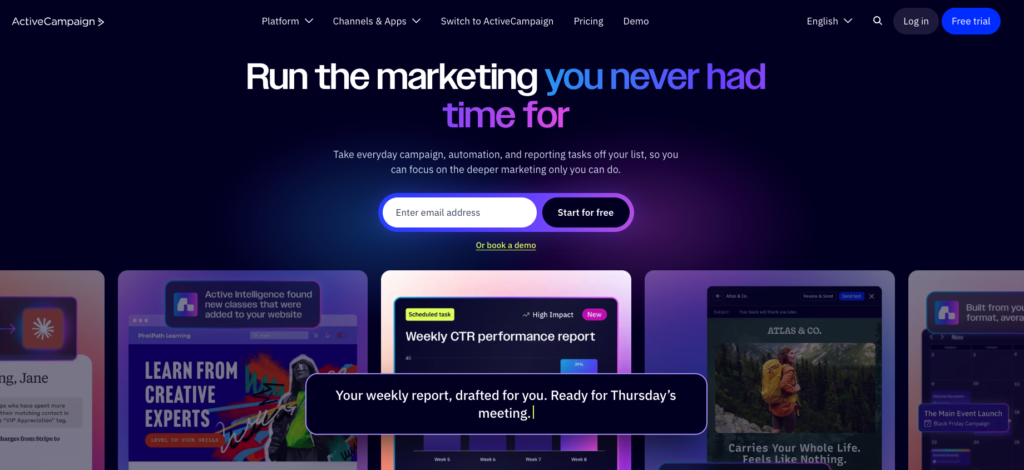
Use behavioral and CRM data to route pricing-page visitors into different nurture paths than new subscribers.
Key Features:
- Visual conditional workflows
- Lead scoring and CRM automation
- Website and email behavior triggers
What we like: Flexible lead nurturing. Granular segmentation.
What could be better: Complex flows need maintenance. Premium capabilities vary by plan.
Pricing: Contact-based plans. See ActiveCampaign official pricing and product information.
Our verdict: A solid B2B nurturing option; compare Customer.io when most triggers come from product events.
2. HubSpot Marketing Hub
Best for: CRM-connected marketing and sales.
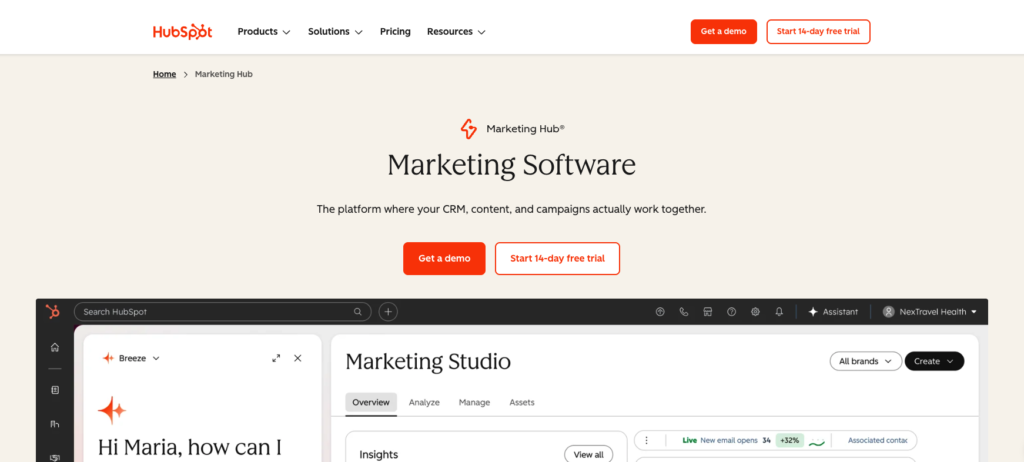
Connect form submissions, pricing visits and demo requests to shared contact records and sales alerts.
Key Features:
- CRM-based workflows
- Lead scoring and sales routing
- Campaign and pipeline reporting
What we like: Shared marketing and sales context. Clear lifecycle visibility.
What could be better: Advanced automation can be expensive. Marketing-contact charges increase.
Pricing: Free tools; professional plans cost more. See HubSpot Marketing Hub official pricing and product information.
Our verdict: Best for scaling sales-led SaaS teams that need connected marketing and revenue operations.
3. Customer.io
Best for: Product-led onboarding and retention.
Trigger onboarding reminders when a trial user fails to finish setup and stop them after activation.
Key Features:
- Custom event-triggered journeys
- Behavior segments
- Multichannel messages and webhooks
What we like: Granular product-event targeting. Flexible lifecycle paths.
What could be better: Needs accurate event tracking. Does not replace a CRM.
Pricing: From around $100/month. See Customer.io official pricing and product information.
Our verdict: Strong fit for PLG activation, trial conversion and retention.
4. Adobe Marketo Engage
Best for: Enterprise B2B demand generation.
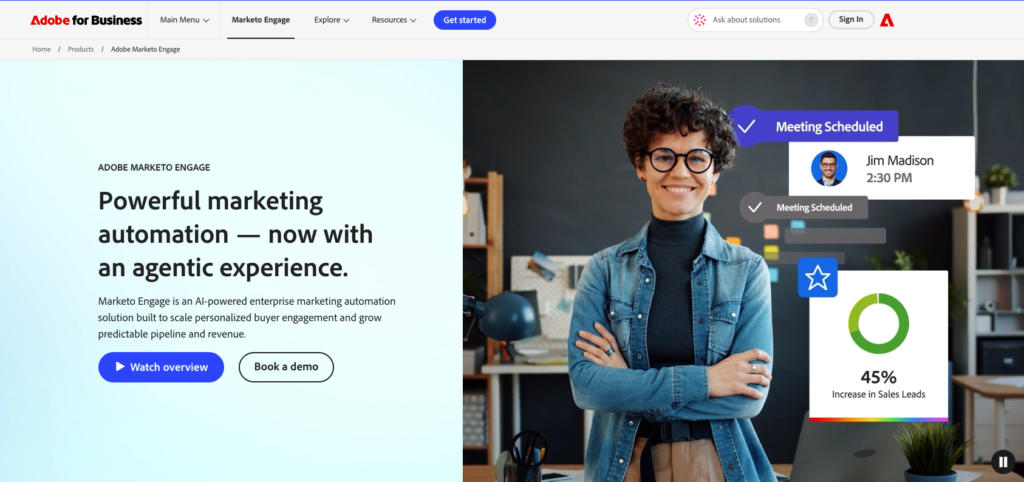
Nurture technical evaluators and budget owners across long buying cycles using separate engagement tracks.
Key Features:
- Smart Campaigns
- Lead scoring and account journeys
- CRM-linked campaigns
What we like: Sophisticated segmentation. Long-cycle nurture support.
What could be better: Implementation is demanding. Dedicated operators are helpful.
Pricing: Custom quote. See Adobe Marketo Engage official pricing and product information.
Our verdict: Better for mature demand generation organizations than early-stage SaaS teams.
5. Klaviyo
Best for: Subscription-commerce lifecycle campaigns.
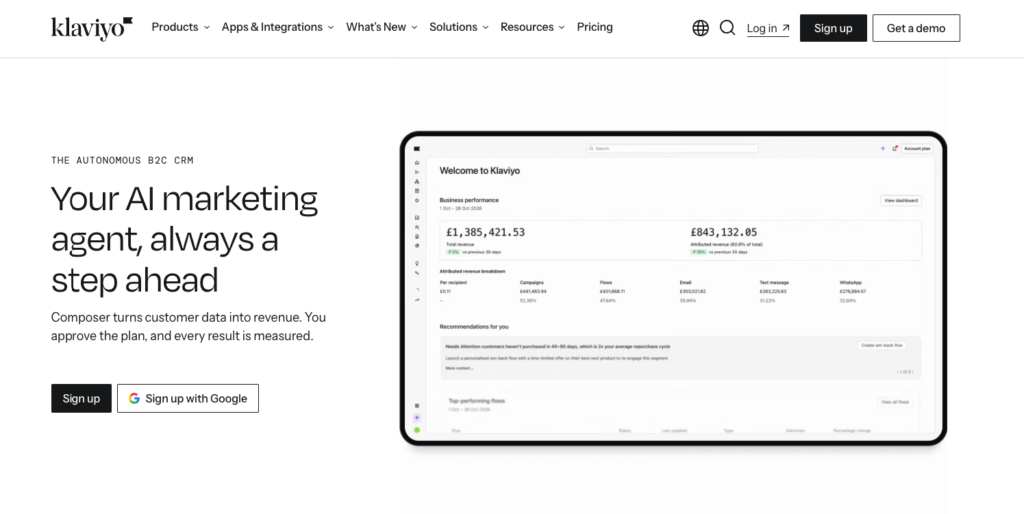
Use purchase and engagement history to personalize journeys for new, repeat and inactive customers.
Key Features:
- Email and SMS flows
- Transaction-based segmentation
- Revenue reporting
What we like: Strong commerce personalization. Useful repeat-purchase flows.
What could be better: Less suited to B2B sales. Costs rise with profiles.
Pricing: Free tier; paid plans vary. See Klaviyo official pricing and product information.
Our verdict: A good purchase-led subscription option, not the first choice for sales-led B2B SaaS.
6. Braze
Best for: Mobile and multichannel engagement.
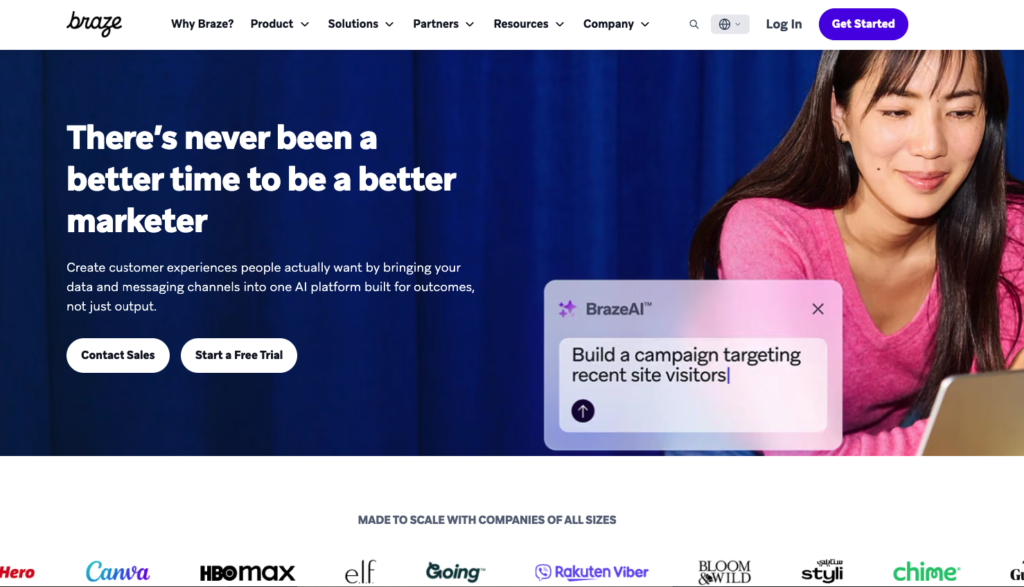
Coordinate push, in-app and email follow-ups when an app user becomes inactive and returns.
Key Features:
- Canvas customer journeys
- Push and in-app messaging
- Real-time behavioral targeting
What we like: Cross-channel coordination. Flexible personalization.
What could be better: Needs technical setup. Heavy for small teams.
Pricing: Custom quote. See Braze official pricing and product information.
Our verdict: Consider for mature mobile-first products with substantial ongoing engagement.
7. Salesforce Marketing Cloud Account Engagement
Best for: Salesforce-based B2B nurturing.
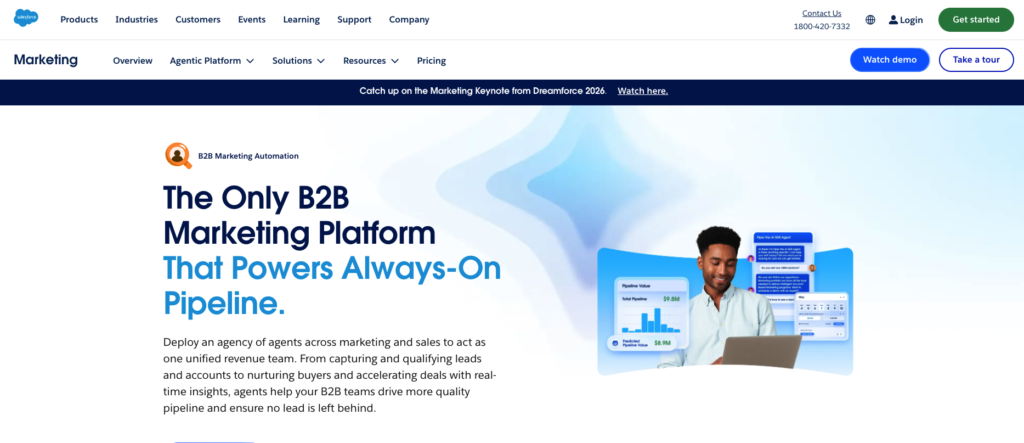
Use Salesforce prospect information to score engaged leads and help sales prioritize outreach.
Key Features:
- Engagement Studio
- Prospect scoring and grading
- Salesforce CRM integration
What we like: CRM alignment. Structured qualification.
What could be better: High entry cost. Less useful outside Salesforce.
Pricing: From around $1,250/month. See Salesforce Marketing Cloud Account Engagement official pricing and product information.
Our verdict: A logical choice for SaaS businesses already operating on Salesforce.
8. Encharge
Best for: SaaS lifecycle email automation.
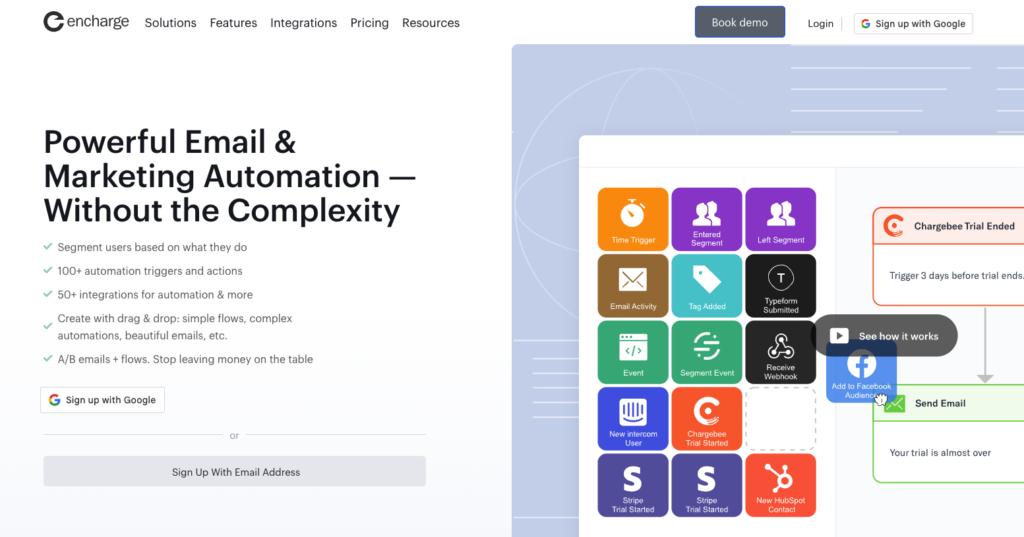
Send different trial onboarding messages depending on which setup steps or product events users complete.
Key Features:
- Visual flow builder
- Behavioral and product triggers
- Subscription integrations
What we like: Focused SaaS use cases. Approachable workflows.
What could be better: Smaller ecosystem. Advanced events require setup.
Pricing: From around $99/month. See Encharge official pricing and product information.
Our verdict: Practical for teams automating trial activation and lifecycle email.
9. Ortto
Best for: Customer journeys and analytics.
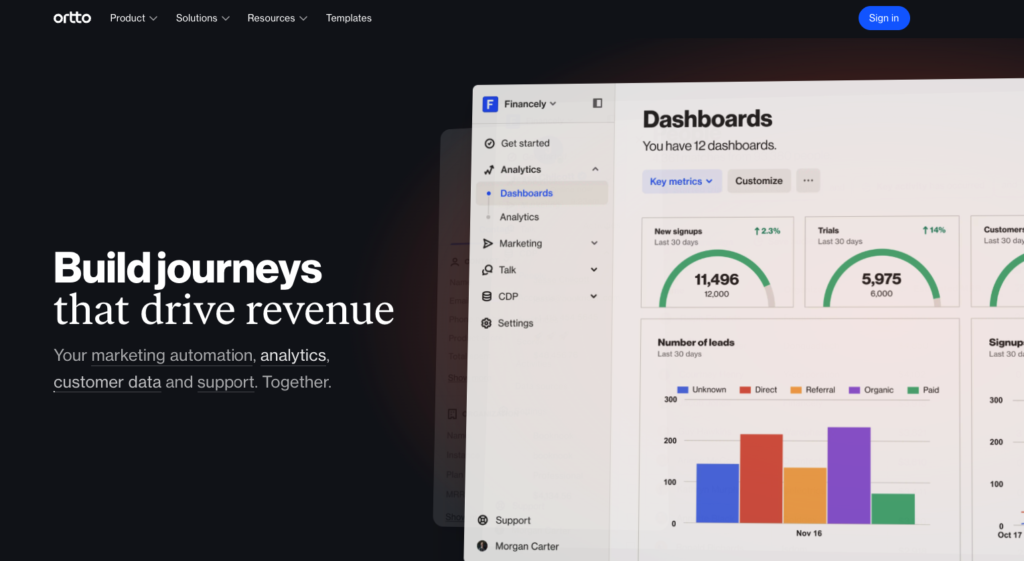
Segment trial users by milestones and trigger guidance while reviewing customer journey performance.
Key Features:
- Visual journeys
- Behavior-based segments
- Customer analytics
What we like: Connected reporting and automation. Clear journey visualization.
What could be better: Advanced setup takes planning. Smaller ecosystem.
Pricing: Check current pricing. See Ortto official pricing and product information.
Our verdict: Consider when marketing automation and customer analytics are both priorities.
10. Drip
Best for: Purchase-driven email campaigns.
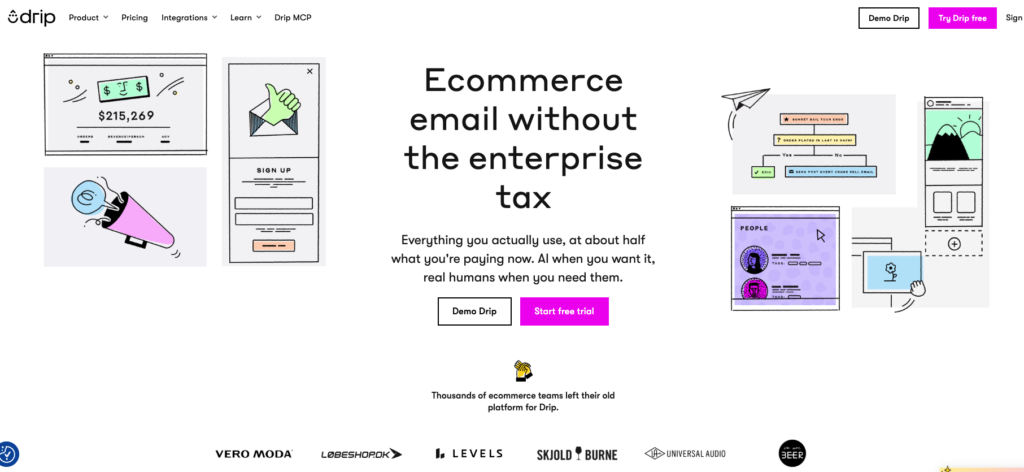
Automate different communications for first-time buyers, repeat subscribers and inactive purchasers.
Key Features:
- Visual email workflows
- Behavior segmentation
- Commerce reporting
What we like: Straightforward automation. Transaction personalization.
What could be better: Mostly ecommerce-oriented. Limited B2B sales support.
Pricing: Contact-based pricing. See Drip official pricing and product information.
Our verdict: Better for subscription-commerce lifecycle journeys than enterprise B2B.
11. Salesforce Marketing Cloud
Best for: Enterprise cross-channel journeys.
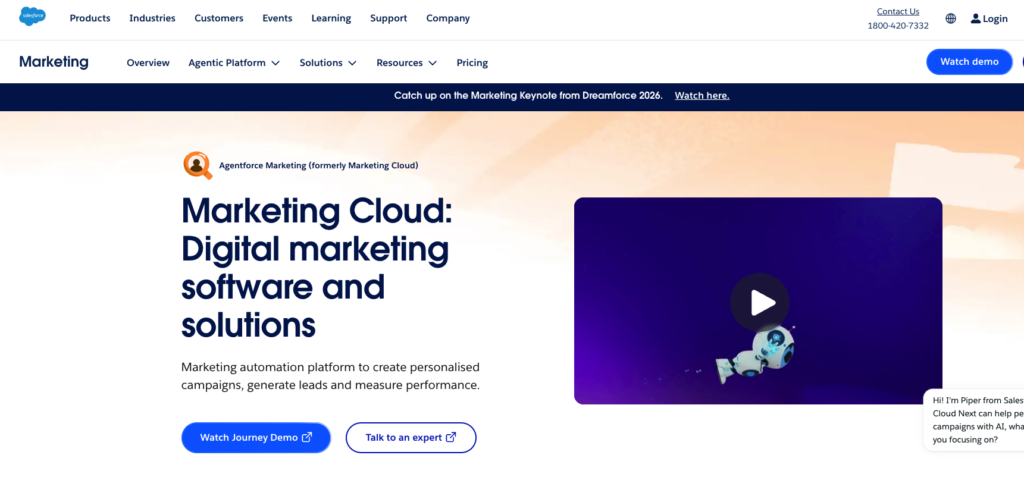
Coordinate messaging across channels using customer lifecycle, engagement and Salesforce data.
Key Features:
- Cross-channel journey tools
- Customer segmentation
- Salesforce data connectivity
What we like: Broad enterprise features. Personalization at scale.
What could be better: Complex administration. Expensive and varied packages.
Pricing: Varies by product and edition. See Salesforce Marketing Cloud official pricing and product information.
Our verdict: Best for large organizations already invested in Salesforce.
12. Reply.io
Best for: Outbound sales prospecting.
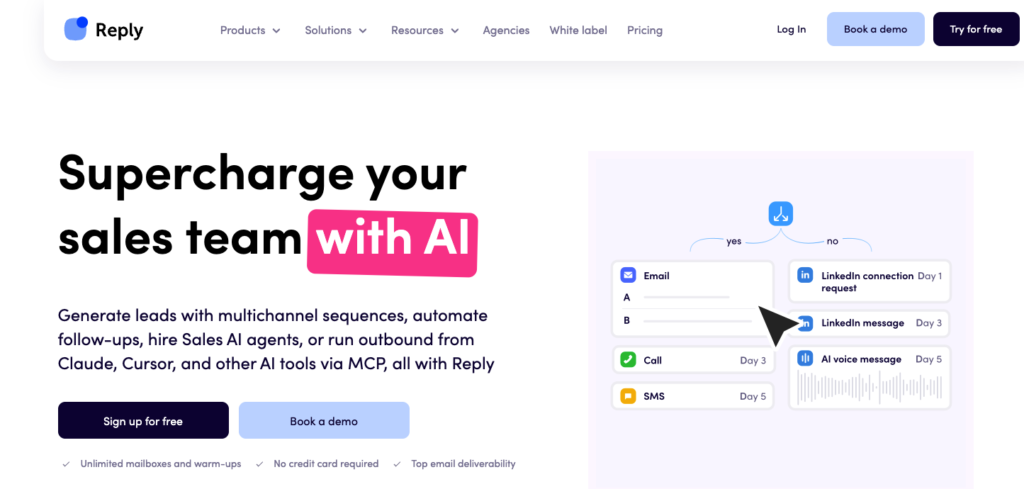
Sequence prospecting emails and supported social tasks so SDRs can organize follow-ups to qualified accounts.
Key Features:
- Email outreach sequences
- Multichannel sales tasks
- CRM-linked outreach reports
What we like: Less manual follow-up. Outbound-specific tools.
What could be better: Not a customer onboarding platform. Deliverability requires care.
Pricing: Plan- and seat-based pricing. See Reply.io official pricing and product information.
Our verdict: A sales engagement complement, not a replacement for lifecycle automation.
13. MoEngage
Best for: Mobile activation and retention.
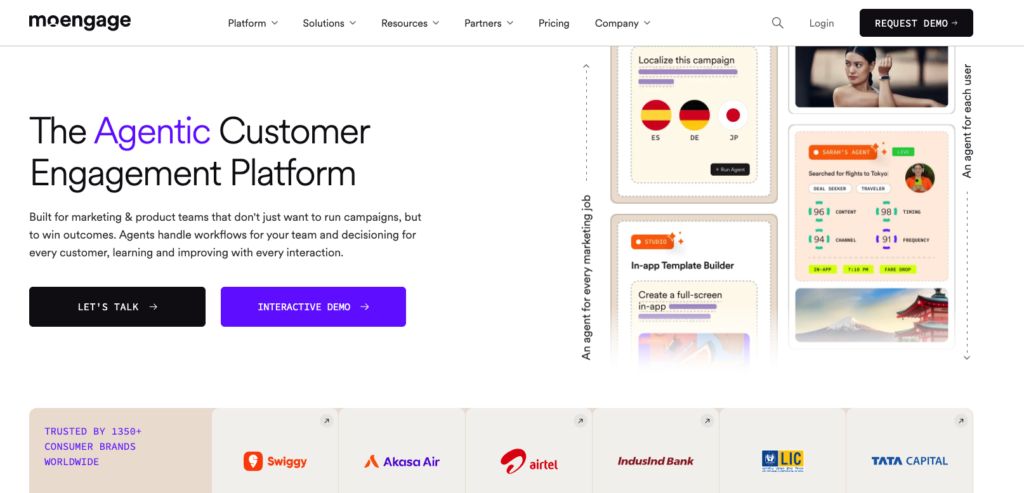
Send an in-app or push reminder when a user stops short of an important product milestone.
Key Features:
- Behavior-triggered campaigns
- Mobile push and in-app
- Lifecycle analytics
What we like: Good mobile engagement. Retention-focused workflows.
What could be better: Relies on product event quality. Overbuilt for smaller teams.
Pricing: Custom or usage-based pricing. See MoEngage official pricing and product information.
Our verdict: Appropriate for mobile-first SaaS products driven by user engagement.
14. Iterable
Best for: Cross-channel lifecycle messaging.
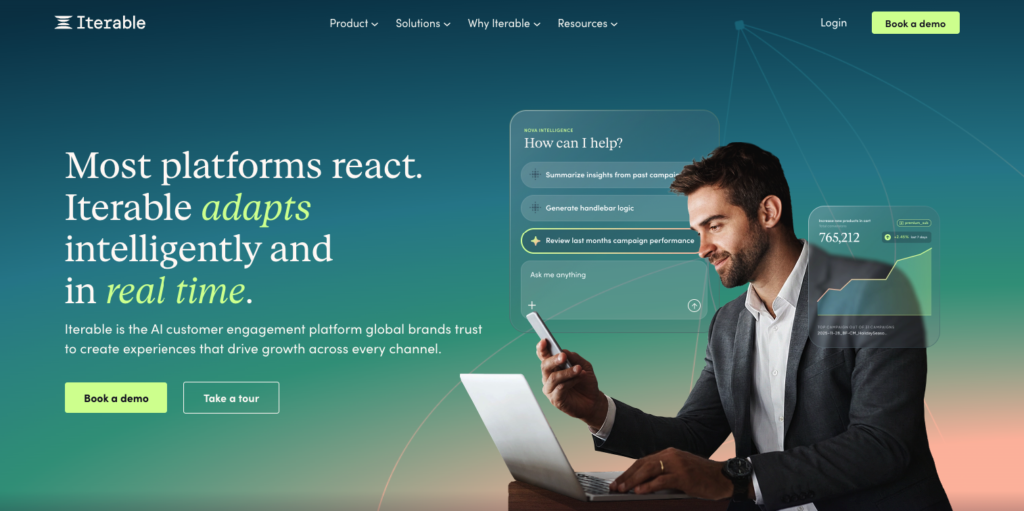
Orchestrate different email, SMS and push journeys for activated customers and inactive users.
Key Features:
- Cross-channel journeys
- Behavioral personalization
- Campaign testing
What we like: Flexible messaging. Advanced personalization.
What could be better: Technical setup needed. Can be excessive for early stage.
Pricing: Custom quote. See Iterable official pricing and product information.
Our verdict: A fit for established SaaS lifecycle marketing programs.
15. Userlist
Best for: B2B SaaS account onboarding.
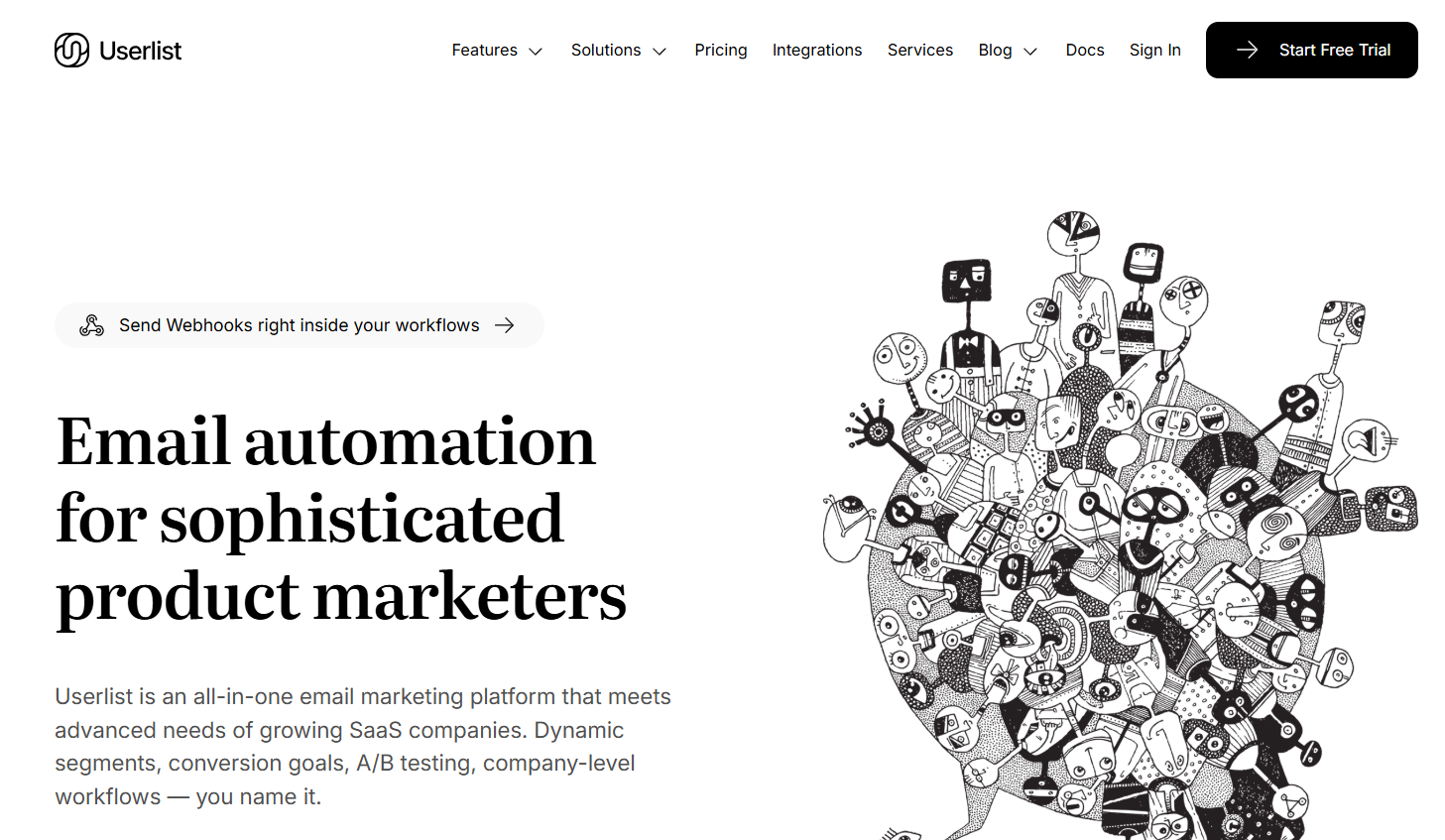
Trigger account-level onboarding based on whether teams invite colleagues or complete setup.
Key Features:
- Company- and user-level segments
- Behavioral messaging
- B2B lifecycle campaigns
What we like: SaaS-focused data model. Account-oriented onboarding.
What could be better: Not a full CRM. Product data integration required.
Pricing: Check current subscription pricing. See Userlist official pricing and product information.
Our verdict: Especially useful when activation is achieved by teams, not individual users.
Which SaaS Marketing Automation Tool Should You Choose?
For B2B lead nurturing, compare ActiveCampaign and HubSpot. For product-led onboarding, evaluate Customer.io and Encharge. For enterprise orchestration, consider Marketo, Braze or Iterable based on your channels and integration needs.
Reply.io serves a different purpose: outbound sales engagement. For account-level outreach ideas, read our guide to ABM for SaaS.
How Can Automation Affect SaaS Customer Acquisition Cost?
Customer acquisition cost (CAC) is sales and marketing acquisition spend divided by new customers acquired over the same period. Automation can reduce manual follow-up and improve conversions, but platform fees and implementation must also be counted.
- Speed: Respond quickly to qualified interest.
- Qualification: Prioritize prospects with meaningful intent signals.
- Activation: Guide trial users to their first valuable product action.
- Measurement: Track lead-to-customer and trial-to-paid conversion before and after rollout.
Include setup work and ongoing software costs in your SaaS marketing budget.
Conclusion
The best SaaS marketing automation tool is the one that solves your most important customer acquisition or retention problem.
For B2B lead nurturing, ActiveCampaign and HubSpot are strong options. Customer.io and Encharge are better suited to product-led onboarding, while Marketo, Braze, and Iterable support more complex marketing operations.
Before choosing, identify the workflows you need, check integration requirements, and compare the total cost of ownership rather than subscription prices alone.