
2025 was not an easy year for SEO, especially in SaaS.
Search behavior changed faster than most teams could adapt. Product discovery started to look very different. Competition tightened across almost every keyword that truly mattered.
But here’s the part most recap posts skip.
I’m sharing this because we lived it every single day. This isn’t a year-end summary.
It’s an honest look at what we worked on, what we chose not to do, and what we learned while running SEO and link-building campaigns throughout the year.
And if you stay with me till the end, you’ll see exactly how those lessons shaped what we’re building next.
What we achieved for our clients in 2025
When I look back at 2025, the clearest indicator of progress is the growth our clients achieved through focused, long-term SEO work.
Link building impact
Link building continued to work in 2025, but only when done with intent and discipline.
Across client campaigns, we built close to 1,600 links. Every link was contextual, relevant, and placed where it genuinely made sense for the product.

Here’s what we focused on and just as importantly, what we didn’t.
The main link types we prioritised were:
- Contextual editorial links
- Product-focused mentions
We stayed away from chasing volume just to inflate numbers. The goal was never “more links.”
The goal was simple: build links that support rankings and bring real value.
And in a year like 2025, that restraint made all the difference.
Traffic and visibility growth
So what happened when we stuck to that approach?
Organic growth across clients came from consistent authority building through our SaaS-focused link-building strategy.
We didn’t chase mass links or short-term spikes. We focused on relevance, trust, and patience.
That patience paid off.
- A VPN brand grew organic traffic by 30%, from 1.4M to 1.8M visits
- A WordPress e-commerce plugin scaled from 0 to 7.9K visits (7,900% growth)
- A virtual server hosting provider increased traffic from 37K to 46K visits in six months (24%)
- A global hosting brand grew from 23K to 120K visits (420% growth)
- A Minecraft hosting company increased traffic by 143%, from 87K to 212K visits
- A fundraising software provider doubled traffic from 100K to 201K visits (101%)
- An AI website builder grew from 0 to 7,400 visits
- A Mac maintenance firm increased traffic from 450K to 753K visits (67%)
Across campaigns, most gains came from rankings for commercial and product-focused keywords.
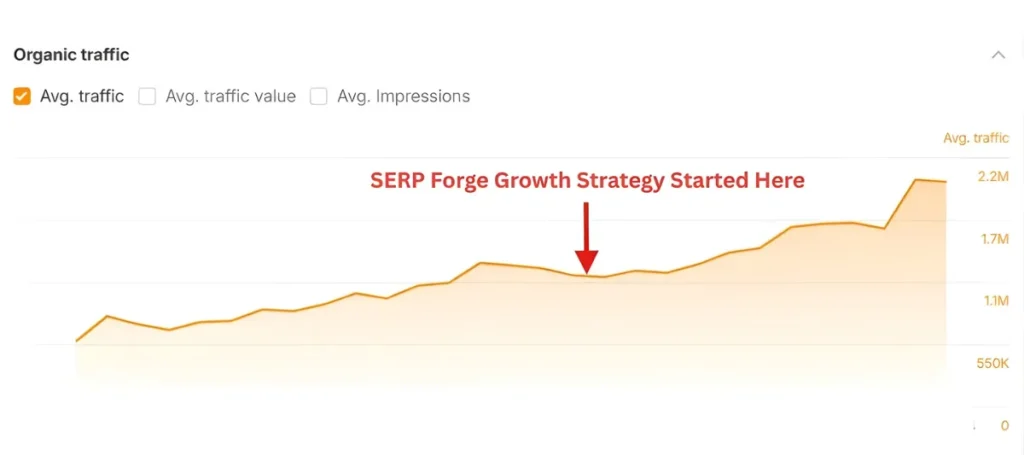
And that insight alone reshaped how we think about SEO.
What we built internally at SERP Forge
Client wins were only half the story.
Behind the scenes, 2025 forced us to rethink how SERP Forge itself should evolve.
1. New products and capabilities
2025 wasn’t just about execution. We invested heavily in building internally.
We launched multiple free and AI-based SEO tools designed specifically for SaaS teams.
We expanded beyond link building and started offering SEO, content marketing, and product marketing.
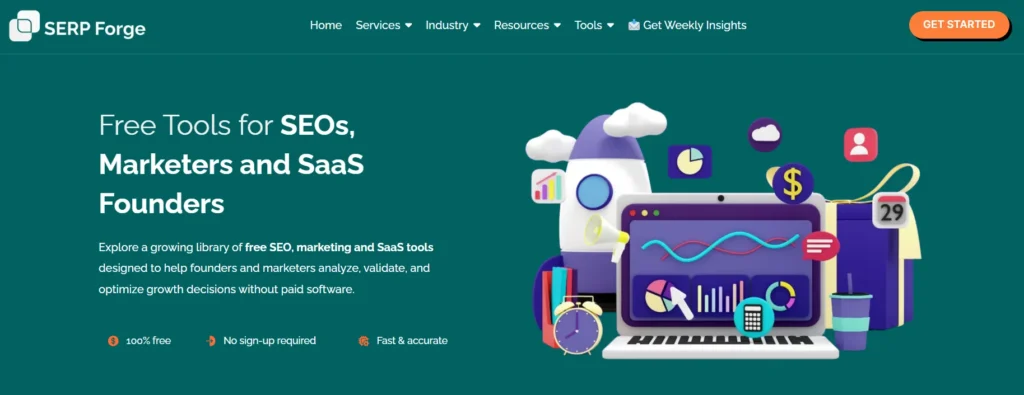
Which brings me to the biggest shift of the year.
2. Company rebranding
I realised that offering link building alone was no longer enough to create a meaningful impact for SaaS companies.
As client needs evolved, the work we were doing naturally expanded beyond links into SEO, content, and product-focused marketing.
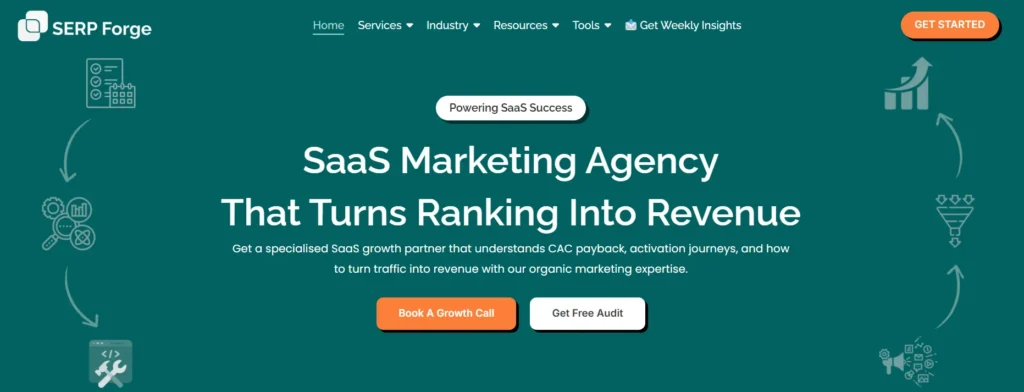
Because of that, we repositioned SERP Forge from a link-building agency to a full SaaS marketing partner.
Updating the website was simply a way to reflect this shift. The work had already moved in that direction the positioning followed.
3. Content and knowledge sharing
As our execution matured, our content had to mature too.
We doubled down on education. We published a high volume of practical, experience-driven content and moved away from surface-level opinions.
We focused on researching content and began collecting expert insights to support what we shared.
The intent was simple: share what actually works, not what sounds good on paper.
4. Process improvements
Growth also exposed gaps.
So we tightened execution across the board:
- Reporting became clearer and more outcome-focused
- Workflows improved to reduce delays and manual gaps
- Client collaboration became more transparent through better communication loops
These changes helped us scale without sacrificing quality, something I care deeply about as a founder
5. Featured mentions
Interestingly, as we focused less on visibility and more on substance, visibility followed.
SERP Forge was featured organically on platforms like:
- GoDaddy
- CMOTimes
- Under30CEO
- Lightkey
- Flicemail
- HubSpot
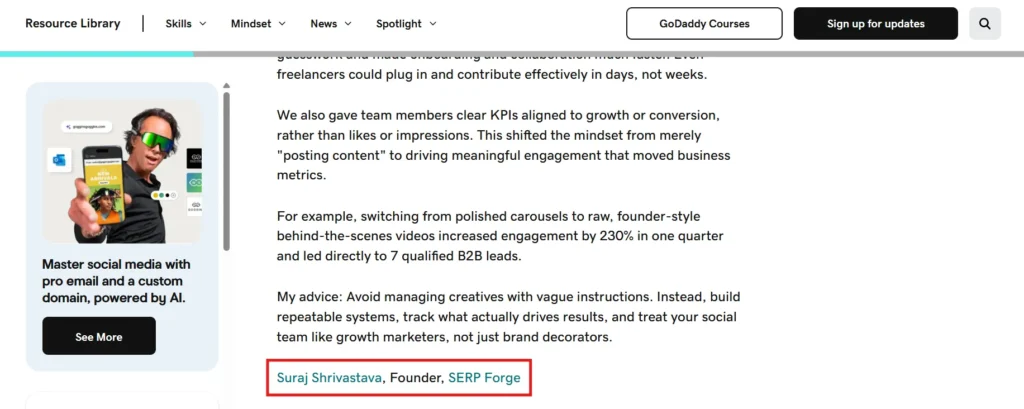
We didn’t chase attention. We focused on the work and let it compound.
Culture, team, and community
Now let’s talk about the part that doesn’t show up in dashboards.
One of the things I’m most proud of in 2025 is how intentionally we invested in people.
We expanded the team across SEO, outreach, content, and operations. Every hire was made carefully, with ownership and long-term growth in mind.
We introduced clearer policies, flexible working hours, defined leave structures, and visible growth paths.
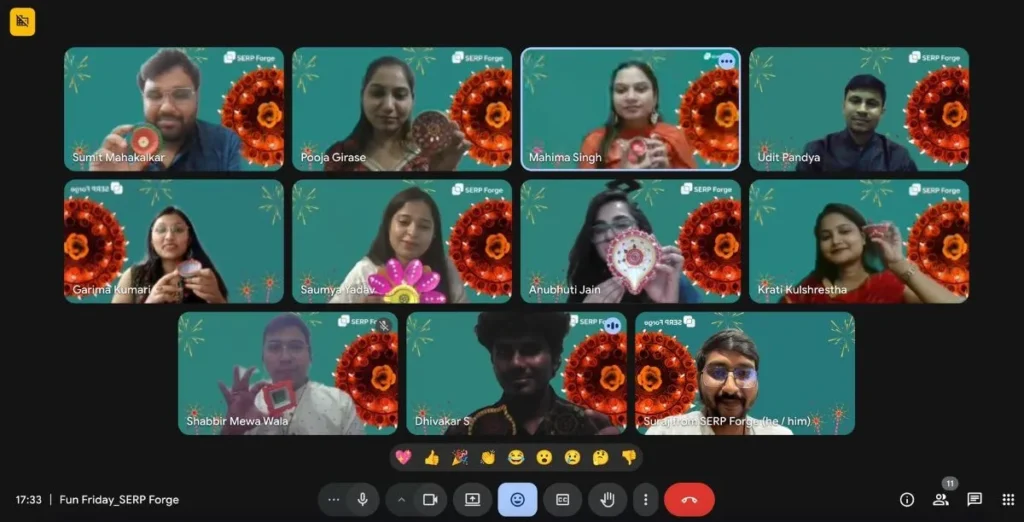
We celebrate festivals like Diwali and Christmas together. We celebrate birthdays too. Many remote companies skip this, but we don’t. It matters.
And slowly, it showed. Collaboration improved. Documentation got cleaner. Communication became easier. The way we worked together matured.
What 2025 taught us about SEO and growth
After working across so many SaaS projects, patterns became impossible to ignore.
Search became more intent-focused and less about keyword matching. Authority still mattered, but relevance mattered more. AI-driven content flooded results and raised the bar for originality.
Here’s the contrast that stood out most.
What worked better than expected:
- Product-led content backed by strong links
- Outreach built on real value, not templates
What we stopped doing:
- Chasing links just for DR
- Publishing content without a clear purpose
- Treating SEO as separate from product and sales
Everything moved closer together, and that changed how we operate.
How these lessons changed the way we work
So what did we do with those lessons?
Our approach changed quietly, but deliberately.
SEO strategy now starts with product positioning and clarity around the ideal customer. Tools help with research and execution, but they don’t replace experience.
We’re doubling down on contextual authority, SaaS-focused SEO frameworks, and real outreach relationships.
At the same time, we’re simplifying, cutting unnecessary reporting and removing content that exists only to fill space.
The focus stays on results.
What we are focusing on in 2026
Looking ahead, 2026 is about building with purpose.
When I think about where we’re headed next, the priority is clarity, doing fewer things, but doing the right ones well.
We want to create more space for meaningful conversations, practical learning, and collaboration grounded in real work, not theory.
For me, that means slowing down the noise and focusing on what actually helps teams make better decisions.
As we move forward, we’re continuing to expand how we support SaaS companies, with the intention of being a more complete and reliable long-term partner, not just a short-term execution layer.
Internally, we’re investing more in our people, strengthening collaboration, and building systems that save time and reduce unnecessary complexity.
The focus for 2026 is clear: build useful things, stay grounded in results, and grow with intention.
Final thought
I’m thankful to every client who trusted us in 2025. Your feedback and challenges shaped how we work today.
I’m equally grateful for the team that stayed curious, focused, and honest throughout the year.
If you’ve followed our work, worked with us, or learned from what we’ve shared, thank you. I’m looking forward to building, testing, and growing together in 2026.
Let’s move forward with clarity, intention, and a commitment to meaningful work.

